Night prayer Catholic: a simple guide for evening prayer
Night prayer Catholic: a simple guide for evening prayer
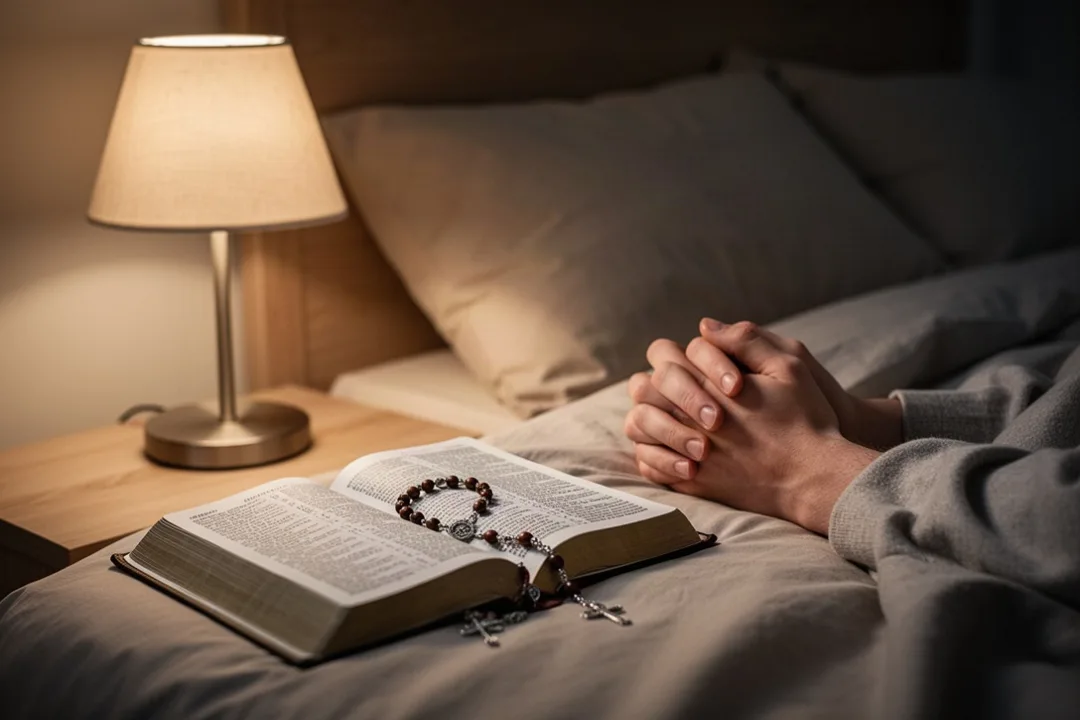
Night prayer helps you place the day, your worries, and your rest in God’s care.
For Catholics, praying at night can mean following the Church’s official Night Prayer, also called Compline, or speaking to God in your own words before bed. Both forms have a place in Catholic life. One connects you with the Church’s daily prayer, while the other gives you room to reflect on what happened, ask forgiveness, express gratitude, and prepare for sleep.
A good evening prayer does not need to be long or emotionally intense. A few attentive minutes can help you end the day with trust rather than anxiety. The purpose is not to perform perfectly, but to turn your mind and heart toward God before the night begins.
Night Prayer is the final prayer of the Catholic Church’s Liturgy of the Hours. The Liturgy of the Hours, also known as the Divine Office, sanctifies different times of the day with psalms, Scripture, intercessions, and prayers. Night Prayer is traditionally prayed just before going to bed.
The official form usually includes an opening prayer, an examination of conscience, a hymn, a psalm or psalms, a short reading from Scripture, a responsory, the Canticle of Simeon, intercessions, and a closing prayer. The exact texts change according to the day and liturgical season.
Many Catholics also use “night prayer” to describe a personal prayer routine. You might begin with the Sign of the Cross, thank God for specific blessings, review your actions, ask forgiveness, pray for other people, and entrust yourself to God’s protection. This simple practice is fully compatible with the Church’s liturgical prayer.
Core idea: Catholic night prayer is not a way to earn God’s care. It is a response to the care God has already shown throughout the day, expressed through worship, repentance, gratitude, and trust.
How to pray Catholic night prayer step by step
You can pray alone, with your family, or with a spouse or roommate. Choose a quiet place, silence unnecessary notifications, and allow yourself enough time not to feel rushed. If you are using the official Night Prayer, a breviary or approved prayer app can guide you through the correct day and season.
Become aware of God’s presence. Sit or kneel comfortably, breathe slowly, and begin with the Sign of the Cross. You may simply say, “Lord, I am here. Thank you for being with me today.”
Review the day honestly. Recall your conversations, decisions, responsibilities, frustrations, and moments of grace. Ask where you recognized love and where you resisted it.
Give thanks for particular gifts. Name two or three concrete things, such as a helpful conversation, sufficient food, meaningful work, a child’s laughter, or strength during a difficult moment.
Confess your sins and ask for mercy. Speak plainly to God about actions, words, omissions, or attitudes that caused harm. Ask for forgiveness and consider one practical way to repair the damage.
Pray with Scripture or a psalm. Read the assigned psalm from Night Prayer, or choose a short passage that helps you rest in God’s promises. Read slowly rather than trying to cover many verses.
Pray for other people. Remember your family, friends, parish, people who are suffering, and anyone you treated poorly or who treated you poorly. Keep the requests simple and sincere.
Entrust tomorrow to God. Name the responsibilities or fears you are carrying into the next day. Ask for wisdom, patience, healing, and the grace to do what is yours to do.
End with a familiar prayer. You might pray the Our Father, Hail Mary, Glory Be, or a traditional prayer such as the Sub tuum praesidium. Finish with the Sign of the Cross and rest.
This sequence can take five minutes or half an hour. The order matters less than the movement of the prayer: presence, gratitude, repentance, intercession, and surrender.
What the official Night Prayer includes
The Church’s Night Prayer follows a stable pattern, which makes it easier to pray even when you are tired. The structure provides words when you do not know what to say and keeps personal prayer from becoming limited to whatever concern feels most urgent.
The examination of conscience
At the beginning, Night Prayer commonly includes an examination of conscience. This is not meant to produce fear or endless self-criticism. It is a brief, truthful look at the day in the presence of God.
You can ask questions such as: Did I treat people with charity? Did I use my time responsibly? Did I speak truthfully? Did I avoid a good action because of selfishness or fear? Did I accept help when I needed it? The goal is clear repentance and renewed freedom, not a detailed inventory of every imperfect thought.
If you recognize serious sin, bring it to the Sacrament of Reconciliation when appropriate. A nightly examination is not a replacement for confession. It is a daily habit that helps you notice patterns, respond to grace, and prepare to make better choices.
The psalms and the short Scripture reading
The psalms used in Night Prayer often express confidence, protection, repentance, or peaceful rest. They give language to experiences that can be difficult to express personally, including loneliness, fear, gratitude, and hope.
Psalm 4 is associated with resting securely in God. Psalm 91 is often prayed in connection with protection. Psalm 134 praises God during the night, and Psalm 31 expresses trust while facing distress. Read these references in an approved Bible or prayer book rather than trying to force yourself to feel the emotions described.
The short reading usually gives one final word from Scripture before sleep. Let it remain with you for a moment. You might ask, “What does this show me about God, and what response does it invite from me tomorrow?”
The Canticle of Simeon
The Canticle of Simeon, traditionally called the Nunc dimittis, comes from the Gospel account of Simeon meeting the infant Jesus. In Luke 2, Simeon recognizes salvation in Christ and can face the end of his waiting with peace.
At night, this canticle takes on a fitting meaning. You have reached the end of one day and can release your unfinished work, unresolved questions, and limited control. The prayer points toward peaceful surrender: God remains faithful while you sleep.
The closing prayer and Marian antiphon
Night Prayer ends with a closing prayer that asks God to remain with the faithful during the night and bring them safely into a new day. Depending on the season, the prayer may conclude with a Marian antiphon such as the Salve Regina, Alma Redemptoris Mater, Ave Regina Caelorum, or Regina Caeli.
These prayers honor Mary as the mother of Jesus and ask for her intercession. Catholics may pray them slowly and attentively, remembering that Marian devotion leads toward Christ rather than replacing prayer to God.
A short Catholic bedtime prayer in your own words
When you are exhausted, a short prayer can be more faithful than attempting a long routine you cannot sustain. You can use a prayer like this:
Lord, thank you for carrying me through this day. Forgive my sins and help me repair any harm I have caused. Protect the people I love, give peace to those who are suffering, and receive all that I cannot control. Into your hands I place this night and tomorrow. Amen.
This prayer includes the essential elements of a Catholic evening prayer: thanksgiving, repentance, intercession, protection, and trust. Adapt the wording so that it reflects your actual circumstances. If you are grieving, mention your grief. If you are worried about a decision, place that decision before God. If the day was joyful, name the joy specifically.
How to make an examination of conscience gentle and honest
An examination of conscience should lead to truth and mercy together. If you only focus on your failures, the practice can become discouraging. If you only list blessings without acknowledging harm, it can become superficial.
Move through the day in three stages:
Notice grace: Where did you receive love, patience, help, beauty, or unexpected strength?
Recognize sin: Where did you act against love through pride, anger, dishonesty, lust, envy, greed, laziness, or neglect?
Choose a response: What apology, boundary, act of service, conversation, or change of habit may be needed?
Avoid turning prayer into a courtroom where you accuse yourself without mercy. Christian repentance is not self-hatred. It is a movement toward God, who calls you to acknowledge the truth, receive forgiveness, and grow in charity.
Some people experience intrusive thoughts or religious anxiety, sometimes called scrupulosity. If you feel compelled to repeat prayers, confess minor matters endlessly, or seek constant reassurance that you have prayed correctly, speak with a trusted priest and, when needed, a mental health professional. A healthy prayer life should deepen trust, not feed compulsive fear.
How to pray when you feel anxious at night
Nighttime often makes worries seem larger. There are fewer distractions, and concerns about health, money, relationships, work, or the future can become more noticeable. Catholic prayer does not require you to pretend that you are calm.
Begin by naming the fear directly: “God, I am worried about this appointment,” or “I do not know how this situation will be resolved.” Then distinguish between what you can do now and what must wait until morning. Offer God the second category instead of rehearsing it repeatedly.
These brief prayers are not magic formulas. Their value is that they return your attention to God when your mind keeps circling the same problem. Pair prayer with practical care: write down tomorrow’s tasks, follow medical advice, contact someone who can help, and seek professional support if anxiety regularly prevents sleep.
For difficult nights: You do not have to solve your whole life before going to bed. Name the next faithful step, place the rest in God’s hands, and allow your body to receive the rest it needs.
How families can pray together before bed
Family night prayer works best when it is brief enough for children and predictable enough to become familiar. Gather at a consistent time, perhaps after a bedtime story or before lights out. A candle may help signal prayer, but never leave it unattended.
A simple family pattern is:
Make the Sign of the Cross.
Invite each person to name one thing they are thankful for.
Ask each person to mention one need or person they want to remember.
Pray the Our Father or a short psalm together.
Ask God to bless the family and those who are alone or suffering.
End with the Hail Mary and the Sign of the Cross.
Children should not be pressured to produce a profound prayer. A child may be thankful for a meal, worried about school, or asking God to help a sick pet. Those ordinary concerns can become genuine prayer when they are brought into God’s presence.
Older children can take turns reading the Scripture passage or leading an intercession. If someone is unwilling to participate, keep the atmosphere peaceful. Regular, welcoming prayer usually forms a stronger habit than a long routine associated with conflict.
When to use traditional Catholic night prayers
Traditional prayers can give you stability during seasons when your own words feel unavailable. They also connect personal devotion with generations of Catholic Christians who have prayed the same words in homes, monasteries, hospitals, and places of danger.
The Our Father is appropriate for almost any night because it includes praise, dependence on God, daily needs, forgiveness, and protection from evil. The Hail Mary asks Mary to pray for you, especially at the present moment and at the hour of death. The Act of Contrition is useful after examining the day and recognizing sin.
The Guardian Angel prayer is often familiar to children and can express trust in God’s protection. The Prayer to Saint Michael may be included when you are seeking strength against spiritual danger, though it should not be treated as a superstition or a guarantee that no difficulty will occur.
You may also pray a decade of the Rosary rather than all five decades. The Sorrowful Mysteries can accompany grief, the Joyful Mysteries can lead to gratitude, and the Glorious Mysteries can renew hope. Choose a form that helps you pray with attention instead of creating an exhausting obligation.
How to use the Liturgy of the Hours at home
If you want to pray the official Night Prayer, use a current breviary, a Catholic prayer book approved for personal use, or a reputable Liturgy of the Hours resource. The order and psalms vary by weekday, Sunday, solemnity, and liturgical season, so a guide prevents confusion.
Before beginning, check whether the resource gives the prayer for the correct date. Then follow the antiphons around the psalms, read the short passage slowly, and join the closing prayer. You do not need to understand every liturgical detail before you begin.
Praying Night Prayer with others can make the rhythm easier. A parish, religious community, or Catholic household may offer it in person or online. When praying with a group, listen to the pauses and responses rather than racing ahead to finish.
If the full form feels difficult at first, start with one psalm and the short reading. Add the rest gradually. The goal is not to master a book but to let the Church’s prayer shape the end of your day.
How to build a consistent Catholic night prayer routine
Consistency usually depends more on a realistic plan than on strong feelings. Set a regular time and attach prayer to an existing habit, such as brushing your teeth, turning off the lights, or putting away your phone. Keep a rosary, prayer book, or Bible in the place where you intend to pray.
Choose a minimum version for very tiring evenings. It might include the Sign of the Cross, one sentence of thanksgiving, an Act of Contrition, the Our Father, and a request for peaceful sleep. On days when you have more energy, pray the complete Night Prayer or spend longer with Scripture.
Several practices can protect the routine:
Keep the first step easy. Sit down and make the Sign of the Cross before deciding how long you will pray.
Use a visible reminder. Place your prayer book beside your bed rather than inside a drawer.
Limit distractions. Charge your phone away from your pillow when possible.
Accept imperfect days. If you miss a night, begin again the next evening without punishment or elaborate compensation.
Review the routine occasionally. Adjust the length, time, or location if it is no longer helping you pray attentively.
Do not measure the value of prayer by whether you feel peaceful immediately afterward. Some nights will remain difficult. Faithfulness can mean simply showing up, speaking honestly, and resting without a dramatic emotional change.
What to do when you fall asleep during prayer
Falling asleep while praying at night is common, especially when you are physically tired. It does not automatically mean you are disrespectful or spiritually lazy. The body has limits, and rest is itself a human need that God understands.
If you regularly fall asleep before finishing, pray earlier in the evening or shorten the routine. You could pray the examination of conscience at dinner and reserve a brief entrustment prayer for bedtime. Sitting upright at a desk may help if you want to complete the official Night Prayer.
When sleep interrupts your prayer, do not restart repeatedly out of fear. Continue the next day or accept that your final conscious moments were turned toward God. A loving relationship is not measured by mechanical completion.
How Catholic night prayer relates to sleep and trust
Christian prayer before sleep recognizes that you are not in control of everything. You cannot keep watch over every person you love, prevent every possible problem, or finish every responsibility before nightfall. Entrusting the night to God is an act of humility.
This trust does not mean ignoring practical responsibilities. You can lock the door, set an alarm, follow a treatment plan, prepare for tomorrow, and still acknowledge that your security ultimately rests beyond your own efforts. Prayer places ordinary precautions inside a larger relationship with God.
The night can also recall death, which is why older Catholic prayers sometimes speak about the hour of death. This language is not meant to make bedtime frightening. It encourages readiness to live in friendship with God now, while reminding you that your hope rests in Christ’s resurrection.
Let the final prayer of the day be simple and truthful: God is present, mercy is available, other people can be entrusted to him, and tomorrow remains in his care.
Frequently asked questions
What is the Catholic prayer before going to sleep?
There is no single required personal bedtime prayer. Many Catholics pray the Our Father, Hail Mary, Act of Contrition, or a short prayer of thanksgiving and surrender. You can also pray the Church’s official Night Prayer, known as Compline. A suitable prayer acknowledges God’s presence, asks forgiveness, remembers others, and entrusts the night to divine care.
Is Night Prayer the same as Compline?
Yes. Compline is the traditional name for the final hour of the Catholic Liturgy of the Hours, and English-speaking Catholics commonly call it Night Prayer. It is a liturgical prayer with psalms, Scripture, intercessions, and a closing prayer. Personal bedtime prayers may follow the same themes without using the complete official form.
Can I pray Catholic night prayer if I am not Catholic?
Anyone may speak to God using the themes of Catholic night prayer, such as gratitude, repentance, protection, and trust. The official Liturgy of the Hours is a prayer of the Catholic Church, but you do not need to be Catholic to read the psalms or offer a personal evening prayer. You may adapt the wording according to your own Christian tradition.
How long should Catholic night prayer take?
It can take anywhere from a minute or two to 15 minutes or more, depending on the form you choose. A short prayer is appropriate when you are exhausted. The complete Night Prayer from the Liturgy of the Hours generally takes longer, especially when prayed slowly or with others. Regular, attentive prayer matters more than reaching a particular length.













Leave a Reply