When fear keeps you awake, danger feels close, or you need words for someone who is suffering, you may ask: What does Psalm 91 mean for a Catholic? The psalm is a prayer of trust in God’s protection, not a guarantee that Christians will never experience illness, loss, temptation, or tragedy.
Psalm 91 invites you to place your life under God’s care while continuing to act with prudence, seek help, and remain faithful. Its images of shelter, wings, angels, darkness, and rescue speak to a deep human need: the confidence that God is present even when circumstances are frightening.
Central Catholic reading: Psalm 91 teaches confidence in God’s faithful presence. It should not be treated as a magical formula or as a promise that faithful people will avoid every physical or emotional hardship.
Psalm 91 is traditionally understood as a prayer of protection and confidence. The person praying turns toward God as a refuge, fortress, and dwelling place. The language is vivid because the psalm addresses dangers that people have always feared: hidden traps, disease, nighttime terror, violence, and threats that seem impossible to control.
For Catholics, this confidence is rooted in the character of God rather than in a technique. God is not being persuaded to care by the repetition of certain words. Instead, the prayer helps you recognize and respond to the care God already offers.
The psalm’s promises should be read alongside the whole Bible and the teaching of the Church. Scripture repeatedly shows faithful people suffering while remaining close to God. Jesus himself experiences rejection, danger, and death. Therefore, Psalm 91 cannot mean that a Christian who recites it will be physically untouchable.
Its deeper promise is that no suffering has the power to separate you from God’s love. God may protect you by changing a situation, by giving you wisdom to avoid danger, by sending help through other people, or by giving you endurance and peace in the middle of hardship.
Who is speaking and who is being addressed?
Psalm 91 has a prayerful, almost dramatic movement between voices. One speaker describes the safety of living close to God. Another addresses the person who trusts in God. Near the end, God speaks directly and promises to remain with the faithful person in trouble.
The exact arrangement of voices can vary slightly in interpretation and translation, but the central message remains clear: the believer is not alone. The psalm moves from human fear toward divine assurance.
The opening image is a person who “dwells” in the shelter of the Most High. This does not suggest visiting God only during a crisis. To dwell means to make God the settled center of life through prayer, worship, repentance, and faithful action.
The psalm then names God with several images. God is a shelter in danger, a shadow in heat, a fortress under attack, and a place of safety when ordinary defenses fail. These images do not reduce God to a physical hiding place. They express security of relationship.
When the psalm speaks of saying to the Lord, “My refuge and my fortress,” it describes an act of faith. The person praying is not pretending that danger does not exist. Instead, the person acknowledges the danger and declares that fear will not have the final word.
How the images of Psalm 91 speak to Catholic life
God as shelter and fortress
A shelter protects a person from conditions that cannot be controlled. A fortress provides stability when threats surround it. These images can help you pray when you feel exposed by financial pressure, conflict at home, a medical diagnosis, grief, or uncertainty about the future.
For Catholics, God’s shelter is encountered through a life of communion with him. Personal prayer matters, but so do the sacraments, the Church’s liturgy, Scripture, and the support of other believers. Protection often comes through ordinary means rather than dramatic signs.
That may mean receiving the Anointing of the Sick, speaking with a priest, visiting a doctor, asking a trusted friend for help, or making a practical plan to leave an unsafe situation. Seeking these forms of help is not a failure to trust Psalm 91. It can be one way God’s care reaches you.
The image of taking refuge under God’s wings is tender rather than military. It recalls the protection of a parent bird sheltering its young. In Catholic prayer, this image can express God’s mercy, tenderness, and willingness to receive you when you are frightened or ashamed.
God’s closeness does not depend on your emotional experience. Some days prayer feels peaceful; on other days it feels dry or distracted. Psalm 91 gives you words to continue turning toward God even when your feelings do not provide reassurance.
Night, darkness, and hidden dangers
Psalm 91 mentions dangers associated with night and darkness. These can be understood literally, but they also represent uncertainty, anxiety, secrets, deception, and threats that are difficult to see clearly.
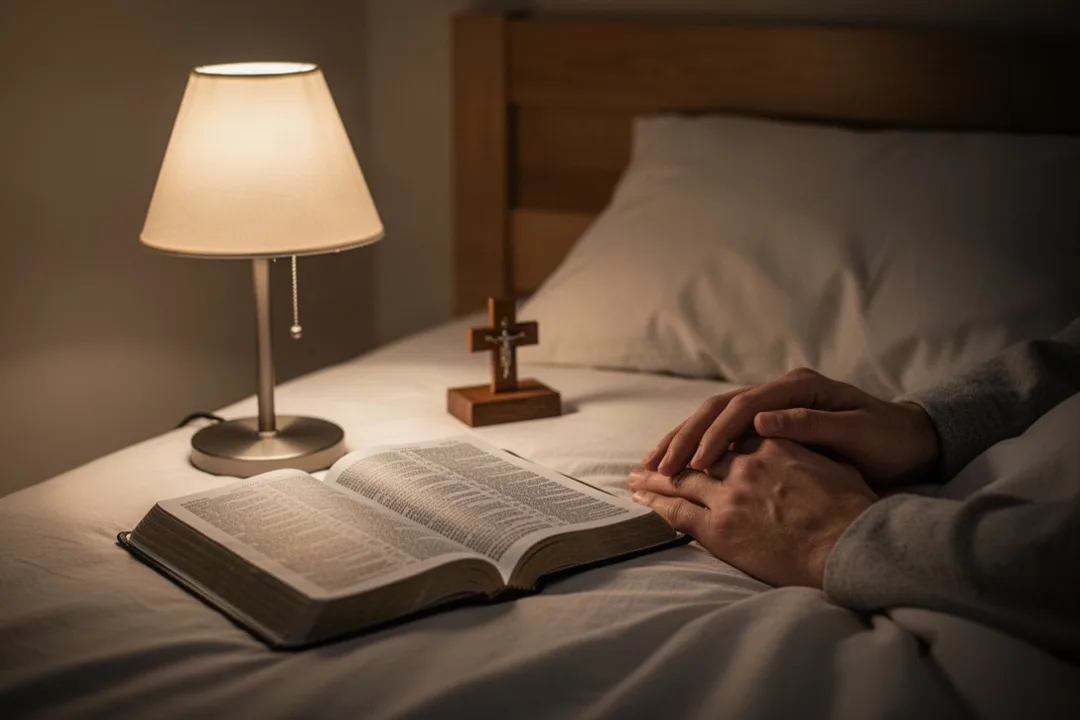
Many people find the psalm especially meaningful before sleep. Night can make worries seem larger, and a repeated prayer can help place those worries in God’s hands. The goal is not to force yourself to feel calm immediately. The goal is to practice trust, one honest prayer at a time.
You might pray the psalm after turning off the lights, then name one specific concern: “Lord, I place my health in your care,” or “Lord, watch over my family and give me wisdom.” This personal response connects the biblical language with your actual life.
Angels and God’s care
Psalm 91 refers to angels guarding the person who trusts in God. Catholic tradition affirms the reality of angels and commonly speaks of a guardian angel’s care. Still, the psalm should not be used to demand supernatural protection or to test whether God will intervene in a particular way.
This point matters because the devil quotes Psalm 91 when tempting Jesus in the wilderness. In the account found in Matthew 4 and Luke 4, Jesus refuses to put God to the test. He does not deny God’s protection; he rejects the idea that faith gives a person permission to act recklessly.
Read Psalm 91 with Jesus’ answer in mind: Trusting God does not mean deliberately entering danger, refusing medical care, ignoring wise advice, or expecting a prayer to cancel every natural consequence.
What Psalm 91 does not promise
Some readers approach Psalm 91 because they have heard that it guarantees safety from illness, accidents, enemies, or death. That interpretation can create confusion and even guilt when suffering occurs. If a loved one becomes sick, the illness is not proof that the person lacked faith.
The psalm is poetry, so its images express a complete confidence in God rather than a legal contract listing conditions and outcomes. Biblical poetry often speaks in broad, powerful pictures. Those pictures reveal truth about God without functioning as a mechanical prediction of every event.
Psalm 91 also does not teach that people who suffer are abandoned. The final section includes a promise of God’s presence in trouble. That distinction is essential: God does not promise an absence of trouble; God promises presence within trouble.
Christian hope extends beyond immediate physical safety. Catholics believe in resurrection and eternal life, so the strongest form of divine rescue is ultimately communion with God. That hope does not make present pain insignificant. It gives suffering a horizon beyond what can be seen now.
When praying for protection, you can ask confidently for healing, safety, reconciliation, and deliverance. You can also pray for courage to accept what cannot be changed, wisdom to make responsible decisions, and grace to remain loving under pressure.
How Psalm 91 connects with Jesus Christ
The New Testament connects Psalm 91 with Jesus during his temptation in the wilderness. The tempter uses the psalm’s language about angelic protection to urge Jesus to throw himself from the temple. Jesus responds by refusing to test God, showing that genuine trust is different from presumption.
This episode offers a Catholic key for reading the psalm. The person who trusts God does not manipulate God. Faith is not a demand that God prove his presence on your preferred terms. It is a relationship marked by obedience, humility, and confidence.
Psalm 91 can also be read in light of Christ’s Passion. Jesus is not spared every form of suffering, yet his relationship with the Father remains unbroken. His resurrection reveals that God’s protection reaches its fullest meaning in salvation, not simply in temporary comfort or earthly success.
This does not require you to suppress fear. In the Gospels, Jesus shows compassion toward frightened and suffering people. You can pray for protection with the confidence of a child who asks for help while also accepting that God’s answer may come through healing, endurance, another person’s care, or a deeper conversion.
Psalm 91 in Catholic worship and devotional practice
Psalm 91 has a recognized place in Catholic prayer. It is associated with night prayer in the Liturgy of the Hours, where the Church entrusts the end of the day to God. Its themes of nighttime protection and peaceful rest make that setting especially fitting.
The psalm also appears in the Church’s Scripture readings and is especially significant during Lent because of the Gospel account of Jesus’ temptation. Hearing it in the liturgy places its promises within the wider story of Christ’s obedience and mission.
You may pray Psalm 91 privately, with your household, in a parish prayer group, or alongside another person who is afraid. Catholics may also bring its themes into Eucharistic adoration, the Rosary, a visit to a sick person, or a short prayer before travel.
Devotional use should support participation in the Church’s sacramental life rather than replace it. A person who loves Psalm 91 can still need confession, the Eucharist, pastoral counsel, professional care, and the practical support of a community.
How to pray Psalm 91 when you feel afraid
You do not need a perfect setting or a long period of silence. A short, attentive prayer can be enough to begin. The following pattern helps you move from fear toward trust without denying what is happening.
Name the fear honestly. Tell God what is frightening you, using specific words rather than vague religious language.
Read or pray the psalm slowly. Pause at images that speak to your situation, such as shelter, wings, angels, or rescue.
Separate trust from control. Ask God for protection while releasing the demand that the outcome must happen in one particular way.
Ask for practical wisdom. Consider what responsible action is needed: calling a doctor, contacting authorities, setting a boundary, or asking someone trustworthy for help.
Pray for other people. Place family members, neighbors, caregivers, and those in danger before God.
End with a simple act of surrender. You might say, “Lord, remain with me and guide my next faithful step.”
This pattern can take five minutes or much longer. The value does not come from completing a required number of repetitions. It comes from bringing your attention back to God and allowing Scripture to shape the way you respond.
Common mistakes when using Psalm 91
Psalm 91 can be a source of real comfort, but certain habits can distort its meaning. Watch for these common mistakes when you pray it or recommend it to another person.
Treating it like a protective charm: The power of prayer is not in carrying, displaying, or repeating words as though they work automatically.
Blaming people for suffering: Illness, abuse, poverty, and tragedy are not reliable evidence of weak faith or hidden sin.
Using it to avoid action: Prayer should not become an excuse to ignore medical treatment, safety planning, legal assistance, or urgent intervention.
Promising a specific outcome: You can encourage hope without telling someone that God will certainly prevent a particular event.
Forcing comfort on someone who is grieving: A person in pain may need quiet presence, practical help, and compassion before they are ready for extended Scripture discussion.
Reading the angel passage as permission for recklessness: Jesus’ temptation shows that trust does not involve putting God on trial.
Ignoring the psalm’s relationship with the rest of Scripture: Read its confidence together with the Cross, the Resurrection, and the biblical call to wisdom and love.
These cautions do not weaken the psalm. They protect its meaning. A mature Catholic prayer holds together confidence in God, acceptance of human limits, and responsible action.
How to pray Psalm 91 for a sick or vulnerable person
When someone is ill, Psalm 91 can help you pray without pretending to know the future. Begin by asking permission if the person is conscious and able to respond. Some people welcome a long prayer; others may prefer one sentence, silence, or a familiar Catholic prayer.
You might read selected lines or paraphrase the psalm in your own words: “God, be this person’s refuge. Give them peace, guide their caregivers, and hold them close through this time.” Keep the focus on God’s presence and loving care, not on proving that recovery must happen immediately.
Pray for the person’s body, mind, and spirit. Ask for relief from pain, clear medical decisions, patience for caregivers, and freedom from isolation. If the person wishes, encourage contact with a priest about the Anointing of the Sick or other pastoral support.
Do not use Psalm 91 to dismiss the seriousness of a diagnosis. Saying “You only need more faith” can deepen a person’s distress. A more faithful response is to remain close, help with concrete needs, and pray with humility.
A household might pray Psalm 91 at the start of a new school year, before a difficult trip, during a family health crisis, or at bedtime. Children may understand its images more readily than abstract explanations, especially when you explain that God’s shelter means loving presence rather than a promise that nothing difficult will ever happen.
Keep the practice simple and consistent. One person can read a section, another can name intentions, and everyone can finish with the Lord’s Prayer or a short prayer for peace. Avoid turning family prayer into a test of religious performance.
For a household facing a specific danger, combine prayer with a clear safety plan. If there is domestic violence, immediate danger, or a medical emergency, contact appropriate emergency or professional services. Prayer and practical protection belong together.
Families can also discuss what the psalm teaches about courage. Courage is not the absence of fear. It can mean asking for help, telling the truth, protecting a vulnerable person, forgiving wisely, or taking the next responsible step while trusting God.
A short Catholic prayer based on Psalm 91
God our refuge, you know the fears I carry and the dangers I cannot control. Keep me close to you, give me wisdom for my decisions, and guide the people who can help me.
Protect those who are vulnerable, comfort the sick, strengthen caregivers, and bring peace to those who cannot sleep. Teach me to trust you without presumption, to seek help without shame, and to remain faithful when the outcome is uncertain.
Through Jesus Christ, help me remember that your presence is not withdrawn in suffering. Hold me in your mercy today and guide my next step. Amen.
Ways to carry Psalm 91 into ordinary decisions
The psalm becomes more than a crisis prayer when it shapes daily habits. You can let its message influence how you speak, plan, and respond to fear. The aim is not to repeat the words constantly, but to develop a steady awareness that God is near.
Before work: Ask for wisdom, honesty, and protection from choices that harm others.
Before travel: Pray for safe judgment, attentive drivers, and care for everyone sharing the road.
During conflict: Ask God to be your refuge so that fear does not make you cruel or impulsive.
When receiving bad news: Pause before reacting, breathe slowly, and seek trustworthy counsel.
At bedtime: Give God the concerns you cannot solve overnight and pray for restful sleep.
When helping someone else: Offer presence and practical assistance instead of only promising that everything will be fine.
Psalm 91 can teach a disciplined form of hope. You acknowledge the reality of danger, refuse to worship fear, and place your life in God’s hands while doing what love and prudence require.
The Catholic meaning of Psalm 91 is therefore neither a guarantee of an easy life nor a denial of suffering. It is an invitation to dwell in God’s presence, trust his mercy, receive help through the Church and through responsible human care, and remain confident that no trial can place you beyond his reach.
Frequently asked questions
Is Psalm 91 a Catholic prayer?
Yes. Catholics may pray Psalm 91 privately or communally, and it is also used in the Church’s liturgical prayer, including night prayer in the Liturgy of the Hours. It is Scripture rather than a prayer written specifically by a Catholic author. Its themes of refuge, protection, and trust fit naturally within Catholic devotion and worship.
Can Catholics pray Psalm 91 for protection from illness?
Yes, you can ask God to protect and heal someone using Psalm 91. Pray with hope, but avoid treating the psalm as a guarantee of recovery or as a substitute for medical care. You can also pray for wise treatment, compassionate caregivers, peace, strength, and the grace to remain close to God during illness.
Should I read Psalm 91 every day?
Daily reading is optional, not a Catholic requirement. A regular practice can help you develop trust and remember God’s presence, especially in the morning or before sleep. You may read the whole psalm, meditate on a few images, or pray it occasionally when a particular situation calls for comfort and guidance.
Why does Satan quote Psalm 91 to Jesus?
In the temptation narratives, Satan misuses the psalm to encourage Jesus to demand a dramatic display of God’s protection. Jesus rejects this manipulation and refuses to test God. The episode shows that Psalm 91 calls for trustful obedience, not reckless behavior or an expectation that God must prove his care on command.
















Leave a Reply