Psalm 23:1-3 describes God as a shepherd who provides what his people need, gives them restorative rest, and leads them along a faithful path. The passage moves from care and provision to renewal and guidance: the shepherd supplies, makes space for peace, restores the inner life, and directs the person toward what is right.
These verses are not a promise of a trouble-free life. They present a picture of close, personal care. The speaker does not say that every desire will be granted or every danger removed. Instead, the psalm expresses confidence that God’s presence and direction are enough for the journey.
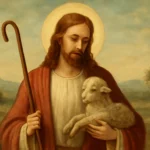
Psalm 23 begins with the image of a shepherd and a sheep. In the ancient world, a shepherd did much more than watch animals from a distance. A shepherd searched for pasture, located water, protected the flock, recognized individual sheep, and guided them through unfamiliar territory. The image therefore communicates attention, responsibility, and relationship.
When the psalmist calls the Lord “my shepherd,” the statement is personal rather than merely theoretical. The speaker is not only saying that God generally cares for people. He or she is confessing trust in God’s care for an individual life. That personal language can make the passage especially meaningful during grief, illness, uncertainty, or a season when the future feels difficult to see.
The next idea is that the speaker will not lack what is truly necessary. This does not mean a faithful person will possess every comfort, achieve every ambition, or avoid every loss. The emphasis is on God’s faithful provision. The shepherd knows what the sheep need and remains committed to leading them toward it.
Key idea: “I shall not want” is best understood as a statement of trust in God’s provision, not a guarantee of unlimited wealth or a life without hardship.
The verse also gives the psalm a calm, confident tone. The speaker does not begin by describing personal strength, perfect circumstances, or careful planning. The first source of security is the character of the shepherd. That order matters: peace begins with knowing who is leading, even when the route ahead is not yet clear.
How green pastures represent rest and provision
The image of green pastures points to food, safety, and a place where the flock can stop moving long enough to be nourished. Sheep do not create their own pasture. They depend on a shepherd to find suitable ground and bring them there. In the psalm, the pasture represents God’s ability to provide a place of sufficient care.
Pasture also suggests permission to rest. A frightened or constantly moving animal cannot feed well. In a similar way, people may have access to what they need but remain too anxious, distracted, or exhausted to receive it. Psalm 23:2 presents God as one who leads his people into a setting where restoration can take place.
The verse does not necessarily refer to a literal location. It can describe the physical, emotional, and spiritual conditions in which a person is sustained. A green pasture may be a period of recovery, a wise relationship, a faithful community, a daily provision, or a quiet awareness that you do not have to carry every burden alone.
For readers living under pressure, this picture can challenge the belief that constant activity proves faithfulness. The shepherd does not drive the sheep endlessly toward the next destination. He leads them to rest that serves life. Rest is not presented as laziness or wasted time; it is part of being cared for.
Why still waters matter in Psalm 23:2
The still waters in the second verse add another layer to the shepherd image. Sheep can be unsettled by rushing water, and they may need a calm source from which they can drink safely. The picture is therefore one of accessible refreshment, not merely abundance.
Water is essential for life, but the setting matters. A person who is dehydrated cannot be helped by a stream that is too dangerous to approach. Likewise, spiritual and emotional renewal often requires conditions where you can receive care without additional fear. The shepherd leads toward water that sustains rather than overwhelms.
Still waters can represent the quiet God provides within a noisy or demanding life. That quiet may not arrive as a dramatic change in circumstances. It may appear through prayer, sleep, honest conversation, wise boundaries, worship, or a moment when anxious thoughts lose their control. God’s peace is often experienced through ordinary means as well as through profound spiritual comfort.
The wording also suggests guidance. The sheep do not necessarily know where the safe water is, but the shepherd does. This is an important distinction for anyone praying for direction. You may not have enough information to plan the entire future, yet you can still take the next faithful step toward the place where life and renewal are found.
What “restores my soul” means
The phrase commonly translated as “restores my soul” can carry the sense of bringing a person back to life, renewing strength, or turning someone back toward the right direction. It describes more than a brief emotional lift. The shepherd attends to the whole person: body, mind, will, memory, hope, and relationship with God.
Restoration may be needed because of exhaustion. It may also be needed because of failure, grief, fear, temptation, disappointment, or spiritual dryness. Psalm 23 does not treat weariness as proof that a person has been abandoned. The need for restoration is part of the human condition, and the shepherd responds with care.
Some readers interpret the soul in this phrase as the deepest inner self. That interpretation fits the passage, but the Hebrew idea can also refer to a person’s life or being. The meaning is broad: God renews the person, not merely one isolated emotion. Restoration includes renewed strength and renewed direction.
This matters when you feel unable to repair yourself through discipline alone. Healthy habits, counseling, community, medical care, and practical changes can all be valuable. Yet the psalm reminds you that renewal is ultimately received rather than manufactured. You can participate in healing without pretending that you are your own shepherd.
Psalm 23:1-3 presents care as a movement from provision to rest, from rest to renewal, and from renewal to faithful direction.
How God’s guidance appears in “paths of righteousness”
After describing pasture, water, and restoration, the psalm turns toward a path. The shepherd does not only make the sheep comfortable; he leads them somewhere. “Paths of righteousness” refers to ways that are right, trustworthy, and consistent with God’s character. The image includes moral guidance, but it also carries the sense of a proper or dependable route.
God’s guidance therefore involves more than receiving an answer to a specific decision. It shapes the kind of person you are becoming and the way you treat other people. A path of righteousness may require honesty when deception would be easier, patience when retaliation feels satisfying, generosity when fear encourages hoarding, or repentance when pride wants to defend itself.
The psalm says these paths are chosen for the sake of God’s name. This means God’s guidance reflects who God is. Divine leadership is not random or self-serving. It displays faithfulness, justice, mercy, and holiness. When people follow that path, their lives are meant to bear witness to the character of the shepherd.
This phrase should not be used to claim that every personal preference has divine approval. A successful outcome does not automatically prove that God directed it, and a difficult outcome does not automatically prove that you missed God’s will. Discernment requires Scripture, prayer, wisdom, character, counsel, and attention to consequences.
These verses promise God’s care, but they should not be separated from the rest of Psalm 23. Later lines refer to dark valleys, enemies, and the possibility of danger. The opening scene is peaceful, yet the full psalm recognizes that faithful people still encounter threat and sorrow.
Psalm 23:1-3 therefore offers security without denying difficulty. The shepherd’s presence does not mean the sheep will never walk through a hard place. It means the journey is not abandoned to chance. Provision, restoration, and guidance remain possible even when circumstances are painful.
The passage also does not teach that material prosperity proves spiritual health. A person may have little and still be deeply held by God. Another person may have many possessions and still be restless, isolated, or spiritually lost. “I shall not want” concerns dependence on God’s care, not a formula for obtaining luxury.
Nor does the passage suggest that every illness will be instantly healed or every prayer answered in the way requested. It can give genuine comfort, but it should never be used to shame someone who remains sick, grieving, anxious, or poor. Compassion listens to a person’s actual experience instead of forcing a simple explanation onto suffering.
How to pray through Psalm 23:1-3
You can pray these verses slowly, turning each image into a specific response. The goal is not to repeat words mechanically. It is to become honest about where you need provision, rest, renewal, or direction.
Name the need. Tell God where you feel depleted, uncertain, afraid, or unable to provide for yourself.
Receive the shepherd image. Picture God as attentive and present rather than distant or indifferent.
Ask for suitable rest. Pray for the ability to recognize and accept healthy opportunities for sleep, quiet, support, and recovery.
Seek restoration. Ask for renewed strength, and remain open to practical help from trusted people and qualified professionals.
Request the next faithful step. Instead of demanding a complete map of the future, ask for wisdom to follow the right path today.
A simple prayer might sound like this in your own words: “God, you know what I lack. Lead me toward what gives life, restore what has been worn down in me, and guide my choices in a way that reflects your character.” Personal prayer does not need impressive language. Honesty and attention are more important than eloquence.
Practical ways to apply Psalm 23:1-3
The passage becomes more than a comforting quotation when its themes shape daily decisions. You can apply it without pretending that every problem has already been solved. Start with small, observable practices that reflect trust in God’s care.
Build a regular pause into your day. Set aside a few minutes without your phone, music, or other demands. Use the time to breathe, pray, and notice your actual condition.
Separate needs from anxious wants. Write down what you genuinely need today and what fear is telling you that you must have immediately.
Accept appropriate help. A shepherd’s care may reach you through a friend, church member, therapist, physician, mentor, or family member.
Choose one righteous step. Make one honest call, apologize, keep a promise, refuse a harmful shortcut, or seek wise counsel.
Protect restorative habits. Sleep, nourishing food, movement, prayer, and healthy boundaries can create room for renewal.
Review the day with gratitude. Notice where provision, guidance, or unexpected strength appeared, even if the day remained difficult.
These practices are not ways to earn God’s care. They are responses to it. They help you become more attentive to the forms of provision and guidance that anxiety can hide from view.
Common mistakes when interpreting Psalm 23:1-3
Because the passage is familiar, readers can sometimes hear it without considering what it actually says. A careful reading protects the text from interpretations that offer false certainty or place unnecessary pressure on people who are suffering.
Reducing the passage to financial success: The shepherd provides what is needed, but the verses do not promise wealth, status, or unlimited possessions.
Equating faith with constant calm: A person can trust God and still experience grief, fear, anger, or exhaustion.
Ignoring the need for action: Trusting the shepherd does not remove responsibility. You may still need to seek treatment, repair a relationship, make a budget, or leave an unsafe situation.
Using the verses to silence pain: Telling someone simply to “have faith” can dismiss their experience. Comfort should include listening and practical support.
Assuming every preference is divine guidance: A desired outcome is not automatically a righteous path. Character and wisdom matter.
Reading restoration as instant perfection: Renewal may happen gradually through prayer, community, time, therapy, repentance, and persistent care.
For times of serious distress: Psalm 23 can accompany practical and professional help, but it should not replace medical care, mental health treatment, emergency support, or protection from abuse.
How Psalm 23:1-3 connects with the rest of Scripture
The shepherd image appears throughout the Bible. Israel’s leaders are sometimes described as shepherds, and God is portrayed as the true shepherd of the people. Other passages use the same image to describe God gathering, feeding, seeking, and protecting those who are vulnerable.
In the New Testament, Jesus uses shepherd language to describe his relationship with his followers, especially in John 10. Christians often read Psalm 23 in light of those passages and understand Jesus as embodying the shepherd’s sacrificial and attentive care. Jewish readers may hear the psalm within the broader biblical and liturgical tradition of trust in the God of Israel.
These connections deepen the meaning without erasing the original poem. Psalm 23 remains a prayer of trust spoken by someone who recognizes dependence, danger, and the need for direction. Its power comes partly from that honesty: the speaker needs a shepherd because life cannot be controlled alone.
Using Psalm 23:1-3 in grief, anxiety, and change
People often turn to these verses during funerals, hospital visits, major transitions, and periods of uncertainty. The pastoral images can give language to feelings that are difficult to express directly. Green pastures may name the rest you long for; still waters may express a desire for calm; restoration may describe the hope of becoming whole again.
When grief is fresh, you do not need to force yourself to feel peaceful. You can read the verses as a statement of what you hope to trust, even when your emotions have not caught up. Faithful prayer may be quiet, angry, confused, or reduced to a single phrase. Trust can coexist with tears.
During anxiety, focus on the passage’s sequence. You do not have to solve every future problem before receiving today’s provision. Ask what the next safe and faithful step is. A meal, a phone call, a medical appointment, a night of rest, or an honest conversation may be the “green pasture” available at this moment.
During a major change, the path image can help you resist two opposite errors: rushing ahead without wisdom and refusing to move until you have absolute certainty. Guidance often becomes clear through the next responsible step. Stay attentive to Scripture, wise counsel, your obligations, and the character formed by your decisions.
A concise reflection on Psalm 23:1-3
Psalm 23:1-3 invites you to see God not as a distant force but as a shepherd who knows, leads, and sustains. The passage begins with what God provides, continues with the rest God makes possible, and then points toward the kind of life God directs. Provision, restoration, and righteousness belong together.
If you are reading these verses in a peaceful season, they can cultivate gratitude and humility. If you are reading them in a painful season, they can give you words for dependence without requiring you to deny the pain. The shepherd’s care is not measured only by how easy the road feels. It is also seen in the presence, renewal, wisdom, and help that make faithful living possible along the way.
Frequently asked questions
What is the main message of Psalm 23:1-3?
The main message is that God provides attentive care like a shepherd. These verses describe enough provision, restorative rest, renewed inner strength, and guidance toward a faithful way of living. They express trust in God’s care rather than promising that believers will avoid every hardship or receive everything they desire.
Does “I shall not want” mean believers will never be poor?
No. The statement is not a guarantee of financial prosperity or a life free from unmet desires. It expresses confidence that God will provide what is truly needed and remain present through hardship. It should not be used to blame people for poverty, illness, or difficult circumstances.
How can I use Psalm 23:1-3 when I feel anxious?
Read one image at a time and connect it with an honest prayer. Ask for help with the need in front of you, make room for restorative rest, and seek wisdom for your next responsible step. Practical support, counseling, medical care, and trusted relationships can work alongside spiritual reflection.
What does “paths of righteousness” mean?
It refers to ways of living that are right, trustworthy, and consistent with God’s character. The phrase includes moral choices such as honesty, mercy, humility, and justice. It does not mean every personal preference has divine approval, nor does a difficult outcome automatically prove that you chose the wrong path.

















Leave a Reply