23rd Psalm Roman Catholic Version: Full Text, Meaning, and Prayer Guide
The Psalm 23 holds a central place in Catholic devotion, offering a compact yet deep prayer that speaks to trust, guidance, consolation, and hope. In the Roman Catholic tradition, the commonly used English rendering follows the classic Douay-Rheims style, a translation that has long shaped Catholic liturgical and devotional life. This article presents the full text of Psalm 23 in a traditional Catholic English version, then dives into its meaning and offers a practical prayer guide to help readers meditate with this psalm in daily life. We also explore variations and paraphrases that preserve Catholic sensibilities while broadening semantic breadth for modern prayer.
The Lord is My Shepherd: The Roman Catholic Version (Full Text)
The Lord is my shepherd; I shall not want.
He maketh me to lie down in green pastures; he leadeth me beside the still waters.
He restoreth my soul: he leadeth me in the paths of righteousness for his name's sake.
Yea, though I walk through the valley of the shadow of death, I will fear no evil: for thou art with me; thy rod and thy staff they comfort me.
Thou preparest a table before me in the presence of mine enemies: thou anointest my head with oil; my cup runneth over.
Surely goodness and mercy shall follow me all the days of my life: and I will dwell in the house of the Lord for ever.
This rendering reflects the traditional Catholic English style, emphasizing a personal, intimate relationship with God as the Shepherd who provides, protects, and guides. The imagery of green pastures and still waters evokes replenishment and peace; the valley of the shadow of death acknowledges danger and sorrow, yet the psalmic voice remains steadfast in trust because of God’s presence. The verse about the table prepared before enemies and the anointing with oil echoes hospitality, blessing, and an abundance of grace that overflows in daily life. The concluding line anchors the believer in the hope of dwelling with the Lord forever.
Meaning and Themes in the Catholic Psalm 23
Psalm 23 is both pastoral and profoundly theological. Its pastoral imagery paints God as a caring shepherd who tends, leads, and protects the flock. The theological center is trust in God’s providence and in God’s personal companionship, even amid danger. Key themes include:
God as Shepherd: The image frames the relationship between God and the human person as one of intimate care, guidance, and protection. The shepherd’s knowledge of each sheep translates into a personal, attentive knowing of each believer.
Provision and Rest:Green pastures and still waters symbolize sustenance, peace, and renewal. God provides a spiritual repose that restores the soul.
Righteousness and Guidance: The path “for his name’s sake” signals that living rightly is tied to God’s own character and glory, not merely to human effort.
Protection in Danger: The valley of the shadow of death acknowledges real fear and risk, yet confident trust remains because God is with us—the shepherd’s presence becomes a shield and comfort.
Hospitality and Blessing: The image of a table set in the sight of enemies, anointing, and overflowing cup conveys abundance, protection, and divine favor in hostile circumstances.
Mercy, Goodness, and Eternal Dwelling: The closing assurance points to a lifelong experience of grace and a divine home in the Lord’s house, now and for all eternity.
Catholic readers often contemplate the psalm as a blueprint for aligning daily life with God’s care. The spiritual message invites Christians to trust wholeheartedly in the Lord’s plan, to listen for divine guidance in ordinary moments, and to respond with gratitude and fidelity. The psalm’s cadence—simple, measured, and lyrical—aids in contemplative prayer, making it a reliable companion for both morning and evening devotions.
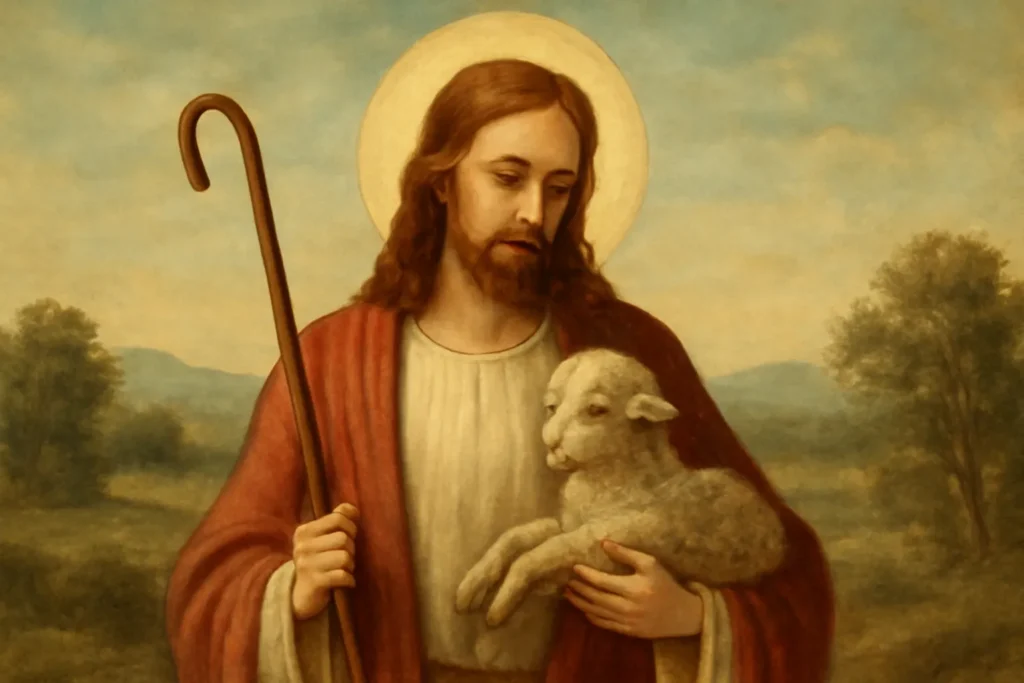
For Catholics, Psalm 23 also connects to sacramental life and liturgical rhythms. The shepherd imagery resonates with the Good Shepherd, Jesus Christ, who leads the Church, nourishes souls with grace, and shepherds the faithful through life’s trials toward eternal life. This association deepens the psalm’s meaning beyond metaphor, inviting believers to encounter Christ through prayer, Scripture, and sacramental grace.
Prayer Guide: Using Psalm 23 in Personal and Communal Prayer
The psalm can be used in a variety of prayer formats, from brief daily invocations to extended contemplative sessions. The following guide offers practical steps for bringing Psalm 23 into practice, whether you are praying alone, with family, or in a small group.
Set a quiet space: Create a still environment free from distractions. Sit comfortably, take three slow breaths, and release tension. This prepares the heart to listen to God’s Word.
Read slowly and reverently: Read the Psalm aloud or softly, focusing on a single verse at a time. Allow the imagery to rise in your imagination and affect your heart.
Personal reflection on each image: Consider what green pastures, still waters, and the valley might signify in your current life. Ask, “Where do I feel God’s provision and rest?” and “Where do I need God’s guidance and comfort?”
Respond in prayer: Speak to God in your own words using the psalm as a frame. You might offer thanks, petition, contrition, or intercession for others, using the prayerful language of the psalm as a starting point.
Imitate the rhythm of trust: End with a short profession of trust, repeating phrases such as, “The Lord is my shepherd; I shall not want,” or “You are with me, Lord, even in the darkest valley.”
Conclude with blessing or blessing prayer: Close by asking for grace to follow God’s path, to dwell in His house, and to share His goodness with others.
Prayer Variants and Meditative Practices
Simple invocation: Lord Jesus, you are my shepherd; guide me today and lead me to life in you.
Petition for comfort: “Grant me a share in your presence, that I may fear no evil, for you are with me.”
Intercession for others: May those who walk through dark valleys know your light, and may your mercy be with them all their days.
Contemplative journaling: Write a short reflection after each verse, noting what God reveals about your needs, fears, or gratitude.
Variations and Semantic Breadth: Catholic English and Paraphrase
Translations and paraphrases vary in wording, yet they preserve the core Catholic meaning: God’s care, guidance, and presence sustain the faithful. Below are several Catholic-friendly renderings and paraphrases designed to broaden semantic grasp while staying faithful to the traditional sense.
Douay-Rheims 1899: Traditional Catholic English
The Lord is my shepherd; I shall not want.
He maketh me to lie down in green pastures; he leadeth me beside the still waters.
He restoreth my soul: he leadeth me in the paths of righteousness for his name's sake.
Surely goodness and mercy shall follow me all the days of my life, and I shall dwell in the house of the Lord forever.
Paraphrase for Meditation: “Personal Restatement”
The Lord is my shepherd. With him, I want for nothing. He gives me rest and renewal, guiding me toward peaceful waters and abundant green fields. He restores my soul and leads me along the right paths for his name’s sake. Even when shadows loom and fear arises, I am not alone, for God is with me—his guidance and his comforting presence sustain me. He blesses me abundantly, even in the face of opposition, and his goodness will accompany me all my days. I am forever safe in God’s house, loved and kept by his mercy.
Liturgical Use and Devotional Life
Psalm 23 has a special place in Catholic liturgy and daily devotions. It is commonly used in:
Mass and Liturgy of the Hours: Portions of Psalm 23 appear in various liturgical settings and are employed for mourning and consolation in particular seasons or memorials.
Evening prayer and bedside devotions: The psalm’s themes of safety, provision, and divine presence make it a comforting choice for personal night prayer and family prayer.
Quiet retreats and spiritual exercises: The imagery invites contemplative journaling, meditation on God’s care, and trust in times of uncertainty.
Funeral rites and remembrance: The shepherd metaphor offers consolation and hope in mourning, pointing to eternal life with the Lord.
In Catholic practice, Psalm 23 can be prayed using a Lectio Divina approach (reading, meditation, prayer, contemplation) or as a simple, faithful petition. The psalm’s succinct structure makes it adaptable for brief daily prayer or extended contemplative sessions.
Historical Context and Translation Notes
The English text commonly used in Catholic devotional life draws heavily from the Douay-Rheims tradition, a translation completed in the late 16th and 17th centuries and widely used by English-speaking Catholics for centuries. In the modern era, Catholics also use contemporary translations (such as NABRE and resources used in the Roman Catholic Lectionary) that preserve the same essential meaning while employing more natural language for readability. The Latin root of Psalm 23 is the Vulgate, where the psalm begins with attribute to God as shepherd: Dominus pascit me, conveying a robust image of divine care.
The shepherd imagery has deep resonance in Jewish and early Christian thought. In the ancient Near East, a shepherd’s role was intimate, daily, and protective—a fitting metaphor for God’s care, guidance, and provision. Catholic interpretation often emphasizes that the shepherd’s rod and staff are instruments not of coercion but of protection and support; they symbolize divine discipline and care that steer the flock toward life and away from danger.
Psalm 23 remains a reliable, timeless prayer for Christians seeking trust, comfort, and hope in God’s ongoing care. Its concise structure—beginning with intimate trust in God as shepherd, moving through restoration and guidance, acknowledging danger with steadfast faith, and concluding with blessing and eternal dwelling—offers a holistic spiritual itinerary. The Catholic tradition honors this psalm as a gift that can accompany believers through ordinary days and through trials alike.
Whether you engage with the classic Douay-Rheims wording, a modern Catholic English translation, or a reflective paraphrase, the essential message remains unchanged: God is with us, restoring our souls, guiding our steps, and inviting us to dwell in his presence forever.














Leave a Reply