Are you looking for the Liturgy of the Hours for today and unsure which prayer to open first? The simplest answer is to use a Catholic breviary or approved prayer app set to your location and today’s date, then choose the hour that fits your schedule. Most people begin with Morning Prayer or Evening Prayer, while the Office of Readings and shorter daytime prayers are available at other times.
The prayers change according to the liturgical season, weekday, Sunday, feast, memorial, or solemnity. That is why a page saved from another day may not be correct today. Once the date is set properly, the service normally guides you through the psalms, Scripture reading, intercessions, the Lord’s Prayer, and the concluding prayer.
Quick answer: Set your breviary or app to the current date, select your time zone, and choose Morning Prayer, Evening Prayer, or another hour. If you are new, pray one complete hour rather than trying to read the entire daily office.
The Liturgy of the Hours is the Catholic Church’s daily cycle of public prayer. It is also called the Divine Office, and it joins the prayer of the Church across the day. The structure is stable, but the actual texts vary with the calendar, so today’s psalms and readings may differ from yesterday’s.
Each hour has a particular purpose. Morning Prayer gives the day a Christian beginning, Evening Prayer marks the movement toward night, and the Office of Readings provides a longer period for Scripture and spiritual writings. Daytime Prayer helps you pause during work or other responsibilities, while Night Prayer offers a quiet examination of the day before sleep.
Office of Readings: A substantial service with psalms, a biblical reading, and a reading from a Church writer or another approved source.
Morning Prayer: Also called Lauds, it praises God at the beginning of the day and includes a Gospel canticle.
Daytime Prayer: Midmorning, midday, and midafternoon forms that help sanctify ordinary work and daily activity.
Evening Prayer: Also called Vespers, it gives thanks for the day and includes a second Gospel canticle.
Night Prayer: A shorter service of trust, repentance, and peaceful rest.
Many editions also contain Compline, the traditional name for Night Prayer, along with seasonal material, feast-day prayers, hymns, and instructions for combining different sections. The titles can vary slightly by edition, but the essential pattern remains recognizable.
The Church describes the hours as prayer for the whole people of God, not only for priests and religious communities. Clergy and members of some religious institutes have particular obligations under Church law, while lay Catholics are generally encouraged to participate according to their circumstances. You do not need to pray every hour to benefit from the practice.
The daily office also connects personal prayer with the broader Church. Someone praying Morning Prayer at home may be using the same psalmody and intercessions prayed in a monastery, parish, hospital chapel, or rectory. That shared rhythm can make a short period of prayer feel connected to something larger without requiring a long private devotion.
How to find the correct prayers for today
The most common problem is not learning the order of the prayers; it is locating the correct calendar page. A complete office combines the ordinary, which stays mostly the same, with proper texts assigned to a specific date. The proper texts tell you when to use a saint’s memorial, a feast, or a solemnity instead of the ordinary weekday material.
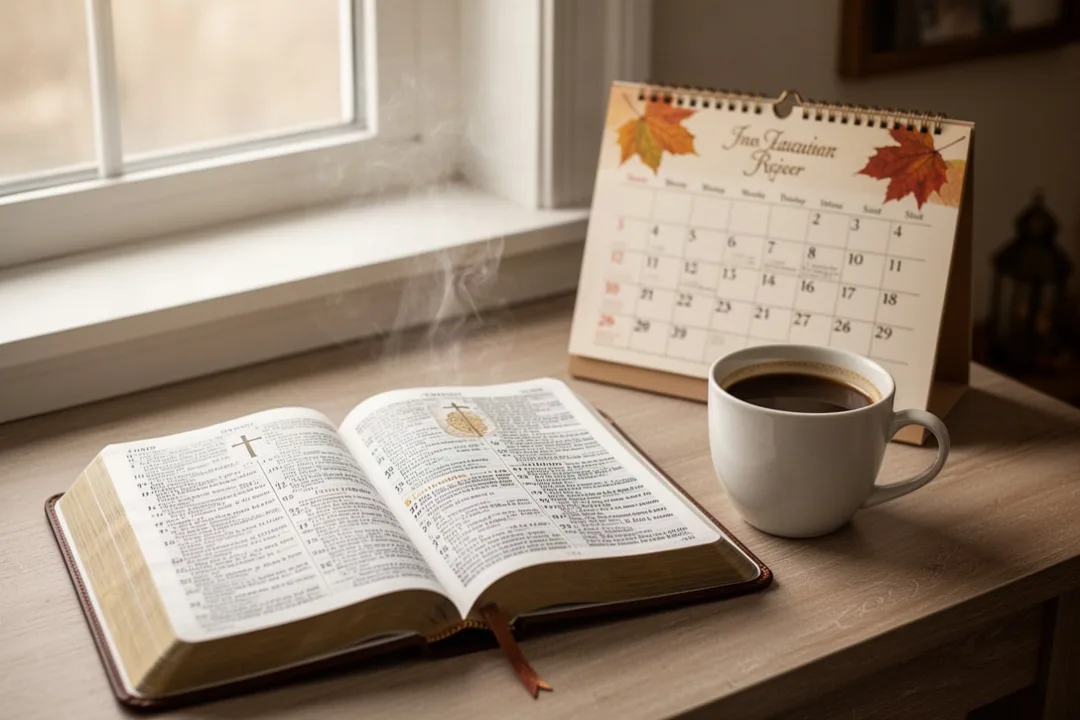
Begin by confirming the date shown by your prayer book or app. If you are praying late at night, check whether the resource treats Night Prayer as part of the current day or the day that is ending. The calendar normally follows the Church’s liturgical day, and major celebrations can begin with First Evening Prayer on the previous civil evening.
Check the date and time zone. Make sure the device or website is using your local date, especially when traveling or praying near midnight.
Identify the liturgical day. Look for the weekday, Sunday, memorial, feast, solemnity, or seasonal observance listed for that date.
Choose an hour. Morning Prayer and Evening Prayer are the most common starting points, but any available hour can be prayed at a suitable time.
Follow the instructions for the day. The resource may tell you to use texts from the Sunday, a saint’s common, or a special celebration.
Read the rubrics carefully. Directions such as “skip,” “repeat,” “use the proper,” or “after the psalm” prevent you from getting lost.
A trustworthy resource usually labels the day clearly near the beginning. It may show the liturgical color, season, rank of the celebration, or the saint being commemorated. These details help you confirm that you have opened the right service before you begin.
When two celebrations seem to compete, the rank of the day determines which one takes priority. Sundays, solemnities, and major feasts generally displace an ordinary weekday observance, but the exact rules can be complex. If an app supplies a single ordered service, follow its directions instead of trying to combine texts from several pages on your own.
Different countries can have different calendars, especially for local saints, national celebrations, and diocesan observances. A resource designed for the United States may not show the same memorial as one designed for Canada, England, Australia, or another country. Select the correct national or diocesan calendar whenever the option is available.
When the page looks different: Do not assume you have the wrong prayer because the psalms or readings differ from a familiar day. The liturgical calendar changes the content, particularly on Sundays, solemnities, and saint memorials.
Which hour should you pray today?
The best hour is usually the one you can pray attentively and consistently. The traditional times provide a pattern rather than a demand that you stop everything at an exact minute. Morning Prayer is normally prayed in the morning, Evening Prayer in the late afternoon or evening, and Night Prayer before sleep, but pastoral circumstances allow flexibility.
Morning Prayer for the start of the day
Morning Prayer is often the easiest entry point. It begins with an invitation to praise, continues with a hymn, psalmody, a short Scripture reading, a response, the Benedictus or another Gospel canticle, intercessions, the Lord’s Prayer, and a concluding prayer.
The Benedictus recalls the promises of salvation announced by Zechariah in Luke 1:68-79. Its place in Morning Prayer gives the service a clear orientation toward Christ and the day ahead. You can pray it before work, after waking, or at another time when you can give the service your attention.
Daytime Prayer during work and responsibilities
Daytime Prayer is shorter and can fit into a lunch break, commute pause, or quiet period between tasks. The standard forms are Midmorning Prayer, Midday Prayer, and Midafternoon Prayer. You do not have to pray all three; many people choose the one that best fits their schedule.
These hours give ordinary activities a deliberate spiritual pause. A few minutes with the psalms can help you remember that prayer is not limited to church buildings, mornings, or moments when life feels calm. If your work environment is busy, you may pray silently from a phone or book, provided doing so is safe and appropriate.
Evening Prayer for thanksgiving and intercession
Evening Prayer is another strong starting point, especially if mornings are rushed. It looks back on the day with gratitude, places unfinished concerns before God, and prays for the Church and the world. The Magnificat, Mary’s canticle from Luke 1:46-55, is the Gospel canticle used in this hour.
Evening Prayer can be prayed before dinner, after returning home, or as part of a parish celebration. Its timing is flexible enough to accommodate family life, though it is best to avoid treating it as background audio when the structure invites active participation.
Night Prayer before sleep
Night Prayer is the shortest regular hour and may be the most approachable when you have limited time. It commonly includes a brief examination of conscience, a hymn, psalmody, a short reading, the Nunc Dimittis or Song of Simeon, and a final blessing.
The Song of Simeon comes from Luke 2:29-32 and expresses peaceful trust after encountering the promised Savior. Night Prayer does not require you to solve every problem from the day. It gives you a structured way to acknowledge your failures, give thanks, and entrust the night to God.
Office of Readings for extended prayer
The Office of Readings is designed for reflection on Scripture and the Church’s spiritual tradition. Alongside the psalms, it normally includes a longer biblical passage and a second reading from a Church Father, saint, council document, or other approved text.
You can pray it at any time of day. Some people use it in the morning, while others reserve it for a weekly period of longer prayer. It is not necessary to add it when you are already struggling to complete a shorter hour; a focused five or ten minutes can be more fruitful than a hurried attempt to do everything.
Every edition has its own navigation system, but the basic sequence is similar. Before opening the book or app, choose a reasonably quiet place and decide how much time you have. A realistic plan prevents you from abandoning the practice because you expected a longer period than your schedule could provide.
Prepare your attention. Silence notifications, sit or stand comfortably, and take a brief moment to recognize that you are beginning the Church’s prayer.
Open the correct hour. Confirm the date, season, and celebration before reading the opening line.
Pray the opening and hymn. The hymn may be sung, spoken, or read silently. You may also use the version provided by your resource.
Read the psalmody slowly. Notice repeated words, images, and movements of praise, lament, trust, or petition rather than rushing to finish.
Continue with the reading and response. The short reading is meant to give the psalmody a biblical focus; the response lets you answer in prayer.
Pray the Gospel canticle. Use the canticle assigned to the hour, together with its antiphon when the resource provides one.
Offer the intercessions. Pause briefly after each petition if you want to add a personal intention.
Pray the Lord’s Prayer and concluding prayer. Finish with the blessing or dismissal appropriate to the hour.
The antiphons deserve special attention. They are short lines placed before and after a psalm or canticle, and they often connect that text to the liturgical season or celebration. If you are pressed for time, do not omit the entire service because you cannot sing them; read them attentively and continue.
Psalmody can feel unfamiliar because it includes joy, anger, fear, grief, confidence, and praise. The Church does not require you to manufacture a particular emotion before praying a psalm. Instead, the psalms give language to human experience and place that experience before God.
You may pray the office alone or with other people. In a group, one side may pray the first part of a psalm and the other side the second, or the leader may read the text while everyone responds. At home, you can use the same structure quietly, speaking aloud when that helps you remain attentive.
Posture can support the prayer without becoming a distraction. You might stand for the opening, hymn, Gospel canticle, intercessions, and conclusion, and sit for the readings and psalmody. If illness, disability, work, travel, or childcare makes that impractical, pray in the posture that allows you to participate.
Books and apps that provide today’s office
You can access today’s Liturgy of the Hours through a four-volume breviary, a one-volume book, or an approved digital resource. The four-volume set offers the complete Roman Catholic office in English and is arranged by seasons and sections of the year. It provides a traditional book-based experience but requires learning how to move among several ribbons and sections.
Christian Prayer is a one-volume edition that many lay Catholics use for Morning and Evening Prayer, along with selected other material. Shorter Christian Prayer is a more compact option with fewer texts. These editions can be easier to carry, although they may not contain every hour or every reading found in the complete Liturgy of the Hours.
Digital prayer resources are convenient because they can automatically supply the date, calendar, psalter week, antiphons, and proper texts. They can also provide audio, pronunciation help, or settings for different countries. Their weakness is that a notification, low battery, or incorrect regional setting can interrupt the experience, so a printed book remains useful for some people.
Use a printed breviary if you prefer a slower, screen-free form of prayer and do not mind learning the page sequence.
Use a digital resource if you want automatic navigation, portability, or help identifying the correct texts for today.
Use a parish or community celebration if praying with other people helps you stay engaged and learn the responses.
Use a shorter edition if the complete four-volume office feels too complicated for your current routine.
Before relying on an app or website, check whether it provides the Roman Catholic Liturgy of the Hours rather than a different daily prayer service. Confirm the language, national calendar, liturgical calendar, and copyright status of the texts. A resource that clearly labels the hour and gives navigation instructions is generally easier for a new user.
If you own a printed breviary, learn the basic parts: the ordinary, psalter, proper of seasons, proper of saints, commons, and concluding prayers. The ordinary explains the recurring order of the hour. The psalter supplies the four-week cycle of psalms, while the proper sections contain texts that change with the season or celebration.
Bookmarks are more useful than trying to memorize every page movement. Keep one at the current date, another in the psalter, and another in the ordinary. When the book sends you to a common or a special feast, follow the page instructions in order and return to the main section when directed.
How to make today’s prayer sustainable
A regular practice usually grows from one dependable hour. Choose a time connected to something you already do, such as making coffee, beginning your workday, eating lunch, or getting ready for bed. The connection makes it easier to remember the prayer without depending entirely on willpower or phone reminders.
Start with Night Prayer, Morning Prayer, or Evening Prayer rather than attempting all five forms immediately. After you become familiar with the order, you can add Daytime Prayer or the Office of Readings when your schedule permits. The purpose is not to turn prayer into a checklist; it is to let the Church’s rhythm shape your day.
Give yourself permission to pray imperfectly. You may mispronounce a name, lose your place, miss a response, or discover that the day’s celebration is more complicated than expected. Correct the mistake if you can, then continue. The value of the office does not depend on performing every movement flawlessly.
When you miss an hour, do not try to force the entire schedule into the next few minutes. Simply choose the next appropriate hour or pray the one you intended when you have time. The office is a daily rhythm, not a demand to feel guilty whenever work, illness, travel, or family responsibilities interrupt your plan.
Try these practical habits when beginning:
Keep the book or device in the place where you normally pray.
Set one gentle reminder for a single hour instead of several competing alerts.
Read the psalms aloud occasionally so their structure and language become familiar.
Write a short personal intention after the intercessions, not during every line of the service.
Pray with a parish group once in a while to learn how the office sounds in community.
Use a shorter hour on difficult days rather than abandoning prayer altogether.
The office can also become a way to pray through the Bible over time. The psalms teach you to bring every part of life before God, while the readings place each day within the story of salvation. The Gospel canticles focus the hours on Christ, and the intercessions widen your attention to the Church, public needs, the suffering, and the people you know.
Some days will feel peaceful; others will feel distracted or dry. Both kinds of days belong within the practice. The fixed structure carries you when your own words are difficult to find, and the changing calendar prevents the prayer from becoming detached from the seasons and celebrations of the Church.
If you are unsure what to pray today, choose Evening Prayer or Night Prayer, set your resource to your local date, and follow its directions from beginning to end. That simple choice gives you a complete starting point without requiring you to master the entire breviary first.
Frequently asked questions
Is the Liturgy of the Hours only for priests and religious?
No. Priests and some religious communities have particular obligations to pray the office, but lay Catholics are welcome to join this prayer. You can pray one hour, pray with a parish group, or use a shorter edition at home. No special status is required, and you do not need permission from a priest to begin.
Can I pray Morning Prayer at a different time?
Yes. The hours have traditional times, but ordinary responsibilities often require flexibility. Morning Prayer can be prayed later in the morning, and Evening Prayer can be prayed earlier or later than usual. Aim for the hour’s character and structure rather than becoming anxious about an exact clock time.
What should I do if I miss the hour assigned for today?
You can pray that hour later if you still have time and want to do so, or move to the next suitable hour. There is no need to repeat the entire day’s office to compensate. If the missed prayer leaves you confused in a printed book, use a digital resource or begin with Night Prayer.
Are the Liturgy of the Hours and the Rosary the same prayer?
No. The Liturgy of the Hours is the Church’s official daily prayer, built around psalms, Scripture, canticles, and intercessions. The Rosary is a separate devotional prayer centered on Gospel mysteries. They can complement each other, but praying the Rosary does not replace the texts of the Liturgy of the Hours.












Leave a Reply