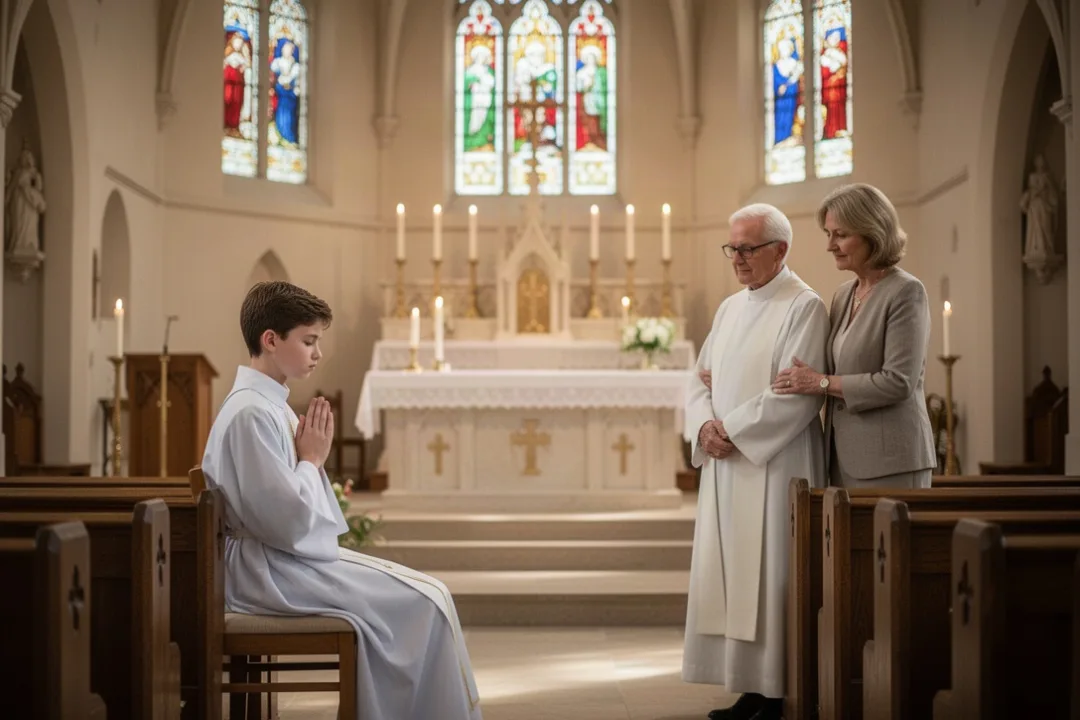
Confirmation prayer for candidates, sponsors, and families
Confirmation prayer for candidates, sponsors, and families
A confirmation prayer asks the Holy Spirit to strengthen a person’s faith, guide their choices, and help them live as a committed Christian. You can pray it before the sacrament, during a preparation session, on confirmation day, or afterward as a continuing prayer for spiritual growth.
Here is a simple prayer you can use: Holy Spirit, come into my heart and strengthen me for the life God calls me to live. Give me wisdom to choose what is good, courage to remain faithful, and love to serve others. Help me remember that I never face my calling alone. Amen.
Confirmation prayer is not a formula that makes the sacrament happen. In Catholic and other Christian settings, the sacrament or rite of confirmation is administered through the church’s prescribed actions, including prayer and the laying on of hands or anointing according to the tradition. A personal prayer prepares your heart to receive God’s grace and respond faithfully.
Confirmation is commonly understood as a deeper strengthening of the grace received at baptism. The Holy Spirit is associated with wisdom, understanding, right judgment, courage, knowledge, reverence, and wonder before God. A prayer can ask for these gifts while also recognizing that Christian maturity develops through daily choices, worship, service, and community.
You do not need elaborate language. The most meaningful prayer may mention a real concern: anxiety about the ceremony, uncertainty about faith, a desire to forgive someone, or the hope of becoming more courageous. Honest words are often more useful than impressive words.
Remember: Prayer supports confirmation preparation, but it does not replace participation in worship, instruction, confession or reconciliation where appropriate, or the church’s sacramental celebration.
A short confirmation prayer for a candidate
This prayer is suitable for a teenager or adult preparing to be confirmed. It can be prayed privately, read aloud in a class, or adapted for a family gathering. Replace general phrases with a particular intention if you want the prayer to sound more personal.
Holy Spirit, prepare my heart for confirmation. Deepen my faith, steady me when I am uncertain, and teach me to recognize what is true and good. Give me courage to follow Christ, patience with myself and others, and compassion for people who need help. May my words and actions reflect God’s love. Guide me today and throughout my life. Amen.
The prayer asks for more than a successful ceremony. It looks toward the responsibilities that follow: making moral decisions, taking part in the life of the church, serving neighbors, and remaining open to God’s direction. A candidate might pray it each evening during the final week of preparation.
How to pray before confirmation step by step
A short routine can make prayer less intimidating. You do not need a perfect setting or a long period of silence. The purpose is to become attentive, speak honestly, and leave room to listen.
Set aside a few quiet minutes. Sit somewhere you can be undisturbed, such as a church, bedroom, garden, or quiet corner at home.
Begin with awareness. Take a slow breath and remember that you are praying in God’s presence. You may make the sign of the cross if that belongs to your tradition.
Name what you are bringing. Tell God about your hopes, questions, nervousness, relationships, and desire to grow.
Ask for specific gifts. Pray for wisdom in decisions, courage in difficult situations, self-control, compassion, and a stronger understanding of faith.
Pray for the people involved. Include your sponsor, family, catechists, clergy, classmates, and anyone who will support you.
Remain quiet for a moment. You are not trying to force a dramatic experience. Simply notice a thought, responsibility, or invitation to love that comes to mind.
End with trust. Offer the coming ceremony and your future choices to God, then close in the customary way for your church.
If your attention wanders, return to one phrase such as “Holy Spirit, guide me” or “Help me live my faith with courage.” Repeating a brief prayer can be more helpful than criticizing yourself for distraction.
A confirmation prayer for strength and courage
Many candidates feel pressure before confirmation. They may worry about speaking in public, remembering the right responses, meeting expectations, or living up to the promises associated with Christian discipleship. A prayer for courage can acknowledge those concerns without allowing fear to define the day.
God of strength, I bring you my fears and my hopes. When I am afraid of standing apart, help me choose what is right. When I fail, help me begin again. When I see someone who is lonely, hurting, or overlooked, give me the courage to respond with kindness. Let your Spirit make me steady, generous, and faithful. Amen.
Courage in Christian life does not always look dramatic. It may mean telling the truth without cruelty, refusing to join in gossip, apologizing first, asking for help, defending someone who is being mistreated, or continuing to pray when you feel spiritually dry.
You can make this prayer concrete by adding one situation you face. For example, ask for courage to speak respectfully in a difficult family conversation, to welcome a new student, or to resist pressure from friends. Specific intentions help connect confirmation to ordinary life.
A confirmation prayer for wisdom and discernment
Wisdom is more than knowing facts about religion. It involves learning to see people and situations with patience, honesty, and compassion. Discernment means considering what is true, loving, responsible, and consistent with your values before you act.
Pray this when you face an important decision or when you are unsure how your faith should shape a response:
Holy Spirit, give me a wise and open heart. Help me separate truth from rumor, courage from pride, and kindness from the desire to please everyone. Show me how to listen before I answer and how to choose actions that protect the dignity of others. Guide my conscience, deepen my understanding, and keep me close to what is good. Amen.
A prayer for wisdom should be paired with practical reflection. Before making a decision, consider who may be affected, whether you are acting from fear or love, what trustworthy people advise, and whether your choice respects your responsibilities. Prayer does not remove the need for careful thought.
Ask: What choice is honest and responsible?
Consider: Who needs protection, patience, or a voice?
Check: Does this action fit the values I say I believe?
Seek: Advice from a mature Christian, pastor, priest, parent, mentor, or sponsor.
Act: Take the next good step instead of waiting for complete certainty.
A prayer to the Holy Spirit for confirmation preparation
Christians use different names and forms of prayer when asking for the Holy Spirit’s guidance. A direct prayer to the Holy Spirit can focus on presence rather than performance. It reminds the candidate that spiritual life is not sustained by personal effort alone.
Holy Spirit, living presence of God, remain with me as I prepare for confirmation. Open my mind to understand the faith, my heart to receive grace, and my hands to serve. Heal what is wounded in me, strengthen what is weak, and make me attentive to people who need care. Lead me into deeper love of God and neighbor. Amen.
The request for healing does not imply that a candidate must be perfect before confirmation. Everyone brings weaknesses, doubts, habits, and unfinished growth. Asking the Spirit to work within those places is an honest way to prepare.
You might pray this slowly while holding a Bible, sitting in the church where confirmation will take place, or walking quietly. If you use Scripture, choose a passage assigned by your church or recommended by your leader, then reflect on its meaning rather than treating prayer as a test.
A confirmation prayer for a sponsor
A sponsor has a supportive role that extends beyond standing beside the candidate during the ceremony. Depending on the church’s requirements, the sponsor may encourage the candidate’s preparation, model a faithful life, listen to questions, and remain a trustworthy presence afterward.
God of faithfulness, thank you for the person entrusted to my care as a confirmation sponsor. Help me listen without judgment, speak with honesty, and encourage growth without demanding perfection. Let my life give credible witness to faith, patience, forgiveness, and service. Give me wisdom to know when to offer advice and when simply to remain present. Amen.
A sponsor can pair this prayer with practical support. Ask the candidate what they are learning, attend a service or preparation event when invited, remember the confirmation date, and check in during the months that follow. Consistent presence usually matters more than a grand gift or a polished speech.
Ask open questions about the candidate’s hopes and concerns.
Share one honest lesson from your own faith journey.
Pray for the candidate by name throughout the preparation period.
Offer help with transportation, attendance, or preparation when needed.
Continue contact after confirmation instead of treating the ceremony as an endpoint.
A confirmation prayer for parents and family members
Families often experience confirmation as both a celebration and a moment of responsibility. Parents and relatives can pray for the candidate’s spiritual freedom, good judgment, supportive friendships, and willingness to keep growing. They can also examine how their own example influences the young person.
Merciful God, bless our family as we support this candidate for confirmation. Help us encourage faith without pressure, answer questions with patience, and make our home a place of forgiveness and prayer. Protect this young person from discouragement and guide the people who teach and accompany them. May our family grow in love, service, and trust in you. Amen.
Family prayer does not need to become a formal event. Before a meal, a parent might ask everyone to share one hope for the candidate. On the evening before confirmation, relatives could pray briefly for peace and courage. A grandparent or sibling might write a personal blessing that the candidate can keep.
Try to avoid presenting confirmation as a performance that must satisfy relatives. The candidate may have questions or a quiet personality. A supportive family makes room for sincere faith, gradual growth, and respectful uncertainty.
A prayer for confirmation day
Confirmation day can be busy, with photographs, guests, music, schedules, and ceremony instructions. A short prayer helps bring attention back to the spiritual meaning of the occasion. It can be prayed at home, in the car, before entering the church, or quietly while waiting.
Lord, thank you for bringing me to this day. Calm my mind and keep my heart attentive. Help me receive this celebration with humility and joy, remembering that faith is a gift and a responsibility. Bless everyone gathered here, especially those who have taught, encouraged, and prayed for me. May I carry the Spirit’s gifts into the way I live and serve. Amen.
If you are leading a group prayer, keep it accessible and focused. Mention the candidates, sponsors, families, church leaders, and those unable to attend. Leave a brief silence so people can offer their own intentions silently.
Practical tip: Print or save a short prayer before the ceremony if you expect to feel nervous. During the service, follow the church’s directions and participate in the official responses rather than substituting a personal prayer.
Prayers for after confirmation
Confirmation is not meant to be treated as the finish line of religious education. After the ceremony, prayer can help you reflect on how the Spirit’s gifts appear in daily decisions. Set a recurring time each week to ask where you noticed courage, wisdom, compassion, or a need for forgiveness.
Use this prayer during the first week after confirmation or whenever your commitment feels difficult:
Faithful God, thank you for the grace I have received. Keep forming me into a person of truth, mercy, and courage. When enthusiasm fades, remind me that faith grows through ordinary choices. Help me take part in worship, learn from wise people, serve those in need, and seek forgiveness when I have caused harm. Keep my heart open to the Holy Spirit. Amen.
Make the prayer part of an action plan rather than leaving it as a feeling. Choose one practice from each category:
Worship: Attend services and participate according to your church’s practice.
Learning: Read a Gospel passage, study a faith question, or speak with a trusted teacher.
Service: Help someone without expecting recognition.
Community: Stay connected to a youth group, parish, congregation, or small group.
Reflection: Review one decision each week and ask how your faith shaped it.
How to write your own confirmation prayer
Writing your own prayer can be especially meaningful because it uses the language of your actual life. Begin with a direct address to God or the Holy Spirit, then describe what you are experiencing. You can mention a hope, fear, question, person, or responsibility.
A useful structure has five parts:
Address: Name the God you are speaking to, such as “Holy Spirit,” “Loving God,” or “Lord.”
Gratitude: Thank God for people, opportunities, faith, or support.
Request: Ask for specific help, such as wisdom, courage, patience, or understanding.
Commitment: Name one way you hope to live differently or serve others.
Trust: Place the future in God’s care and end in the traditional manner of your community.
For example, a candidate who feels unsure about speaking up might write: “Holy Spirit, I am grateful for the people who have guided me. Help me speak honestly and kindly when someone is treated unfairly. Give me patience while I learn and courage when I am afraid. Show me one practical way to serve this week. Amen.”
There is no required length for a personal prayer unless your church leader has given a specific assignment. Two sincere sentences can be enough. If the prayer is being used in a group, ask permission before sharing private details about another person.
Confirmation prayers for different Christian traditions
The meaning and practice of confirmation varies among Christian churches. In the Catholic Church, confirmation is one of the sacraments of initiation. In Anglican, Episcopal, Lutheran, Orthodox, and other traditions, the rite may have distinct theology, preparation, wording, and requirements. Some churches confirm baptized members; others use related practices or understand the event differently.
For that reason, adapt a general prayer to your community’s teaching. Use the name of the service preferred by your church, follow its instructions for participation, and ask a priest, pastor, catechist, or church leader if you are unsure about a specific phrase.
The central themes remain widely appropriate: dependence on God, openness to the Holy Spirit, growth in faith, courage to live with integrity, and love expressed through service. A personal prayer can be reverent without copying a formal liturgy.
When confirmation prayer feels difficult
Some people expect prayer to produce a strong emotional experience. That may happen, but it is not a requirement. Prayer can feel quiet, repetitive, distracted, or uncertain, especially when you are tired or under pressure.
If you do not know what to say, begin with a truthful sentence: “God, I am here, and I do not know how to pray.” You can sit in silence, repeat a brief request, or ask someone you trust to pray with you. Doubt and questions can be brought into prayer rather than hidden.
When fear becomes overwhelming, speak with a parent, sponsor, clergy member, counselor, or preparation leader. Spiritual support and emotional support can work together. Confirmation preparation should not require you to ignore serious distress.
Choosing a confirmation prayer that fits the moment
The best prayer depends on what you need. A candidate facing ceremony anxiety may choose a prayer for peace and courage. Someone considering a difficult decision may need wisdom and discernment. A sponsor may focus on patience and faithful example, while a family may pray for encouragement and unity.
Before preparation begins: Ask for an open mind and a willing heart.
During instruction: Ask for understanding and the humility to learn.
Before the ceremony: Ask for calm, courage, and attentive participation.
On confirmation day: Give thanks for the people who have supported you.
Afterward: Ask for perseverance and a practical desire to serve.
During doubt: Ask for honesty, patience, and trustworthy guidance.
A confirmation prayer is most useful when it connects worship with life. Let it shape one decision, one relationship, or one act of service. The words may be brief, but the response they encourage can continue long after the ceremony.
Frequently asked questions
Can I use a confirmation prayer if I am not Catholic?
Yes. Christians from many traditions pray for guidance from the Holy Spirit during confirmation or a similar rite. The ceremony, theology, and required wording vary by church, so follow your congregation’s instructions for the official service. A personal prayer for wisdom, courage, faithfulness, and love can usually be adapted without changing your church’s practice.
Should a confirmation prayer be addressed to God or the Holy Spirit?
Either can be appropriate. Many prayers address God while asking specifically for the Holy Spirit’s guidance and gifts. Others speak directly to the Holy Spirit. Use the language taught by your church if you are praying publicly; in private prayer, choose the form that helps you speak sincerely and attentively.
What should I give someone along with a confirmation prayer?
A handwritten prayer, prayer card, journal, Bible, or small devotional item can accompany your message. The most meaningful gift usually reflects the person’s needs and your relationship. Include a personal note about one quality you admire and one hope you have for their faith, rather than focusing only on the ceremony.
How long should a confirmation prayer be?
There is no universal length. A private prayer may take only a few sentences, while a group prayer can be longer if it includes candidates, sponsors, families, and church leaders. Keep public prayers clear and focused. A short, sincere prayer is preferable to a lengthy one that feels difficult to understand or perform.









Leave a Reply