In Catholic teaching, the Holy Spirit is the third Person of the Trinity, fully divine with the Father and the Son. The Spirit is not an impersonal force or merely a symbol of God’s presence; the Holy Spirit knows, loves, acts, and draws people into communion with God. Catholics encounter the Spirit especially through Baptism, Confirmation, the Eucharist, prayer, Scripture, and the life of the Church.
The Holy Spirit brings Christ’s grace into the present. The Spirit helps you believe, strengthens you to live the Gospel, gives particular gifts for service, and forms holiness within you over time. Catholic faith does not treat the Spirit as a private spiritual experience detached from the Church. Instead, the Spirit works both in the hearts of individual believers and through the Church’s worship, teaching, sacraments, and mission.
Catholics profess one God in three divine Persons: the Father, the Son, and the Holy Spirit. This mystery is called the Holy Trinity. The three Persons are not three gods, and the Holy Spirit is not a lesser part of God. The Spirit shares the same divine nature as the Father and the Son.
The names used for the Spirit reveal something about this divine Person’s work. “Holy Spirit” points to God’s holiness and spiritual nature. “Advocate,” “Counselor,” or “Comforter” expresses the Spirit’s continuing presence with believers. “Spirit of truth” describes the Spirit’s role in leading people toward the truth revealed in Christ.
Christian language often uses images because the Spirit cannot be seen directly. Catholic Scripture and worship associate the Holy Spirit with water, fire, wind, a cloud, oil, a dove, and anointing. These images are not different spirits. They show different aspects of the Spirit’s action: cleansing, transformation, freedom, protection, peace, healing, and consecration.
The Catholic Church teaches that the Holy Spirit proceeds eternally from the Father and the Son. This wording appears in the Nicene Creed used in the Latin Catholic tradition. Eastern Catholic Churches preserve a different traditional wording that emphasizes the Spirit’s procession from the Father through the Son. These formulations express a profound theological mystery rather than two separate spirits or two competing gods.
Central belief: Catholics do not worship the Holy Spirit as an energy or vague inspiration. They pray to and adore the Holy Spirit as God, the divine Person who unites believers with the Father through Jesus Christ.
How the Holy Spirit appears throughout salvation history
The Holy Spirit is active from the beginning of creation. Catholic interpretation sees the Spirit’s presence in the life-giving breath of God, in the prophets who speak God’s word, and in the wisdom given to leaders of God’s people. The Spirit’s work is not limited to the period after Jesus’ resurrection.
In the Old Testament, God’s Spirit equips particular people for a task. The Spirit gives prophets courage to call the people back to faithfulness and gives leaders wisdom for service. The prophets also look ahead to a fuller outpouring of the Spirit, one that will reach God’s people more widely and transform their hearts.
The Spirit’s work becomes especially clear in the life of Jesus. The Spirit is present at Jesus’ conception, rests upon him at his baptism, leads him in his public ministry, and empowers his proclamation of God’s kingdom. Jesus acts in complete unity with the Father, and the Spirit makes this mission visible within human history.
Before his death, Jesus promises that the Father will send the Spirit to remain with his disciples. After the Resurrection, the risen Christ sends them to continue his mission. At Pentecost, the Holy Spirit comes upon the apostles and other disciples, giving them courage to proclaim Christ and gathering people from different nations into one community.
Pentecost is therefore more than a dramatic event in the past. It reveals the Church’s permanent identity as a people created, guided, and sent by the Holy Spirit. The Spirit gives the Church life and keeps its mission connected to Christ rather than to human strength alone.
What the Holy Spirit does in a Catholic’s life
The Holy Spirit first draws a person toward God. Faith is not simply the result of collecting religious information. The Spirit opens the mind and heart to recognize God’s self-revelation and to respond freely. This response can develop gradually through family life, worship, suffering, study, friendship, or a sudden moment of conversion.
The Spirit also makes Christ present to believers. Catholics do not understand Jesus as only a historical figure whose teachings are remembered from a distance. Through the Spirit, Christ continues to act in the Church, especially through the sacraments. The Spirit helps believers understand Scripture, participate in worship, and recognize the living Lord in the Christian community.
Another central work is sanctification, the process by which a person is made holy. The Spirit does not usually remove every weakness instantly. Instead, the Spirit gives grace to turn away from sin, practice virtue, receive forgiveness, repair harm, and grow in love. Christian maturity includes both God’s initiative and your repeated cooperation with grace.
The Spirit gives comfort, but comfort does not always mean pleasant feelings. The Spirit may strengthen a person to endure grief, resist temptation, ask for help, or remain faithful when prayer feels dry. Divine consolation can appear as peace, clarity, courage, patience, or a renewed willingness to do what love requires.
The Holy Spirit also creates unity. Catholic unity is not based on everyone having the same personality, background, or role. The Spirit gathers different people into one body and teaches them to use their differences for the good of others. Unity does not eliminate legitimate diversity; it joins diversity to a shared faith and mission.
The Holy Spirit and the Catholic sacraments
The sacraments are effective signs of grace instituted by Christ and entrusted to the Church. The Holy Spirit acts in every sacrament, though the Church highlights the Spirit’s work in different ways. The sacraments are not magic rituals that force God to act. They are encounters with Christ in which God gives grace through visible signs and the Church’s prayer.
Baptism begins life in the Spirit
In Baptism, a person is freed from sin, reborn as a child of God, incorporated into Christ, and joined to the Church. Water signifies cleansing and new life, while the invocation of the Father, Son, and Holy Spirit reveals the Trinitarian source of Baptism. The Spirit makes the baptized person a temple of God and begins a new life of grace.
Infants can receive Baptism because the sacrament is first God’s gift, not a reward for intellectual achievement. Parents and godparents promise to help the child grow in faith. Adults who receive Baptism normally undergo a period of formation and freely profess the faith before entering sacramental life.
Confirmation strengthens baptismal grace
Confirmation deepens and strengthens the grace received in Baptism. Through anointing with sacred chrism and the laying on of hands, the baptized person receives a special outpouring of the Holy Spirit. The sacrament roots the Christian more firmly in Christ, strengthens the bond with the Church, and gives power to bear witness to the faith.
Confirmation is not simply a Catholic coming-of-age ceremony or a graduation from religious education. It marks a real sacramental strengthening for Christian mission. The confirmed person is called to participate more actively in the Church and to bring the Gospel into family life, work, civic responsibilities, and relationships.
The Eucharist renews communion with Christ
At Mass, the Church invokes the Holy Spirit over the gifts of bread and wine and asks that they become the Body and Blood of Christ. This prayer is called the epiclesis. The Eucharist is also a prayer that the Spirit unite the worshiping community and form it into one body in Christ.
The Spirit’s action in the Eucharist is not separate from Christ’s action. The Spirit makes present the one saving sacrifice of Christ and enables the Church to offer itself more completely to the Father. Receiving Communion should therefore lead to deeper charity, reconciliation, and service rather than remain an isolated devotional moment.
Reconciliation restores friendship with God
In the Sacrament of Reconciliation, the Holy Spirit moves a person to recognize sin, feel genuine sorrow, confess honestly, and accept God’s mercy. The priest offers sacramental absolution in the name of Christ and the Church. The Spirit heals the relationship damaged by sin and gives grace for a changed life.
Forgiveness does not erase the need to make amends. A person may need to return property, correct false statements, seek reconciliation, or accept appropriate consequences. The Spirit leads repentance toward concrete love, not merely private relief.
The seven gifts of the Holy Spirit
Catholic tradition identifies seven gifts of the Holy Spirit, associated especially with the grace of Confirmation. They are wisdom, understanding, counsel, fortitude, knowledge, piety, and fear of the Lord. These gifts dispose believers to follow the Spirit’s promptings and to respond to life with a supernatural habit of judgment and action.
Wisdom helps you value God and see created things in their proper relationship to God.
Understanding deepens your grasp of the truths of faith and their meaning for life.
Counsel helps you judge what faithful action is appropriate in a particular situation.
Fortitude gives strength to endure hardship and remain faithful when doing good is difficult.
Knowledge helps you recognize how created realities should be used in relation to God’s purposes.
Piety forms a loving, reverent relationship with God and a respectful concern for others.
Fear of the Lord is humble awe before God, not panic or servile terror.
These gifts do not make a person infallible or eliminate the need for reason, advice, and moral formation. Someone who claims to be Spirit-led can still misunderstand a situation. The gifts mature through prayer, Scripture, sacramental life, wise guidance, and repeated choices to practice virtue.
The fruits of the Spirit are visible qualities that develop when a person cooperates with divine grace. Catholic tradition commonly names twelve fruits: charity, joy, peace, patience, kindness, goodness, generosity, gentleness, faithfulness, modesty, self-control, and chastity. These qualities show that the Spirit is shaping a person’s character.
Fruits are not the same as pleasant moods. Christian joy can coexist with sorrow, and peace can coexist with serious concern. A person may be growing in patience while still struggling emotionally. The question is whether grace is gradually making the person more loving, truthful, steady, and free.
Charisms are particular gifts given by the Holy Spirit for the benefit of the Church and the world. They may include teaching, administration, encouragement, evangelization, service, healing, leadership, or a special ability to support those in need. A charism is not a badge of personal superiority. Its purpose is always service.
Charisms should be discerned within the Church. A genuine spiritual gift will not require rejecting the Catholic faith, excusing serious sin, manipulating vulnerable people, or treating personal impressions as unquestionable commands. The Spirit who gives a gift also leads believers toward humility, truth, communion, and responsible use of that gift.
A useful test: Ask whether a claimed spiritual prompting leads toward love of God and neighbor, honesty, humility, responsibility, and communion with the Church. Strong emotion alone is not reliable evidence of the Holy Spirit.
How Catholics pray to the Holy Spirit
Prayer to the Holy Spirit can be simple and direct. You can ask for light before making a decision, strength during temptation, patience in a difficult relationship, or courage to serve. The traditional prayer “Come, Holy Spirit” is widely used, but you do not need a formal formula for your prayer to be sincere.
The Sign of the Cross is already a prayer to the Trinity. The Gloria praises the Father, Son, and Holy Spirit. The Creed professes faith in the Holy Spirit, and the liturgy repeatedly invokes the Spirit’s presence. The Church’s official prayers provide a steady framework when personal words are difficult.
Prayer to the Spirit should remain connected to Jesus. The Holy Spirit does not draw attention away from Christ. The Spirit helps you understand Christ’s teaching, imitate his self-giving love, and enter more deeply into his relationship with the Father.
You can use a short pattern when beginning prayer:
Become attentive: Set aside a few quiet minutes and acknowledge that God is present.
Ask for light: Request help to see your situation truthfully and without self-deception.
Listen with Scripture: Read a short passage and notice what calls you toward faith, repentance, or love.
Respond concretely: Choose one faithful action rather than waiting for a dramatic experience.
Review the result: Later, consider whether the prayer produced greater charity, clarity, humility, and freedom.
How to discern the Holy Spirit’s guidance
Discernment means testing thoughts, desires, opportunities, and experiences in the light of the Gospel. Not every strong desire comes from the Holy Spirit. A desire can arise from fear, pride, exhaustion, social pressure, resentment, or wishful thinking. Discernment takes time and often benefits from conversation with a trusted priest, spiritual director, or mature Catholic.
Look at the direction of a prompting rather than only its intensity. The Spirit may call you to a difficult task, so ease is not the only measure. However, even difficult guidance should tend toward truth, charity, humility, and responsible freedom. A voice that urges hatred, revenge, deception, abuse, or reckless behavior should not be treated as divine guidance.
Discernment also respects the Church’s moral teaching. A private experience cannot make an objectively wrong action right. If a proposed choice directly contradicts the Gospel or a clear moral obligation, no claimed inspiration can justify it.
Practical questions can help you test an impression:
Does this lead me toward greater love of God and other people?
Does it respect truth, human dignity, and my real responsibilities?
Am I becoming more humble and teachable, or more self-important and isolated?
Does the desire remain steady after time for prayer and reflection?
Would I be willing to discuss this decision honestly with a wise Catholic guide?
What concrete consequences would this choice have for vulnerable people?
Common mistakes when seeking the Holy Spirit
Catholics sometimes misunderstand the Spirit by expecting every action to be accompanied by a powerful feeling. God can give consolation, but faith does not depend on emotional intensity. A quiet decision to forgive, tell the truth, attend Mass, or care for someone may be a more reliable sign of grace than a moment of spiritual excitement.
Other mistakes arise when people separate the Spirit from ordinary means of Christian growth. Prayer matters, but so do the sacraments, moral reasoning, learning, community, accountability, and practical service. The Spirit often works through these ordinary channels rather than bypassing them.
Confusing emotion with revelation: Feelings can provide information, but they require interpretation and testing.
Seeking signs constantly: An obsession with omens can replace trust, prudence, and responsible action.
Ignoring the Church: Private inspiration should not be used to dismiss Scripture, doctrine, sacramental life, or legitimate authority.
Using gifts for status: A spiritual gift exists to build up others, not to create a platform for superiority.
Expecting instant perfection: The Spirit normally forms virtue through repeated cooperation, repentance, and perseverance.
Neglecting mental health: Distressing voices, extreme fear, or experiences that impair daily life deserve professional care as well as pastoral support.
The Holy Spirit in Catholic worship and community life
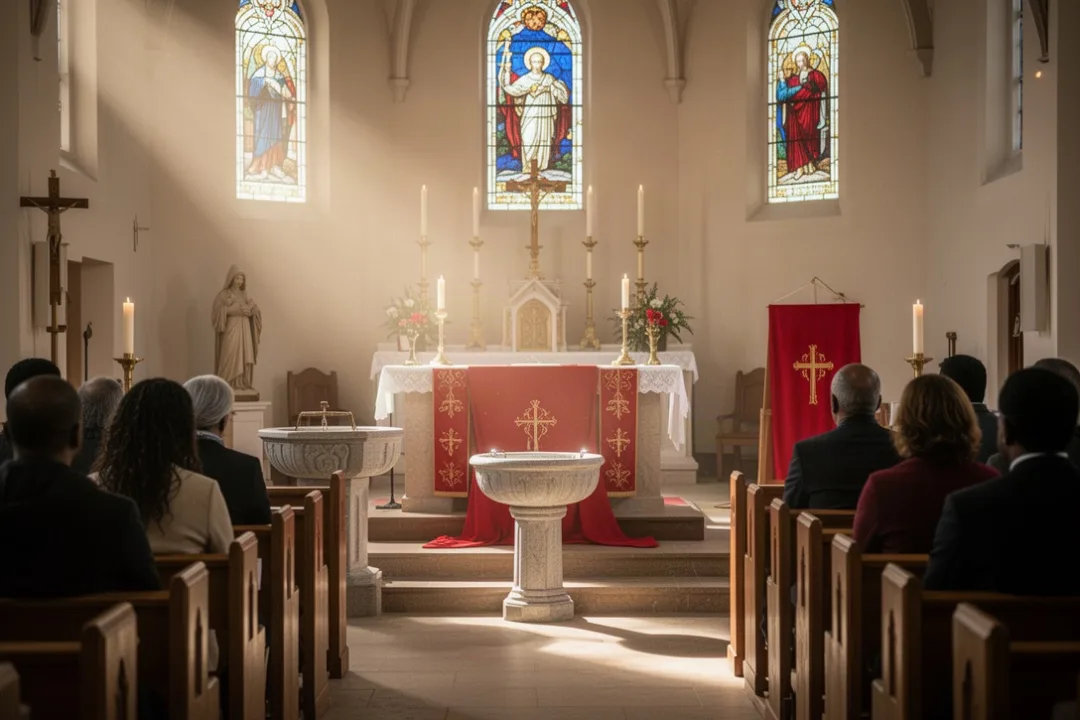
The Church’s liturgy is the primary place where Catholics encounter the Spirit’s work together. Scripture is proclaimed, prayers are offered, water and oil are used, bread and wine become sacramental signs, and the community is sent to live what it has celebrated. The Spirit joins these elements to Christ’s saving work.
The priest does not control the Holy Spirit, and the congregation does not manufacture the Spirit through enthusiasm. Catholic worship is a gift received through the Church’s sacramental life. Reverence, attentive participation, silence, singing, listening, and acts of charity can all help believers become more receptive to grace.
The Spirit also works beyond the church building. A Catholic family practicing forgiveness, a caregiver protecting someone vulnerable, a worker refusing dishonesty, or a parish serving people in poverty can all become places where the Gospel is made visible. The Spirit sends believers into ordinary duties with an extraordinary source of love.
Church community provides important safeguards and encouragement. Other believers can help you recognize gifts you overlook, challenge self-deception, share burdens, and confirm whether a perceived calling bears good fruit. Christian life is personal, but it is never meant to be isolated.
Growing in cooperation with the Holy Spirit
Cooperating with the Holy Spirit begins with openness. You can ask God to show you where you need healing, where you resist grace, and whom you are being called to serve. Openness does not mean passivity; it means offering your freedom to God while making thoughtful choices.
A regular Catholic life gives this cooperation structure. Attend Mass, receive the sacraments worthily, read Scripture, examine your conscience, practice works of mercy, and seek reconciliation when you sin. These practices do not earn God’s love. They help you receive and live the grace God freely gives.
Pay attention to small movements of charity. The Spirit may prompt you to apologize, call a lonely relative, stop gossip, speak up for someone treated unfairly, or return to a neglected responsibility. A life guided by the Spirit is often recognized less by extraordinary experiences than by a steady increase in love.
When you fail, begin again without despair. The Holy Spirit is the giver of life and the source of renewal. Repentance, confession, and practical change open space for grace. Over time, cooperation with the Spirit makes a person more deeply rooted in Christ and more available for the good of others.
Frequently asked questions
Is the Holy Spirit the same as the Holy Ghost?
Yes. “Holy Spirit” and “Holy Ghost” are two English translations of the same Christian term. “Ghost” once commonly meant spirit, but “Holy Spirit” is more familiar in contemporary American English. Both refer to the third Person of the Trinity, not to a deceased human being or an impersonal supernatural force.
Can Catholics pray directly to the Holy Spirit?
Yes. Catholics may address the Holy Spirit directly in personal prayer, traditional devotions, and liturgical prayers. They may ask for wisdom, courage, healing, holiness, or guidance. Prayer to the Holy Spirit remains Trinitarian: the Spirit is adored as God and is not treated as separate from the Father and the Son.
Does every Catholic receive the gifts of the Holy Spirit?
Catholic teaching holds that the Holy Spirit is given through Baptism and that the sacrament of Confirmation strengthens this gift. The seven gifts are available for Christian growth, but they may develop differently in each person. Their presence is usually seen through growing virtue and faithful service, not necessarily through unusual experiences.
What should I do if I am unsure whether a prompting comes from God?
Avoid making an immediate major decision based only on a strong impression. Pray, examine whether the prompting agrees with the Gospel and Catholic moral teaching, consider its practical consequences, and seek advice from a trustworthy priest or mature spiritual guide. Persistent distress or voices that disrupt daily life also warrant qualified mental-health support.












Leave a Reply