Miraculous Medal Shrine: history, meaning, and visiting guide
Miraculous Medal Shrine: history, meaning, and visiting guide
You may be searching for a Miraculous Medal Shrine because you want a place to pray, learn where the medal began, or plan a Catholic pilgrimage. The name can refer to several shrines, but the best-known destination is the Chapel of Our Lady of the Miraculous Medal on Rue du Bac in Paris, where the medal’s story is traditionally connected with the visions of Saint Catherine Labouré.
In the United States, the National Shrine of Our Lady of the Miraculous Medal in Perryville, Missouri, is a major place of devotion. Other churches and chapels also honor Our Lady of the Miraculous Medal. Each shrine has its own schedule and customs, yet they share the same purpose: to lead visitors toward prayer, the sacraments, and deeper trust in Mary’s intercession and in Christ.
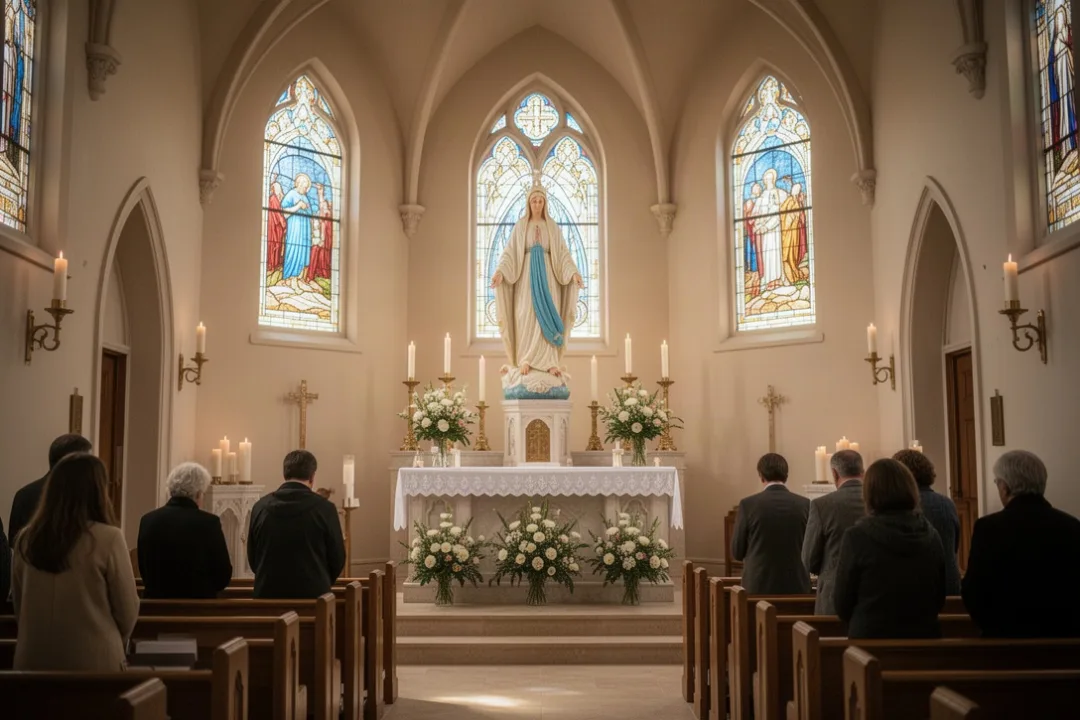
A shrine is more than a beautiful church or a place connected with an important person. It is a location set apart for public devotion and prayer. At a Miraculous Medal Shrine, visitors may attend Mass, receive the Sacrament of Reconciliation, pray before an image of Mary, light a candle, request prayers, or simply sit quietly.
The word “miraculous” does not mean that wearing the medal automatically produces a miracle. The medal is a sacramental: a visible sign used by Catholics to encourage faith and prayer. Its purpose is to point beyond the object itself, toward God’s grace and Mary’s role in directing believers to Jesus.
Many visitors come with a particular intention. They may be praying for a sick relative, seeking guidance about a difficult decision, grieving someone who has died, or giving thanks for an answered prayer. A shrine provides a physical setting where those intentions can be expressed with attention and reverence.
Keep the focus clear: The Miraculous Medal is not a good-luck charm. Catholic devotion treats it as a reminder of faith, prayer, and Mary’s intercession, not as an object with independent power.
The shrines also preserve the memory of Saint Catherine Labouré, a Daughter of Charity who lived in France during the 19th century. Catholic tradition holds that Mary appeared to Catherine in Paris in 1830 and asked for a medal to be made according to the image she received. The medal later became known as the Miraculous Medal because of reports of favors and conversions associated with devotion to it.
Visitors do not have to be experts in Catholic history to pray at a shrine. You can come with a simple intention, spend a few minutes in silence, and participate respectfully in whatever services are available. A pilgrimage may be carefully planned, or it may be as simple as stopping at a local shrine while traveling.
Where the major Miraculous Medal Shrines are located
The Chapel of Our Lady of the Miraculous Medal in Paris
The Paris chapel, commonly called the Chapel of the Miraculous Medal, is located at 140 Rue du Bac in the 7th arrondissement. It stands within the complex associated with the Daughters of Charity and is the place most closely linked with the apparitions traditionally reported by Saint Catherine Labouré.
The chapel is associated with three important moments in Catherine’s account. In July 1830, she reported an encounter with Mary. In November of that year, she described a vision in which Mary appeared with an oval frame around her, along with the words associated with the medal’s familiar prayer. A later encounter is traditionally connected with the request that a medal be produced.
At the chapel, visitors can pray before images associated with Our Lady of the Miraculous Medal and Saint Catherine. The site also includes a place connected with Catherine’s remains. Since it is an active Catholic place of worship rather than only a museum, visitors should expect times of silence, scheduled liturgies, and limited access during services.
Travelers should check the chapel’s official schedule before arriving. Opening hours, Mass times, confession availability, guided visits, and security procedures can change. A visit is usually more meaningful when you allow enough time for prayer instead of treating the chapel as a quick sightseeing stop.
The National Shrine in Perryville, Missouri
The National Shrine of Our Lady of the Miraculous Medal in Perryville is one of the major American centers of Miraculous Medal devotion. It is connected with the Vincentian tradition and welcomes pilgrims who want to pray, attend religious services, learn about the medal, or take part in organized devotions.
The Perryville shrine is known for its church, devotional spaces, and grounds that support both individual prayer and group pilgrimages. Visitors may find Mass, confession, novena prayers, religious articles, and opportunities to submit prayer intentions, depending on the day’s schedule.
Because the shrine serves pilgrims from different parts of the country, it may offer more structured programming than a small parish church. Some visitors plan a full day; others come for a service and a short period of private prayer. Contact the shrine before traveling if you need accessibility information, group arrangements, or details about a particular liturgy.
Local churches and other Marian shrines
Not every place called a Miraculous Medal Shrine is a national or international destination. A parish may have a side chapel, altar, statue, or devotional group dedicated to Our Lady of the Miraculous Medal. Some Catholic churches also host a Miraculous Medal novena on a weekly basis.
These local settings can be valuable because regular prayer is often easier in a nearby church than during a once-in-a-lifetime trip. If you are searching for a shrine near you, look for the exact name of the church, its diocese, and its current schedule. Confirm that the location is open to visitors and learn whether the medal is blessed or distributed during a particular service.
Paris: the historic chapel connected with Saint Catherine Labouré and the origin of the medal’s devotion.
Perryville, Missouri: a major American national shrine associated with the Miraculous Medal tradition.
Local parishes: churches that offer novenas, Masses, prayer groups, or a dedicated image of Our Lady of the Miraculous Medal.
What the Miraculous Medal means
The front of the medal traditionally shows Mary standing with her arms extended. Rays of light come from rings on her fingers, representing graces available to those who ask. Around the image is the prayer, “O Mary, conceived without sin, pray for us who have recourse to thee.” This wording refers to Mary’s Immaculate Conception and asks her to pray for those who turn to her.
The medal’s reverse side contains several familiar symbols. A large letter M appears beneath a cross, while two hearts are shown below: one associated with Jesus and one with Mary. Twelve stars surround the design. Catholic explanations commonly connect these symbols with Christ, Mary, the suffering and love represented by the two hearts, and the biblical image of the woman crowned with stars.
The front and back work together as a compact statement of faith. Mary is not presented as a replacement for Christ. Instead, the design emphasizes her relationship to him and her prayer for those who seek God. The medal can therefore serve as a prompt to say a prayer, make a good decision, or return to the Gospel during an ordinary day.
Many people wear the medal on a chain, keep it in a wallet, place it near a bed, or carry it in a pocket. The outward practice matters less than the inward purpose. Wearing it should encourage trust, repentance, charity, and prayer, rather than superstition or a belief that the medal guarantees protection from every hardship.
The phrase on the medal also reflects an important Catholic teaching: Mary is invoked as one who prays for believers. Catholics who use the medal do not worship Mary. They honor her as the mother of Jesus and ask her to intercede with God, much as someone might ask a family member or friend to pray for a need.
How to prepare for a visit to a Miraculous Medal Shrine
A shrine visit can be more peaceful when you decide in advance what you hope to do. You may want to attend Mass, pray a novena, light a candle, visit a particular image, receive a medal, or bring a list of people who need prayer. A short written list can help you stay focused when the setting is busy.
Check the shrine’s official schedule before leaving home. Look for opening times, Mass and confession schedules, parking information, gift shop hours, accessibility details, and rules for photography. An active chapel may close temporarily for a liturgy or limit entry during a private ceremony.
Choose your intention. Pray for a person, a need, a thanksgiving, or a desire to grow in faith.
Review the schedule. Confirm services, confession times, opening hours, and any arrangements required for groups.
Dress and behave respectfully. Wear clothing suitable for a Catholic place of worship and silence your phone.
Allow unhurried time. Include time for quiet prayer, not only the activity that brought you there.
Decide how you will continue the devotion. You might pray the novena, wear a blessed medal, or join a local prayer group.
If you are traveling to Paris or Perryville, build your plans around the shrine rather than assuming you can enter at any hour. A pilgrimage may involve walking, waiting, or adapting to a service schedule. Bring water and any necessary medication, especially if you intend to spend several hours visiting religious sites.
Photography policies vary. In some places, quiet photographs may be allowed outside services; in others, photography is restricted or prohibited. Ask a staff member if you are uncertain, and never photograph people who are praying without permission.
Children and first-time visitors are welcome when they are prepared for the setting. Explain that a shrine is a place where people may be praying for serious needs. Encourage children to speak quietly, stay near the adults accompanying them, and observe the same respect expected in any church.
Practical tip: If you want a medal blessed, ask the shrine or parish when and how that can be done. A religious article is ordinarily blessed by a priest or deacon, and the procedure differs from one location to another.
Prayers and devotions commonly offered at the shrine
The best-known devotion connected with the medal is the Miraculous Medal novena. A novena is a prayer or set of prayers traditionally offered over nine days, although local communities may gather weekly or follow a different schedule. The exact wording can vary, so a shrine may provide its own approved booklet or prayer sheet.
A typical visit may include silent prayer before an image of Mary, the Rosary, a novena service, Mass, confession, or a request for prayers. You do not have to do everything. Choose the practices that genuinely help you pray rather than rushing through several devotions without attention.
When praying with the medal, you can begin by naming your intention plainly. Ask God for the grace you need, then ask Mary to pray for you. You might include gratitude, an honest admission of fear or sorrow, and a willingness to accept wise help from other people.
The Rosary is also common at Marian shrines. Its repeated prayers create a steady rhythm for reflecting on events in the life of Jesus and Mary. If you do not know the prayers or mysteries, you can follow along with a printed guide or join quietly without feeling embarrassed.
Receiving the Sacrament of Reconciliation can be a significant part of a pilgrimage. Confession is not required simply because you entered a shrine, but visitors who wish to receive it should check the available times and follow the direction of the priest. Preparation usually includes examining your conscience, expressing genuine sorrow, and intending to amend your life.
You can also pray without using a formal devotion. Sit quietly and bring your concerns to God. Read the story of the Annunciation, reflect on Mary’s care for Jesus, or ask for strength to act with patience and compassion. The shrine’s purpose is not to make prayer complicated; it is to give prayer a dedicated place.
Pray for family members, friends, neighbors, and people who have no one else to pray for them.
Give thanks for a recovery, a new opportunity, reconciliation, or a grace you have received.
Ask for help with a specific virtue, such as patience, courage, humility, or forgiveness.
Spend several minutes in silence before leaving instead of ending the visit immediately after a service.
How to receive and use a Miraculous Medal respectfully
You do not have to buy an expensive medal for the devotion to have meaning. Medals are available in different sizes and materials, and a simple medal can serve the same spiritual purpose as an elaborate one. If a shrine distributes medals, ask whether they are already blessed or whether you should request a blessing separately.
A blessed medal should be treated with respect, but it is not an object that must be handled with fear. If it breaks or is lost, you have not lost God’s protection. Replace it if you wish, say a prayer of thanksgiving, and continue practicing the faith the medal is meant to recall.
Some people wear the medal every day, while others keep it in a prayer space. You may also give one to another person, especially if you explain its meaning rather than presenting it as a guarantee of a particular outcome. A thoughtful gift might include the name of the shrine, a prayer card, or an invitation to attend a novena.
The medal should not be used to pressure someone into religious belief or to promise healing. Prayer can be offered with hope while recognizing that suffering, medical care, and difficult circumstances require practical responses as well. A person who is sick should receive appropriate professional care, and a person in crisis may need pastoral, medical, or emergency support.
For many Catholics, the most faithful way to honor the medal is to let it shape daily conduct. Pray before making a harsh reply. Seek forgiveness after causing harm. Visit someone who is lonely. Give help without expecting recognition. These actions express the faith that the medal is intended to awaken.
A visit to a Miraculous Medal Shrine can be deeply personal, but it is also connected to a wider community. You may encounter people from different countries, parishes, and stages of life. Their reasons for coming may differ, yet the shared acts of prayer, silence, and reverence give the shrine its distinctive character.
Frequently asked questions
Is the Miraculous Medal Shrine Catholic?
Yes. The major shrines associated with the Miraculous Medal are Catholic places of devotion, worship, and pilgrimage. Visitors may attend Mass, pray the Rosary or novena, receive confession when available, and ask for Mary’s intercession. People of other Christian traditions or visitors who are simply curious may usually enter respectfully, while participation in Catholic sacraments is reserved according to Catholic practice.
Can anyone visit the Miraculous Medal Shrine in Paris?
Visitors are generally welcome at the chapel on Rue du Bac, but access depends on opening hours, liturgies, and local procedures. Check the chapel’s current information before traveling. Plan to dress modestly, speak quietly, and allow worshippers to pray without interruption. Photography rules and arrangements for large groups may differ from ordinary individual visits.
What should I pray for at a Miraculous Medal Shrine?
You can bring any honest prayer: healing, wisdom, forgiveness, protection for a family member, help with grief, or gratitude for a blessing. Many visitors also pray for people they have never met. A simple prayer is enough. State your intention, ask God for grace, and ask Mary to intercede rather than treating the medal or shrine as a guarantee of a specific result.
Do I need to be Catholic to wear a Miraculous Medal?
No one is forced to be Catholic before receiving or wearing a medal, but you should understand what it represents. It is a Catholic sacramental connected with prayer, Mary’s intercession, and trust in God—not a lucky charm. If you are unsure about its meaning, ask a priest, deacon, or shrine staff member to explain the devotion before choosing to wear it.














Leave a Reply