Saint Peter feast day: June 29 traditions and meaning
Saint Peter feast day: June 29 traditions and meaning
Are you checking the church calendar for Saint Peter feast day and wondering which date to mark? In the Catholic Church and many other Western Christian traditions, Saint Peter is chiefly honored on June 29, the Feast of Saints Peter and Paul. The day remembers two apostles who played central but very different roles in the early Christian community.
Saint Peter is associated with Jesus’ choice of him as a leading apostle, his public confession of faith, his denial of Jesus during the Passion, and his later ministry as a witness to the resurrection. Saint Paul is remembered for preaching Christ widely beyond the Jewish community. Their shared feast celebrates the foundation, growth, and worldwide mission of the Church.
Saint Peter’s main feast day is June 29, when the Church celebrates Saints Peter and Paul together. The date has been observed as an important Christian feast for many centuries, although local calendars may assign additional days to events or titles connected with Peter.
June 29: The Solemnity or Feast of Saints Peter and Paul, Apostles, in many Western churches.
February 22: The Feast of the Chair of Saint Peter in the Roman Catholic calendar, honoring Peter’s teaching and pastoral office.
November 18: The Dedication of the Basilicas of Saints Peter and Paul in Rome in the Roman Catholic calendar.
January 16: A commemoration sometimes associated with Peter’s chains in certain Christian calendars and traditions.
When someone asks for “Saint Peter’s feast day” without further explanation, June 29 is usually the intended date. If you are preparing a parish service, school lesson, prayer, or family observance, check your church’s calendar because feast names and levels of celebration can vary by denomination and country.
Quick answer: Saint Peter is most commonly celebrated on June 29, together with Saint Paul. The date may appear as the Feast of Saints Peter and Paul or, in Catholic usage, the Solemnity of Saints Peter and Paul.
Why Saint Peter and Saint Paul share June 29
Peter and Paul were not identical in background, temperament, or ministry. Peter was one of the Twelve Apostles who followed Jesus during his earthly ministry. Paul, formerly known as Saul, became a Christian apostle after an experience of conversion and devoted himself to preaching to Gentiles. Their shared feast emphasizes that the Church grew through different forms of service.
Peter is often presented as the visible leader among the Twelve and as a witness who helped guide the first Christian community in Jerusalem. Paul is remembered as a missionary, theologian, and letter writer whose preaching helped establish Christian communities across the eastern Mediterranean. Christian tradition connects both men with Rome and with martyrdom there, although the details of their deaths are preserved through tradition rather than a complete biblical account.
The pairing also acknowledges that the Church’s mission needs both continuity and outreach. Peter represents the apostolic community gathered around Jesus’ original disciples. Paul represents the proclamation that moved across cultural and geographic boundaries. Celebrating them together makes June 29 more than a commemoration of two individuals; it is a feast about faith handed on and faith shared.
What the Bible says about Saint Peter’s life and calling
Peter was a fisherman from Galilee. The Gospel accounts identify him as Simon before Jesus gave him the name Peter, related to the idea of a rock or foundation. He appears among Jesus’ closest disciples and is frequently listed first among the Twelve.
Several Gospel episodes shape the Christian understanding of Peter:
Jesus calls Peter and his brother Andrew to leave their fishing work and follow him, as described in Matthew 4:18–22, Mark 1:16–20, and Luke 5:1–11.
Peter identifies Jesus as the Messiah in Matthew 16:13–20, Mark 8:27–30, and Luke 9:18–21.
Peter is present at significant moments such as the raising of Jairus’s daughter, the Transfiguration, and Jesus’ prayer in Gethsemane.
During Jesus’ arrest and trial, Peter denies knowing him, an event recorded in all four Gospels.
After the resurrection, Jesus restores Peter to a pastoral role in John 21:15–19, where Peter is asked to care for Jesus’ followers.
These stories present Peter as courageous, impulsive, loyal, and capable of failure. He is not remembered because he never made mistakes. His significance lies partly in the way he was forgiven, restored, and entrusted with responsibility after a serious failure of courage.
The Acts of the Apostles describes Peter preaching in Jerusalem, healing in Jesus’ name, welcoming Gentiles into the Christian community, and helping the apostles discern how the growing movement should respond to new circumstances. Acts 2, Acts 10, and Acts 15 are especially important for understanding his leadership and his role in the Church’s early expansion.
What Saint Peter represents in Christian tradition
Saint Peter is associated with several themes that explain why his feast remains meaningful. He represents apostolic leadership, because the New Testament presents him as a prominent voice among the apostles. He also represents repentance, because his denial of Jesus is followed by renewed service rather than permanent exclusion.
In Catholic tradition, Peter has a particular connection with the papacy. Catholic teaching understands the bishop of Rome as Peter’s successor and regards Peter as the first bishop of Rome. The June 29 feast therefore has special importance in Rome and throughout the Catholic Church, while other Christian traditions may honor Peter’s apostolic ministry without accepting the same claims about papal succession.
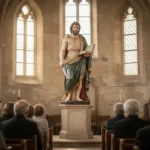
Peter is also linked with the “keys” mentioned in Matthew 16:19. Christian art often shows him holding keys as a symbol of this passage and of his role in receiving responsibility within the apostolic community. The symbol does not mean that every Christian tradition interprets Peter’s authority in exactly the same way; it reflects a major theme in Catholic and broader Western Christian imagery.
His story also gives the feast a human dimension. Peter was devoted to Jesus but sometimes misunderstood him. He made bold promises and then became afraid. The feast invites worshipers to consider how faith can mature through weakness, and how a person’s worst moment does not necessarily define the rest of that person’s life.
How churches observe Saint Peter feast day
The form of the celebration depends on the denomination, local calendar, and day of the week. In a Catholic parish, June 29 may be marked with a special Mass, readings about Peter and Paul, hymns, preaching, and prayers for the pope, bishops, clergy, missionaries, and the unity of Christians. When the date falls on a weekday, the parish may offer a special service without treating it as a public holiday.
Many Anglican and Lutheran churches also observe Saint Peter and Saint Paul with a liturgical service. Some communities use the name “Feast of Saint Peter and Saint Paul,” while others use “Saints Peter and Paul, Apostles.” Orthodox churches celebrate the Apostles Peter and Paul on June 29 in calendars that follow the revised Julian or Gregorian reckoning; churches using the Julian calendar currently celebrate the date later on the civil calendar.
In places where Peter is a patron saint, the feast can include processions, public prayers, music, parish meals, or local customs. The details may be highly regional. A church named for Saint Peter may celebrate its patronal feast with greater ceremony than an ordinary weekday commemoration.
Common elements may include:
Readings from the Acts of the Apostles and the letters associated with Peter or Paul.
A homily about leadership, conversion, mission, forgiveness, or Christian unity.
Prayers for the Church’s leaders and for people who proclaim the Christian faith.
Red vestments or other red liturgical decorations, since red is commonly associated with the Holy Spirit and martyrdom.
Music and images showing Peter with keys or Paul with a sword or scroll.
Not every church uses all these elements. Liturgical colors, readings, and prayers are governed by each tradition’s calendar and worship book. A local bulletin or church office can provide the most accurate information for a specific congregation.
Why red is associated with the feast
Red is widely used for celebrations of martyrs and for major observances connected with the Holy Spirit. Peter and Paul are traditionally honored as martyrs, so many Western churches use red vestments on June 29. Red may appear in altar cloths, banners, flowers, or stained-glass imagery as well.
The color can point to courage and sacrifice, but it should not reduce the feast to a tragic ending. Peter’s martyrdom is understood within the larger Christian hope of resurrection. The feast remembers his death while placing greater emphasis on his witness, ministry, and continuing significance for the Church.
Symbols and images connected with Saint Peter
Religious art often identifies Peter through a small group of recognizable symbols. The most familiar are two keys, which refer to the authority associated with Peter in Matthew 16. Artists may show one gold key and one silver key, though the exact design varies.
Other symbols include a boat, fishing net, rooster, inverted cross, and book. The boat recalls Peter’s work as a fisherman and the Gospel stories of Jesus teaching from a boat. The rooster recalls Peter’s three denials before the cock crowed. A book may represent his preaching or the letters traditionally associated with him.
Tradition says Peter was crucified upside down because he did not consider himself worthy to die in the same manner as Jesus. For that reason, an inverted cross can be associated with Peter. It should not automatically be treated as an anti-Christian symbol; context matters. In a church, museum, or historic artwork, it may be a specifically Petrine symbol.
When using imagery for a feast day, choose symbols that help explain the person rather than treating them as decoration alone. A fishing net can lead to a conversation about Peter’s calling. Keys can prompt discussion of service and responsibility. The rooster can open a thoughtful conversation about fear, forgiveness, and restoration.
You do not need to belong to a parish named Saint Peter to mark June 29. A simple observance can combine learning, prayer, hospitality, and an act of service. The focus is not on recreating a public festival but on remembering Peter’s life and considering how his example speaks to Christian discipleship.
Check the local church calendar. Find out whether a nearby congregation offers a June 29 service or a celebration on the nearest Sunday.
Read a short selection about Peter. Consider Matthew 16, Luke 5, John 21, or Acts 10, then discuss what Peter learns and how his role changes.
Pray for church leaders. Include pastors, priests, bishops, missionaries, teachers, and people who feel unprepared for responsibilities they have received.
Share a meal. A modest fish dinner can recall Peter’s work and the meals shared by Jesus and his disciples, though any meal is appropriate.
Practice restoration. Reach out to someone who needs encouragement, forgiveness, or a second chance.
Learn about another Christian tradition. Compare how Catholic, Orthodox, Anglican, or other communities remember Peter and Paul.
Families with children can use a map to trace places mentioned in Acts, draw a boat or keys, or act out a respectful retelling of Peter’s call. Older children may appreciate discussing why a person who denied Jesus could still become a major leader. The answer involves repentance, grace, community support, and the belief that failure does not end a vocation.
A useful family question: Ask, “What helped Peter return to faithful service after he failed?” This keeps the focus on growth and responsibility rather than treating Peter as either a flawless hero or a permanent failure.
Saint Peter feast day traditions around the world
June 29 has both religious and cultural importance in many countries. In communities where Peter is a patron saint, the celebration may extend beyond the church service. Processions, boats, special foods, music, and neighborhood gatherings can connect the apostle’s story with local history.
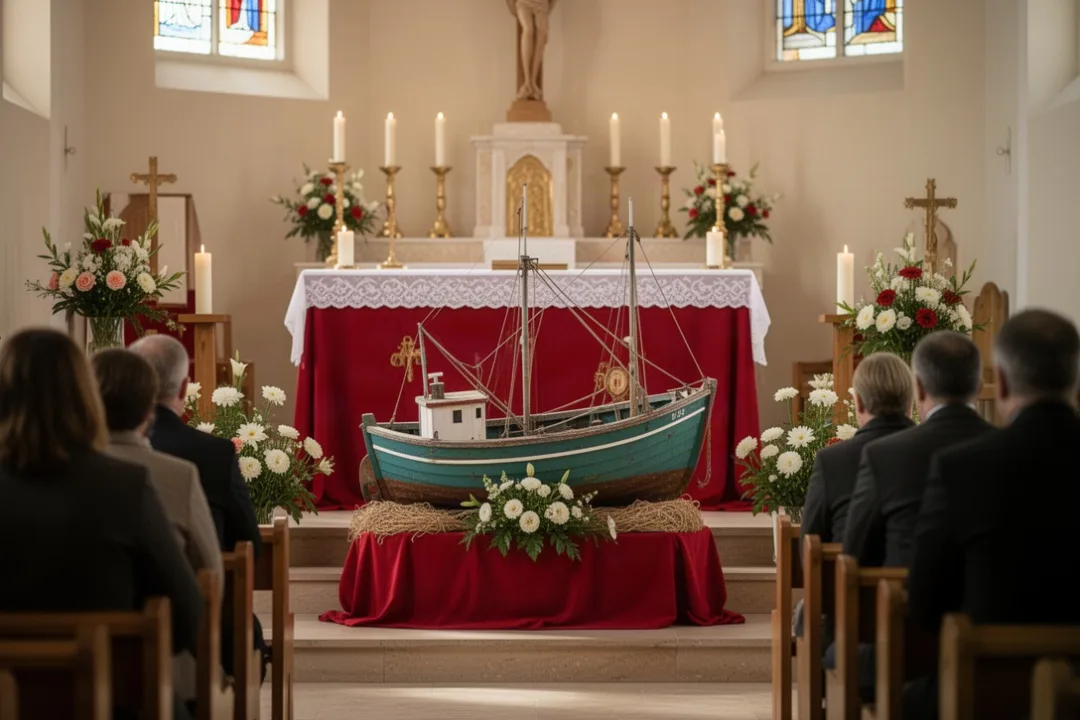
Coastal and fishing communities may give particular attention to Peter as a former fisherman. Some places hold blessings of boats or prayers for people who work at sea. These customs are local rather than universal, so their exact form depends on regional practice and church approval.
In Rome, the feast is closely connected with the city’s identity and with the Basilica of Saint Peter. In other locations, churches named for Peter may hold a patronal celebration, invite neighboring congregations, or collect donations for charitable work. A parish festival can therefore honor Peter not only through worship but also through hospitality and service.
Orthodox communities often observe a preparatory period known as the Apostles’ Fast before the feast, although the length varies from year to year because the date of Pascha affects the calendar. Practices differ among Orthodox jurisdictions and individuals. Anyone participating should follow the guidance of their own church rather than assuming that one tradition applies everywhere.
Saint Peter’s connection with Rome and the papacy
Christian tradition has long connected Peter with Rome, where he is believed to have been martyred and buried. The Basilica of Saint Peter was built over a site traditionally associated with his tomb. Archaeological and historical discussions about the site are complex, but the place has remained one of Christianity’s most important pilgrimage destinations.
For Catholics, Peter’s connection with Rome has theological significance. The pope is understood as the bishop of Rome and as holding a ministry linked to Peter’s role among the apostles. June 29 can therefore be a day of prayer for the pope and for the Church’s pastoral leadership.
Other Christians may honor Peter’s historic association with Rome while understanding church authority differently. Some emphasize the shared apostolic heritage of all Christians rather than papal jurisdiction. Respectful explanation matters because the feast is shared across traditions, but its interpretation is not identical in every church.
How Peter’s story differs from Paul’s
Since June 29 honors both apostles, it helps to distinguish their stories. Peter belonged to Jesus’ original circle of disciples and was present during Jesus’ ministry, death, and resurrection appearances. Paul did not follow Jesus during that earthly ministry; he became a Christian missionary after a powerful conversion experience.
Peter’s ministry began mainly within the first Jewish Christian community, although Acts presents him as an important participant in the inclusion of Gentiles. Paul is especially associated with missionary work among Gentiles and with letters addressed to Christian communities. Their ministries sometimes involved disagreement, including a conflict described in Galatians 2, showing that the early Church faced real tensions.
The feast does not pretend that Peter and Paul agreed about everything or served in the same way. Instead, it recognizes that Christian communities were shaped by multiple witnesses and complementary gifts. Peter and Paul each contributed to the Church’s identity, and both endured suffering for their testimony.
Prayers and themes for the feast
A prayer for Saint Peter feast day can be brief and specific. You might thank God for Peter’s witness, ask for courage to admit mistakes, pray for church leaders, and remember people whose work requires faith under pressure. Some Christians also ask for the intercession of Saint Peter, while others honor him through direct prayer to God and reflection on his example.
Calling: Ask for clarity about how your gifts can serve others.
Repentance: Bring a failure honestly to prayer and consider what repair may be possible.
Leadership: Pray for people entrusted with spiritual, civic, or family responsibilities.
Unity: Remember the divisions among Christians and pray for greater understanding.
Mission: Support those who teach, preach, serve, or work across cultural boundaries.
Readings connected with Peter do not need to be treated as a test of biblical knowledge. Read slowly, identify what Peter says and does, and ask what changes between the beginning and end of the passage. The restoration scene in John 21 is particularly suited to reflection because it connects love, responsibility, and care for others.
Is Saint Peter feast day a holy day of obligation?
For most Catholics, June 29 is not a universal holy day of obligation in the same way as certain major feasts, but requirements can differ according to local bishops’ conferences and particular calendars. The date may be celebrated with a solemn Mass even when Catholics are not required to attend.
Other denominations use different language and rules. Some observe June 29 as a major feast, some mark it in a regular Sunday service, and some mention Peter in a broader calendar of saints. If attendance is a question, consult your parish, diocese, or denomination rather than relying on a general calendar.
The absence of a universal obligation does not make the feast unimportant. Christian calendars include many observances that offer a regular rhythm of remembrance, teaching, and prayer without requiring the same level of attendance as the highest-ranking holy days.
What Saint Peter’s feast can mean today
Peter’s feast speaks to people who have been asked to lead before they feel ready. It also speaks to anyone who has failed publicly, regretted a decision, or wondered whether trust can be restored. His story presents leadership not as personal perfection but as a responsibility shaped by humility, repentance, and care for others.
The shared feast with Paul adds another lesson. Christian communities need people who preserve a received faith and people who communicate it in new places and circumstances. Peter and Paul show that different personalities, backgrounds, and methods can serve a common mission, even when disagreement must be faced honestly.
Marking June 29 can therefore be as simple as attending worship, reading about Peter, praying for the Church, or offering practical help to someone who needs support. The central question is not how elaborate the celebration looks. It is whether the day helps you remember a flawed but faithful witness whose life became an example of forgiveness, service, and steadfast testimony.
Frequently asked questions
Is Saint Peter’s feast day always June 29?
June 29 is the principal date associated with Saint Peter in many Western Christian calendars because it honors Saints Peter and Paul together. Peter also has other observances, including the Chair of Saint Peter on February 22 in the Roman Catholic calendar. Eastern churches using the Julian calendar may celebrate June 29 on a different date in the civil calendar.
Why is Saint Peter shown holding keys?
The keys refer to Jesus’ words about giving Peter the keys of the kingdom in Matthew 16:19. In Christian art, they symbolize Peter’s apostolic authority and pastoral responsibility. Catholic tradition gives this image a particular connection with the papacy, while other churches may interpret Peter’s authority and succession differently.
What color is used for Saint Peter’s feast day?
Red is commonly used because Peter and Paul are honored as martyrs and because red is associated with the Holy Spirit. A church may use red vestments, banners, or decorations on June 29. Local worship traditions can differ, so the color is not identical in every denomination or congregation.
How can children learn about Saint Peter?
Children can hear a simple retelling of Peter’s call, denial, and restoration, then discuss how someone can make a serious mistake and still return to faithful service. A map, drawing of a fishing boat, or paper keys can make the lesson concrete. Keep the focus on courage, forgiveness, responsibility, and caring for others.












Leave a Reply