Is Mary Magdalene a saint? What Christians believe
Is Mary Magdalene a saint? What Christians believe
Yes, Mary Magdalene is a saint in the Roman Catholic Church, Eastern Orthodox Church, Anglican Communion, and several other Christian traditions. Her feast day is generally observed on July 22, although some churches use different calendars or commemorations.
Mary Magdalene appears in the Gospels as a devoted follower of Jesus, a witness to his crucifixion and burial, and one of the first people to encounter him after the resurrection. Jesus then sent her to tell the other disciples, which is why she is often called the “apostle to the apostles”.
The word saint can mean slightly different things among Christian traditions. In general, it refers to a person regarded as holy and faithful to God, especially someone whose life gives the church an example of discipleship. In many churches, saints are also remembered in worship and asked to pray for the living.
Mary Magdalene is recognized as a saint because the New Testament presents her as a committed disciple who remained near Jesus during his suffering and became a witness to the central Christian belief in the resurrection. Her importance does not depend on later legends. It is rooted in the Gospel accounts themselves.
The Roman Catholic Church does not treat Mary Magdalene as a modern canonization case. She was honored as a saint from the early centuries of Christianity, long before the formal canonization procedures used today became standard. Her place in the church’s calendar reflects this ancient and continuous devotion.
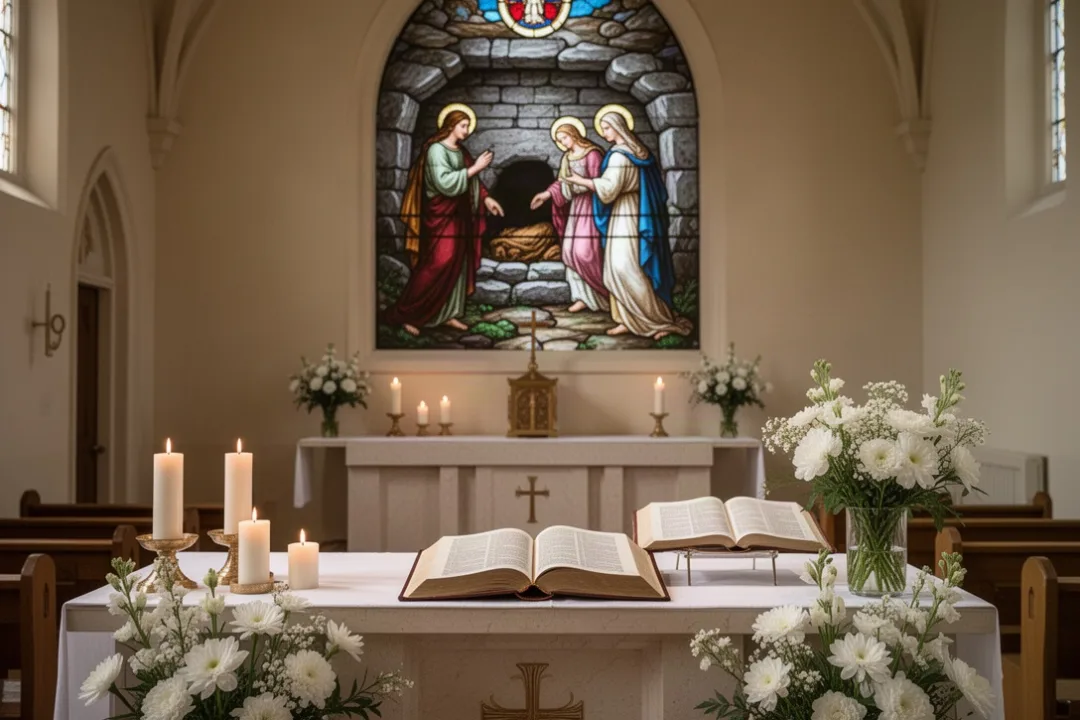
The Eastern Orthodox Church also venerates her as a Holy Myrrh-Bearer and Equal-to-the-Apostles. The title recognizes the women who went to Jesus’ tomb with spices and encountered the empty tomb. Orthodox tradition particularly emphasizes Mary’s role as a faithful witness and missionary of the resurrection.
Many Anglican churches commemorate Mary Magdalene as a saint as well. Some Lutheran, Methodist, and other Protestant communities honor her as an important biblical disciple, although Protestant beliefs about praying to saints and the formal use of saint titles differ widely.
The short answer: Mary Magdalene is universally important in historic Christianity, but churches differ in how they define sainthood, commemorate her, and understand the practice of asking saints to pray.
What the Gospels say about Mary Magdalene
Mary Magdalene is named in all four canonical Gospels. Her name probably identifies her as a woman from Magdala, a town on the western shore of the Sea of Galilee. “Magdalene” is therefore a place-based name, not a family surname in the modern sense.
Luke 8:1-3 describes Mary as one of the women who traveled with Jesus and the Twelve. The passage says that Jesus had freed her from seven demons and that she, along with other women, helped support the group from her resources. The text does not explain the medical or spiritual meaning of this description, so it should not be used to invent details about her past.
Her presence among Jesus’ followers is significant because the Gospel accounts show women taking an active role in his ministry. Mary was not merely a distant admirer. She belonged to the group of disciples who followed Jesus, listened to his teaching, and supported the work of proclaiming God’s kingdom.
Mary also appears among the witnesses to Jesus’ death. Matthew 27:55-56, Mark 15:40-41, and John 19:25 place her at or near the crucifixion. These accounts differ in their precise lists of women, but they consistently connect Mary Magdalene with the final events of Jesus’ earthly life.
She was also associated with the burial. Matthew 27:61 and Mark 15:47 identify her as a witness to where Jesus was laid. This detail matters because it establishes her continuity as a witness: she saw Jesus’ death, knew where he was buried, and returned to the tomb afterward.
The resurrection narratives give her a central role:
Matthew 28:1-10 presents Mary Magdalene and another Mary visiting the tomb, finding it empty, and receiving a message that Jesus had risen.
Mark 16:1-11 names Mary Magdalene as the first person to whom the risen Jesus appeared in the longer ending of the Gospel.
Luke 24:1-12 includes Mary among the women who reported the empty tomb to the apostles.
John 20:1-18 gives the fullest account of Mary’s encounter with the risen Jesus and his instruction that she tell the disciples.
Because the Gospel accounts were written with different emphases and arrangements, the details are not identical. Their shared point is clear: Mary Magdalene was an eyewitness and messenger of the resurrection, not a minor figure added only for background.
Why she is called the apostle to the apostles
The title apostle to the apostles highlights Mary Magdalene’s mission after the resurrection. In John 20, Jesus tells her to go to his brothers and report what she has seen. She then announces to the disciples that she has encountered the risen Lord.
The phrase is not a claim that Mary held exactly the same office as the Twelve in every church tradition. Instead, it points to a particular fact: she was commissioned to deliver the first resurrection message to Jesus’ closest male disciples. Her role was therefore both personal and public.
In the ancient world, women’s testimony was often given less social weight than men’s testimony, though the details varied by community and circumstance. The Gospel writers’ decision to place women, especially Mary Magdalene, at the center of the resurrection witness is one reason Christians have long considered her role remarkable.
Her witness also shows that Christian discipleship is not limited to a position of formal authority. Mary serves through faithfulness, courage, and testimony. She stays present when many disciples have scattered, returns to the tomb, recognizes the risen Jesus, and carries his message to others.
Christian communities have drawn different lessons from this role. Some emphasize Mary as a model of evangelization. Others focus on her perseverance in grief and confusion. Still others point to her as evidence that women were among Jesus’ earliest and most important followers.
The title also corrects a common assumption that Mary Magdalene was primarily known for sin and repentance. The canonical Gospels do not call her a prostitute, and they do not describe her as the unnamed sinful woman in Luke 7. Her primary biblical identity is that of a disciple and resurrection witness.
How Mary Magdalene became associated with other women in the Gospels
For many centuries in Western Christianity, Mary Magdalene was often combined with several different women mentioned in the Gospels. These included the unnamed woman described as sinful in Luke 7, Mary of Bethany, and the woman who anointed Jesus in another Gospel account. This blending shaped sermons, paintings, prayers, and popular ideas about her.
The association with prostitution is especially widespread, but the Bible does not make that identification. Luke 7:36-50 describes an unnamed woman who shows devotion to Jesus, while Luke 8:2 separately names Mary Magdalene as a woman from whom seven demons had gone out. The two passages do not say that they describe the same person.
Mary of Bethany is also a separate figure in the Gospel of John. She is the sister of Martha and Lazarus and is connected with Bethany, a village near Jerusalem. Although later tradition sometimes linked her with Mary Magdalene, the biblical texts present them as different women.
Western Catholic interpretation gradually became more careful about these identifications. In the 20th century, the Roman Catholic liturgical calendar distinguished Mary Magdalene from Mary of Bethany and the unnamed woman in Luke. This did not reduce Mary’s importance; it restored attention to the identity the Gospel texts give her.
The distinction matters because labeling Mary Magdalene a former prostitute can obscure the actual evidence. It also places emphasis on an alleged sexual past that the New Testament never states. A more accurate description is that she was a woman healed by Jesus who became a prominent disciple and witness.
Eastern Christian traditions generally maintained a clearer distinction among these women. Orthodox icons and liturgical texts honor Mary Magdalene as the Myrrh-Bearer and Equal-to-the-Apostles without making her identity depend on the Western image of a repentant prostitute.
Keep the biblical identities separate: Mary Magdalene, Mary of Bethany, and the unnamed woman in Luke 7 are not explicitly identified as the same person in the New Testament.
How different Christian traditions honor her
Mary Magdalene’s feast or memorial appears in the calendars of several historic Christian traditions. The form of the observance varies, but the main themes are consistent: her discipleship, her presence at the cross and tomb, and her proclamation of the resurrection.
Roman Catholic observance
In the Roman Catholic Church, July 22 is the Feast of Saint Mary Magdalene. A feast is a significant liturgical observance, more prominent than an ordinary memorial. The church’s prayers and readings emphasize Mary’s encounter with the risen Christ and her mission to announce the resurrection.
Pope Francis elevated the celebration from a memorial to a feast in 2016. This change highlighted Mary Magdalene’s role as the first witness to the resurrection and gave her liturgical commemoration a rank comparable to the feasts of the apostles.
Catholic devotion may ask Mary Magdalene to pray for individuals or communities. Catholics do not generally understand this as worshiping her. Worship belongs to God; honoring a saint means recognizing that person’s faith and asking for intercession within the communion of the church.
Eastern Orthodox observance
Eastern Orthodox Christians honor Mary Magdalene as one of the Myrrh-Bearing Women. Orthodox tradition also calls her Equal-to-the-Apostles, a title used for certain saints whose missionary work is considered comparable in importance to that of the apostles.
Orthodox worship often presents her as a loyal disciple who remained faithful through the crucifixion and carried the resurrection message. She is remembered not primarily as a reformed sinner, but as a courageous witness and evangelist.
Anglican and other Christian observance
Many Anglican churches keep July 22 as the feast of Mary Magdalene. Anglican resources and local congregations may emphasize different aspects of her story, including women’s ministry, evangelism, contemplative prayer, and the church’s calling to proclaim Christ’s resurrection.
Some Protestant churches do not use the word saint in the same liturgical or devotional way. Even so, they may preach on Mary Magdalene, include her in a church calendar, or describe her as a faithful biblical witness. Other communities avoid invoking saints while still honoring her example.
These differences do not erase the common biblical foundation. Across traditions, Mary Magdalene is remembered for staying close to Jesus, witnessing the empty tomb, meeting the risen Christ, and sharing the message with the disciples.
What Mary Magdalene’s story means for Christians today
Mary Magdalene’s story gives Christians a model of steadfast discipleship. The Gospels place her near Jesus during moments when public support had become dangerous and emotionally costly. Her presence at the cross and tomb shows loyalty that continues even when she does not yet understand what God is doing.
Her story also presents grief as part of faithful life. In John 20, Mary goes to the tomb in sorrow and confusion. She does not begin with a confident explanation of the resurrection. Her understanding develops through an encounter with Jesus, and her grief becomes the setting in which she receives a mission.
Mary’s witness also challenges the habit of judging people by unverified stories. For generations, many people knew her mainly through the label of a prostitute, even though the biblical text does not call her one. Reading her story carefully allows her own words and actions to come into focus.
She can also serve as a model for people who feel overlooked. The Gospel accounts place her at the heart of the resurrection proclamation. Her authority comes from having seen and heard the risen Jesus and from faithfully carrying his message to others.
For Christians who honor saints, Mary Magdalene may be remembered in several practical ways:
Attend a service or prayer commemorating her feast on or near July 22.
Read the resurrection accounts in Matthew 28, Mark 16, Luke 24, and John 20.
Reflect on the difference between biblical evidence and later traditions about her identity.
Consider how faithful witness can include both listening for God and sharing what you have received.
Pray for courage to remain compassionate and truthful when grief or uncertainty makes faith difficult.
Her life does not suggest that every question must be answered immediately. Mary first experiences loss, confusion, and uncertainty. She then recognizes Jesus and becomes a messenger. That pattern has made her a lasting example of how a disciple’s testimony can grow from faithful presence.
What “saint” means when you ask about Mary Magdalene
If you are asking whether Mary Magdalene is officially recognized as a saint, the answer is yes in the major historic churches that use formal saint calendars. She is not a fictional figure created by medieval devotion; she is a named person in the New Testament and one of its most prominent witnesses to the resurrection.
If you are asking whether every Christian must use the title “Saint Mary Magdalene,” the answer depends on the tradition. Catholics, Orthodox Christians, Anglicans, and some other churches normally do. Many evangelical and other Protestant Christians may simply say Mary Magdalene while honoring her as a disciple and witness.
If you are asking whether she was a prostitute, the careful answer is no one can establish that from the Bible. The association comes from later Western interpretation that combined her with other women. The Gospel texts identify her as a woman healed by Jesus, a devoted follower, and a messenger of the resurrection.
So the clearest answer brings these points together: Mary Magdalene is a saint in several Christian traditions because she lived as a faithful disciple and witnessed the risen Jesus. Her feast day remembers not a legend about her past, but the central role she played in proclaiming the resurrection.
Frequently asked questions
When is Saint Mary Magdalene’s feast day?
Saint Mary Magdalene’s feast day is generally observed on July 22. The Roman Catholic Church celebrates it as a feast, while Eastern Orthodox, Anglican, and other churches may use their own liturgical calendars and customs. Local observances can include Scripture readings, prayers, worship services, or teaching about Mary’s role as a witness to the resurrection.
Was Mary Magdalene the same person as Mary of Bethany?
The New Testament presents them as different women. Mary of Bethany was the sister of Martha and Lazarus, while Mary Magdalene was a follower of Jesus from Magdala. Some Western traditions later combined their identities, but modern Catholic interpretation and Eastern Christian tradition generally distinguish them.
Did Mary Magdalene write a Gospel?
No Gospel included in the New Testament is attributed to Mary Magdalene. Several later writings, such as the Gospel of Mary, are associated with her name, but they are not part of the New Testament canon and were composed later than the canonical Gospels. The New Testament presents her as a witness and messenger, not as a Gospel author.
Why is Mary Magdalene important to women in Christianity?
Mary Magdalene is important because the Gospel accounts place her among Jesus’ closest followers and make her a principal witness to his death, burial, and resurrection. Jesus sent her to tell the disciples what she had seen. Many Christians therefore view her as an early model of women’s discipleship, leadership, and proclamation.

















Leave a Reply