Jesus and Mary Magdalene: What the Bible actually says
Jesus and Mary Magdalene: What the Bible actually says
If you have heard that Jesus and Mary Magdalene may have been married, related, or involved in a secret relationship, you may wonder what the Bible actually supports. The short answer is that the New Testament does not describe them as spouses or romantic partners. It presents Mary Magdalene as a devoted follower of Jesus, a woman healed by him, and one of the first witnesses to his resurrection.
Mary’s importance does not depend on a hidden romance. The Gospel accounts give her a significant role in the story of Jesus: she traveled with his ministry, supported it with other women, remained near the cross, saw where he was buried, and announced the empty tomb. Later traditions and modern fiction have added ideas that the earliest Christian sources do not establish.
Mary Magdalene is identified by her connection to Magdala, a town on the western shore of the Sea of Galilee. The name distinguishes her from other women named Mary in the New Testament, including Mary the mother of Jesus and Mary of Bethany. Her hometown became part of her name because “Mary” was common in first-century Jewish communities.
Luke 8:1-3 places Mary among the women who traveled with Jesus and the Twelve as Jesus proclaimed the kingdom of God. The passage says that Jesus had healed her from seven demons. It also names Joanna, Susanna, and other women who helped support the group from their own resources.
The Gospel description gives two useful pieces of information. First, Mary had experienced serious spiritual or personal suffering before becoming a follower of Jesus. Second, she was not merely an interested listener. She belonged to a group of women who actively accompanied and supported Jesus’ ministry.
The phrase “seven demons” should not be treated casually or turned into a diagnosis using modern medical categories. The text describes Mary’s condition in the spiritual language of the period, but it does not explain the symptoms or circumstances. What it does emphasize is the change in her life and her continuing commitment to Jesus.
A common correction: The Bible never says that Mary Magdalene was a prostitute. That association developed through later Western interpretation, especially by blending her with other unnamed women in the Gospels. The New Testament identifies her as a healed follower of Jesus, not as a sex worker.
Mary also appears in lists of women who witnessed Jesus’ death and burial. Matthew 27:55-61, Mark 15:40-47, Luke 23:49-56, and John 19:25-42 describe the presence of women around the final events of Jesus’ life, though the names and details vary among the accounts. Mary Magdalene is consistently connected with these events.
Luke 8:1-3: Mary is named among the women who followed Jesus and helped support his ministry.
Matthew 27:55-61: She is present at the crucifixion and observes the tomb where Jesus is laid.
Mark 15:40-47: She watches Jesus’ death, burial, and the location of his tomb.
Luke 24:1-12: She is among the women who find the tomb open and report what they have seen.
John 20:1-18: She encounters the risen Jesus and tells the disciples that she has seen him.
These references show a pattern rather than a single isolated appearance. Mary is present at moments when many other followers have withdrawn or are absent. Her role is especially striking because women’s public testimony was often treated as less authoritative in the social world of the first century. The Gospel writers nevertheless preserve her testimony as central to the resurrection story.
What relationship did Jesus and Mary Magdalene have?
The Gospels portray Jesus and Mary Magdalene as teacher and disciple, or more broadly, as leader and devoted follower. Jesus healed her, and she then traveled with his ministry. The texts do not use the language of marriage, courtship, or sexual intimacy when describing them.
Mary’s devotion was serious and personal, but devotion is not the same as romance. She appears to have placed her loyalty, time, and resources behind Jesus’ mission. Other women did the same, and Luke specifically presents them as a group of followers who helped sustain the ministry.
No canonical Gospel says that Jesus married Mary Magdalene. No canonical Gospel calls her his wife, fiancé, or romantic companion. The accounts do not mention a wedding, household, children, or a marital relationship between them. That absence does not prove every detail of their private lives, but it means the claim cannot be presented as a biblical fact.
Jesus did have close relationships with several people. The Gospels mention his particular love for Lazarus and his sisters, Martha and Mary, in John 11. Jesus also had a close circle of disciples, including Peter, James, and John. A close spiritual or personal bond therefore does not automatically indicate a romantic relationship.
Some readers focus especially on the scene in John 20, where the risen Jesus speaks with Mary in the garden. The encounter is intimate in the sense that it is personal and emotionally significant: Mary recognizes Jesus when he calls her by name, and Jesus gives her a message for the disciples. Yet the passage’s focus is recognition, resurrection, and witness, not marriage.
Another detail sometimes discussed is Jesus’ instruction to Mary in John 20:17. Some translations render part of the statement as “Do not hold on to me,” while others convey the sense of “Do not cling to me.” The wording concerns Mary’s response to the risen Jesus and his coming departure to the Father. It does not establish a romantic or sexual relationship.
Descriptions of Mary as a “companion” can also create confusion. A companion may mean a fellow traveler, student, associate, or trusted follower. In the Gospel accounts, Mary is clearly a companion in ministry. The texts do not give the word a marital meaning.
What Mary Magdalene did during Jesus’ death and resurrection
Mary Magdalene’s importance becomes clearest in the final chapters of the Gospels. She is connected with Jesus’ crucifixion, burial, the discovery of the empty tomb, and the first announcements of the resurrection. Her presence links the public ministry of Jesus with the earliest proclamation of Christian faith.
Mary at the crucifixion
When Jesus is executed, the Gospel accounts describe women watching from a distance or standing nearby. Mary Magdalene is repeatedly named among them. Her presence matters because the crucifixion was dangerous, humiliating, and publicly traumatic. Remaining near the site showed loyalty under severe pressure.
While many male disciples are described as fleeing or remaining hidden, Mary and other women continue to observe what happens. The accounts do not suggest that they could stop the execution. Their role is that of witnesses who remain present, grieve, and preserve the knowledge of what occurred.
Mary at the burial site
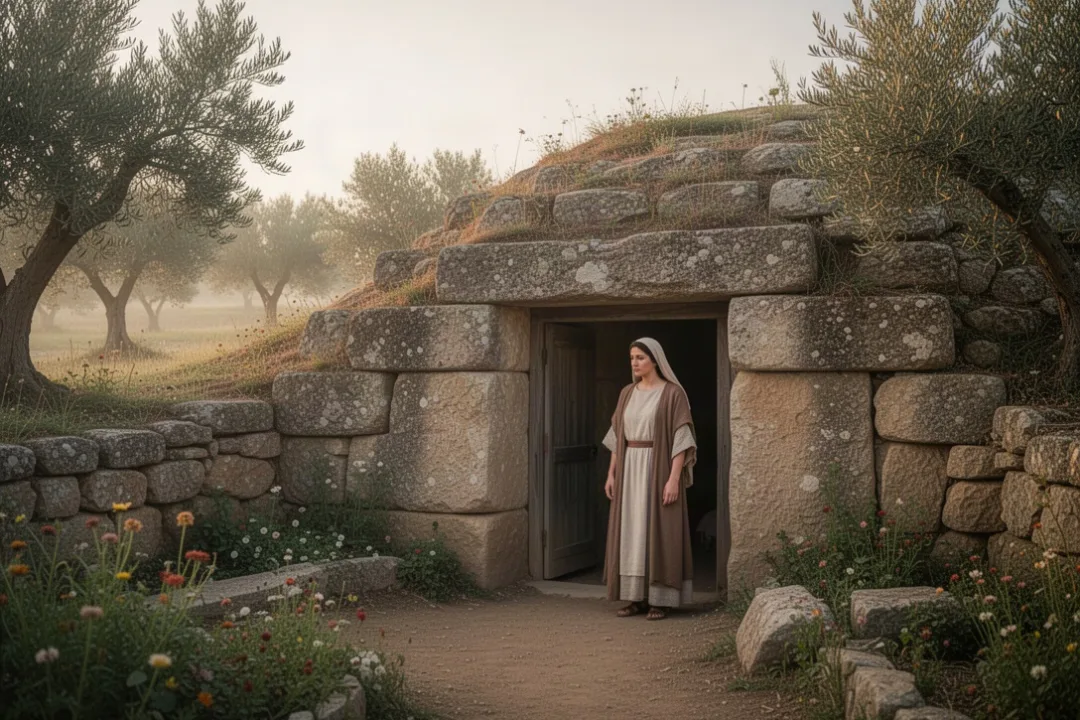
After Jesus’ death, Mary is associated with the tomb where his body is placed. In the Synoptic Gospels—Matthew, Mark, and Luke—women see the tomb and later return with spices. This detail establishes that Mary and the other women knew where Jesus had been buried.
That knowledge becomes significant on the first day of the week. The resurrection announcement is not detached from the death and burial. Mary’s connection with the tomb allows the Gospel writers to show that the women were not visiting a random location. They were returning to the place where Jesus had been laid.
Mary at the empty tomb
All four Gospels connect Mary Magdalene with the empty tomb, although they differ in the order of events and the number of women mentioned. She is among the women who discover that the stone has been moved and that Jesus’ body is no longer there. Angelic messengers or other heavenly figures explain that Jesus has risen, depending on the Gospel account.
At first, the disciples do not respond as though the report is obvious or expected. Luke 24 presents the women’s announcement as sounding like an idle tale to some of the apostles. Peter goes to the tomb to investigate. This reaction helps show that the Gospel writers do not portray the first witnesses as delivering a message that everyone immediately accepted without questions.
Mary meets the risen Jesus in John
John 20 gives Mary Magdalene the most extended resurrection appearance. She comes to the tomb and sees that the stone has been removed. After telling Peter and the beloved disciple, she remains near the tomb, weeping and searching for an explanation.
In John’s account, Mary initially mistakes Jesus for the gardener. She recognizes him when he speaks her name. Jesus then sends her to tell the disciples that he is ascending to his Father. Mary carries out that commission and reports that she has seen the Lord.
John 20 presents Mary as a witness who recognizes the risen Jesus and carries his message to the disciples.
This scene explains why Mary has sometimes been called the “apostle to the apostles”. That title is a later honorific rather than a phrase used in the biblical text itself, but it captures her function in John’s account. She is sent to communicate the resurrection to Jesus’ male disciples.
Why her witness matters: The resurrection accounts do not make Mary Magdalene a minor background character. They place her at the center of the first Christian announcement that Jesus had risen, making her one of the earliest and most important witnesses in the tradition.
Why Mary Magdalene was later confused with other women
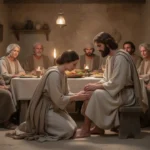
One of the most persistent misunderstandings about Mary Magdalene is the belief that she was a prostitute who washed Jesus’ feet. That story is not about a woman named Mary Magdalene. Luke 7:36-50 tells of an unnamed woman described as sinful who anoints Jesus’ feet, weeps, and receives his forgiveness. The text does not identify her as Mary Magdalene.
Another Gospel passage describes Mary of Bethany anointing Jesus. John 12:1-8 names her as the sister of Martha and Lazarus. She is a different person from Mary Magdalene, whose hometown was Magdala. Similar first names contributed to later confusion.
These three figures are distinct in the Gospel narratives:
Mary Magdalene: A follower from Magdala, healed from seven demons, present at the crucifixion and burial, and a resurrection witness.
The unnamed sinful woman in Luke 7: A woman who anoints Jesus’ feet and receives his affirmation, but whose name is not given.
Mary of Bethany: The sister of Martha and Lazarus, who appears in the Bethany stories and anoints Jesus in John 12.
In the Western church, these separate figures were sometimes treated as one person in preaching, art, and devotional tradition. That interpretation shaped centuries of paintings and stories, but it is not required by the Gospel texts. Modern readers should distinguish later tradition from what the New Testament explicitly says.
The idea that Mary Magdalene had been sexually immoral may also reflect a tendency to define prominent women by a dramatic past rather than by their leadership or testimony. The biblical account gives no basis for that label. It tells readers that Jesus healed her and that she became a faithful participant in his ministry.
What noncanonical writings say about Jesus and Mary Magdalene
Speculation about Jesus and Mary Magdalene often draws on writings outside the New Testament. Several early Christian texts, generally known through later manuscripts, portray Mary as a significant disciple or as a recipient of special teaching. These writings can help historians study the diversity of early Christian thought, but they should not be treated as if they were identical to the four canonical Gospels.
The Gospel of Mary, for example, presents Mary as a figure who receives and communicates spiritual instruction. In the surviving text, she faces opposition from Peter and others who question whether the Savior would have spoken privately with a woman. The work highlights disputes about authority and revelation; it does not plainly state that Mary was Jesus’ wife.
The Gospel of Philip contains a passage that calls Mary Jesus’ companion and says that he loved her more than other disciples. The text is fragmentary, and translations differ in how certain terms are rendered. Some interpreters connect the passage with marriage, but the wording does not provide a simple, universally accepted statement that Jesus and Mary were married.
These writings were composed or circulated in Christian communities that differed from the authors of Matthew, Mark, Luke, and John. They may preserve traditions, theological reflections, or symbolic language. Their existence shows that early Christians debated Mary’s status and the nature of discipleship, not that every later claim about her is historically established.
A responsible reading asks several questions before accepting a claim from an ancient text:
When was the text written? A work written later than the canonical Gospels may reflect a developed tradition rather than a direct eyewitness account.
What kind of writing is it? A theological dialogue, symbolic saying, biography, and historical narrative make different claims.
Is the passage complete? Fragmentary manuscripts can make context and translation uncertain.
Does the text clearly say what later interpreters claim? A term such as “companion” may have more than one possible meaning.
How does the claim compare with earlier sources? A dramatic idea needs stronger evidence than a repeated, explicit description.
The popular image of a secret marriage often comes from combining ambiguous passages, later traditions, and modern storytelling. Works such as novels, films, and television dramas may use the idea because it creates a compelling alternative history. Fiction can raise interesting questions, but it does not turn speculation into evidence.
Why Mary Magdalene matters for Christian history and faith
Mary Magdalene matters because the Gospel writers preserve her as a faithful disciple and resurrection witness. Her story challenges the assumption that the central followers of Jesus were only the Twelve apostles. Women played an active role in supporting Jesus’ ministry, observing his death, caring about his burial, and announcing the resurrection.
Her story also complicates common ideas about authority. Mary did not hold influence because the text presents her as Jesus’ wife. She held influence because she encountered him, remained faithful, and was entrusted with a message for the disciples. Her authority is connected to witness and commission.
Mary’s example is especially important in the context of the first-century world. Women could be active religious participants, patrons, and witnesses, but social structures often limited how their testimony was received. The Gospel accounts still place Mary at the center of events that define Christian belief.
She also demonstrates that a person’s past does not have to determine the meaning of their life. The Gospels do not give a detailed biography of Mary before she met Jesus. They do, however, show a movement from affliction to restored life, and from restored life to committed service.
Readers who want to study Jesus and Mary Magdalene carefully can begin with the clearest passages rather than with later speculation:
Read Luke 8:1-3 for Mary’s place among Jesus’ traveling supporters.
Compare Matthew 27, Mark 15, Luke 23, and John 19 for her presence at the crucifixion and burial.
Compare Matthew 28, Mark 16, Luke 24, and John 20 for the resurrection accounts.
Read Luke 7:36-50 and John 12:1-8 to distinguish other women from Mary Magdalene.
Approach noncanonical writings as evidence of later Christian diversity, not as automatic replacements for the canonical Gospels.
The most defensible answer is therefore straightforward: Jesus and Mary Magdalene had a close teacher-disciple relationship, and Mary was one of Jesus’ most important followers and resurrection witnesses. The Bible gives no reliable basis for calling her his wife or romantic partner. Her real significance is stronger than the rumor: she was a courageous disciple who remained present and became the first messenger of the risen Jesus in the Gospel tradition.
Frequently asked questions
Does the Bible say Jesus and Mary Magdalene were married?
No. None of the four canonical Gospels calls Mary Magdalene Jesus’ wife or describes a wedding, marriage, children, or romantic relationship. The texts present her as a follower who traveled with Jesus, supported his ministry, witnessed his death and burial, and announced his resurrection. Some later writings use language that interpreters debate, but they do not establish a clear historical marriage.
Was Mary Magdalene the same person as the woman who washed Jesus’ feet?
The Gospel texts do not identify them as the same person. Luke describes an unnamed sinful woman who anoints Jesus’ feet, while John names Mary of Bethany in another anointing account. Mary Magdalene is separately identified as a woman from Magdala who followed Jesus and witnessed the resurrection. Later Western tradition sometimes combined these figures.
Why is Mary Magdalene called the apostle to the apostles?
The phrase reflects her role in the resurrection accounts, especially John 20. After encountering the risen Jesus, Mary is sent to tell the disciples what she has seen and heard. The title is a later description rather than a direct biblical phrase, but it recognizes that Mary delivered the first resurrection announcement to Jesus’ male followers.
What does the Gospel of Mary say about Mary Magdalene?
The surviving sections portray Mary as a prominent disciple who receives spiritual teaching and shares it with others. The text also describes disagreement over her authority, particularly involving Peter. It does not clearly say that she was Jesus’ wife. Because the work comes from a different early Christian setting and survives incompletely, it should be read alongside—not substituted for—the canonical Gospels.















Leave a Reply