St. Thomas Feast Day is July 3 in the Roman Catholic calendar, honoring the Apostle Thomas, one of Jesus’ Twelve Apostles and the disciple remembered for moving from uncertainty to faith.
The feast celebrates Thomas the Apostle, also called Didymus, a name that means “twin.” The Gospel of John uses both names, but it does not identify Thomas’s twin or provide many details about his family background.
Thomas appears in several important Gospel scenes. He shows courage when Jesus decides to return to Judea, asks a direct question about where Jesus is going, and later struggles to accept the other disciples’ report that Jesus has risen. His story gives the feast a distinctive spiritual focus: honest questions can lead to deeper faith.
The central Gospel reading associated with the feast is John 20:24-29. In that passage, Thomas is absent when the risen Jesus first appears to the disciples. He says that he needs convincing evidence, but when Jesus appears again, Thomas recognizes him and makes a profound confession of faith.
That scene explains why Thomas is often called “Doubting Thomas.” The nickname is familiar, but it can reduce his story too much. Thomas was not the only disciple who had difficulty understanding the Resurrection. His questions are recorded openly, and his eventual declaration shows that doubt was not the end of his relationship with Christ.
The central message: St. Thomas Feast Day does not celebrate doubt for its own sake. It honors a disciple who brought uncertainty into the presence of Jesus and received a faith grounded in encounter.
Why the feast is celebrated on July 3
In the Roman Catholic liturgical calendar, the Feast of St. Thomas the Apostle falls on July 3. The date was moved from December 21 as part of the calendar revision that followed the Second Vatican Council. July 3 is now the familiar date for Catholic parishes in the United States and many other places.
Before that change, Western Christians commonly observed St. Thomas on December 21. That date remains associated with the apostle in some calendars and local traditions, which explains why different sources may list two dates. When you are checking a parish bulletin, prayer book, or family tradition, identify the church calendar being used before assuming that one date is incorrect.
July 3 also appears in the calendars of some other Western Christian communities, including parts of the Anglican tradition. Christian churches do not all use one universal liturgical calendar, so the exact date can vary according to denomination, region, and rite.
How Eastern Christians observe St. Thomas
Eastern Christian communities have their own ways of remembering the apostle. In many Eastern Orthodox calendars, the main feast of the Apostle Thomas is observed on October 6. Orthodox Christians also celebrate Thomas Sunday, the Sunday after Easter, which recalls the Gospel account of Thomas meeting the risen Christ.
Thomas Sunday is especially connected with the Resurrection because it follows the celebration of Easter. The liturgy presents Thomas’s experience as part of the Church’s continuing proclamation that Christ has risen. In this setting, the emphasis is often less on a personal nickname and more on the apostle’s recognition of Jesus.
Eastern Catholic churches may follow different liturgical calendars depending on their particular tradition. Some use the Gregorian calendar, some use the Julian calendar for certain observances, and some have local customs that shape the celebration. The safest way to confirm the date is to consult the calendar of your own parish or diocese.
In India, communities known as St. Thomas Christians maintain a particularly strong connection with the apostle. Their traditions hold that Thomas brought Christianity to the Indian subcontinent and established communities there. July 3 is widely associated with the apostle’s martyrdom in these communities, although local customs and church calendars can differ.
What the Bible says about the Apostle Thomas
Thomas is named in the lists of the Twelve Apostles in the Synoptic Gospels and in Acts. The Gospel of John gives him the most developed role. These passages show several sides of his character rather than presenting him only as a doubter.
John 11:16: Thomas responds to Jesus’ decision to return to Judea with a statement showing loyalty and willingness to face danger with him.
John 14:5: Thomas asks how the disciples can know the way if they do not know where Jesus is going. His question creates the setting for Jesus’ teaching about the way to the Father.
John 20:24-29: Thomas questions the first reports of the Resurrection, then recognizes the risen Jesus when he appears to the disciples.
John 21:2: Thomas is named among the disciples present during an appearance of the risen Jesus in Galilee.
Acts 1:13: Thomas appears in the list of apostles gathered after Jesus’ Ascension.
These references portray Thomas as a disciple who speaks plainly. He does not always understand events immediately, but neither does he quietly withdraw. He asks what he needs to ask, remains connected to the apostolic community, and becomes a witness to the Resurrection.
The Gospel’s treatment of Thomas is also significant because it addresses later believers who will not see the risen Jesus in the same physical way as the first disciples. The passage points toward faith based on the apostolic testimony and the work of God, while still acknowledging the human desire for certainty.
Why Thomas is more than the “doubting” apostle
The label “Doubting Thomas” is based on a real episode, but it leaves out Thomas’s earlier courage and later witness. In John 11, he is prepared to go with Jesus even when the journey appears dangerous. That response suggests a disciple who is committed, not indifferent.
Thomas’s question in John 14 also has value. He does not pretend to understand Jesus’ words about departure and return. Because he asks for clarification, the other disciples—and later readers—receive a clearer explanation of Jesus’ relationship with the Father.
His reaction after the Resurrection can be understood as grief, confusion, and a need to distinguish a genuine encounter from a rumor. Thomas had watched Jesus die. His hesitation reflects the seriousness of what the disciples were claiming, not necessarily a permanent refusal to believe.
For many Christians, Thomas offers a model for faith that is intellectually honest. He demonstrates that questions can be brought into prayer, Scripture study, and community rather than hidden. His story does not promise that every question will receive a complete answer, but it does show that uncertainty need not separate a person from Christ.
How churches celebrate St. Thomas Feast Day
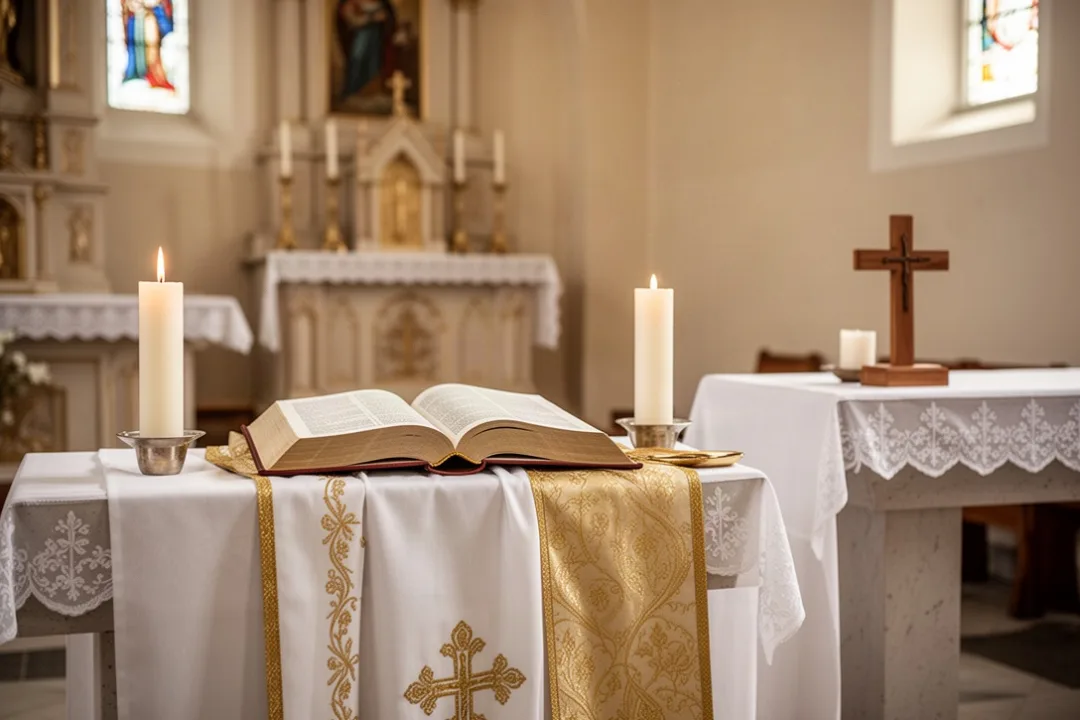
A parish celebration usually centers on the Eucharistic liturgy and readings about Thomas. The priest or minister may preach about the difference between skepticism, honest questioning, and faithful trust. Some communities also include prayers for missionaries, travelers, builders, educators, or people seeking clarity in difficult circumstances.
In churches connected with St. Thomas Christian traditions, the day may include a procession, special hymns, devotional services, cultural gatherings, and the honoring of the apostle as the community’s spiritual ancestor. Customs vary widely, so a celebration in Kerala, Chennai, Chicago, or another city may have a different character while sharing the same apostolic focus.
Families can observe the day without organizing a large event. A short reading from John, a conversation about a difficult question of faith, or a prayer for Christians who face persecution can make the feast meaningful. The purpose is not to imitate Thomas’s uncertainty as a performance, but to remember his movement toward recognition and commitment.
Useful ways to observe the feast include:
Attend Mass, Divine Liturgy, or a service honoring the Apostle Thomas.
Read John 11, John 14, and John 20, paying attention to the questions Thomas asks.
Pray for people who are searching for truth or struggling with religious doubt.
Learn about the history of St. Thomas Christian communities in India.
Discuss how a Christian community can respond with patience to sincere questions.
Support a missionary, church, or charitable ministry connected with your parish.
St. Thomas’s connection with India
Ancient Christian communities in India identify Thomas as the apostle who brought the Christian message to the region. These communities are commonly known as St. Thomas Christians or Thomas Christians. Their heritage includes distinctive liturgical, theological, and cultural traditions shaped by centuries of life in India.
According to longstanding tradition, Thomas preached in parts of southern India and was martyred near Mylapore, in present-day Chennai. A shrine at San Thome in Chennai is associated with this tradition. Historical discussions continue about the details of Thomas’s travels and martyrdom, but his importance to Indian Christian identity is clear.
St. Thomas Feast Day can therefore carry a meaning beyond the remembrance of one biblical figure. For many Indian Christians and their descendants, it celebrates a living apostolic heritage, the continuity of local Christian communities, and the connection between the Church in India and the earliest Christian mission.
If you are researching a family or parish celebration, ask which St. Thomas tradition is being followed. A Roman Catholic parish may use the July 3 readings and calendar. A Syro-Malabar, Syro-Malankara, Orthodox, or other Eastern community may include different prayers, music, fasting practices, and commemorative customs.
St. Thomas Feast Day compared with other St. Thomas feast days
The phrase “St. Thomas Feast Day” can refer to several different saints named Thomas. The Apostle Thomas is the most common meaning, but checking the full name prevents confusion when planning a service or researching a patron saint.
St. Thomas the Apostle: commonly celebrated July 3 in the Roman Catholic calendar; also remembered on different dates in Eastern and local calendars.
St. Thomas Becket: the Archbishop of Canterbury, commemorated on December 29 in the Roman Catholic calendar. He was killed in Canterbury Cathedral in 1170.
St. Thomas Aquinas: the Dominican theologian and Doctor of the Church, commemorated on January 28 in the Roman Catholic calendar.
St. Thomas More: the English lawyer, statesman, and martyr, commemorated on June 22 in the Roman Catholic calendar.
These saints have different histories and spiritual emphases. A prayer service about apostolic witness and the Resurrection points to Thomas the Apostle, while a program about religious freedom, scholarship, or public service might focus on one of the later saints.
Practical tips for finding the correct date and planning a celebration
Calendars, websites, and older prayer books can create confusion because feast dates change between rites and sometimes change in rank or observance from one calendar revision to another. Use the full name of the saint and the church tradition when searching for information.
Identify the saint. Confirm that the event honors Thomas the Apostle rather than Thomas Becket, Thomas Aquinas, or Thomas More.
Identify the church calendar. Check whether the parish follows the Roman Catholic, Anglican, Eastern Orthodox, or another liturgical calendar.
Confirm the year’s local schedule. A feast may be transferred or given a different liturgical treatment when it coincides with another major celebration.
Use the parish’s official information. The bulletin, diocesan calendar, or parish office is more reliable than an undated social media post.
Match the readings to the rite. Biblical passages and psalm settings may differ even when the feast has the same name.
Explain the purpose of the gathering. Tell participants whether the event is a Mass, a prayer service, a cultural celebration, or a historical presentation.
Common mistakes are easy to avoid. Do not assume that every church observes the feast on July 3, and do not describe Thomas only as a doubter. Do not present traditions about his missionary journeys as if every detail were established with the same certainty as the Gospel passages.
Practical check: If you need the date for a wedding program, school calendar, parish announcement, or family event, write “St. Thomas the Apostle” and include the church tradition. That wording prevents confusion with the other saints named Thomas.
What St. Thomas can teach about questions and faith
Thomas’s story gives churches a way to speak about doubt without treating every question as rebellion. Some questions come from curiosity, some from pain, and some from a desire to test whether a claim is trustworthy. Christian communities can respond differently to each, but Thomas’s example encourages honesty rather than forced certainty.
His story also calls for patience. The other disciples tell Thomas what they have seen, but their testimony does not immediately resolve his grief or confusion. When Jesus appears, he meets Thomas where he is. That pattern can encourage Christians to listen carefully to people who are searching instead of shaming them for needing time.
The feast also emphasizes the connection between personal faith and community. Thomas is not portrayed as discovering the risen Jesus alone in isolation. He remains among the disciples, hears their witness, and encounters Christ in the gathered community. Questions may be personal, but Christian belief is also formed through Scripture, worship, tradition, and the testimony of other believers.
For that reason, St. Thomas Feast Day can be especially meaningful for students, converts, people returning to church, and anyone carrying unresolved religious questions. The day offers neither a simplistic answer nor a demand to pretend. It presents Thomas as a real disciple whose uncertainty became part of his witness.
A prayer for St. Thomas Feast Day may ask for courage to seek truth, humility to admit uncertainty, and grace to recognize Christ’s presence. It can also remember missionaries, pastors, teachers, and communities whose Christian identity is linked to the apostle.
Suitable Bible readings include the passages that show Thomas’s character across the Gospel of John. John 11:16 highlights his willingness to follow Jesus into danger. John 14:5 presents his direct question about the way. John 20:24-29 provides the central Resurrection account, while Acts 1:13 places him among the apostles after the Ascension.
When reading these passages aloud, use the translation authorized by your church. For personal study, compare the surrounding verses rather than isolating Thomas’s most famous exchange. The broader context shows a disciple who is loyal, questioning, present, and ultimately transformed by the risen Christ.
A simple family or small-group format could include a reading, a few minutes of silence, discussion of one question raised by the text, and prayer for people who are seeking faith. That structure keeps the observance focused while allowing room for honest conversation.
When St. Thomas Feast Day falls in future years
In the Roman Catholic calendar, July 3 remains the ordinary date for the Apostle Thomas, so it does not move from year to year in the way Easter does. The weekday changes, however, and a local parish may adjust the public celebration because of its worship schedule or another observance.
Churches that use another rite may list October 6, December 21, Thomas Sunday after Easter, or another local date. A calendar entry without a denomination or rite is therefore incomplete. For an accurate answer, pair the date with the name of the calendar and the full title “St. Thomas the Apostle.”
Whether observed through a liturgy, a procession, a family prayer, or study of the Gospel, the feast keeps attention on a disciple whose questions became part of the Church’s testimony. St. Thomas is remembered not because he never struggled, but because he remained close enough to encounter the risen Christ.
Frequently asked questions
Is St. Thomas Feast Day always July 3?
No. July 3 is the principal date for St. Thomas the Apostle in the Roman Catholic calendar and several Western traditions. Eastern Orthodox and other churches may observe him on October 6, December 21, Thomas Sunday after Easter, or another local date. The correct date depends on the church’s rite and liturgical calendar.
Is St. Thomas the same person as Thomas Aquinas?
No. St. Thomas the Apostle was one of Jesus’ Twelve Apostles and appears prominently in the Gospel of John. Thomas Aquinas was a medieval Dominican theologian and philosopher. Their feast days are different: the Apostle is commonly honored on July 3 in the Roman Catholic calendar, while Aquinas is honored on January 28.
Why is Thomas called “Doubting Thomas”?
The nickname comes from John 20, where Thomas asks for convincing evidence after hearing that Jesus has risen. It is an incomplete description because Thomas also shows loyalty and courage elsewhere in the Gospel. His story ultimately emphasizes recognition and faith, not permanent disbelief.
How can a family celebrate St. Thomas Feast Day?
You could read the Gospel passages about Thomas, attend a church service, learn about St. Thomas Christian communities in India, or pray for people who are searching for faith. A thoughtful discussion about honest questions can also reflect the feast’s message better than a purely decorative observance.













Leave a Reply