Saint Andrew: the apostle, feast day, and enduring legacy
Saint Andrew: the apostle, feast day, and enduring legacy
When you hear the name Saint Andrew, you may think of Scotland’s flag, an X-shaped cross, or one of the apostles named in the New Testament. The answer to the basic question is straightforward: Andrew was a fisherman, an early follower of Jesus, and the brother of Simon Peter. He is remembered for bringing people to Christ, even though the Bible gives him fewer words and scenes than it gives several other apostles.
Andrew’s story is valuable precisely because it shows how an ordinary person can serve an important purpose without standing at the center of every event. He listened, followed, introduced others to Jesus, and remained part of the apostolic community. Christian tradition later connected him with missionary work, martyrdom, and several countries and cities, although some details come from tradition rather than direct biblical evidence.
Who Saint Andrew was according to the New Testament
Andrew was one of the Twelve Apostles chosen by Jesus. The Gospel accounts identify him as the brother of Simon Peter, and both men worked as fishermen. John’s Gospel associates them with Bethsaida, while the Gospel accounts also place their fishing work around the Sea of Galilee.
The name Andrew comes from a Greek word associated with manliness or courage. His name is notable because it is Greek, even though he was a Jewish man from Galilee. Names from different languages circulated in the eastern Mediterranean, so the Greek form does not by itself tell us that Andrew came from a Greek family.
The Gospel of Matthew, Mark, and Luke present Andrew as one of the first disciples called while he and Peter were working as fishermen. Jesus called them to leave their nets and follow him. The Gospel of John gives a more personal sequence: Andrew first encountered Jesus through the witness of John the Baptist, then went to find his brother Peter.
That meeting with Peter is one of Andrew’s clearest contributions. John 1:40–42 describes Andrew bringing Simon to Jesus, where Simon received the name Cephas, also translated as Peter. Andrew’s role was not to keep his discovery private; he immediately shared it with the person closest to him.
A useful way to remember Andrew: Scripture repeatedly presents him as someone who notices a person or possibility and then brings it to Jesus. His influence often appears through connection rather than public prominence.
What Andrew did among the disciples
The New Testament names Andrew in the lists of the apostles, usually near Peter, James, and John. These lists differ slightly in arrangement, but they consistently place him among the Twelve. He traveled with Jesus, heard his teaching, witnessed healings, and shared in the community that continued Jesus’ mission after the Resurrection.
Andrew appears by name in only a handful of Gospel scenes, but those scenes reveal a recognizable pattern. He is often the disciple who identifies a person, raises a question, or helps make a connection. His actions are modest, yet they move the story forward.
Andrew brings Peter to Jesus
In John 1, Andrew is first described as a disciple connected with John the Baptist. After hearing John identify Jesus, Andrew follows Jesus and spends time with him. He then finds his brother Simon and tells him that they have found the Messiah, before bringing him to Jesus.
This scene is central to Andrew’s identity. Peter’s later prominence does not erase Andrew’s part in Peter’s first encounter with Jesus. The story illustrates how a person’s spiritual influence may begin with one conversation at home, at work, or among close friends.
Andrew points out the boy with the loaves and fish
In John 6:1–15, a large crowd follows Jesus, and the disciples face the practical problem of feeding everyone. Andrew mentions a boy who has five barley loaves and two fish, while also recognizing that such a small amount seems inadequate for the crowd.
The Gospel then describes Jesus multiplying the food. Andrew did not perform the miracle, but he helped bring the available resource into view. His comment combines realism with openness: he saw the limitation, yet he still placed what was available before Jesus.
Andrew helps Greek visitors approach Jesus
John 12:20–22 records that some Greeks wanted to see Jesus. They first approached Philip, and Philip spoke with Andrew. Together they brought the request to Jesus. This brief account again presents Andrew as a bridge between people and Christ.
The passage occurs near the end of Jesus’ public ministry and introduces teaching about his approaching death and glorification. The Gospel does not explain the Greeks’ background in detail, so readers should avoid turning the scene into a claim that Andrew personally converted a specific nation. It does show that people outside the immediate circle of the disciples were seeking Jesus and that Andrew helped carry their request forward.
In Mark 13:3, Andrew is among the disciples who privately ask Jesus about his teaching concerning the temple. The question is connected with Peter, James, and John, who seek clarification about when the predicted events will take place. Jesus’ response forms the discourse often called the Olivet Discourse.
This moment gives a glimpse of Andrew as a learner. He was not merely present for public signs; he also asked questions about difficult teaching. His example can encourage careful listening and honest inquiry rather than pretending to understand everything immediately.
How Andrew relates to Peter and the other apostles
Andrew is often described as Peter’s brother, but he should not be reduced to a supporting character in Peter’s story. The two men shared a trade and an early call to discipleship, yet the Gospels give them different kinds of prominence. Peter frequently speaks for the group and appears in major events, while Andrew more often appears in moments of introduction and practical attention.
Peter became one of the best-known leaders of the early church, and Christian tradition associates him especially with Rome. Andrew’s reputation developed differently. He became associated with missionary preaching beyond Judea, maritime regions, Constantinople, Greece, and places that later claimed him as a patron. These later associations are not all equally well documented.
The apostolic group itself included varied personalities and backgrounds. Andrew’s example sits alongside the boldness of Peter, the questions of Thomas, the zeal of Simon the Zealot, and the faithful presence of other disciples. The New Testament does not suggest that only the most visible apostle mattered. Each person belonged to the shared mission.
What happened to Saint Andrew after the Resurrection
The New Testament says little about Andrew’s later movements. Acts names the apostles as a group in the period after Jesus’ ascension, but it does not provide a travel diary for Andrew. The biblical record therefore supports his place among the apostles, while later accounts supply much of the detail about his missionary activity.
Christian traditions have connected Andrew with regions around the Black Sea, Asia Minor, Greece, and areas north of the Danube. Some Eastern Christian communities especially honor him as a missionary to lands associated with Byzantium and the Black Sea. Western traditions have also linked him with Achaea in Greece.
These accounts developed over time and are not identical. Some traditions attribute particular journeys or churches to Andrew without providing evidence that modern historians can verify. A careful account distinguishes New Testament evidence, early Christian memory, and later national or local traditions.
Andrew’s connection with Constantinople
The Ecumenical Patriarchate of Constantinople honors Andrew as its patron. This connection is related to the tradition that Andrew founded or served the church of Byzantium, the city later known as Constantinople and now Istanbul. The tradition also supports a symbolic relationship between Peter, associated with Rome, and Andrew, associated with Constantinople.
That relationship matters especially in the history of Eastern and Western Christianity. Andrew’s name is therefore prominent not only in parish devotion but also in discussions of apostolic succession, church leadership, and the relationship between major Christian centers.
Andrew’s connection with Greece
Patras, a city in western Greece, is traditionally regarded as the place where Andrew was martyred. The Cathedral of Saint Andrew in Patras is an important pilgrimage site, and relics associated with the apostle have been honored there and elsewhere.
Tradition holds that Andrew was crucified during the reign of the Roman governor Aegeas, sometimes identified in Latin sources as Aegeas or Aegeates. The New Testament does not describe his death, and the surviving accounts of his martyrdom were written later. Details about the form of the cross and his final words belong to Christian tradition rather than the biblical text.
Why Saint Andrew is associated with an X-shaped cross
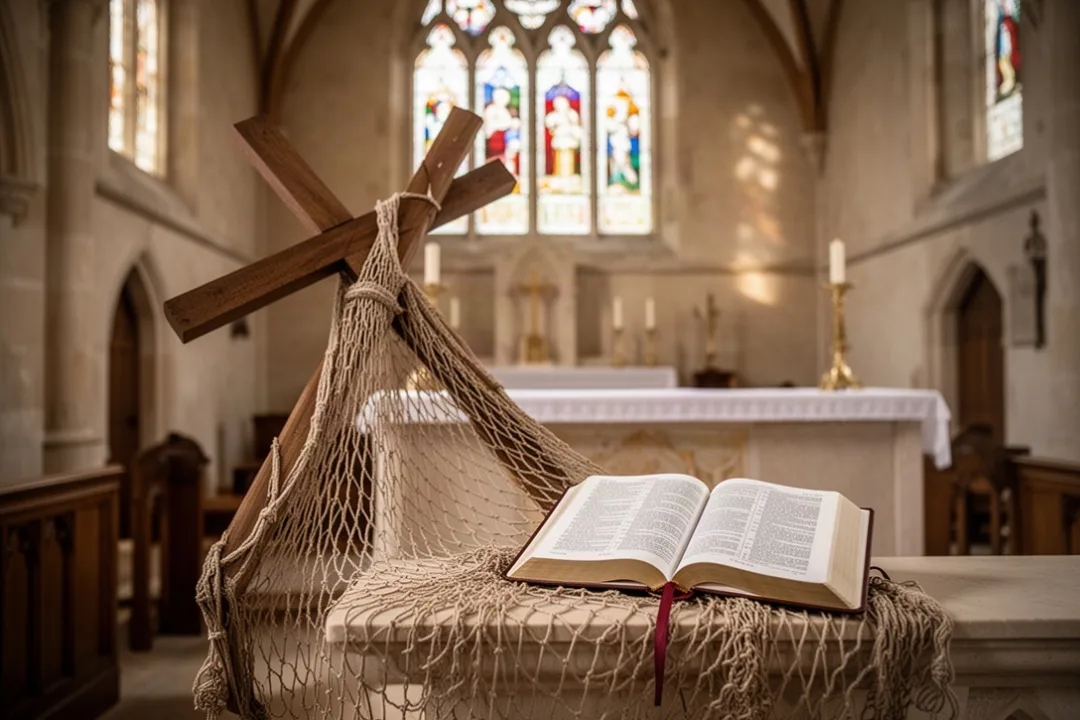
The saltire, or diagonal cross shaped like the letter X, is commonly called Saint Andrew’s Cross. Tradition says Andrew was crucified on a cross of this form because he considered himself unworthy to die on the same kind of cross as Jesus. This account explains the symbolism, but it should be presented as tradition rather than a fact directly recorded in the New Testament.
The saltire appears on the national flag of Scotland, where it is known as the Saltire. It is also used in flags, heraldry, church art, and civic symbols in places connected with Andrew. In Christian art, Andrew may be shown with a diagonal cross, fishing equipment, or a net.
Artists sometimes portray him as an older bearded man, following conventions used for the apostles. These images are devotional and symbolic, not reliable portraits. No authenticated contemporary likeness of Andrew is known.
Why Scotland celebrates Saint Andrew
Andrew is the patron saint of Scotland, and his feast day is closely tied to Scottish identity. The precise history of how this patronage developed includes medieval traditions and national symbolism. One popular account says that relics of Andrew were brought to Scotland by a monk named Regulus, but the story is legendary and should not be treated as established history.
Scotland’s flag, the white saltire on a blue field, is the most recognizable national symbol associated with Andrew. The cross also appears in the Union Flag because Scotland’s saltire is combined with the crosses associated with England and Ireland.
Saint Andrew’s Day takes place on November 30. In Scotland, celebrations may include traditional music, dancing, meals, cultural events, and gatherings that highlight Scottish heritage. The day can be religious, cultural, or both, depending on the community observing it.
Andrew is also a patron or important figure in traditions connected with several other places, including Greece, Romania, Ukraine, Russia, and Barbados. Patronage can reflect different layers of history: an apostolic tradition, a church dedication, a relic, a local legend, or a later national decision.
When and how Christians observe Saint Andrew’s feast day
Most churches that keep a calendar of saints observe Andrew’s feast on November 30. In Western Christianity, the date is generally known as the Feast of Saint Andrew the Apostle. Eastern Christian churches also celebrate him on November 30, although liturgical customs and calendars can differ.
A parish may mark the feast with a Mass, Divine Liturgy, prayer service, Scripture readings, preaching, music, or a procession. Churches dedicated to Andrew may hold special events that connect the apostle’s story with local service and evangelism.
Families and individuals can observe the day in simple ways. Reading the passages that mention Andrew, learning about a local church named for him, or sharing a meal connected with Scottish, Greek, or another regional tradition can make the day meaningful without treating cultural customs as universal religious requirements.
Read Andrew’s Gospel scenes: John 1:35–42, John 6:1–15, John 12:20–26, and Mark 13:3–13 are useful starting points.
Pray for people who introduce others to faith: teachers, parents, sponsors, pastors, missionaries, and friends can all reflect Andrew’s connecting role.
Support a practical ministry: Andrew’s appearance in the feeding story makes food assistance and hospitality fitting themes for service.
Learn the difference between history and tradition: Keep the biblical record distinct from later accounts of Andrew’s journeys and death.
Traditional prayers and devotions connected with Saint Andrew
There is a traditional prayer associated with Saint Andrew that begins with a reflection on the apostle’s longing to be near the cross. It is often used from November 30 through Christmas Eve, sometimes as part of a seasonal novena. The prayer exists in several versions, and its popular use does not mean that Andrew himself wrote it.
Many people also ask Andrew’s intercession for courage, evangelization, family members, travelers, fishermen, and people trying to share their faith with someone else. These devotions reflect his traditional image as a missionary and as the brother who brought Peter to Jesus.
A short prayer in your own words can focus on the same themes: gratitude for people who helped you encounter faith, courage to speak with humility, and willingness to offer what you have even when it appears insufficient. Christian prayer traditions differ, so individuals should follow the practices of their own church.
Prayer perspective: Andrew’s example does not require dramatic public speaking. His witness often begins with noticing one person, sharing what he has learned, and making an honest invitation.
Common mistakes when learning about Saint Andrew
Stories about Andrew have circulated for centuries, and some popular claims blend Scripture, legend, art, and national tradition. A few simple habits can help you understand his story accurately.
Do not confuse Andrew with Peter: They were brothers, but Andrew was not another name for Peter. Andrew is also distinct from other New Testament figures with similar names.
Do not claim that every journey is documented in the Bible: The New Testament does not give a detailed account of Andrew’s missionary travels after Pentecost.
Do not present the X-shaped cross as certain biblical evidence: It comes from later martyrdom tradition.
Do not assume every Saint Andrew celebration is exclusively religious: In Scotland and elsewhere, November 30 may include national and cultural events as well as worship.
Do not overlook Andrew because Peter is more famous: The Gospel specifically remembers Andrew as the person who brought Peter to Jesus.
Do not treat a devotional image as a historical portrait: Paintings and statues use symbols to communicate faith, not to document Andrew’s appearance.
What Saint Andrew can teach modern readers
Andrew’s story speaks to people who serve without receiving much public recognition. He does not dominate the Gospel narrative, yet his actions matter. He finds Peter, identifies the boy with food, helps Greek visitors reach Jesus, and asks questions as a disciple.
His example also offers a balanced view of influence. Andrew is neither portrayed as passive nor as a self-promoter. He pays attention, speaks when he has something useful to say, and allows Jesus to determine what happens next. That combination of initiative and humility explains why he remains a compelling apostolic figure.
The feeding story offers another practical lesson. Andrew sees that the available food is small compared with the need, but he does not hide the resource or dismiss the situation entirely. Christians often apply this pattern to acts of service: name the real limitation, offer what is available, and trust that the result does not depend on personal status.
His encounter with Peter also highlights the long reach of an ordinary invitation. Andrew may not have known what Peter would become, but he still brought him to Jesus. A conversation that seems small at the time can shape a family, congregation, or wider community for years.
Where Saint Andrew’s relics and symbols are honored
Relics attributed to Andrew have been kept or honored in several places, including Patras, Constantinople, Rome, and Scotland. The history of their movement is complex, and different churches preserve different traditions about their authenticity and transfer. Relics should therefore be discussed with respect for religious belief and care about historical certainty.
In 1964, Pope Paul VI returned a relic associated with Andrew to the Greek Orthodox Church in Patras, an event often remembered as a gesture of Christian reconciliation. Other exchanges and returns of relics have taken place in the context of improved relationships between Christian communities.
Churches and public spaces named for Andrew can be found far beyond these historic centers. His symbols include the diagonal cross, a fishing net, fish, and sometimes a book representing apostolic teaching. These images help worshipers recognize a figure whose written biography is brief but whose traditional influence is widespread.
Passages to read when studying Saint Andrew
A focused reading of the Gospel passages gives a clearer picture than a collection of legends alone. Each passage reveals a different aspect of Andrew’s character and ministry.
John 1:35–42: Read about Andrew’s first encounter with Jesus and his decision to bring Simon Peter.
Mark 1:16–20: Consider the call of Andrew and Peter as they work beside the Sea of Galilee.
Matthew 4:18–22: Compare Matthew’s account of the brothers leaving their nets to follow Jesus.
John 6:1–15: Notice Andrew’s role in identifying the boy’s small supply during the feeding of the crowd.
John 12:20–26: Observe how Andrew helps Greek visitors make contact with Jesus.
Mark 13:3–13: See Andrew among the disciples asking about Jesus’ teaching concerning the temple and coming events.
Acts 1:12–14: Place Andrew among the apostles who remain together in prayer after Jesus’ ascension.
These references do not answer every question about Andrew’s life. They do establish the central facts: he was one of the Twelve, the brother of Peter, an early disciple, and a person who repeatedly helped others come closer to Jesus. Later traditions add color and local meaning, but the Gospel scenes remain the firmest foundation for understanding him.
Why Saint Andrew still matters
Saint Andrew is remembered not because he produced a large body of writing or occupied every major scene, but because he responded when he recognized something important. He followed Jesus, brought his brother, noticed a small offering, and helped outsiders make contact with the teacher his own community was discovering.
His feast day and symbols have traveled across churches, nations, and cultures. For some people, Andrew is the patron of Scotland; for others, he is the apostle of Greece, Constantinople, fishermen, or quiet personal witness. Across these traditions, one theme remains clear: faith can spread through a simple act of bringing one person to another.
Frequently asked questions
Was Saint Andrew one of the twelve apostles?
Yes. Andrew was one of the Twelve chosen by Jesus. The New Testament identifies him as Simon Peter’s brother and names him in the apostolic lists. He appears in several Gospel scenes, including the calling of the fishermen, the feeding of the crowd, and the meeting with Greek visitors who wanted to see Jesus.
Why is Saint Andrew’s cross shaped like an X?
Christian tradition says Andrew was crucified on a diagonal cross because he considered himself unworthy to die on the same type of cross as Jesus. The New Testament does not describe Andrew’s death or the shape of his cross. The saltire later became strongly associated with him and appears on Scotland’s flag.
What is Saint Andrew’s feast day?
Saint Andrew’s feast day is November 30. Churches that honor the apostles may mark it with worship, Scripture readings, prayer, music, or special services. In Scotland, Saint Andrew’s Day is also a major cultural observance featuring traditional food, dancing, music, and celebrations of Scottish heritage.
What is Saint Andrew the patron saint of?
Andrew is especially associated with Scotland, Greece, Constantinople, Romania, Ukraine, Russia, and Barbados. He is also traditionally connected with fishermen and several coastal communities. Patronage developed through different combinations of local church tradition, missionary stories, relics, and national history, so the details vary by place.














Leave a Reply