St. Barbara: Story, feast day, symbols, and patronage
St. Barbara: Story, feast day, symbols, and patronage
St. Barbara is a Christian martyr traditionally believed to have lived in the third century. Her feast day is December 4, and she is especially honored as the patron saint of artillery workers, miners, military engineers, architects, and people who face sudden death.
Her story says that Barbara was locked in a tower by her pagan father after choosing Christianity, secretly received baptism, and was killed for her faith. The details come mainly from later Christian tradition rather than contemporary historical records, so her story should be read with care: her devotion is ancient, while parts of the familiar narrative are difficult to verify.
Who St. Barbara was and why Christians remember her
Barbara is traditionally described as a young woman from the eastern Roman Empire, often associated with the city of Heliopolis in Phoenicia. Heliopolis was an important ancient city, known today as Baalbek in Lebanon. Accounts place her life during a period when Christianity was still forbidden or heavily persecuted in parts of the Roman world.
According to the traditional account, Barbara came from a wealthy family. Her father, usually named Dioscorus, was a pagan who wanted to protect or control her. Some versions say he kept her in a tower to prevent unwanted contact with the outside world, particularly with Christian teachers.
Barbara is said to have encountered Christianity despite this isolation. She accepted the faith, rejected the religious expectations placed on her, and arranged for a priest to baptize her. Her conversion became known when she altered the design of a bathhouse or tower being built for her, adding a third window as a sign of the Trinity: Father, Son, and Holy Spirit.
Her father reportedly became furious and handed her over to local authorities. The story says Barbara was tortured and eventually beheaded by Dioscorus himself. He was then struck by lightning, which explains why she became associated with thunder, lightning, explosions, and sudden death.
Historical caution: The surviving stories about Barbara were written down centuries after the period in which she is said to have lived. The Church’s long devotion to her is clear, but specific details of her biography are not established with the same certainty as those of saints documented by contemporary sources.
Barbara is remembered not because her story celebrates suffering for its own sake, but because it presents her as someone who remained faithful under pressure. For many Christians, she represents courage of conscience, protection in dangerous work, and hope in the face of an unexpected death.
The story of St. Barbara’s tower and martyrdom
The tower is the most recognizable symbol in images of St. Barbara. It represents both the physical confinement imposed by her father and the spiritual life she developed despite that confinement. In some artistic traditions, the tower has three windows, a visual reference to the Trinity and to Barbara’s decision to express her Christian belief openly.
The story varies from one source and region to another. In some versions, Barbara’s father builds the tower to hide her from suitors. In others, it is a bathhouse or fortified structure. Barbara asks for three windows instead of two, explaining that the light entering through them can symbolize the three persons of the Trinity.
These details are part of a broader style of medieval saint biography. Such accounts often combine a saint’s martyrdom with meaningful symbols, moral lessons, and dramatic events. The purpose was not always to provide a modern historical biography. Stories of this kind helped communities remember a saint’s character, faith, and relationship with God.
The traditional account says Barbara escapes briefly after her father discovers her conversion. A mountain opens or a rock changes shape, allowing her to hide, but a shepherd reveals her location. She is then brought before a local official, sometimes identified as a governor named Marcianus, and refuses to renounce Christianity.
The punishments described in later versions are severe. They may include beatings, imprisonment, exposure, and other forms of torture. The narrative emphasizes Barbara’s endurance and her refusal to abandon her faith. Finally, she is condemned to death, and her father carries out the execution.
Lightning kills Dioscorus immediately afterward, according to the legend. This event shaped Barbara’s role as a protector against lightning strikes and sudden, violent death. It also explains her connection to weapons that produce thunderous explosions, especially artillery.
Readers should separate the story’s religious meaning from claims that cannot be independently confirmed. The tower, the three windows, the father’s execution of Barbara, and the lightning strike are familiar elements of tradition, but historians do not possess reliable contemporary evidence for every part of the account.
St. Barbara’s feast day and Christian observances
St. Barbara’s feast day is December 4. It is observed in the Roman Catholic tradition, Eastern Orthodox Christianity, and several Eastern Catholic communities, although customs and liturgical calendars can differ. In some places she is honored through church services, processions, prayers, food traditions, or celebrations connected to local occupations.
In the Roman Catholic Church, Barbara was once included more broadly in the liturgical calendar. Her commemoration was later limited in the Roman calendar because the historical evidence for her life was considered uncertain. She remains a popular saint in many communities, and local churches, military units, professional groups, and families continue to honor her.
Eastern Christian communities may refer to her as the Great Martyr Barbara. Her feast can include Divine Liturgy, hymns, blessings, and the veneration of an icon or relic where one is present. Practices vary by country, parish, and tradition, so a local church is the best source for details about a particular observance.
One well-known custom in parts of the Middle East is associated with Saint Barbara’s Day, or Eid il-Burbara. Families may prepare a sweet wheat dish or other regional foods and gather together. In some communities, children dress in costumes or participate in neighborhood traditions. These customs can combine Christian remembrance with older seasonal practices.
Another tradition is the cutting of branches on or around December 4. In some European regions, people place branches from fruit trees in water, hoping they will bloom around Christmas. The practice is linked with Barbara’s feast and has become a sign of life, hope, and renewal during winter.
Common ways to observe the feast day include:
Attending a liturgy or prayer service dedicated to St. Barbara.
Praying for people who work in mines, construction, engineering, emergency response, or the armed forces.
Learning about the history of Christian martyrdom and the limits of the surviving evidence.
Preparing a local Saint Barbara food tradition with family or a parish community.
Supporting people who face dangerous work or who are grieving a sudden death.
The feast day does not require every believer to accept each legendary detail literally. Many people honor Barbara as a model of faithful courage while recognizing that her written biographies were shaped by centuries of storytelling and devotion.
What St. Barbara symbolizes in art and devotion
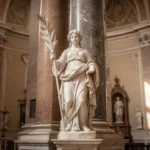
Artists usually portray Barbara as a young woman wearing a crown, holding a tower, or standing beside one. She may also carry a sword, a chalice, a palm branch, a book, or a host. Each object points to a different part of her traditional story or to a broader Christian meaning.
The tower, windows, and crown
The tower is Barbara’s most consistent attribute. It recalls her confinement and her confession of faith. Three windows may appear in the tower to represent the Trinity. In some images, Barbara holds the tower in her hand; in others, it stands behind her as a prominent architectural feature.
A crown can indicate her noble or wealthy family background, but it can also symbolize the “crown of martyrdom” traditionally associated with saints who died for their faith. The crown is therefore not only a reference to social status. It represents spiritual victory and fidelity under persecution.
The sword, palm branch, and chalice
The sword generally refers to Barbara’s death by beheading. It can also signify the decisive separation between her Christian commitment and the demands of her father. In a religious image, the sword is not an invitation to violence; it identifies the manner of her martyrdom.
The palm branch is a common Christian symbol of martyrdom. It recalls the ancient association between palm branches and victory, presenting the martyr as someone who remained faithful even when facing death.
A chalice, sometimes shown with the Eucharist, connects Barbara with Christian worship and with the traditional prayer for protection against sudden death. This attribute is especially meaningful because some older devotional traditions asked Barbara to help believers receive the sacraments before dying unexpectedly.
Lightning, cannon, and other symbols
Lightning is linked to the death of Barbara’s father in the traditional story. It also connects her with storms, thunder, and sudden danger. In military art, she may appear with a cannon or artillery equipment, reflecting her patronage of those who work with powerful explosives.
Her symbols may therefore change depending on where her image appears. A parish church might show the tower and palm branch, while a military chapel may emphasize the cannon. A mining community may portray her with tools or underground workers, and an architectural setting may highlight the tower as a sign of building and protection.
How to identify her: Look first for the tower, especially one with three windows. A sword, palm branch, chalice, crown, lightning, or cannon can provide additional clues, but the tower is usually the most helpful attribute.
Who considers St. Barbara a patron saint?
Barbara is associated with occupations and situations involving explosions, unstable structures, fire, storms, and sudden death. Her patronage developed over time from the events of her legend and from the practical dangers faced by different communities.
Artillery personnel are among her best-known devotees. In several countries, military artillery units hold Saint Barbara celebrations, often called a Saint Barbara’s Day observance. These events may include a religious service, a formal gathering, or a professional ceremony, depending on the unit’s country and tradition.
Miners also honor Barbara because mining involves underground work, blasting, cave-ins, and other serious hazards. In mining regions, her image may be placed near a mine entrance, in a workplace chapel, or in a community church. She can represent both protection and solidarity among workers.
Her patronage extends to other groups connected with dangerous materials, construction, and sudden disasters. Lists differ by region, but commonly associated occupations include:
Military artillery crews and weapons technicians.
Miners and people who work with blasting materials.
Military engineers and explosive ordnance specialists.
Architects, builders, and people associated with towers or fortifications.
Firefighters and others who respond to fires or explosions.
People working with lightning, storms, or electrical hazards.
Barbara is also invoked by people who fear dying suddenly. This connection does not mean that Christians expect a saint to remove every danger. Instead, devotional prayer may express a desire for protection, courage, preparation, and a faithful death when circumstances cannot be controlled.
For workers, her patronage can carry a practical social meaning. Remembering Barbara may encourage a community to respect workplace hazards, care for colleagues, and honor people who have been injured or killed while working. A feast day can serve as both a religious observance and a moment to recognize professional responsibility.
Architects and builders may be connected with Barbara because of the tower in her story. The association is less about a specific technical role and more about the imagery of buildings, fortified structures, and the protection represented by a strong shelter.
How to pray to St. Barbara and use her story thoughtfully
There is no single required prayer to St. Barbara. A person may use a traditional prayer from a parish or devotional book, or speak plainly about a dangerous job, a serious storm, a family member in the military, or the fear of an unexpected death. The prayer can ask for protection, wisdom, courage, and care for others.
A simple prayer might include these elements:
Address God and remember Barbara’s example of faithful courage.
Name the person, workplace, family, or situation requiring care.
Ask for sound judgment, safe practices, and protection from harm.
Pray for people already injured, grieving, or facing death.
End with trust in God rather than a promise that no difficulty will occur.
For Christians, devotion to Barbara should point beyond the saint herself. Saints are honored as examples and intercessors, while worship belongs to God. A prayer to Barbara may therefore ask her to pray for you, just as someone might ask a trusted member of the Christian community to pray.
Her story can also be approached through the themes it raises. Barbara refuses to let family pressure determine her religious identity. She remains committed despite punishment. Her example may speak to people who are trying to act according to conscience while facing intimidation, isolation, or threats.
At the same time, the violence in the traditional story should not be romanticized. A respectful reading recognizes the suffering of martyrdom without treating abuse as proof of holiness or encouraging anyone to remain in danger. If you face threats because of your beliefs, seek practical help from trusted people, local authorities, clergy, or support services.
People who honor St. Barbara in a workplace can pair prayer with concrete safety measures. Religious devotion does not replace training, protective equipment, emergency planning, or responsible supervision. For miners, soldiers, firefighters, construction workers, and others in high-risk roles, careful preparation and mutual responsibility are essential forms of respect for life.
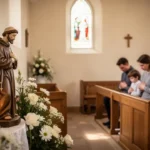
Her feast day can also be a time to remember those who have died suddenly. A family might light a candle, visit a church, donate to a relief organization, or contact someone who has lost a loved one. These actions give the tradition a living purpose: not merely asking for protection, but extending care to people affected by danger and loss.
St. Barbara’s enduring appeal rests on the meeting of several ideas: a young woman’s resistance to coercion, the Christian meaning of martyrdom, the fear of sudden death, and the need for protection in hazardous work. Whether approached as history, legend, art, or devotion, she remains a recognizable figure whose tower continues to carry a clear message about courage and conscience.
Frequently asked questions
When is St. Barbara’s feast day?
St. Barbara’s feast day is December 4. Churches and communities observe it in different ways, including liturgies, processions, prayers, military ceremonies, and regional food customs. Eastern Christian and Roman Catholic communities may follow different calendars or local practices, so the exact form of observance depends on the tradition and location.
Why is St. Barbara associated with lightning?
According to her traditional legend, lightning killed her father after he executed her for becoming Christian. This dramatic detail led to her association with lightning, thunder, explosions, and sudden death. It also helped explain why artillery workers, miners, and others exposed to dangerous blasts came to regard her as a patron saint.
Is St. Barbara a historically verified person?
Barbara has been honored by Christians for many centuries, but the surviving written accounts were recorded long after the period in which she supposedly lived. Historians cannot verify every detail of her biography, including the tower and lightning story. Her ancient devotion is well established, while the narrative details remain part of religious tradition.
What should you look for in an image of St. Barbara?
The most useful identifying feature is a tower, often shown with three windows. She may also hold or stand beside a sword, palm branch, chalice, book, or crown. Lightning and cannon imagery often appears when the artwork emphasizes her patronage of artillery, miners, firefighters, or people facing sudden danger.













Leave a Reply