If you are looking for the patron saint of firemen, the usual answer is Saint Florian. He is honored especially by firefighters, fire departments, emergency workers, and communities that have experienced destructive fires. His feast day is May 4, which is also observed in many places as a day connected with firefighters and fire-safety traditions.
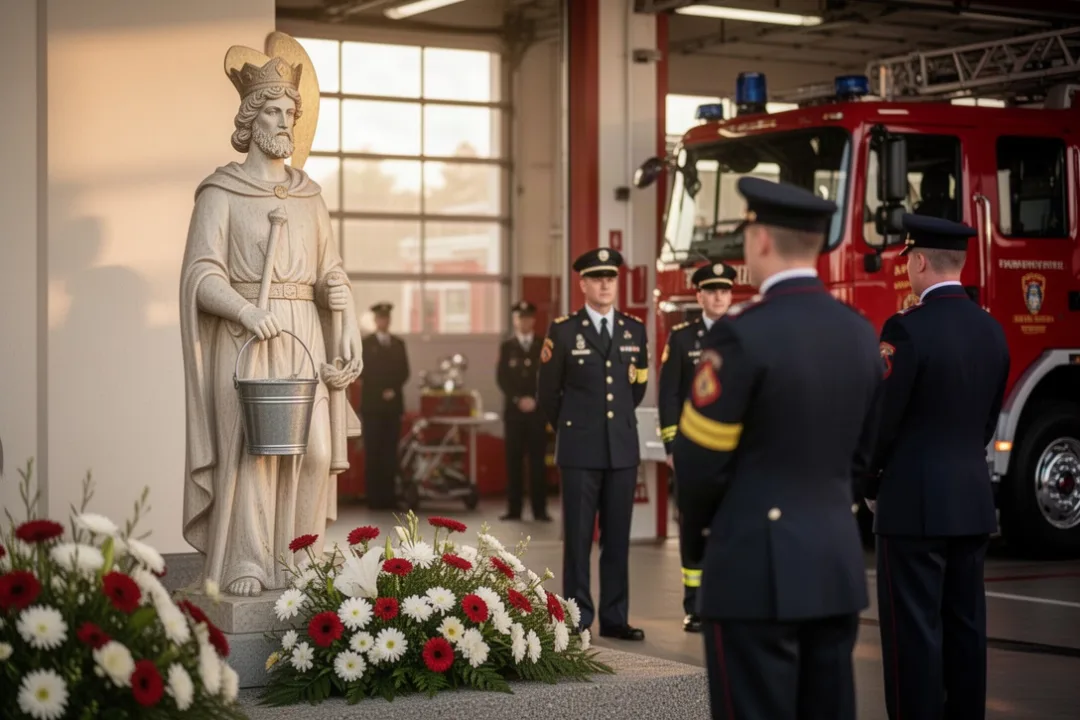
Saint Florian is often shown wearing the uniform or armor of a Roman officer while pouring water from a bucket onto a burning building. The image reflects a later tradition about his protection from fire, but his historical story centers on courage under persecution, loyalty to his Christian faith, and willingness to protect others at great personal cost.
Short answer: Saint Florian is the most widely recognized patron saint of firemen. Saint Barbara is also associated with firefighters in some regions and traditions, but Florian is the name most commonly connected with fire departments.
Saint Florian lived during the Roman Empire and served as an officer in the Roman military or civil administration. Historical details about his life are limited, and some later accounts combine documented tradition with devotional storytelling. He is generally identified as Florian of Lorch, linked with the Roman province of Noricum, in an area that is now part of Austria.
According to tradition, Florian refused to take part in the persecution of Christians during the reign of Emperor Diocletian. He was arrested, questioned, and eventually killed because of his Christian faith. The traditional account says that he was thrown into the Enns River with a stone tied around his neck. He is therefore honored as a Christian martyr, not simply as a legendary figure connected with firefighting.
The association with fire developed through his popular image and devotional traditions. Stories describe Florian putting out a fire with a small amount of water, often from a bucket. That image made him an understandable intercessor for people whose work involves entering burning buildings, controlling flames, and protecting homes, businesses, forests, and communities.
His patronage also reflects the qualities firefighters are expected to show: discipline, bravery, quick judgment, self-sacrifice, and service to neighbors. The title does not mean that firefighters expect a supernatural guarantee against injury. Rather, devotion to Florian expresses a hope for protection, strength, wisdom, and peace in dangerous work.
What is known about Saint Florian’s life
Saint Florian is believed to have been born sometime in the third century. He served in the Roman administration and is often described as a commander or officer responsible for organizing troops. The exact position he held is not certain, and many biographical details come from later sources rather than contemporary records.
Tradition places his martyrdom on May 4, around the early fourth century. He was reportedly arrested after expressing solidarity with Christians who were being persecuted. Even though he may not have been sentenced for carrying out the same religious practices as those Christians, his refusal to deny them brought him under suspicion.
Florian’s story became especially influential in Central Europe. Churches, chapels, statues, and wells were dedicated to him, particularly in Austria, Germany, Poland, and nearby areas. In towns vulnerable to devastating fires, communities sought his protection and placed his image near houses, public buildings, and water sources.
Some traditions also connect Florian with water, flood protection, brewers, and chimney sweeps. These associations developed from local customs and the practical relationship between water, fire prevention, and trades that dealt with heat or smoke. His most familiar role, however, remains patron of firefighters and protection from fire.
How to recognize Saint Florian in religious art
Saint Florian’s artistic symbols make him relatively easy to identify. He is commonly depicted as a Roman soldier or officer holding a flag, spear, or shield. His clothing may be ancient military armor, a cloak, or a uniform-like costume based on the artistic style of the period.
The clearest identifying feature is usually the bucket of water. Florian may be shown pouring it over a burning house, tower, or group of buildings. Some images show him holding the bucket while flames appear at his feet or beside him. The small stream of water emphasizes trust, protection, and the belief that great danger can be met with courage and divine help.
A bucket of water: the most recognizable reference to his connection with fire protection.
Flames or a burning building: a visual reminder of the danger faced by firefighters and the communities they serve.
Roman armor: a sign of his military or administrative service and his readiness to stand firm under pressure.
A martyr’s palm: a traditional Christian symbol of victory through faithful endurance.
A flag, spear, or shield: symbols of duty, courage, and defense.
A stone or river setting: references to the tradition of his death by drowning.
Not every statue or medal includes every symbol. A small Saint Florian medal may show only a figure holding a bucket, while a church statue might include a detailed burning building and military clothing. The style can vary substantially from one country or artist to another.
Saint Florian’s feast day and firefighter traditions
Saint Florian’s feast day is May 4. In Catholic calendars and local customs, the day may be marked with a Mass, a procession, a blessing of firefighters, or a memorial for emergency workers who died in the line of duty. The way it is observed depends on the local diocese, parish, fire department, or community.
Fire departments may use the day for both religious observance and public service. A department might attend a worship service, place flowers at a memorial, display a Saint Florian statue, or invite families and residents to a fire-prevention event. These practices are especially common in communities with strong Central European Catholic heritage.
For a firefighter or family member, the feast day can be a meaningful opportunity to:
Attend a service dedicated to Saint Florian or emergency responders.
Remember firefighters, dispatchers, and other public-safety workers who have died.
Ask for protection, sound judgment, and strength during future calls.
Thank current and retired members of a fire department.
Review household fire-safety plans, smoke alarms, and escape routes.
Support a department, relief fund, or family assistance organization.
A practical safety activity fits naturally with the spiritual meaning of the day. Checking smoke-alarm batteries, practicing an evacuation plan, or learning how to use a fire extinguisher turns remembrance into an act of protection. Devotion to a patron saint can accompany responsible preparation; it does not replace training, equipment, building codes, or emergency planning.
A useful observance: On May 4, combine a prayer or memorial service with a concrete safety check at home or work. Test alarms, clear exits, and make sure everyone knows where to meet after an evacuation.
What Saint Florian represents to firefighters
Saint Florian’s importance is not limited to the image of water putting out flames. His story gives firefighters a model of service under pressure. He held a position of authority, yet his traditional account emphasizes responsibility toward vulnerable people rather than personal status.
His martyrdom also makes him a symbol of integrity. In the story, he does not abandon people who are being persecuted simply to preserve his own safety. For firefighters, that idea can represent the duty to enter dangerous situations, protect strangers, and act according to professional standards even when fear is present.
Firefighters may also identify with Florian because his work and death involve a close relationship with danger. A patron saint is not necessarily chosen because the person lived the same occupation. Instead, the connection often grows from shared virtues, a symbolic image, historical devotion, or a community’s long-standing custom.
For some firefighters, Saint Florian is a deeply personal religious figure. Others may value him mainly as part of department heritage. Some may wear his medal, while others may display his image on a station wall or patch. These forms of respect can coexist with different religious beliefs and levels of personal devotion.
How to use a Saint Florian medal or statue
A Saint Florian medal is commonly given to firefighters, recruits, emergency responders, or family members. It may be worn on a chain, attached to a key ring, placed in a vehicle, or kept in a locker. A medal is a devotional reminder, not a protective device with guaranteed magical power.
When choosing one, consider the setting and the person who will receive it. A small, durable medal may be best for everyday wear, while a larger medal or statue may suit a fire station, memorial, or home. If the recipient is Catholic, the medal can be blessed by a priest or deacon, although the blessing does not change the person’s equipment or remove the risks of the job.
Look for these details when selecting a meaningful image:
The figure of Florian holding or pouring from a bucket.
A clear reference to fire, such as flames or a burning building.
The recipient’s name, department, rank, or service dates if personalization is appropriate.
A size and material suitable for regular wear or station display.
A design that respects the recipient’s religious convictions and personal preferences.
A statue can serve as a focal point for a department prayer, annual ceremony, or memorial display. It may stand near a chapel, station entrance, training room, or remembrance area. Some departments may prefer a simple plaque or emblem rather than a religious statue, particularly when serving a religiously diverse community.
Prayers and ways to honor Saint Florian
There is no single required prayer to Saint Florian for firefighters. A person may use a traditional prayer from a parish or devotional book, or speak in their own words. A short prayer can ask for protection, clear thinking, physical courage, compassion, and safe returns for everyone responding to an emergency.
A prayer may also include firefighters’ families, dispatchers, emergency medical personnel, law enforcement officers, utility workers, and residents affected by a fire. Remembering those who lost homes or loved ones keeps the focus on the whole community rather than on the responder alone.
A personal prayer might follow this pattern:
Address Saint Florian and acknowledge his example of courage and faithful service.
Ask God for protection and wisdom for firefighters facing danger.
Pray for calm decisions, teamwork, and care for injured or displaced people.
Remember firefighters who have died and those living with injuries or trauma.
Ask for strength and patience for families waiting at home.
End with a commitment to serve others responsibly and prepare for emergencies.
People who are not Christian can still participate respectfully in a Saint Florian observance by attending a memorial, honoring fallen firefighters, or supporting public-safety work. A department ceremony can make room for religious prayer, a moment of silence, or inclusive words of remembrance according to local practice.
How Saint Barbara is connected with firefighters
Saint Barbara is another figure sometimes associated with firefighters. She is widely known as the patron saint of artillery workers, miners, engineers, and people exposed to sudden death. Because fire, explosions, mines, and dangerous industrial work overlap in many historical settings, her patronage may include firefighters in certain countries or professional traditions.
Saint Florian remains the more direct and widely recognized answer when someone asks for the patron saint of firemen. Saint Barbara’s association is best understood as regional or occupationally related, rather than as a replacement for Florian. A local department may honor both saints, especially if its history includes military, mining, explosives, or Central European traditions.
The two figures can be distinguished by their usual imagery. Florian is associated with a bucket and a burning building. Barbara is often shown with a tower, a sword, or other symbols connected with her traditional story and patronage. Religious artwork is not always standardized, so context and inscriptions can help identify the figure.
How different Christian traditions may honor firefighters
Saint Florian is particularly prominent in Catholic and Eastern European communities, but the way firefighters are honored varies widely. A Catholic parish may celebrate his feast day with a Mass or blessing. An Orthodox community may emphasize local martyrs and a memorial service. Protestant churches may honor firefighters through a service of appreciation without using a patron-saint tradition.
Some fire departments have no formal religious affiliation. They may still recognize Saint Florian as part of historical symbolism, just as they may display an emblem, bell, memorial wall, or department motto. In a public institution, ceremonies should be respectful of different beliefs and voluntary for personnel.
These differences do not change the practical meaning behind the tradition. Communities want to recognize people who protect others from fire and disaster. Whether the observance takes the form of a prayer, a moment of silence, a public ceremony, or a safety demonstration, the central themes remain service, remembrance, courage, and community care.
What Saint Florian’s patronage does and does not mean
Calling Saint Florian the patron saint of firemen does not mean that every firefighter must be Catholic or even religious. It also does not mean that a medal, statue, or prayer guarantees a firefighter’s safety. Firefighting remains hazardous work requiring training, protective equipment, physical readiness, communication, and sound incident command.
Patronage is a form of spiritual relationship and cultural memory. People look to a patron saint for an example of virtue and for intercession within their faith. The tradition can offer comfort before a difficult shift, help families express concern for a loved one, and provide a meaningful way to remember those who never returned from a call.
The tradition also should not be used to romanticize unnecessary risk. Saint Florian’s example is better understood as a call to responsible courage: protect life, follow training, work as a team, recognize limits, and make decisions that give everyone the best chance of returning safely.
Ways families and communities can honor firefighter service
You do not need to belong to a fire department to honor Saint Florian or the people he represents. A community can connect the tradition with practical support for local responders and with care for families affected by emergencies.
Attend an open house or public memorial hosted by the local fire department.
Donate needed supplies through an approved department or firefighter-support organization.
Thank firefighters without interrupting active duty or emergency operations.
Learn basic fire prevention and evacuation procedures.
Keep driveways, hydrants, and emergency access routes clear.
Support programs that help injured, retired, or fallen firefighters’ families.
Teach children to respect emergency scenes and follow evacuation instructions.
These actions express the same concern for neighbors that Saint Florian’s story has come to represent. They also recognize that fire protection depends on the entire community, including residents who maintain alarms, practice evacuation plans, and give responders room to work.
Why Saint Florian remains meaningful today
Saint Florian remains meaningful because his image brings together several concerns that are still familiar: sudden danger, public responsibility, loyalty to others, and the need for courage when ordinary life is disrupted. The bucket of water is simple, but the message behind it is broader than extinguishing flames.
For firefighters, Florian can symbolize a safe return after a call, wise leadership during a crisis, and remembrance of colleagues who died serving others. For families, he can represent hope during long shifts and difficult deployments. For communities, he can encourage gratitude paired with practical responsibility.
So, if you need the name for a firefighter’s medal, memorial, parish service, or department tradition, Saint Florian is the standard choice. His feast day on May 4 offers a natural time to honor emergency workers, remember the fallen, and make the homes and neighborhoods they protect safer.
Frequently asked questions
Is Saint Florian the patron saint of firefighters or only firemen?
Saint Florian is traditionally associated with both firemen and firefighters. The older term “firemen” is common in the historical title, while “firefighters” is more inclusive and accurately reflects the people who serve today. His patronage can include women firefighters, volunteer departments, career departments, and other emergency workers connected with fire protection.
What is Saint Florian’s feast day?
Saint Florian’s feast day is May 4. Churches and fire departments may mark it with a service, blessing, procession, memorial, or public-safety event. Customs differ by location, so a local parish or department will determine whether the day receives a formal observance.
What does Saint Florian hold in statues and medals?
Saint Florian is usually shown holding a bucket or pouring water onto a burning building. He may also wear Roman armor and carry a flag, shield, or spear. These symbols connect him with his traditional military service, martyrdom, courage, and protection from fire.
Can a non-Catholic firefighter honor Saint Florian?
Yes. A non-Catholic firefighter can honor Saint Florian as part of department history, cultural tradition, or a memorial ceremony without adopting Catholic devotional practices. People may participate through a moment of silence, attending a community event, supporting firefighter families, or learning fire-safety practices.












Leave a Reply