St. Bibiana was a fourth-century Roman virgin and martyr traditionally remembered for remaining faithful to Christianity despite imprisonment, loss, and abuse. Her feast day is December 2, and the church of Santa Bibiana in Rome is associated with the place where her relics are honored.
Much of her story comes from later Christian tradition rather than surviving contemporary records. Even so, Bibiana has remained a significant figure in Roman devotion, especially for people seeking her intercession in connection with headaches, seizures, mental illness, and other afflictions.
Who St. Bibiana was according to Christian tradition
St. Bibiana, also known as Saint Viviana or Vibiana, is traditionally described as a young Christian woman who lived in Rome during a period when Christians could face official persecution. Her story presents her as the daughter of Flavian, a Christian Roman official, and Dafrosa, a woman also honored as a martyr.
Tradition says Bibiana had a sister named Demetria. The family’s Christian faith allegedly brought them into conflict with Roman authorities. After Bibiana’s father was stripped of his office and killed, her mother was also executed. Demetria is said to have died shortly afterward while being interrogated.
Bibiana was then left alone. Accounts differ in their details, but the central story remains consistent: she was pressured to abandon Christianity, refused, and suffered martyrdom rather than deny her faith.
Historical caution: The details of Bibiana’s life come mainly from later passion narratives and church tradition. Her existence and long-standing Roman veneration are treated separately from the precise details of her trial and death, which cannot be independently confirmed in every part.
St. Bibiana’s story in four traditional stages
A Christian family in Rome: Bibiana is said to have belonged to a family that openly practiced Christianity.
Loss and persecution: Her father and mother were reportedly killed, and her sister died after refusing to give up the faith.
Resistance to pressure: Bibiana was allegedly placed in the care of a woman who tried to persuade her to abandon Christianity and pursue a different life.
Martyrdom and burial: Bibiana remained steadfast and was killed. Her body was later buried in a place that became connected with the church of Santa Bibiana.
This structure explains why Bibiana is remembered not simply as a martyr, but as a person who endured family tragedy, isolation, and sustained pressure. Her story places courage in ordinary human terms: she is not described as a soldier or political leader, but as a young woman defending her conscience.
When is St. Bibiana’s feast day?
St. Bibiana’s feast day is December 2. The date is observed in the Roman Catholic tradition as a day to remember her witness and martyrdom. Parish communities may mark it with Mass, prayer, devotional readings, or a commemoration of the saint’s connection with Rome.
December 2 also places her feast close to the beginning of Advent. That timing can give the day a particular spiritual character: Bibiana’s story is often considered alongside themes of faithfulness, hope, endurance, and preparation.
Feast-day observances vary by parish and diocese. Some communities may give the day a prominent liturgical place, while others may mention Bibiana in a calendar of saints without holding a separate public celebration.
Why St. Bibiana is associated with suffering and healing
Bibiana’s connection with healing comes from the long development of popular devotion rather than from a clear biblical account of healing miracles. Christians have sought her prayers because her story centers on physical and emotional suffering, unjust treatment, and perseverance under severe circumstances.
She is commonly invoked for headaches and epilepsy, and some traditions also connect her with mental or neurological disorders. In older popular devotion, her name has sometimes been associated with people experiencing confusion, emotional distress, or other conditions that were poorly understood in earlier centuries.
These associations should not be treated as medical diagnoses or as replacements for professional care. Prayer to a patron saint can express hope and solidarity, but anyone experiencing seizures, severe headaches, mental-health symptoms, or a sudden change in behavior should seek appropriate medical attention.
For physical suffering: Devotees may ask for courage, relief, and wise medical care.
For mental or emotional distress: Prayer may focus on comfort, protection, and the support of family and professionals.
For caregivers: Bibiana’s example can represent patience when helping someone through a prolonged illness.
For people facing pressure: Her story emphasizes the dignity of conscience and the strength to remain faithful without harming others.
What happened at Santa Bibiana in Rome?
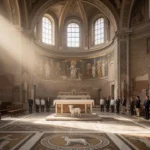
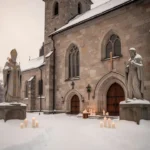
Santa Bibiana is a church in Rome traditionally built near the site associated with Bibiana’s burial. It stands on the Esquiline Hill, near the area historically connected with the Licinian Gardens and an ancient Roman cemetery.
The church is generally associated with the fourth century, a period when Christianity was becoming more publicly established in Rome. Its foundation is traditionally linked to the discovery or honoring of Bibiana’s relics. Over the centuries, the building was repaired and changed, reflecting the changing needs of Roman worship.
For visitors, Santa Bibiana is important for two connected reasons. It is a place of Christian devotion to a martyr, and it is also a surviving Roman church whose architecture and artwork show how the memory of early saints was preserved through later generations.
Why Bernini’s statue of St. Bibiana matters
The church of Santa Bibiana contains a well-known statue of the saint by Gian Lorenzo Bernini. Created in the seventeenth century, the sculpture shows Bibiana standing with a column and holding a palm, two symbols that communicate different parts of her story.
The palm branch is a traditional sign of martyrdom. It points to victory through faithful endurance rather than military power. The column recalls the account that Bibiana was tied to a column and beaten before her death, although this detail belongs to the later traditional narrative rather than securely documented contemporary history.
Bernini’s work is significant because it presents Bibiana as both physically present and spiritually composed. Her posture and expression suggest suffering without reducing her to a victim. The statue helped shape how later worshipers imagined a young martyr whose strength came from conviction.
The sculpture also reflects the artistic priorities of seventeenth-century Rome. Religious art from this period often sought to make saints emotionally accessible, allowing viewers to see the cost of faith and the hope associated with martyrdom. In Santa Bibiana, the setting, architecture, and statue work together as a place of memory.
What symbols are connected with St. Bibiana?
Artists and devotional materials usually identify Bibiana through a small group of symbols. These symbols are useful when recognizing her in church art, prayer cards, or paintings.
Palm branch: This represents martyrdom and steadfastness.
Column: This refers to the traditional account of her torture.
Young woman’s clothing: Bibiana is commonly portrayed as a young Roman Christian rather than as a queen, abbess, or religious founder.
Church setting: Images may connect her with Santa Bibiana and the Roman community that preserved her memory.
Occasional medical references: Later devotional art or texts may allude to the illnesses for which she is invoked.
Symbols are not proof that every detail of a saint’s biography is historically certain. Instead, they show how a community has interpreted and remembered that person. In Bibiana’s case, the visual language emphasizes martyrdom, endurance, and compassionate intercession.
How to pray with St. Bibiana’s example
You do not need a special formula to ask for St. Bibiana’s intercession. A short prayer can name the person or situation that concerns you and ask for strength, healing, wisdom, and support. The purpose is not to treat the saint as a source of magical protection, but to seek prayer within the Christian communion of saints.
A simple devotional practice can follow these steps:
Name the concern clearly. Bring a person, illness, fear, injustice, or difficult decision to prayer.
Remember Bibiana’s witness. Consider how she is traditionally portrayed as remaining faithful under pressure.
Ask for practical help as well as spiritual comfort. This may include competent medical care, reconciliation, safety, or the courage to set a necessary boundary.
Pray for caregivers and family members. Long-term illness affects more than the person who is diagnosed.
End with an act of care. Make a medical appointment, contact a trusted person, check on someone who is alone, or offer concrete assistance.
For Catholics, a prayer to Bibiana may be included with the Lord’s Prayer, a Rosary, or another established devotion. People from other Christian traditions may honor her example without using formal saintly intercession. The central theme remains the same: faith should strengthen compassion and responsible action.
For urgent symptoms: A sudden severe headache, first seizure, loss of consciousness, difficulty speaking, weakness on one side, or immediate danger requires prompt emergency or professional medical help. Devotion and treatment can coexist, but prayer should never delay urgent care.
What is historically certain about St. Bibiana?
The line between historical evidence and devotional tradition matters when discussing early Christian martyrs. Ancient records about many Roman saints are limited, and later accounts sometimes combine local memory, religious symbolism, and narrative details intended to encourage believers.
For Bibiana, the strongest continuing evidence is her early and persistent veneration in Rome, especially the church dedicated to her. The existence of a long-standing cult and a church associated with her name shows that Christians in Rome preserved her memory as a holy martyr.
Other details are less secure. The names of her parents and sister, the identity of the official involved, the exact circumstances of her interrogation, and the precise method of her death appear in traditional accounts, but they should not be presented as though every detail were established by independent contemporary documents.
This distinction does not make the tradition meaningless. Saints’ stories can carry theological and moral meaning even when historians cannot verify every narrative element. Bibiana’s story has continued to speak about conscience under persecution and hope in the face of loss.
How St. Bibiana differs from similarly named saints
The names Bibiana, Viviana, and Vibiana can create confusion. They may appear as alternate forms connected with the same Roman saint, depending on the language, historical spelling, or local tradition.
Bibiana should also be distinguished from other saints named Vivian, Vivien, or Vivianus. A calendar entry, church dedication, or devotional resource may use a different spelling without referring to the same person. Checking the feast date, location, and associated symbols can help identify which saint is meant.
Bibiana: The form most commonly used for the Roman virgin martyr and the church in Rome.
Viviana: An alternate form found in some languages and devotional contexts.
Vibiana: Another spelling that may appear in historical or regional references.
December 2: The date most closely associated with the Roman St. Bibiana.
If you are researching a baptismal name, church dedication, family devotion, or historical document, preserve the spelling used in the original source while checking the wider context. Variations in spelling do not automatically indicate different people.
What St. Bibiana can mean for people today
Bibiana’s appeal is not limited to people who are studying Roman history or looking for a patron saint. Her story can provide a framework for thinking about resilience without romanticizing suffering. She is remembered as someone who did not surrender her conscience when powerful people tried to control her choices.
That message can be applied carefully. Endurance does not mean remaining in an unsafe situation, refusing needed treatment, or tolerating abuse. A faithful response to pressure may include asking for help, leaving danger, reporting wrongdoing, or protecting another vulnerable person.
Her association with illness also invites a more compassionate view of people whose conditions were misunderstood in earlier centuries. Anyone praying with Bibiana’s memory can pair devotion with listening, accurate information, medical support, and respect for the dignity of people living with disability or mental-health challenges.
For visitors to Rome, Santa Bibiana offers a particularly tangible connection to this tradition. For those who cannot visit, the feast day on December 2, a quiet prayer, or an act of care for someone who is suffering can serve as a meaningful way to remember her.
A short prayer inspired by St. Bibiana
You may pray in your own words, but a simple prayer can help focus your intention:
St. Bibiana, remembered for your faithful courage, pray for those who suffer, those who care for them, and all who face pressure because of conscience. Help us seek wise assistance, protect the vulnerable, and remain faithful to what is good.
This prayer does not promise a particular outcome. It places suffering within a practice of hope and asks for the qualities Bibiana represents: courage, patience, compassion, and fidelity. Those qualities remain at the center of her place in Christian memory.
How to observe St. Bibiana’s feast day
A feast day can be observed simply and respectfully. If your parish includes Bibiana in its calendar, you may attend worship or ask whether the community has a prayer service. If no local observance exists, reading about Santa Bibiana in Rome or setting aside time for someone who is ill can connect the day with its traditional meaning.
Learn about the history of Santa Bibiana and the art associated with it.
Pray for people living with neurological, mental, or chronic illnesses.
Contact someone who is isolated or supporting a seriously ill family member.
Support a reputable medical, disability, or mental-health organization.
Reflect on a situation in which compassion and courage are both needed.
Observed this way, December 2 becomes more than a date on a calendar. It recalls a Roman martyr whose memory has endured through worship, art, and care for people facing suffering.
Frequently asked questions
Is St. Bibiana the same person as St. Vivian?
Bibiana is sometimes called Viviana or Vibiana, and these names can refer to the same Roman martyr in different languages or traditions. However, “St. Vivian” may also refer to another saint, so the feast day and historical setting should be checked. The Roman Bibiana is especially associated with December 2 and the church of Santa Bibiana in Rome.
What is St. Bibiana the patron saint of?
St. Bibiana is traditionally invoked for headaches, epilepsy, and some mental or neurological illnesses. These associations developed through popular devotion and should not be understood as medical claims. Anyone with concerning symptoms should obtain professional care. A prayer to Bibiana may accompany treatment and offer spiritual support to patients, families, and caregivers.
Where can someone visit St. Bibiana’s church?
Santa Bibiana is an historic church in Rome, traditionally connected with the saint’s burial and relics. It is known for Bernini’s statue of Bibiana, which depicts her with a palm branch and column. Visitors should verify current opening hours, liturgical schedules, and access requirements before planning a visit.
Was St. Bibiana definitely killed in the way her story describes?
Bibiana’s early veneration in Rome is well established as a longstanding Christian tradition, but many details of her biography come from later accounts. The names of family members, the officials involved, and the exact method of martyrdom are not equally certain. It is more accurate to describe those details as traditional rather than fully documented history.














Leave a Reply