Saint Blaise: His Story, Feast Day, and Throat Blessing
Saint Blaise: His Story, Feast Day, and Throat Blessing
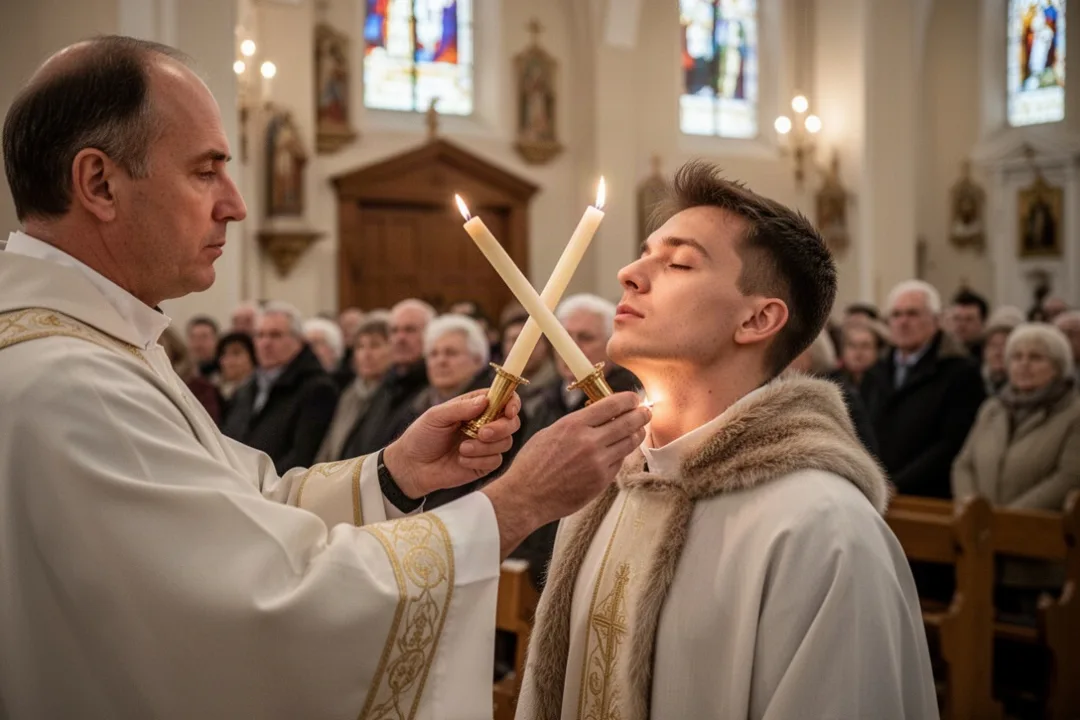
Saint Blaise is best known as the Christian martyr associated with healing throat illnesses and blessing the throat. His feast day is traditionally observed on February 3 in the Roman Catholic Church, often with a blessing given using two crossed candles.
Blaise was remembered as a bishop and physician who lived in Sebaste, an ancient city in Armenia, during the early centuries of Christianity. Historical details about his life are limited, and later accounts combine a small number of traditional memories with stories of miracles and martyrdom. Even so, devotion to him spread widely across Europe and remains visible in parish churches, family prayers, and the annual blessing of throats.
Saint Blaise, also called Saint Blase in some English traditions, is traditionally identified as the bishop of Sebaste in Armenia. Sebaste was located in the region of Cappadocia and is associated with the city now known as Sivas in modern Turkey. Blaise is generally placed in the early fourth century, a period when Christians in the Roman Empire could face official persecution.
Accounts describe Blaise as a man known for prayer, medical skill, and care for people. Before becoming a bishop, he may have practiced as a physician, although the surviving stories do not provide a secure biography in the modern historical sense. His reputation for compassion became part of the way Christians remembered him after his death.
According to traditional accounts, Blaise withdrew to a cave or secluded place in the mountains. Wild animals were said to gather around him peacefully, and hunters eventually discovered him there. The story presents his retreat as a place of prayer and refuge, rather than as an escape from responsibility. He is often depicted with animals because of this part of his legend.
The governor Agricolaus is traditionally named as the official who ordered Blaise’s arrest. The exact historical details are uncertain, but the broad pattern reflects the experience of many early Christian martyrs: a bishop was taken into custody, pressured to abandon his faith, and killed after refusing to do so.
Historical perspective: The earliest dependable details about Saint Blaise are limited. His feast, prayers, and devotional customs are well established, while many details in his life story belong to later hagiographic tradition rather than documented biography.
Why Saint Blaise is connected with throat healing
The most famous story about Blaise concerns a young boy who was choking on a fish bone. The boy’s mother brought him to the imprisoned bishop, who prayed over him and healed him. This episode explains why Blaise became especially associated with throat ailments, choking, and protection of the airway.
Versions of the story differ in their details. Some place the healing before Blaise’s arrest, while others connect it with his time in prison. The central idea remains the same: Blaise notices a person in physical danger and responds with prayer and mercy.
For Christians who seek his intercession, the story is not a guarantee that every illness will disappear. Instead, it expresses confidence that God can be asked to bring healing, protection, courage, and care through the prayers of the saints. A throat blessing may therefore be understood as a prayer for bodily health and spiritual strength, not as a substitute for medical treatment.
Saint Blaise’s association with the throat also reflects the practical fears of earlier communities. Serious throat infections, choking, and other illnesses could become life-threatening when medical care was limited. A saint remembered for responding to such danger naturally became a focus of prayer for families seeking protection.
How Saint Blaise died as a Christian martyr
Traditional accounts say that Blaise was arrested because of his Christian faith during a period of persecution. The governor is said to have ordered him to sacrifice according to Roman religious customs. Blaise refused, remaining faithful to Christianity even after imprisonment and interrogation.
Before his death, the stories attribute several miracles to him, including the rescue of the boy with the fish bone. His refusal to deny his faith is the central reason he is honored as a martyr. In Christian use, martyr means a witness who remains faithful under persecution, often at the cost of life.
Accounts of Blaise’s execution vary. One traditional version says that he was beaten or tortured and then beheaded. Another well-known element of the story involves his being tied to a post and beaten with iron combs, tools associated with wool processing. This detail may help explain why some images of him include a comb-like instrument.
The precise sequence of events cannot be confirmed from surviving early records. Devotion to Blaise, however, has long centered on his courage, his compassion toward the sick, and his willingness to suffer rather than abandon his convictions. Those themes remain more significant for prayer than the exact mechanics of his death.
When Saint Blaise’s feast day is observed
Saint Blaise’s feast day is February 3 in the Roman Catholic calendar. Many Catholic parishes offer the blessing of throats on that date, although local schedules may move the rite to the nearest Sunday or another convenient day. The practice can therefore vary from one church to another.
Some Eastern Christian traditions observe Saint Blaise on a different date. Feast days are shaped by the liturgical calendar used by each church, and calendars can also differ according to local custom. If you attend an Eastern Catholic or Orthodox parish, the best source for the date and service is that community’s published calendar.
February 3 occurs during winter in the United States, when colds, flu, dry air, and other respiratory problems are common. That seasonal setting has helped keep the throat blessing meaningful for many families. It also makes the rite a natural occasion to pray for people who are ill, elderly, medically vulnerable, or caring for someone who is sick.
What happens during a Saint Blaise throat blessing
The traditional Catholic rite uses two candles joined in the shape of a cross. A priest, deacon, or another minister holds the candles near the person’s throat while saying a prayer asking God, through the intercession of Saint Blaise, to protect the person from disorders of the throat and other illness.
The candles are often blessed before they are used. Their flame or wax represents Christ as light, while the cross-shaped arrangement points to Jesus’ death and resurrection. The candles do not have healing power by themselves. They serve as a visible sign accompanying the Church’s prayer.
Exact wording differs by parish and approved liturgical book. The minister may bless each person individually, or a congregation may receive a general prayer over everyone present. Some churches invite people to come forward after Mass; others include the blessing during a separate service.
Children often receive the blessing, but adults may receive it as well. A person does not need to have a current throat problem. The prayer may be offered as a request for protection, healing, or gratitude for recovery.
A typical blessing involves these elements:
Prayer and Scripture: The community gathers in worship and asks God for help through Saint Blaise’s intercession.
Blessed candles: Two candles are held together in a cross-like form.
Contact or proximity: Depending on local practice, the candles may touch the throat or be held just in front of it.
A brief invocation: The minister asks for protection from illness and for health of body and spirit.
A response of faith: The person receiving the blessing may answer “Amen” or follow the parish’s direction.
Health reminder: A throat blessing is a religious prayer, not medical care. Seek prompt medical attention for breathing trouble, severe swelling, inability to swallow, dehydration, or symptoms that worsen quickly.
What the candles and throat blessing symbolize
The candles point first to Christ, the source of light and healing in Christian worship. Their use does not mean that Blaise replaces Christ. Saints are honored as faithful witnesses whose prayers are requested, while God remains the source of grace and healing.
The crossed shape recalls the cross and gives the blessing a specifically Christian meaning. It connects a practical request for throat protection with the larger Christian hope of redemption, endurance, and new life. The gesture also makes the prayer visible and memorable, especially for children.
The throat has symbolic importance beyond physical health. It is the part of the body used for speech, singing, swallowing, and breathing. A blessing of the throat may therefore invite reflection on how you use your voice: to speak truthfully, encourage others, pray, and avoid words that cause needless harm.
For singers, teachers, public speakers, clergy, and anyone whose work depends on the voice, the feast can carry a particular personal meaning. The prayer may express gratitude for the ability to speak and a request for wisdom in using that gift. It can also remind people to care for their voices through rest, hydration, and appropriate medical advice.
How churches and families honor Saint Blaise
Customs connected with Saint Blaise differ by country, denomination, and parish. The throat blessing is the best-known practice, but it is not the only way people observe his feast. Some communities celebrate a Mass or prayer service, while others remember him privately at home.
In parts of Europe, Saint Blaise has been honored as a protector of animals as well as people. This connection comes from the stories of wild creatures gathering near his retreat. In rural communities, people may bring animals to receive a blessing or ask for the saint’s intercession for livestock and pets.
Some traditions involve special breads, cakes, candles, or small devotional objects. These customs often grew from local history rather than from a universal rule. A parish may distribute blessed bread, while another may focus entirely on the formal throat blessing.
Families can observe the day simply. They might attend worship, pray for people with respiratory illness, learn about a local church named for Blaise, or talk with children about compassion for the sick. A short prayer can connect the feast with practical acts of care, such as calling an isolated relative or helping someone get medical advice.
Common ways to mark the feast include:
Attending a parish service on or near February 3.
Receiving the traditional throat blessing.
Praying for people who are ill or recovering from surgery.
Learning about Christian martyrs and the history of early Armenian Christianity.
Giving attention to safe voice care and responsible treatment of illness.
Remembering animals and people who depend on compassionate care.
Practical tips and common mistakes about Saint Blaise
Saint Blaise’s feast is easy to observe respectfully when you understand what the blessing does and does not mean. Local customs can vary, so asking a parish office about its schedule and procedure is often more useful than assuming every church follows the same practice.
Do not treat the blessing as a medical cure. Prayer can accompany treatment, but it should not delay emergency care, a doctor’s evaluation, or prescribed medicine.
Check the parish schedule. The blessing may be offered after Mass, during a special service, or on a nearby Sunday rather than exactly on February 3.
Ask before bringing an animal. Some churches welcome animals for a blessing, while others cannot accommodate them inside the building.
Do not assume the candles must touch your throat. The minister may hold them near you, depending on local practice and safety considerations.
Use the correct name in context. Blaise and Blase refer to the same saint in different English traditions, but parish materials may prefer one spelling.
Respect denominational differences. Not every Christian church observes the feast or uses the same calendar and blessing rite.
Keep fire safety in mind. Candles should be handled by the minister or another responsible adult and kept away from clothing, hair, and combustible materials.
Connect prayer with care. If someone is sick, offer practical help, listen to them, and encourage appropriate professional treatment.
A person can receive the blessing even if they are not currently sick. It may be offered as a prayer of protection or as a reminder to use the voice and body responsibly. If you are uncomfortable with close contact because of illness or personal circumstances, tell the minister; many churches can provide the blessing without touching the throat.
How Saint Blaise appears in Christian art
Artists commonly portray Blaise wearing a bishop’s vestments and holding a crozier, the staff associated with a bishop. These symbols identify his pastoral office. He may also hold a book, a sign of teaching and Christian faith, or raise one hand in blessing.
The most distinctive objects associated with him are two candles and an iron comb. The candles refer to the throat blessing. The comb recalls the instrument of torture described in later accounts of his martyrdom, although its meaning may not be obvious to viewers unfamiliar with the tradition.
Animals may appear near Blaise, especially a deer or other wild creatures. This imagery comes from the account of his life in the wilderness. It emphasizes his reputation for gentleness toward creation and his identity as a person who offered refuge and care.
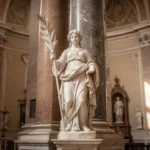
Churches named for Saint Blaise may display a statue, stained-glass window, icon, or painting showing one or more of these symbols. Looking at the image alongside the feast-day prayers can help explain why the saint is connected with both healing and martyrdom.
Praying with Saint Blaise can begin with a direct request for health of the throat, lungs, and respiratory system. It can also widen into prayer for doctors, nurses, caregivers, emergency workers, and people who live with chronic illness. His story places physical suffering and spiritual courage together rather than treating them as unrelated concerns.
The saint’s traditional compassion toward the choking child may be especially meaningful for parents and caregivers. The story invites prayer for alertness, patience, and the ability to respond when another person is vulnerable. It also highlights the value of seeking help instead of ignoring a serious symptom.
His martyrdom offers another focus: faithfulness under pressure. You might ask for courage to act according to conscience, kindness when facing hostility, and strength during a long illness. These requests do not require dramatic circumstances. They can apply to ordinary decisions, difficult conversations, and seasons of uncertainty.
A simple personal prayer might ask God to protect your throat and voice, heal those who are sick, guide medical professionals, and help you speak with honesty and compassion. You may mention Saint Blaise by name and ask for his intercession, following the devotional practice of your church.
Why devotion to Saint Blaise continues
Saint Blaise remains familiar because his story joins a concrete human need with a clear spiritual image. People know what it means to fear choking, lose their voice, suffer a throat infection, or worry about someone who cannot breathe easily. The annual blessing gives those concerns a place in communal prayer.
His example also reaches beyond physical healing. Blaise is remembered as a bishop who cared for people, a physician associated with healing, a protector of animals, and a martyr who remained faithful. Those roles make him a figure of mercy, courage, and responsible care.
The feast does not require elaborate observance. Attending a blessing, praying for the sick, learning the history behind the candles, or offering practical help to a neighbor can all honor its meaning. The most faithful response to the tradition combines prayer with wise action and compassion.
For that reason, Saint Blaise’s feast continues to hold a modest but meaningful place in Christian life. The candles recall Christ’s light, the prayer asks for protection, and the saint’s story encourages care for bodies, voices, animals, and people whose needs may otherwise go unnoticed.
Frequently asked questions
Is Saint Blaise the patron saint of sore throats?
Yes. Saint Blaise is traditionally invoked for throat illnesses and choking because of the story that he healed a boy who was choking on a fish bone. His patronage is also associated with people who work with their voices, although the throat connection remains his best-known role.
Can anyone receive a Saint Blaise throat blessing?
Practices vary by church, but many parishes offer the blessing to anyone who wishes to receive it. You do not usually need to be ill or belong to a particular age group. Ask the parish whether the blessing is available and whether it will be given individually or to the whole congregation.
Are the candles used for Saint Blaise blessed?
Traditionally, the two candles used in the rite are blessed before they are held near the recipient’s throat. The candles are religious signs, not objects believed to have independent healing power. The blessing is a prayer asking God for protection and healing through Saint Blaise’s intercession.
What should I do if I have serious throat symptoms?
Seek medical care rather than relying only on prayer or a blessing. Emergency symptoms include difficulty breathing, inability to swallow, severe swelling, blue lips, or rapidly worsening illness. You can receive spiritual support while also following advice from a qualified medical professional.











Leave a Reply