Lent is the Catholic Church’s 40-day season of prayer, fasting, and almsgiving that prepares believers for Easter.
It is a period of spiritual preparation centered on the death and Resurrection of Jesus Christ. During Lent, Catholics are encouraged to turn away from sin, renew their relationship with God, and practice greater charity toward other people.
The season begins on Ash Wednesday and leads into Holy Week, which includes Palm Sunday, Holy Thursday, Good Friday, and the Easter Vigil. Although Lent is commonly described as lasting 40 days, Sundays are not counted as days of fasting in the Western Catholic calendar. The number recalls the biblical periods of 40 days associated with testing, prayer, and preparation.
Lent is a season of conversion. In Catholic teaching, conversion means more than feeling sorry for mistakes. It involves turning your heart and habits back toward God and allowing faith to shape the way you live.
The Church gives Lent a clear three-part focus: prayer, fasting, and almsgiving. These practices work together. Prayer deepens a person’s relationship with God, fasting creates space for self-discipline and dependence on God, and almsgiving directs attention toward the needs of others.
Lent is not intended to be a contest in personal endurance or a temporary diet plan. Giving something up can be useful, but the spiritual purpose is to grow in love, freedom, and obedience. A sacrifice that leaves you more patient, generous, or attentive to God has greater value than a private challenge performed only to prove that you can complete it.
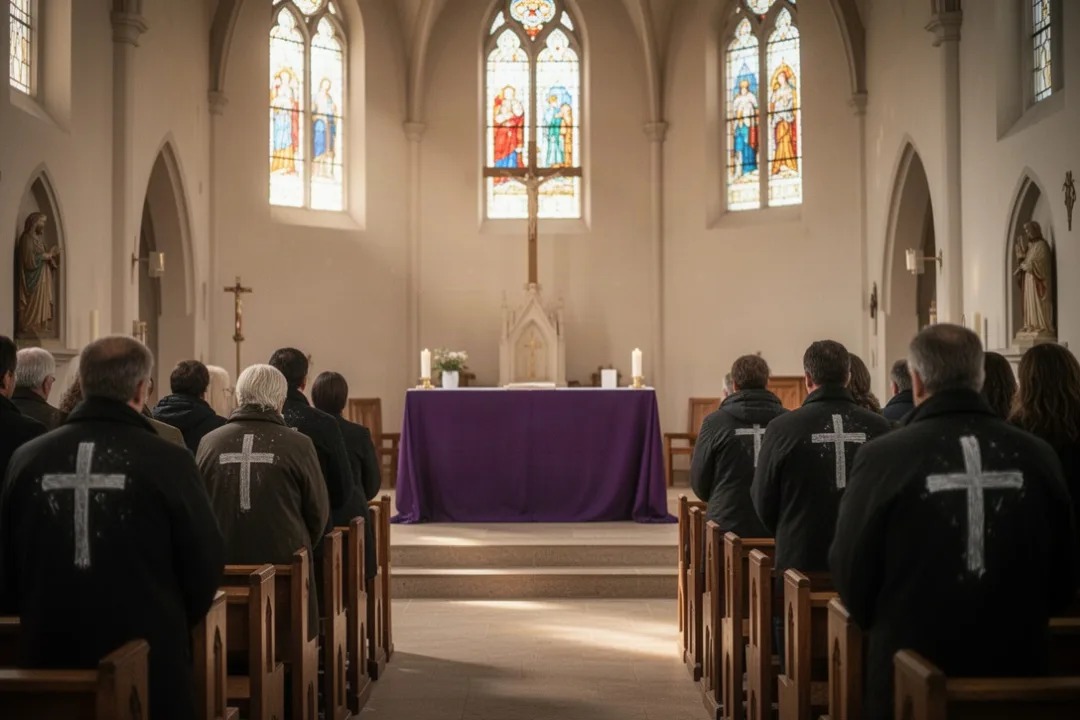
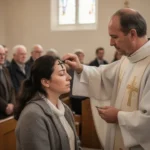
The traditional call to repentance appears clearly on Ash Wednesday, when Catholics receive ashes on their foreheads. The ashes are a visible reminder of human mortality and the need to repent. The priest or minister may use words referring to returning to the Gospel or remembering that human beings come from dust and will return to dust.
Ashes are not a sacrament. They are a sacramental, meaning a sacred sign used by the Church to prepare people to receive grace and respond to God. Catholics may receive them whether or not they attend Mass regularly, although receiving ashes does not by itself make someone holy or forgive sin.
The central question of Lent: What needs to change so that you can love God and your neighbor more faithfully?
Why Catholics observe 40 days of Lent
The number 40 has a strong biblical meaning. It often marks a period of testing, purification, waiting, or preparation. In the Book of Genesis, rain falls for 40 days and nights during the flood. Moses spends 40 days on Mount Sinai, and the Israelites spend 40 years journeying through the wilderness before entering the Promised Land.
The most direct connection for Lent is Jesus’ 40 days in the desert before beginning his public ministry. The Gospel accounts describe Jesus fasting and facing temptation in the wilderness. Catholics see this time as a model for their own Lenten discipline: stepping away from distractions, resisting temptation, listening to God, and preparing to serve others.
Lent also connects with the preparation of catechumens, people who are preparing to receive Baptism. In the early Church, candidates often underwent an extended period of instruction and spiritual formation before being baptized at the Easter Vigil. The season still has a special importance for those preparing for the sacraments of Baptism, Confirmation, and the Eucharist.
For baptized Catholics, Lent is a time to renew the meaning of their own Baptism. The season asks you to reject sin and to live more fully as a follower of Christ. At the Easter Vigil, the whole Church renews its baptismal promises, making Lent a preparation not only for Easter Sunday but also for this communal renewal.
Sundays have a distinctive place during Lent. They remain days of worship and celebration because every Sunday commemorates Christ’s Resurrection. Catholics may continue a personal Lenten sacrifice on Sundays, but the Church does not treat Sunday as a required day of fasting in the same way as Ash Wednesday or Good Friday.
What Catholics do during Lent
Catholic Lenten practices are meant to make faith concrete. A person might pray more regularly, simplify a routine, give up a particular pleasure, volunteer, donate money, or seek reconciliation after a conflict. The most useful practice is one that helps you become more attentive to God and more loving toward people.
Prayer during Lent
Prayer can take many forms. Some Catholics attend Mass more frequently, spend time in Eucharistic adoration, pray the Rosary, read the Gospels, or set aside several quiet minutes each morning. Others return to a prayer practice they had neglected.
Lent is especially associated with praying the Stations of the Cross. This devotion follows the events of Jesus’ Passion, from his condemnation to his burial. Churches often offer the Stations on Fridays during Lent. The practice invites Catholics to meditate on Christ’s suffering and to consider the connection between faith, sacrifice, compassion, and hope.
Prayer should not become merely an attempt to complete more religious activities. A short, sincere prayer may be more fruitful than an ambitious plan that cannot be maintained. You might begin with a simple request such as asking God to reveal one area where you need repentance or one person who needs your care.
Read a short passage from one of the Gospels each day.
Pray for a person with whom you have difficulty.
Attend an additional Mass or parish prayer service when possible.
Spend a few minutes in silence rather than filling every pause with a screen or conversation.
Use the Stations of the Cross as a prayerful reflection on Jesus’ Passion.
Fasting and giving something up
Fasting is the practice of limiting food or another legitimate comfort for a spiritual purpose. Catholic fasting is intended to train the will, remind you that you depend on God, and make you more aware of people who do not have enough to eat.
Many Catholics choose to give up something during Lent, such as alcohol, sweets, social media, entertainment, or unnecessary shopping. This custom can help expose habits that have become too controlling. If the sacrifice only produces irritation without encouraging prayer or charity, it may need to be reconsidered.
A personal sacrifice does not replace the Church’s required days of fasting and abstinence. It is an additional practice chosen by the individual. The sacrifice should also be realistic. A commitment that can be followed consistently for the season is usually more helpful than an extreme promise that lasts only a few days.
Almsgiving and acts of charity
Almsgiving means giving material help to people in need. It can include donating money, providing food, supporting a charitable organization, or helping someone directly. Catholic tradition connects fasting and almsgiving because reducing personal consumption can free resources for others.
Charity during Lent is broader than financial giving. You might visit someone who is lonely, help a family member, forgive an offense, offer practical assistance, or give your full attention to someone who is often overlooked. These acts challenge the self-centeredness that Lent seeks to uncover.
Good works should be performed with respect for the dignity of the person receiving help. Catholics are called to serve others, not to use another person’s hardship to gain praise. A quiet and consistent act of mercy may reflect the meaning of Lent more deeply than a highly visible gesture.
What fasting and abstinence require for Catholics
The Catholic Church distinguishes between fasting and abstinence. Fasting limits the amount of food a person eats. Abstinence means refraining from a particular kind of food, traditionally meat.
In the United States, Catholics who meet the age and health requirements are required to fast on Ash Wednesday and Good Friday. The usual discipline permits one full meal and two smaller meals that together do not equal another full meal. Eating between meals is not part of the fast, although necessary medicine and certain health-related needs are not treated as ordinary violations.
On Ash Wednesday and the Fridays of Lent, Catholics in the United States who are age 14 and older are required to abstain from meat. This generally means avoiding the flesh of warm-blooded animals, including beef, pork, and poultry. Fish, shellfish, eggs, dairy products, and plant-based foods are traditionally permitted, although a meatless meal can take many forms.
Fasting laws apply to Catholics from the beginning of the year in which they turn 18 through the beginning of the year in which they turn 60. People who are pregnant or nursing, seriously ill, frail, or unable to fast safely for other reasons are not expected to harm their health. Parents should teach children the meaning of fasting without placing adult obligations on them before the appropriate age.
Local bishops’ conferences can establish particular norms, and individual circumstances may require pastoral guidance. If you have a medical condition, a history of disordered eating, or uncertainty about how the rules apply to you, ask a priest or qualified health professional rather than treating fasting as a test of willpower.
Health comes first: Catholic fasting does not require you to put your health at risk. A safe alternative, such as giving up a nonfood comfort or adding an act of charity, can support the spirit of Lent.
Abstinence from meat is not meant to suggest that meat is evil or that fish is morally superior. The practice is a form of penitential self-denial. Choosing a simpler meal helps Catholics remember Christ’s sacrifice and practice solidarity with people who live with fewer choices.
Fridays have a special penitential meaning because Jesus was crucified on a Friday. The Church therefore calls Catholics to remember Christ’s Passion through abstinence and other forms of penance. Outside Lent, the exact Friday discipline may depend on the norms of the local bishops’ conference, so Catholics should follow the guidance of their own country and diocese.
How Lent leads into Holy Week and Easter
Lent reaches its most intense point in Holy Week. The week begins with Palm Sunday, which commemorates Jesus’ entry into Jerusalem. Churches bless and distribute palm branches, and the Gospel account of the Passion is proclaimed during the liturgy.
Holy Thursday begins the Easter Triduum, the central three-day celebration of the Christian year. At the Mass of the Lord’s Supper, Catholics remember the institution of the Eucharist and Jesus’ command to serve others. Many parishes include the washing of feet, recalling the humility and service Jesus demonstrated to his disciples.
Good Friday commemorates Jesus’ crucifixion and death. The Catholic Church does not celebrate Mass on Good Friday. Instead, the liturgy includes readings from Scripture, the solemn intercessions, the veneration of the cross, and the distribution of Communion that was consecrated on Holy Thursday.
Holy Saturday is a quiet day of waiting. The Church reflects on Christ’s death and burial while anticipating the Resurrection. After nightfall, the Easter Vigil begins. It includes the blessing of the Easter fire, the proclamation of salvation history through Scripture, the celebration of Baptism and Confirmation for catechumens, and the first Eucharist of Easter.
Easter Sunday then celebrates the Resurrection of Jesus. Lent has prepared Catholics not simply to feel sorrow for sin, but to recognize that repentance leads toward new life. The goal is not to remain focused on deprivation. It is to receive the joy of the Resurrection with a renewed commitment to faith, hope, and love.
A useful Lenten plan is specific enough to follow and humble enough to adjust. Instead of making a vague promise to “pray more,” decide when and how you will pray. Instead of choosing a sacrifice because it sounds impressive, choose one that addresses a real habit or weakness.
Begin with honest reflection. Ask where you are most distracted, self-centered, impatient, or resistant to God.
Choose one prayer practice. Set a regular time for Scripture, Mass, the Rosary, silence, or another form of prayer.
Choose a concrete sacrifice. Give up or reduce something that occupies too much of your attention or resources.
Choose an act of charity. Decide how you will give time, money, encouragement, or practical help to another person.
Include reconciliation. Consider celebrating the Sacrament of Penance and Reconciliation, especially if unresolved sin or resentment is weighing on you.
Review the practice each week. If the plan is unrealistic, simplify it rather than abandoning the purpose of Lent.
The Sacrament of Penance has a natural place during Lent. In that sacrament, a Catholic examines conscience, confesses sins to a priest, receives absolution, and accepts a penance. The sacrament is not meant to humiliate the penitent. It is a means of receiving God’s mercy and beginning again with greater freedom.
Lent can also expose the difference between religious appearance and genuine conversion. A person may follow food rules while speaking cruelly, withholding forgiveness, or ignoring someone in need. Catholic practice holds these areas together: external discipline should lead to an interior change that affects relationships and daily choices.
If you fail in a Lenten practice, you do not need to abandon the season. Recognize what happened, ask for God’s help, and begin again. The value of Lent is not measured by an unbroken record of personal achievement. It is found in a more honest relationship with God and a more faithful response to grace.
For families, Lenten customs can include meatless meals, shared prayer, charitable projects, Scripture reading, or attending parish services. Children can participate through age-appropriate sacrifices and acts of kindness. The purpose is to help them understand that Lent is a season of preparation and love, not merely a set of food restrictions.
For someone who is not Catholic, Lent can still be observed as a period of reflection, prayer, service, or preparation for Easter. Catholic fasting requirements apply to Catholics according to Church law and local norms, but visitors are welcome at Catholic services. A parish can explain its Holy Week schedule and help anyone who wants to learn more.
Lent asks Catholics to clear away what prevents wholehearted love of God and neighbor. Through prayer, fasting, almsgiving, repentance, and participation in the Church’s liturgy, the season points toward the central Christian proclamation: Jesus Christ died, rose from the dead, and offers new life.
Frequently asked questions
When does Lent begin and end in the Catholic Church?
Lent begins on Ash Wednesday. It continues through the daytime of Holy Saturday, although the Easter Vigil begins the celebration of Easter after nightfall. Holy Week falls within Lent, but the Easter Triduum has its own distinct liturgical character. The dates change each year because Easter is celebrated on a different Sunday.
Can Catholics eat fish during Lent?
Yes. Catholic abstinence traditionally prohibits meat from animals such as beef, pork, and poultry, but fish and shellfish are permitted. Eggs, dairy products, and plant-based foods are also generally allowed. The point is penitential self-denial, not choosing an elaborate seafood meal as a substitute for an ordinary feast.
Do Catholics have to give up something for all 40 days?
Many Catholics voluntarily give up a food, habit, or activity, but the Church does not require every person to choose the same personal sacrifice. Required fasting and abstinence are separate obligations. A voluntary practice is most helpful when it encourages prayer, self-control, generosity, or a change in a habit that limits love of God and others.
What is the difference between Lent and Advent?
Lent prepares Catholics for Easter, especially the celebration of Jesus’ Passion, death, and Resurrection. Advent prepares them for Christmas and also directs attention toward Christ’s future coming. Lent has a more penitential character, with fasting and repentance strongly emphasized, while Advent combines expectation and preparation with a more restrained but hopeful tone.












Leave a Reply