The meaning of ashes for Lent centers on mortality, repentance, and turning back to God. When ashes are placed on the forehead on Ash Wednesday, they remind Christians that human life is limited and that faith calls for an honest change of heart.
The ashes also point toward hope and renewal. Lent is not only a reminder of death or sin; it is a season for preparing to celebrate Jesus’ death and resurrection at Easter. The mark on the forehead expresses humility, invites self-examination, and signals a desire to live more faithfully.
Ashes carry several connected meanings in Christian worship. Their symbolism comes from the ordinary nature of ash: it is what remains after something has been burned, it is associated with dust and the earth, and it can represent mourning, penitence, and purification.
Human mortality and the return to dust
The ashes remind you that human life is fragile and temporary. The biblical account of creation describes humanity as formed from the dust of the ground, while the account of humanity’s fall connects death with the return to the earth. Ash Wednesday brings that reality into worship through a visible sign rather than leaving it as an abstract idea.
This reminder is not meant to make people despair. It places everyday concerns in a larger perspective. Wealth, appearance, status, and accomplishments do not last forever, while the way you love God and your neighbor has lasting spiritual significance.
Many ministers use words based on the message in Genesis 3:19, reminding worshipers that they are dust and will return to dust. Others use a short call to repentance drawn from the Gospel message. The exact wording varies by church, but the central meaning remains the same: remember your mortality and let that knowledge shape the way you live.
Repentance and a changed direction
In the Bible, people sometimes used ashes as an outward sign of grief over sin and a desire to return to God. Sitting in ashes, wearing rough clothing, fasting, and praying could express deep sorrow and humility. Ash Wednesday carries this tradition into the beginning of Lent.
Repentance means more than feeling guilty. It involves recognizing where your life has moved away from God’s purposes and choosing a different direction. That might involve confessing harmful behavior, repairing a damaged relationship, ending a dishonest practice, or becoming more attentive to people who need help.
The ash mark does not prove that someone has repented, and receiving ashes does not automatically remove sin. Instead, it is a public sign of an inward intention. The visible mark can prompt an honest question: What needs to change in my relationship with God, other people, and my own responsibilities?
Mourning, humility, and dependence on God
Ashes have long been associated with mourning. In the Lenten setting, they can represent sorrow for personal sin, the brokenness of the world, and the suffering caused by human selfishness. They also express humility by acknowledging that people do not control everything and cannot save themselves through their own effort.
Humility in this context does not mean self-hatred or pretending that you have no gifts. It means seeing yourself truthfully: dependent on God, capable of doing harm, in need of forgiveness, and responsible for using your abilities well. The ashes place every worshiper on the same level, regardless of age, income, occupation, or reputation.
The ash mark is a reminder, not a magical object. Its value comes from the faith and repentance it represents, not from any power in the material itself.
Why Christians receive ashes on Ash Wednesday
Ash Wednesday begins the season of Lent in many Western Christian traditions. Lent is a period of preparation for Easter, traditionally marked by prayer, fasting, repentance, and generosity. Ashes give the season a clear beginning by making its message visible on the body.
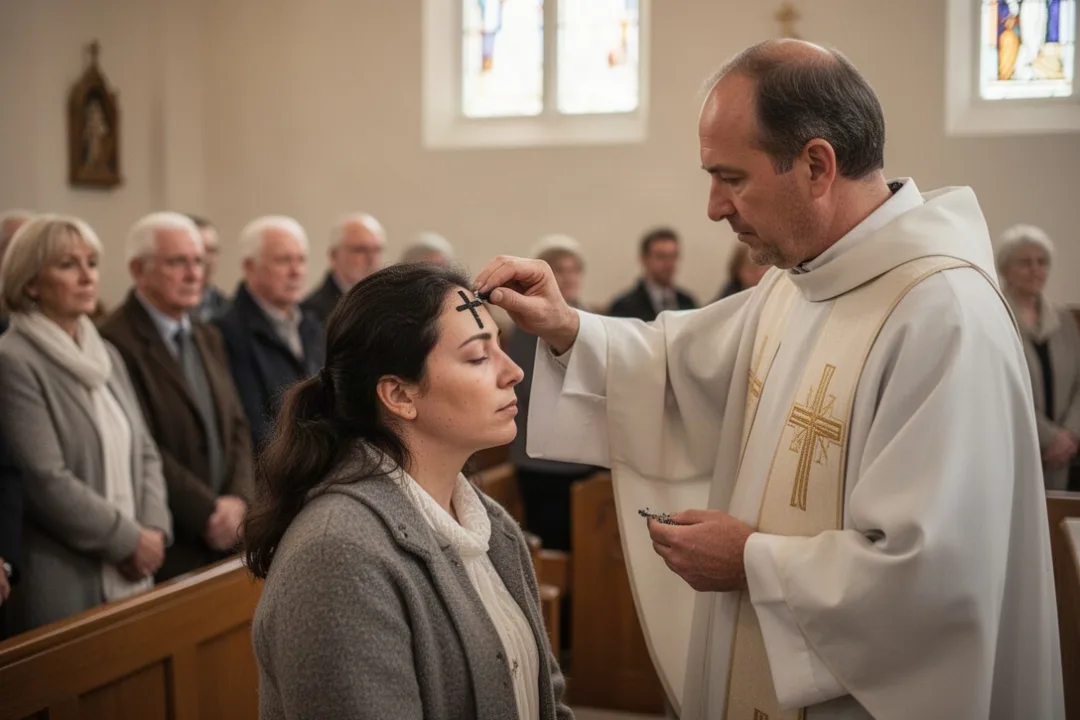
The service often includes readings from Scripture, a sermon or reflection, prayers of confession, and the blessing or distribution of ashes. A minister, priest, or other authorized worship leader may place the ashes on the forehead in the form of a cross. Some churches sprinkle ashes on the head instead.
The cross is meaningful because it connects the ashes with Jesus’ death and the Christian belief in resurrection. The sign acknowledges human sin and mortality while also pointing toward Christ’s mercy and new life. A person leaves the service carrying both a warning and a promise: life is limited, but repentance and hope remain possible.
Why Ash Wednesday comes before Easter
Ash Wednesday starts a season that leads toward Holy Week and Easter. The traditional forty-day pattern recalls biblical periods of testing and preparation, especially Jesus’ forty days in the wilderness. Sundays are treated differently in many traditions, so the calendar period from Ash Wednesday to Easter is longer than forty calendar days.
The placement of Ash Wednesday matters because Christian worship does not treat Easter as an isolated celebration. Before the church proclaims resurrection, Lent creates space to face sin, suffering, temptation, and death. The ashes help worshipers enter that season with seriousness rather than treating Easter as only a spring holiday.
Lent is also communal. Although personal disciplines are common, Christians observe the season alongside a congregation and the wider church. Everyone receives the same basic reminder of mortality and need, which can encourage compassion instead of comparison.
What the forehead cross communicates
A cross made with ashes can communicate several ideas at once. It may identify someone as a Christian, but its deeper purpose is spiritual rather than social. It says that the person is willing to remember mortality, seek forgiveness, and orient life around Jesus.
Because the mark is placed where others can see it, it can also challenge the desire to keep faith entirely private. At the same time, Jesus’ teaching in Matthew 6 warns against performing religious practices mainly to gain public approval. The visible sign is not intended as a badge of moral superiority. It should point to humility rather than religious status.
Where the ashes come from and how churches use them
Many churches prepare Ash Wednesday ashes by burning palm branches from the previous year’s Palm Sunday. The palms are dried, burned, and sifted into a fine powder. Some congregations buy prepared ashes or use another appropriate source, depending on their tradition and local practice.
The connection with Palm Sunday is symbolic. Palms recall Jesus’ entry into Jerusalem, a moment of public celebration that leads toward his suffering and death. Burning those palms and using the resulting ashes the following year connects the church’s joyful welcome with the sober events of Holy Week.
The ashes are often mixed with a small amount of oil or water so they can be applied. Their color may range from gray to nearly black, and the texture can vary. These practical differences do not change the spiritual meaning.
How ashes are distributed
During the service, people usually come forward one at a time or remain in their seats while a worship leader approaches them. The minister may make a cross on the forehead with a thumb or finger. In some communities, ashes are placed on the top of the head or sprinkled over the head.
A person may hear a reminder of mortality, a call to repent, or both. The minister may also offer a blessing or prayer. Practices differ among Roman Catholic, Anglican, Lutheran, Methodist, Presbyterian, and other churches, so the form of the service depends on the congregation.
Receiving ashes is generally optional. You may participate, remain seated, receive a blessing without ashes, or attend the service without coming forward. Visitors are often welcome, but you can ask a church leader about the local practice if you are uncertain.
Why ashes can remain visible
Some people leave the ashes on their foreheads for the rest of the day. Others remove them soon after the service, especially if they work in a setting where a visible religious sign could create discomfort or safety concerns. Neither choice automatically demonstrates more or less faith.
Keeping the ashes visible can invite personal reflection and remind others that Lent has begun. Removing them can also be appropriate when privacy, employment, family circumstances, or personal conviction makes that preferable. The spiritual meaning lies in the response to the reminder, not in how long the mark remains.
Leave the ashes in place as a quiet public witness or personal reminder.
Remove them gently if you prefer not to wear a visible mark.
Ask for a blessing instead if you want to participate without receiving ashes.
Follow the church’s instructions about the service and preparation.
How ashes connect with prayer, fasting, and giving
Ashes have meaning within the wider discipline of Lent. By themselves, they are a brief ritual. Their purpose becomes clearer when they lead to practices that reshape daily life. Lent traditionally emphasizes prayer, fasting, and almsgiving, sometimes described as turning toward God, mastering unhealthy attachments, and serving neighbors in need.
Prayer and honest self-examination
Prayer during Lent may include confession, silence, Scripture reading, worship, or prayers for other people. The goal is not to use extra religious activity to earn God’s favor. It is to become more attentive to God and more truthful about the condition of your heart.
Ash Wednesday can be a useful time to identify habits that need attention. You might ask:
Where have I ignored the needs of another person?
Which attitudes or habits keep me from loving God and my neighbor?
What responsibility have I avoided because it is uncomfortable?
What kind of forgiveness, repair, or guidance do I need to seek?
These questions are most useful when they lead to specific action. A general wish to “be better” is less practical than deciding to apologize, attend worship regularly, set aside time for prayer, or seek help for a destructive habit.
Fasting and freedom from unhealthy attachments
Fasting involves voluntarily giving up food or another legitimate activity for a spiritual purpose. Christian traditions differ widely in their rules. Some emphasize abstaining from certain foods, while others encourage giving up entertainment, shopping, social media, alcohol, or another habit that consumes too much attention.
A Lenten fast should not harm your health or encourage disordered eating. Children, pregnant people, older adults, and people with medical conditions may need a different practice or no food-related fast at all. A spiritual leader or medical professional can help you choose a safe approach.
The purpose of fasting is not to impress God or make yourself suffer for its own sake. It can reveal how often you depend on comfort, distraction, or control. The time, money, or attention created by the fast can then be redirected toward prayer, service, and love of neighbor.
Almsgiving and practical mercy
Giving during Lent may involve donating money, sharing food, volunteering, or helping someone with a practical need. It can also mean offering patient attention, visiting someone who is isolated, or supporting a community organization that serves vulnerable people.
Acts of mercy keep Lenten repentance from becoming entirely private. If the ashes remind you that every person is mortal and dependent, generosity becomes a natural response. You are not using charity to purchase forgiveness; you are letting gratitude and repentance change the way you treat others.
Choose a specific response to the ashes. Pair a spiritual practice with a concrete act of mercy, such as setting a daily prayer time and making a weekly gift to help someone in need.
What receiving ashes does and does not mean
Receiving ashes does not make someone morally superior, guarantee forgiveness, or replace a sincere relationship with God. It does not mean that the person has completed Lent or mastered repentance. The mark is a beginning, not a spiritual achievement.
It also does not mean that Christians believe the body is worthless. The reminder of dust recognizes physical mortality while Christian faith affirms the value of embodied human life. People are called to care for their bodies, other people, and the created world even while acknowledging that earthly life is not permanent.
For many Christians, the ashes also do not represent hopelessness. The season of Lent faces suffering and death honestly because Easter proclaims that death does not have the final word. The ashes therefore hold together two truths: human beings need repentance, and God offers mercy and new life.
How the practice differs among Christian traditions
Ash Wednesday is especially common in Western liturgical churches, including Roman Catholic, Episcopal, Lutheran, Methodist, and Anglican communities. Many other Protestant congregations also offer ashes, while some churches do not observe the day or use a different beginning to Lent.
Eastern Orthodox churches generally begin the Lenten season on a different date and do not typically use the same Ash Wednesday ceremony. Individual congregations may have their own practices, so no single service represents every Christian tradition.
Differences can include the wording used, the placement of ashes, whether children receive them, the rules for fasting, and whether ashes are available outside the main worship service. These variations do not eliminate the shared themes of repentance, mortality, humility, and preparation for Easter.
How to respond if someone asks about your ashes
A simple explanation is enough: “They remind me that life is temporary and call me to repentance during Lent.” You can also say that the ashes point toward Easter and a renewed commitment to prayer, fasting, and service.
You do not have to discuss personal beliefs or explain your religious practice in detail. If the mark creates unwanted attention, you can remove it respectfully. The ritual is meant to support faithful living, not to pressure you into a public conversation.
How to observe the meaning of ashes throughout Lent
The ashes are placed on one day, but their meaning can shape the entire season. A helpful practice is to return to the original reminder each week: life is limited, repentance is possible, and love must become visible in action.
Choose a small number of practices you can sustain rather than making an unrealistic list. Lent is not a competition in endurance. A quiet, consistent discipline can create more honest reflection than a dramatic promise abandoned after a few days.
Begin with prayer. Ask for clarity about one area of life that needs healing, correction, or renewed attention.
Choose a realistic fast. Give up or limit something that has become distracting, excessive, or spiritually unhelpful.
Plan a concrete act of mercy. Decide how you will share time, money, skills, or attention with another person.
Make room for repair. Apologize, reconcile, seek counsel, or take another responsible step where harm has occurred.
Review the practice each week. Notice what you are learning without treating success or failure as a reason for pride or despair.
Keep Easter in view. Let repentance lead toward forgiveness, hope, and a renewed way of living.
If you miss a day of prayer or break your fast, you do not need to abandon the whole practice. Acknowledge what happened, make any needed repair, and begin again. The meaning of the ashes is not that you must prove your worth; it is that you are invited to return to God with honesty.
For that reason, the most faithful response to ashes may be quiet and ordinary: telling the truth, forgiving someone, caring for your health, resisting needless consumption, praying for a difficult person, or helping a neighbor. The mark fades, but the call to live with humility, mercy, and hope can continue through Easter and beyond.
Frequently asked questions
Are ashes for Lent only for Roman Catholics?
No. Ash Wednesday and the distribution of ashes are common in Roman Catholic, Anglican, Episcopal, Lutheran, Methodist, and other Christian communities. Some Protestant churches also observe the day, while others do not. Eastern Orthodox churches generally follow a different Lenten calendar and usually do not use the same Ash Wednesday ritual. Local customs vary from one congregation to another.
Can someone receive ashes without being baptized?
Practices differ by church, so ask the congregation’s pastor or priest if you are unsure. Many services welcome visitors and allow people to receive ashes or a blessing without requiring a detailed membership check. Receiving ashes is not the same as receiving a sacrament in every tradition, and it does not by itself declare the person’s complete beliefs.
What should you do with ashes after Ash Wednesday?
If ashes remain on your forehead, you can leave them there as long as you wish or remove them gently with water and a cloth. There is no universal requirement to keep them visible. The spiritual significance comes from repentance and faithful action, not from preserving the mark for a particular number of hours.
Is giving up something for Lent required?
The answer depends on your Christian tradition and personal circumstances. Many churches encourage fasting or another meaningful discipline, but the practice should support prayer and love rather than damage your health or create pride. If food-related fasting is unsafe, choose prayer, service, generosity, or a different form of self-denial instead.













Leave a Reply