What is Ash Wednesday and why do Christians observe it?
What is Ash Wednesday and why do Christians observe it?
You may notice people with a dark ash cross on their foreheads and wonder what it means. Ash Wednesday is the first day of Lent, the Christian season of preparation before Easter. Many Christians attend a worship service, receive ashes, and begin a period of prayer, repentance, fasting, and generosity.
The day is called Ash Wednesday because ashes are placed on the forehead or head. They symbolize human mortality and the need to turn back toward God. The ashes do not make someone holier, erase sin, or guarantee a particular spiritual result. They are a visible reminder of an inward commitment to live with greater humility and faith.
What Ash Wednesday means in the Christian calendar
Ash Wednesday begins Lent, a season that leads to Holy Week and Easter. Lent lasts 40 weekdays and Saturdays, with Sundays treated differently in many traditions. The number recalls the 40 days Jesus spent fasting in the wilderness, as described in the Gospels, as well as other biblical periods of testing and preparation.
Because Easter falls on a different date each year, Ash Wednesday also changes dates. It can occur in February or March. Its date is determined by the date of Easter, so the day is not tied to a fixed calendar date like Christmas or New Year’s Day.
For many Christians, Lent is a time to examine their lives honestly. They may ask where they have become distracted, self-centered, resentful, or indifferent to other people’s needs. The season creates space for spiritual renewal rather than simply encouraging people to give up a favorite food or habit.
The central idea: Ash Wednesday reminds Christians that life is temporary and that repentance means turning away from harmful ways and turning toward God, mercy, and love of neighbor.
How Ash Wednesday is observed step by step
Practices differ among churches, but an Ash Wednesday service commonly follows a recognizable pattern. A person does not need to understand every detail before attending. The service is usually open to visitors, and you can participate quietly according to your own beliefs and comfort.
The service begins with Scripture, music, and prayer. Readings often focus on repentance, fasting, mercy, and the proper motives for religious practice. The congregation may hear passages connected with human weakness and God’s compassion.
The worship leader explains the meaning of the day. A priest, pastor, or other minister may speak about mortality, sin, reconciliation, and the beginning of Lent. The emphasis is generally on sincere change rather than public performance.
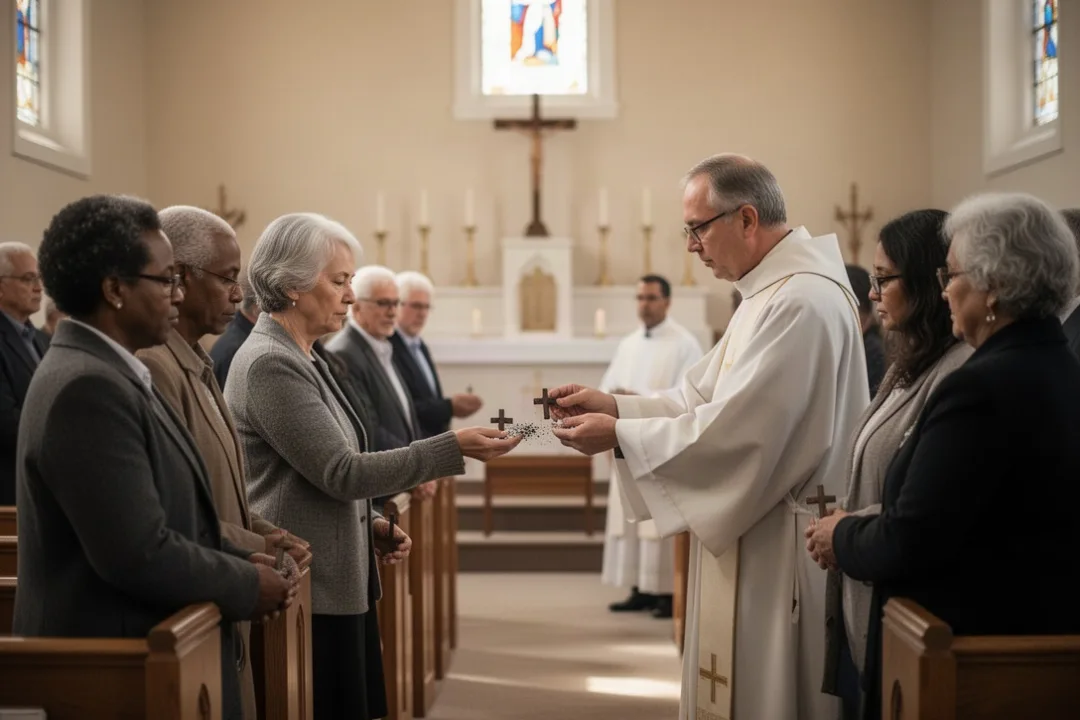
People are invited to receive ashes. Participants usually come forward or remain in their places while a minister places ashes on the forehead or sprinkles them on the head. Some churches offer ashes to anyone who wishes to receive them, including visitors.
A biblical reminder accompanies the ashes. The minister may use words about remembering that human beings come from dust and return to dust, or words urging repentance and faith. Exact wording differs by church and worship tradition.
The service continues with prayers and, in many churches, Communion. Catholic, Anglican, Lutheran, Methodist, and other congregations may include the Eucharist or Lord’s Supper, while some services focus on prayer, preaching, and the imposition of ashes.
The season continues beyond the service. Ash Wednesday is not the whole practice of Lent. Christians may continue with daily prayer, a voluntary fast, charitable giving, confession, Bible reading, reconciliation, or other disciplines.
Receiving ashes is voluntary. You may attend a service without receiving them, and you may receive ashes without making a public statement about your personal beliefs. A church may also provide ashes in a drive-through setting, at a campus ministry, or during a brief prayer service outside regular Sunday worship.
What the ashes symbolize
Ashes have several related meanings in Christian worship. In the Bible, people sometimes use ashes as a sign of grief, humility, mourning, or repentance. Sitting in ashes or putting ashes on the body represented a serious response to loss, wrongdoing, or a crisis that required turning back to God.
On Ash Wednesday, ashes also point to mortality. The human body is temporary, and every person eventually dies. The mark can interrupt ordinary routines with a direct reminder that time is limited and that a meaningful life involves more than possessions, status, productivity, or appearance.
The ashes may be formed into a cross, but the mark is not a magical object. It does not function as a spiritual shield, and it does not make a person morally superior to someone who does not wear ashes. Its purpose is to direct attention to repentance and dependence on God.
The ashes are often made from palm branches used in the previous year’s Palm Sunday observance. Churches collect, dry, and burn the branches, then prepare the resulting ash for the next Ash Wednesday. Some congregations use another source of ash, but the connection with Palm Sunday is common.
Why Christians connect Ash Wednesday with repentance
Repentance is more than feeling guilty for a short time. In Christian teaching, it involves recognizing wrongdoing, turning away from it, and seeking a changed relationship with God and other people. Depending on the situation, repentance may include an apology, restitution, counseling, confession, a change in behavior, or a decision to stop causing harm.
Ash Wednesday gives this practice a clear beginning. Instead of treating faith as a collection of ideas, the day asks Christians to look at their actual choices. How do they use money? How do they treat family members, coworkers, strangers, and people with less power? What habits are damaging their health or relationships? Where have they avoided responsibility?
Repentance should not be confused with self-hatred. Christian traditions generally distinguish between acknowledging sin and believing that a person has no value. The ashes express humility, but they also point toward mercy, forgiveness, and the possibility of change.
Some people find the service comforting because it gives them language for regret and hope. Others experience the symbolism as challenging, especially when they are confronted with mortality or unresolved choices. Both reactions can be part of the seriousness of the day.
How fasting and self-denial fit into Ash Wednesday
Fasting is one of the best-known Lenten practices. In general, fasting means limiting food for a period of time, while abstinence means avoiding a particular food or category of food. Rules differ considerably between churches and even among individuals within the same tradition.
For Roman Catholics in the United States, Ash Wednesday is a day of fasting and abstinence for many adults within the applicable age ranges set by the Church. The details can include eating fewer meals and avoiding meat, while exceptions apply for health conditions, pregnancy, demanding physical work, and other circumstances. Catholics should consult current guidance from their parish or diocese when they need specific rules.
Other Christians may choose a voluntary fast from a certain food, alcohol, entertainment, shopping, social media, or another activity. The purpose is not to create a public challenge or prove willpower. A useful practice should help a person pray, become more attentive to others, or loosen an unhealthy attachment.
Choose a practice that is safe. Do not fast from food if you have a medical condition, a history of disordered eating, are pregnant or nursing, or have another reason fasting could be harmful.
Keep the purpose clear. Pair a sacrifice with prayer, reflection, service, or generosity instead of treating it as a standalone test.
Do not use fasting to judge others. People have different health needs, work schedules, family responsibilities, and religious practices.
Consider giving something positive. You might add daily prayer, volunteer service, a phone-free period, or regular support for a charitable organization.
Jesus’ teaching about fasting in Matthew 6 warns against making religious discipline a performance for other people. Christians therefore often try to practice Lenten self-denial quietly, without using it to gain admiration or pressure others.
Who observes Ash Wednesday?
Ash Wednesday is especially associated with Roman Catholic, Anglican, Episcopal, Lutheran, Methodist, Presbyterian, and other liturgical churches. Some non-denominational and evangelical congregations also hold Ash Wednesday services, particularly when they follow the broader Christian calendar.
Not every Christian church observes the day. Some traditions place little emphasis on the liturgical calendar, while others reject formal Ash Wednesday services because they do not see them as required by Scripture. Christians within the same denomination may also have different views about wearing ashes publicly.
In the United States, Ash Wednesday is widely recognized in communities with Catholic and Protestant churches that observe Lent. A person may see ashes at work, school, a hospital, or a public worship service. The mark can be an important private devotion, a public sign of faith, or simply part of a community’s shared religious rhythm.
There is no requirement for every Christian to receive ashes. Some people observe the beginning of Lent at home through prayer or reading Scripture. Others attend a service but choose not to receive the mark. A respectful church will explain its practice and allow you to decide.
What happens if you attend an Ash Wednesday service?
If you have never attended one, the service may feel unfamiliar but is usually straightforward. You can sit, stand, or kneel as the congregation does when you are comfortable. Visitors are not expected to know every response, hymn, or gesture.
Before the service, check the church’s website or call the office if you want to know whether it offers ashes to visitors, whether Communion is included, and what time the service begins. Some churches hold several services on Ash Wednesday, including a shorter service during the workday.
When ashes are distributed, the minister may invite you forward. You can approach with the congregation, remain seated, or quietly decline. If you receive ashes, the minister may make a cross on your forehead with a thumb or fingertip, or place ashes on the top of your head.
In many Catholic churches, visitors may come forward during Communion to receive a blessing instead of the Eucharist, but local practice varies. If you are unsure, follow the instructions given during the service or ask an usher before it begins.
Good to know: Ashes are not a requirement for observing Lent. A sincere prayer, a thoughtful act of repentance, or a practical act of mercy can mark the beginning of the season even if you never attend a service.
How Ash Wednesday differs from Good Friday and Easter
Ash Wednesday, Good Friday, and Easter are connected but serve different purposes. Ash Wednesday begins Lent and emphasizes mortality, repentance, and preparation. Good Friday remembers Jesus’ crucifixion and focuses on suffering, sacrifice, and the meaning of the cross.
Easter celebrates the resurrection of Jesus. Its central themes are new life, victory over death, hope, and the renewal of creation. The movement from ashes to Easter is therefore not a movement from despair to positive thinking. It is the Christian pattern of facing sin and death honestly while trusting in God’s redeeming work.
Holy Week fills the days between the end of Lent and Easter with services and observances that vary by tradition. Palm Sunday usually recalls Jesus’ entry into Jerusalem. Maundy Thursday may focus on Jesus’ last supper and his command to love and serve. Good Friday recalls the crucifixion, and Easter celebrates the resurrection.
Why Ash Wednesday is not only about giving something up
Many people describe Lent by naming something they plan to stop doing. Giving up sweets, alcohol, television, or online entertainment can be useful, but the practice is not the point by itself. If a sacrifice produces irritability, pride, or anxiety without encouraging love and self-control, it may need to be reconsidered.
Christians often describe Lenten discipline through three connected practices: prayer, fasting, and almsgiving. Prayer turns attention toward God. Fasting creates a deliberate limit or sacrifice. Almsgiving means giving resources, time, or care to people in need.
A practical Lenten plan might include the following:
Spend five or ten quiet minutes in prayer each morning.
Read a short passage from one of the Gospels and consider how it applies to your choices.
Set aside money saved from a voluntary sacrifice for a food pantry or relief organization.
Contact someone you have avoided and begin a respectful conversation when doing so is safe and appropriate.
Choose one harmful habit to address with concrete support rather than relying on a vague promise.
Reserve regular time for service, visiting someone who is lonely, or helping with a local community need.
These practices can make the season more active and constructive. They also help keep Lent from becoming a private exercise in self-improvement detached from responsibility toward other people.
Common questions about wearing ashes
People who receive ashes often leave them visible throughout the day, while others remove them soon after the service. Neither choice has a universal meaning. Wearing ashes can acknowledge one’s faith publicly, remind the wearer of the day’s purpose, or connect the person with a worshiping community.
Some people worry that visible ashes could seem like boasting. That concern reflects the Christian warning against performing religious devotion for attention. Others believe the mark can serve as a quiet witness or invite respectful conversations. The best choice depends on the person’s tradition, workplace, safety, and conscience.
Ashes may be removed with water and gentle soap, though they often fade naturally. They may leave a small amount of residue on clothing or skin. There is no spiritual penalty for washing them off, and keeping them on does not make the observance more meaningful.
You do not have to be baptized or a church member in every tradition to receive ashes, but policies differ. Some churches welcome anyone who wishes to participate, while others reserve particular parts of worship for members. Ask the congregation if you need clarity.
How to observe Ash Wednesday thoughtfully at home
If you cannot attend a service, you can still use the day for reflection. Set aside a quiet period and consider where you need forgiveness, where another person may need your help, and which habit is keeping you from living according to your values. A written prayer or journal entry can provide a concrete way to begin.
You might read the biblical passages traditionally associated with Ash Wednesday, including Matthew 6:1-6 and Matthew 6:16-21, without treating the exercise as a test. These passages emphasize sincere devotion, prayer directed toward God rather than public approval, and a proper relationship with material possessions.
Another option is to contact a local church about receiving ashes at a later service or during a community outreach event. Some churches provide brief prayer opportunities for people who work during regular worship times. If you are observing Lent with a family, keep the practice age-appropriate and focus on compassion rather than fear.
The most meaningful observance is usually specific and honest. Instead of making a long list of promises, choose one or two practices that lead toward greater attention, mercy, and integrity. Ash Wednesday begins a season, but its purpose is expressed through the choices that follow.
What Ash Wednesday invites Christians to remember
Ash Wednesday places several truths together: human life is fragile, wrongdoing has consequences, repentance is possible, and God’s mercy is central to Christian hope. The ash mark is temporary, but the questions it raises can remain with a person long after the mark disappears.
The day also resists superficial religion. It asks Christians to examine whether their worship changes how they treat people who are vulnerable, inconvenient, unfamiliar, or easy to ignore. Prayer and fasting are meant to shape conduct, not replace justice, kindness, honesty, or reconciliation.
For someone who observes it, Ash Wednesday can therefore be both solemn and hopeful. It begins with the reality of human limits, but it points toward a season of renewal that culminates in Easter. The ashes say that life is brief; Lent asks what you will do with that life while you have it.
Frequently asked questions
Is Ash Wednesday a holy day of obligation?
For Roman Catholics in the United States, Ash Wednesday is generally not a holy day of obligation, so Catholics are not ordinarily required to attend Mass. Many still attend because the day begins Lent. Other Christian traditions have their own expectations, and local schedules may differ. If you belong to a particular church, your parish or denomination can explain its current practice.
Can anyone receive ashes on Ash Wednesday?
Policies vary by congregation. Many churches offer ashes to visitors, children, baptized Christians, and people who are exploring faith. Others follow more specific membership or sacramental guidelines. Receiving ashes is voluntary, so you can attend the service without receiving them. Ask a minister or usher beforehand if you are uncertain about the church’s practice.
Do you have to fast on Ash Wednesday?
Fasting requirements depend on your denomination, age, health, and personal circumstances. Roman Catholic rules include specific fasting and abstinence guidance for eligible adults, while other Christians may choose their own discipline. People with medical needs, a history of disordered eating, pregnancy, or demanding physical work should not adopt a harmful fast and can choose prayer or service instead.
How long should you leave Ash Wednesday ashes on?
There is no required length of time. Some people leave ashes in place all day as a public reminder of their faith, while others wash them off after the service or before work. Removing the ashes does not cancel the observance. The meaning comes from the repentance and reflection they represent, not from how long the mark remains visible.













Leave a Reply