Palm branches: Meaning, symbolism, and Palm Sunday traditions
Palm branches: Meaning, symbolism, and Palm Sunday traditions
Palm branches symbolize victory, peace, kingship, and hope. In Christianity, they are most closely associated with Palm Sunday, when believers remember Jesus entering Jerusalem before his crucifixion. People may carry blessed palms in worship, use them in processions, or keep them at home as a reminder of faith and Christ’s triumph.
The meaning of palm branches comes from several layers of biblical and cultural symbolism. Palms were linked with celebration and honor in the ancient Mediterranean world, while the Bible also uses palm trees and branches as images of life, flourishing, righteousness, and worship. Their meaning can therefore include both the welcome given to Jesus and the deeper Christian hope that suffering and death do not have the last word.
Palm Sunday falls on the Sunday before Easter. It recalls Jesus’ entrance into Jerusalem, an event described in all four Gospels, although the details differ slightly between the accounts. The Gospel of John specifically mentions palm branches, while Matthew and Mark describe branches being used by the crowd, and Luke focuses on the people praising Jesus without naming palms.
The crowd’s actions communicate public honor. People placed branches and garments along the road as Jesus approached, creating a ceremonial welcome usually associated with a respected ruler or victorious leader. Their response expressed hope that Jesus was the promised king who would bring deliverance, although many expected that deliverance to look like political liberation.
For Christians, the event carries a deliberate tension. The crowd welcomes Jesus as a king, yet the story moves toward his arrest, suffering, and death. The palms therefore do not represent a simple celebration detached from hardship. They point to Christ’s kingship expressed through humility and sacrifice, rather than through military power.
Central meaning: Palm Sunday palms are not lucky charms. They are worship symbols that help Christians remember Jesus’ public welcome, his willing suffering, and the hope of resurrection.
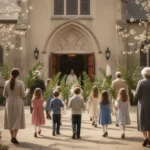
Many churches read the account of Jesus’ entry into Jerusalem during Palm Sunday services. A procession may begin outside or at the back of the church, with worshipers carrying palms while hymns or prayers are offered. The movement from one place to another reflects the biblical crowd gathering around Jesus and also prepares worshipers for the events of Holy Week.
The palms may be shaped into crosses, displayed near a cross, or held during the service. Some congregations give one branch to each person, while others provide fronds, small bundles, or woven designs. Local customs vary, but the purpose remains similar: to connect physical movement and visible symbols with the story of Jesus’ final days.
How palm branches became a symbol of victory and peace
Palm branches carried symbolic meaning before they became strongly associated with Palm Sunday. In the ancient world, palm trees were connected with strength, abundance, and survival, especially in warm regions where the trees could flourish in difficult conditions. Their tall trunks and evergreen fronds also made them natural images of endurance and life.
In several ancient cultures, palms appeared in celebrations of military or civic victory. A victorious athlete, ruler, or soldier might be shown with a palm branch, and artistic depictions often used palms to signal triumph. This background helps explain why the branches in the Gospel story could suggest that Jesus was being received as a victorious king.
Palm branches could also represent peace. A branch lifted or offered openly does not look like a weapon, and the palm’s association with prosperity made it suitable for scenes of public celebration. In Christian interpretation, the image develops further: Jesus brings peace through reconciliation with God, not through the conquest expected by many of his contemporaries.
The Bible uses palm imagery in several ways. Psalm 92 compares the flourishing of the righteous to the growth of a palm tree, presenting a picture of continued life and fruitfulness. The palm tree also appears in descriptions of sacred spaces, including the temple imagery in 1 Kings and Ezekiel. These references support associations with righteousness, beauty, worship, and spiritual vitality.
The book of Revelation describes a great multitude from every nation holding palm branches as they worship God and the Lamb. This scene gives the branches an unmistakable connection with ultimate victory after suffering. The people are not celebrating an easy life; they have come through severe distress, yet they stand in hope before God.
Because of these biblical and cultural associations, one palm branch can communicate several ideas at once:
Welcome: the branch recalls the crowd receiving Jesus in Jerusalem.
Kingship: it acknowledges Jesus as a ruler, though his kingdom is understood differently from earthly empires.
Victory: it points toward Christ’s triumph over sin and death.
Peace: it reflects reconciliation and the peaceful character of Jesus’ mission.
Enduring life: it evokes the Bible’s images of flourishing trees and lasting faith.
Hope after suffering: it connects Palm Sunday with the resurrection celebrated at Easter.
The symbol does not require every Christian to interpret each layer separately. A congregation may emphasize welcome and praise, while an individual may find the strongest meaning in hope or perseverance. The essential point is that palms direct attention beyond the plant itself to the story of Jesus.
Why churches use palm branches in worship
Churches use palms because physical symbols help worshipers remember sacred events. A spoken reading can be meaningful, but carrying a branch, hearing a procession, and seeing palms around the sanctuary engage the senses. The practice gives children and adults a concrete way to participate in the service.
A typical Palm Sunday observance may include several elements:
Distribution of branches: Ushers or clergy give palms to worshipers before the service begins.
Blessing or prayer: The church may pray over the palms and ask that they help people remember Christ’s example.
Procession: The congregation walks while carrying the branches, sometimes circling the church or entering the sanctuary together.
Scripture reading: The story of Jesus entering Jerusalem is read or proclaimed.
Hymns and responses: Worshipers praise Christ as king and reflect on the meaning of Holy Week.
Passion reading: Some churches also read the account of Jesus’ arrest, trial, crucifixion, and death, moving quickly from celebration to solemn reflection.
Not every congregation follows all of these practices. Some churches hold a large outdoor procession; others simply place palms near the altar or hand them out at the door. In communities where fresh palms are unavailable, churches may use local branches or other suitable greenery while preserving the same spiritual purpose.
Children often take an active role in Palm Sunday services. They may carry branches, walk in the procession, or help create palm crosses. This participation teaches the story through action rather than explanation alone. It also reflects the Gospel accounts, which portray a public gathering rather than a private religious moment.
The palms are usually blessed in traditions that use sacramental or sacramental-like objects. The blessing does not turn the leaves into magical objects. Instead, it sets them apart as reminders of prayer, worship, and the church’s remembrance of Christ’s entry into Jerusalem.
Some people keep palms behind a crucifix, near a Bible, or in another respectful place at home. The branch can serve as a visual prompt for prayer throughout the year. When it becomes dry or brittle, it should be treated reverently rather than thrown away casually, according to local church custom.
What to do with palm branches after Palm Sunday
Palm branches dry naturally after several days or weeks. Their condition depends on the variety of palm, humidity, handling, and whether the fronds were cut fresh. A branch may remain green for a while, turn yellow or brown, or become stiff and fragile. Drying does not remove its symbolic value.
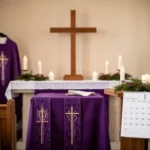
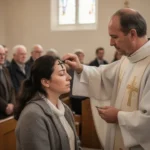
Many churches collect old palms and burn them to make ashes for the following year’s Ash Wednesday services. Ash Wednesday begins the season of Lent, and the ashes traditionally remind Christians of human mortality and the need for repentance. Burning the previous year’s palms creates a visible connection between the praise of Palm Sunday and the humility of Lent.
Not every church makes its own ashes. Some send the palms to another congregation, use an appropriate disposal method, or give specific instructions to members. If you are unsure what to do with your branch, ask your church office or clergy member rather than assuming one practice applies everywhere.
Common respectful options include:
Return the branch to your church during the collection period announced after Palm Sunday.
Keep it in a dry place near a cross, Bible, or prayer area until the church requests it.
Follow your congregation’s disposal guidance if the palm cannot be burned safely.
Avoid burning palms indoors or in a way that could create a fire hazard.
If you want to preserve a palm, place it away from direct sunlight and moisture. Do not seal a damp branch in plastic, since trapped moisture can encourage mold. Woven palms may be especially delicate, so handle them gently and avoid bending dried sections repeatedly.
Safety reminder: Never burn dried palms without proper ventilation, a safe outdoor setup, and permission where required. Returning them to a church is usually the simplest option.
Some people compost plain, untreated palm leaves. That may be suitable where local composting rules allow it, but palms can break down slowly because their fibers are tough. Remove ribbons, wire, plastic wrapping, and other decorations before placing any plant material in compost or yard waste.
How palm branches connect Palm Sunday with Holy Week
Palm Sunday is the beginning of Holy Week, not the end of the Easter celebration. The branches represent public praise, but the services that follow often become more solemn as the church remembers the Last Supper, Jesus’ prayer and arrest, his trial, crucifixion, burial, and resurrection.
This progression helps explain why palms can feel both joyful and serious. They recall an enthusiastic welcome, yet the Gospel story shows that public admiration can be unstable. The crowd’s expectations were not the same as Jesus’ mission, and Christian worship holds both the praise and the suffering together.
For many believers, the palm branch becomes a reminder to follow Jesus beyond moments of celebration. It can represent faithfulness when circumstances change, courage when doing what is right becomes costly, and hope when the outcome is not immediately visible. The symbol is strongest when it leads to reflection rather than remaining a decorative object.
The contrast between palms and the cross is especially significant. A palm may suggest triumph, while the cross reveals the path through which Christian tradition understands that triumph to come. Together, they communicate a central Christian claim: victory is found through self-giving love, faithfulness, and resurrection, not merely through power or public approval.
Families can use the palms as a simple way to discuss Holy Week. A parent might ask what it means to welcome someone, why the crowd expected a king, or how the story changes from Palm Sunday to Easter. Children can make a palm cross, draw the procession, or place the branch near a Bible while the family reads the relevant Gospel account.
Adults may use the branch as a prompt for personal prayer. It can raise practical questions: Where do you seek recognition? How do you respond when expectations are disappointed? What does peace look like in your relationships? How can hope remain present during suffering? These questions connect the ancient symbol with ordinary life without reducing it to a slogan.
How different Christian traditions observe Palm Sunday
Most Christian traditions that observe the liturgical calendar recognize Palm Sunday, but the details differ. Roman Catholic, Anglican, Episcopal, Lutheran, Methodist, Orthodox, and other churches may use palms in processions and services, while the prayers, music, calendar, and method of blessing vary by denomination and region.
In some Western churches, worshipers receive long palm fronds that are folded into crosses or other shapes. In other communities, palms are woven into elaborate designs. Eastern Christian churches may use palm branches or other local greenery, depending on what is available in their region. The symbol is adapted to local climate and custom rather than requiring one universal form.
In tropical and subtropical areas, churches may use freshly cut local palms. In colder areas, imported palm fronds may be distributed, or congregations may use branches from plants that are available locally. The particular leaf matters less than the act of remembering Jesus’ entry into Jerusalem and proclaiming his kingship.
Some congregations focus on the joyful procession, while others include the Passion narrative during the same service. This difference affects the atmosphere: one service may feel celebratory, while another moves quickly into silence and reflection. Both approaches emphasize different parts of the same Holy Week story.
People who do not attend a church service can still learn about the symbolism by reading one or more Gospel accounts, visiting a local service, or observing how Christian communities in different countries use branches. The key is to understand the palm as part of a larger pattern of worship, Scripture, remembrance, and hope.
Palm branches remain meaningful because they combine a familiar natural object with a layered story. They recall a crowd welcoming Jesus, ancient images of victory and peace, the sorrow of Holy Week, and the Christian hope of resurrection. Carried in a procession or kept quietly at home, a palm branch points beyond itself to faithful love that endures through suffering and leads to life.
Frequently asked questions
Are palm branches mentioned in every Gospel account of Jesus’ entry into Jerusalem?
No. John explicitly mentions palm branches, while Matthew and Mark refer to branches without specifying palms. Luke describes people praising Jesus as he approaches but does not mention branches. Christians still commonly use palms because John’s account and longstanding worship tradition connect them directly with Palm Sunday.
Can I keep a palm branch at home after Palm Sunday?
Yes. Many people place dried palms near a cross, Bible, or prayer space as a reminder of Jesus’ entry into Jerusalem and the events of Holy Week. Keep the branch dry and away from heat sources. If your church collects old palms for Ash Wednesday, return yours according to its instructions.
Why are palm branches burned for Ash Wednesday?
Some churches burn the previous year’s palms to produce ashes for Ash Wednesday. The practice links the joyful praise of Palm Sunday with Lent’s themes of humility, repentance, and mortality. Churches do not all make ashes this way, so follow your congregation’s guidance and never burn dried palms indoors or unsafely.
What can you use if real palm branches are unavailable?
Churches may use local greenery, paper palms, or other branches when fresh palms are difficult to obtain. The material is less important than the worship practice it supports. The branch represents welcome, kingship, peace, and hope, so a substitute can serve the same purpose when it is used respectfully.














Leave a Reply