Rose of Lima: life, meaning, feast day, and patronage
Rose of Lima: life, meaning, feast day, and patronage
When you hear the name Rose of Lima, you may wonder whether it refers to a flower, a church, or a historical person. It most commonly means Saint Rose of Lima, a Peruvian Catholic mystic who lived in Lima from 1586 to 1617 and became the first person born in the Americas to be canonized by the Catholic Church.
Rose is remembered for her intense prayer, care for sick and poor people, devotion to Christ, and disciplined life as a Dominican tertiary. Her story is not simply about suffering or extraordinary religious practices. It also concerns family responsibilities, hidden service, compassion, and the spiritual life of a young woman who lived in a rapidly changing colonial city.
Saint Rose of Lima was born Isabel Flores de Oliva in Lima, Peru, in 1586. Her family had Spanish roots, and she grew up during the early colonial period, when Lima was an important center of government, commerce, and Catholic life in South America.
According to traditional accounts, her mother began calling her Rose after seeing a rose-like mark or beauty in the infant’s appearance. The name became associated with her, although she was baptized Isabel. Later, the Dominican archbishop Toribio de Mogrovejo formally confirmed the name Rose, or Rosa, for her.
From childhood, Rose showed a strong desire to dedicate herself to God. She admired the example of Saint Catherine of Siena, another Dominican laywoman known for prayer, service, and spiritual independence. Rose eventually became a member of the Third Order of Saint Dominic, allowing her to live a consecrated life without entering a cloistered convent.
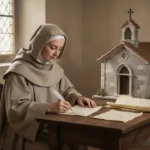
Her decision was significant because her family expected her to marry. Rose wanted to remain unmarried and give herself to prayer and service, but she did not simply abandon her household. She continued living with her family, helping support them through needlework and other work, while shaping an unusually demanding religious routine.
A useful distinction: Rose of Lima was not a nun living in a convent. She was a Dominican tertiary, also called a lay member of the Third Order, who practiced her vocation while remaining in the world and at home.
Rose was canonized in 1671 by Pope Clement X. Her canonization made her the first person born in the Americas to be officially recognized as a saint by the Catholic Church. She is especially important in Peru and throughout Latin America, but her devotion also spread to the Philippines and other parts of the world.
Rose of Lima’s family life, work, and care for others
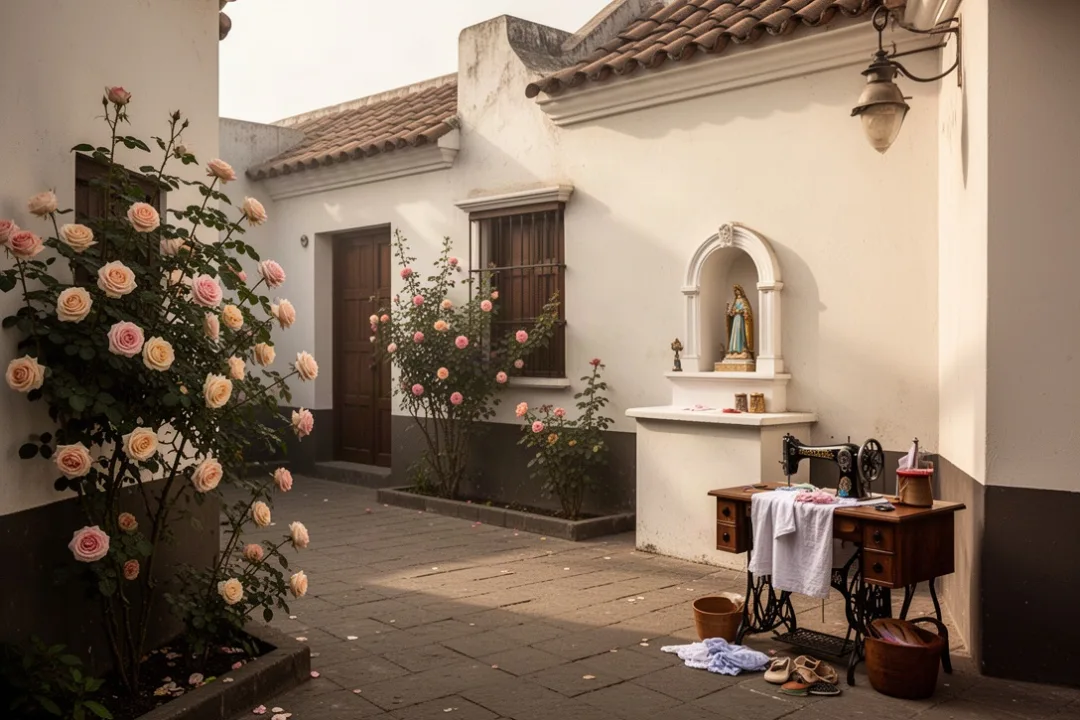
Many popular images show Rose alone in prayer, but her life also involved ordinary duties. Her family faced financial pressure, and Rose used her skills to earn money. She reportedly made and sold embroidered goods, cared for household needs, and cultivated flowers that could be sold.
Her religious commitment therefore existed alongside practical responsibility. She did not understand holiness as an escape from every family obligation. Instead, she tried to turn daily work into an expression of service and sacrifice.
Rose also cared for people who were sick, poor, or otherwise neglected. She helped create a small infirmary or room for vulnerable people at her family’s home. The exact details of every traditional account are not equally easy to verify, but her reputation for direct care of the suffering is central to the way she has been remembered.
Her service was particularly striking in a society marked by deep divisions of wealth, status, race, and colonial power. Rose’s life does not erase those divisions, and it should not be used to romanticize colonial society. Still, her attention to people who lacked security gave her witness a practical dimension beyond private devotion.
She is often described as caring for people with serious illness, including those whom others feared or avoided. That part of her story can speak to modern readers who understand compassion as more than sympathy. Care requires time, physical effort, patience, and willingness to remain present when another person is vulnerable.
Rose also experienced tension within her family. Her mother wanted her to marry, and the household needed income. Rose’s choice to remain unmarried was not presented as an easy personal preference. It involved negotiation, work, and perseverance within the limits of her circumstances.
She remained connected to family life rather than entering a convent.
She practiced humility through hidden tasks rather than seeking public recognition.
These details help explain why Rose remains meaningful to people who do not live in monasteries or religious communities. Her life joined ordinary work with an extraordinary sense of purpose. The rose associated with her name can therefore symbolize not only beauty, but also care cultivated through labor.
What Rose of Lima believed and practiced
Rose’s spirituality centered on Christ’s suffering, prayer, self-denial, and love for others. Like many Catholic mystics of her period, she believed that voluntary sacrifice could unite a person more closely with Christ and deepen compassion for those who suffer.
Historical accounts describe severe forms of penance, fasting, bodily discomfort, and prolonged prayer. Modern readers may find some of these practices disturbing or difficult to understand. They should be read within the religious culture of seventeenth-century Catholicism and not treated as a general model that everyone should imitate.
The central point of Rose’s spirituality was not physical pain by itself. It was the conviction that love should shape the whole person, including choices, habits, possessions, time, and relationships. Her practices were intended to express repentance, solidarity with Christ, and concern for people in need.
Rose is also associated with mystical experiences, including visions and a deep sense of closeness to God. Such accounts come from devotional biographies and testimony connected with her canonization process. The Catholic Church’s recognition of Rose as a saint does not mean that every vivid detail in every later retelling carries the same historical certainty.
Her prayer life had a strongly personal character. She sought quiet and privacy, sometimes creating a small space for prayer in the garden or near her home. Yet her solitude was not simply withdrawal. It gave her a source of strength for work, endurance, and service.
Rose’s witness is often understood as a call to make love concrete through prayer, self-discipline, and care for people who suffer.
She also developed a special devotion to the Virgin Mary and to Saint Catherine of Siena. Dominican spirituality influenced her understanding of study, prayer, preaching, and service, even though she was not a friar or nun. Her example shows that a layperson could pursue a serious spiritual vocation outside the usual structures of religious life.
For Catholics, Rose’s life can encourage several practices:
Set aside regular time for prayer, even when daily responsibilities are demanding.
Examine personal habits and reduce excess where it interferes with generosity.
Serve someone directly rather than limiting faith to private feelings.
Bring family pressures to prayer instead of assuming spiritual life exists apart from them.
Seek guidance before adopting severe forms of fasting or bodily discipline.
That last point matters. Rose’s historical practices should not encourage self-harm, disordered eating, or punishment of the body. A healthy modern application of her example is usually found in moderation, service, prayer, and responsible sacrifice, not in copying extreme acts.
What the rose symbolizes in Saint Rose’s story
The rose is the obvious symbol connected with Rose of Lima, but its meaning is broader than a reference to her name. In Christian art, the rose can represent purity, love, beauty, martyr-like sacrifice, and spiritual flourishing. In Rose’s case, it also links her identity to Lima and to the natural world surrounding her home.
Traditional stories say that roses appeared in connection with Rose’s holiness or divine favor. Some accounts describe flowers in unusual settings, while others focus on the way her name developed from an observation made during infancy. These stories belong to a devotional tradition, and the details vary.
Artists commonly portray her wearing a crown of roses or holding roses. The crown can suggest both beauty and suffering. In Rose’s spiritual outlook, love was not merely attractive or comforting; it demanded patience, fidelity, and a willingness to serve without applause.
She may also appear with a small anchor, a symbol associated with hope, steadfastness, and her connection with the city of Lima. Other images include the Christ Child, a cross, a crown of thorns, or a habit associated with the Dominican Third Order.
When you see a rose used in a church, medal, prayer card, or statue connected with her, it may point to several ideas at once:
Her name, given after the flower-like appearance associated with her childhood.
Her beauty transformed by humility rather than personal display.
Her suffering offered in love rather than endured as an end in itself.
Her care for others, which required patience and steady work.
The spiritual life as something cultivated gradually, like a living plant.
The symbolism is especially powerful because a rose has both softness and thorns. That contrast fits the way Rose is remembered: gentleness toward people in need alongside rigorous discipline. It also explains why flowers remain a natural part of images, altars, processions, and feast-day observances dedicated to her.
Rose of Lima’s feast day and places of devotion
Saint Rose of Lima’s feast day is commonly observed on August 23 in the Roman Catholic calendar. In Peru, her principal celebration is traditionally associated with August 30, a date that remains deeply important in Peruvian religious and civic life. Local calendars and communities may observe her on different dates.
In Peru, celebrations connected with Rose can include Masses, processions, flowers, prayers, and visits to places associated with her life. The most important devotional locations are in Lima, including the shrine and sanctuary dedicated to her and the house traditionally connected with her family.
The historic center of Lima contains several sites tied to early Peruvian Catholic figures. Rose’s home and the well associated with her devotion have become places where visitors pray, leave written petitions, and ask for healing or help. The well is linked to a tradition in which Rose’s image or name became connected with petitions cast into it.
Visitors should distinguish between historical evidence, devotional tradition, and later popular customs. A pilgrimage does not require treating every story as a modern report. Many people visit such sites because they connect prayer with memory, community, and the physical places where a saint lived.
A person observing Rose’s feast day at home might choose a simple practice rather than a large celebration. For example, you could place a rose near a cross, read a short account of her life, pray for people who are sick, or make a practical gift to a local food pantry or shelter.
A respectful feast-day observance could include:
Attending Mass or another Christian service, if that is part of your tradition.
Praying for Peru, Lima, and people facing poverty or illness.
Learning about Dominican lay spirituality and service.
Visiting a church that keeps an image of Saint Rose.
Offering flowers while also doing a concrete act of mercy.
Practical devotional idea: Let the flower point toward an action. Alongside a rose or prayer, call someone who is isolated, prepare a meal, volunteer, or support reliable medical and social services.
Rose of Lima’s patronage and prayers for help
Saint Rose of Lima is the patron saint of Peru and is widely honored as a patroness of Lima and the Americas. She is also associated with the Philippines and with people seeking help for illness, family difficulties, poverty, and spiritual endurance. Exact patronage lists can differ by country, diocese, parish, or devotional source.
She is sometimes named as a patron of gardeners, florists, needleworkers, and embroiderers, reflecting the work and symbols connected with her life. In some traditions, she is invoked by law enforcement or by people concerned with social order. These associations are not all equally universal, so local customs matter.
When Catholics ask for Rose’s intercession, they are not worshiping her or treating her as a source of divine power. They are asking a saint to pray with them and for them. The prayer may focus on a specific need, but it can also ask for courage to serve, patience during illness, or wisdom in family decisions.
A simple prayer inspired by Rose might ask God to help you remain faithful in ordinary responsibilities, care for people who are suffering, and use your abilities generously. You can mention a particular person by name, especially someone who is sick, poor, lonely, or facing pressure that others cannot see.
Rose’s example may be particularly meaningful when you feel that your work is hidden or unrecognized. She is remembered not only for mystical experiences, but also for sewing, supporting her household, tending to the sick, and praying in private. Those details give her patronage a practical quality.
Her life can also prompt careful questions about religious self-denial. If you want to practice fasting or sacrifice in her honor, choose something safe and proportionate. People with medical conditions, a history of eating disorders, or other health concerns should avoid severe fasting and consult an appropriate professional when needed.
How Rose of Lima is remembered today
Rose of Lima continues to matter because her story brings together several forms of commitment that are often separated: personal faith, family duty, manual work, care for the vulnerable, and public religious identity. She was not powerful because she held political office or inherited wealth. Her influence grew through the way communities remembered her life and interpreted her witness.
Her story also invites a balanced reading. Rose’s compassion should not be separated from the real people she served, and her ascetic practices should not be copied without context. At the same time, her devotion should not be reduced to a decorative rose or a sentimental image of a young saint.
For many believers, the most challenging part of her example is its consistency. She tried to connect prayer with what she did with her hands, money, time, and attention. Her spirituality was not limited to words. It appeared in the way she worked, cared, endured, and remained committed to a chosen vocation.
For others, Rose’s story raises historical questions about colonial Peru, women’s religious choices, and the ways church institutions evaluate sanctity. Those questions do not necessarily weaken devotion. They can lead to a more mature understanding of how a saint is remembered across centuries and cultures.
If you are researching the name Rose of Lima for a child, school project, church celebration, artwork, or personal prayer, the most accurate short description is this: Saint Rose of Lima was a seventeenth-century Peruvian Dominican tertiary known for prayer, charity, austerity, and care for the sick and poor. Her feast is generally observed on August 23, with August 30 especially significant in Peru.
The rose associated with her can remain a simple reminder: beauty is not merely something to admire. In Rose’s story, it becomes a sign of love cultivated through discipline and expressed through service.
Frequently asked questions
Was Rose of Lima a nun?
No. Rose of Lima did not enter a convent. She became a Dominican tertiary, a lay member of the Third Order of Saint Dominic, and lived at home with her family. This allowed her to pursue a dedicated religious life while continuing to work, help support her household, and care for people who were sick or poor.
Why is Saint Rose of Lima shown with roses?
Roses relate to her name, which developed from a tradition about her appearance as an infant, and to the flower symbolism surrounding her devotion. In religious art, roses can represent love, purity, beauty, and sacrifice. Some images also include thorns to suggest the suffering and self-denial associated with her spiritual life.
What is Saint Rose of Lima the patron saint of?
She is especially recognized as the patron saint of Peru, Lima, and the Americas. She is also honored in the Philippines and invoked in connection with illness, poverty, family concerns, and spiritual endurance. Some local traditions associate her with gardeners, florists, needleworkers, and other occupations, but patronage lists vary.
When is Saint Rose of Lima’s feast day?
The Roman Catholic calendar commonly celebrates Saint Rose of Lima on August 23. In Peru, August 30 has traditionally been her major feast date and remains an important day for public devotion. A parish or religious community may follow a local calendar, so the date can differ depending on where you are.











Leave a Reply