St. Rita feast day: date, meaning, and ways to observe
St. Rita feast day: date, meaning, and ways to observe
St. Rita’s feast day is celebrated each year on May 22.
Known as St. Rita of Cascia, she is honored in the Catholic Church as a woman of prayer, forgiveness, and faithful endurance through suffering. Many people ask for her intercession in situations that seem impossible, especially family conflicts, troubled marriages, grief, and long-standing personal difficulties.
May 22 marks the annual liturgical memorial of Saint Rita of Cascia, an Augustinian nun from Italy. Her feast day is connected with the date traditionally associated with her death in 1457. She lived in the late 14th and early 15th centuries, a period marked by political conflict, family rivalries, and religious divisions.
Rita was born in the town of Roccaporena and later became closely associated with Cascia, where she entered the Augustinian monastery of Saint Mary Magdalene. Her life included marriage, widowhood, the loss of her children, and many years as a religious sister. These experiences help explain why people facing family pain and bereavement often feel a particular connection with her.
The Church canonized Rita in 1900 under Pope Leo XIII. Her devotion had already spread widely among Catholics, particularly in Italy and throughout communities with strong Augustinian traditions. Today, parishes and shrines may mark May 22 with Masses, novenas, processions, rose blessings, charitable activities, or special prayers.
The date to remember: St. Rita’s feast day is May 22. In some communities, celebrations begin with a novena or other prayers several days before the feast.
Who St. Rita of Cascia was
St. Rita’s traditional biography describes a life shaped by difficult transitions. She was born to devout parents and, according to longstanding accounts, hoped to become a religious sister. Instead, she married Paolo Mancini, a man associated with the violence and rivalries of the area.
Accounts of Rita’s marriage differ in detail, but tradition presents her as a woman who sought peace in a difficult home. Her husband was eventually killed in a cycle of conflict. Rita then faced another painful loss when her two sons died, traditionally from illness, before they could pursue revenge for their father’s death.
After becoming a widow, Rita wanted to enter the Augustinian community in Cascia. Traditional accounts say that her first attempts were unsuccessful because of the circumstances of her widowhood and the continuing family conflict. She eventually entered the monastery, where she lived in prayer, work, and service for the rest of her life.
Devotion to Rita emphasizes her decision to forgive rather than continue a pattern of retaliation. That emphasis does not mean that abuse or violence should be tolerated. Her example is better understood as a call to seek peace, protect the vulnerable, pursue justice responsibly, and refuse to let hatred determine the future.
How to observe St. Rita’s feast day step by step
You do not need to live near a shrine or attend a large public celebration to observe May 22 meaningfully. A simple practice can center on prayer, honest reflection, and a concrete act of charity.
Set aside time for prayer. Attend Mass if you can, or spend a few quiet minutes asking for St. Rita’s intercession for a specific intention.
Name the situation clearly. Bring one concern to prayer rather than trying to list every problem at once. It might involve grief, reconciliation, a strained relationship, or a decision that requires patience.
Read about Rita’s life. Reflect on how she responded to loss, conflict, widowhood, and religious vocation. Keep in mind that some details come from devotional tradition rather than independently documented history.
Pray for peace and wise action. Ask for the grace to forgive where forgiveness is possible, establish healthy boundaries where needed, and seek help when a situation is unsafe.
Make a practical offering. Visit someone who is lonely, support a food pantry, help a grieving friend, or give to a trusted organization serving families in crisis.
Share the day respectfully. If a relative or friend has a devotion to St. Rita, send a thoughtful message or invite them to pray with you.
A feast day is not a test of how elaborate your observance can be. The central purpose is to remember a holy person and allow that remembrance to shape your own choices. For St. Rita’s feast, that often means combining prayer with peacemaking and compassion.
St. Rita is widely known as the patron saint of impossible or difficult causes. People turn to her when a situation seems beyond their control or when ordinary solutions have not brought relief. This title does not promise that every desired outcome will occur. Instead, it expresses trust that prayer can bring strength, clarity, comfort, and hope even when circumstances remain painful.
She is also associated with several groups and needs connected to her life story. Devotional lists vary by country and tradition, but commonly mentioned patronages include:
Abused or mistreated women: Rita is remembered as a woman who endured a troubled marriage, although devotion to her must never be used to tell someone to remain in danger.
Widows: She experienced the death of her husband and later lived as a widow before entering religious life.
Parents who have lost children: Her traditional biography includes the deaths of her two sons.
Marriage and family difficulties: Her example is often invoked by people seeking reconciliation, wisdom, or healing within families.
Peace and reconciliation: Her story is associated with ending cycles of revenge and choosing a path toward peace.
Desperate or apparently impossible situations: This is the patronage most frequently connected with her name.
These patronages developed through popular devotion and the way Catholics have interpreted her life. They are not a substitute for professional, medical, legal, or pastoral support. Someone facing domestic violence, coercion, or threats should seek immediate help from trusted people and appropriate local services.
A safety reminder: St. Rita’s example of forgiveness should never be used to pressure someone to return to an abusive relationship, remain in danger, or avoid reporting a crime.
Why roses are associated with St. Rita’s feast day
Roses are one of the most recognizable symbols of St. Rita. The traditional story says that near the end of her life, while she was confined to bed, she asked for a rose from her family’s garden during winter. A visitor reportedly found a rose blooming despite the season and brought it to her.
This account is part of the devotional tradition surrounding Rita rather than a detail that can be verified in the same way as a dated historical record. Still, the rose has become a powerful symbol of hope in harsh circumstances, especially when an answer appears unlikely.
Many churches bless roses on or near May 22. People may take the blessed roses home, offer them to someone who is sick or grieving, or place them near a religious image. In some locations, roses are distributed after Mass or carried during a procession honoring the saint.
The rose can carry several meanings at once. Its beauty may suggest God’s care, while its thorns can represent suffering and the cost of love. For people devoted to St. Rita, the image often points to hope that can survive hardship without pretending hardship is insignificant.
How to pray a St. Rita novena before May 22
A novena is a prayer practice lasting nine days. A St. Rita novena may be prayed from May 13 through May 21, leading up to her feast day on May 22, although people also pray it at other times of the year.
Different prayer books and Catholic communities use different texts. You can follow an approved devotional booklet, a parish handout, or a simple personal structure. A novena is not a magical formula, and the number of days does not guarantee a particular result. Its value lies in returning steadily to prayer and allowing time for reflection.
A simple nine-day pattern could look like this:
Begin with a quiet pause. Put aside distractions and become aware of the reason you are praying.
State your intention. Mention the person or situation by name, while remaining open to wisdom rather than demanding one specific outcome.
Reflect on one aspect of Rita’s life. You might consider forgiveness, patience, grief, service, courage, or the search for peace.
Ask for intercession. Request St. Rita’s prayers for the intention and for the grace to respond faithfully.
End with a practical resolution. Choose one action, such as making a phone call, seeking counseling, apologizing, setting a boundary, or helping someone in need.
You can pray alone, with family, or with a parish group. Some people add the Lord’s Prayer, the Hail Mary, or another familiar Catholic prayer. If you are using a published novena, follow its wording and instructions. Bible passages may also guide reflection; for example, readings about mercy, endurance, reconciliation, or care for the suffering can complement the devotion without turning the novena into a promise of a specific result.
What to do at church on May 22
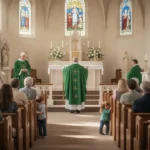
Parishes observe St. Rita’s feast day in different ways. A church named for her may hold a particularly elaborate celebration, while another parish may simply include her memorial in the daily Mass calendar. Check the parish schedule because the date may fall on a weekday, and local liturgical practices can vary.
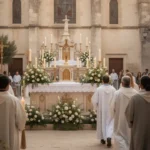
Mass in honor of St. Rita: The liturgy gives the community a shared setting for prayer and remembrance.
Veneration of a statue or image: People may pray before an image of the saint, especially at a church or shrine dedicated to her.
Blessing of roses: Parishioners may bring roses or receive them after a blessing.
Special intercessions: The community may pray for people dealing with family conflict, grief, illness, or seemingly impossible circumstances.
Processions: Some communities carry an image of St. Rita through the streets as a public expression of faith.
Charitable collections: A feast-day celebration may include support for food assistance, shelters, ministries to families, or other local needs.
If you attend a Mass for the first time, you do not need to know every custom in advance. Follow the congregation’s posture and participate in the parts that are familiar to you. You may also attend quietly and use the time for personal prayer.
How St. Rita’s symbols help explain her devotion
Religious art often shows St. Rita with objects connected to her story and spiritual identity. These symbols are not merely decorative; they help communicate why generations of Catholics have looked to her as an example.
The thorn
A thorn on Rita’s forehead is associated with a traditional account of her receiving a wound while contemplating Christ’s suffering. The mark is usually understood as a sign of union with Christ in suffering, not as an invitation to seek pain for its own sake. It reminds devotees that compassion can grow from an honest awareness of human suffering.
The rose
The rose represents hope, grace, and an unexpected sign of life in an unfavorable season. It also connects the feast day with a concrete custom that families and parishes can share. Giving a rose to someone who is sick, grieving, or isolated can turn a private devotion into an act of care.
The crucifix
Images of Rita may include a crucifix, reflecting her deep contemplation of Christ’s passion. For devotees, the crucifix can represent the belief that suffering is not ignored by God. It can also encourage a compassionate response to people who are carrying burdens that others cannot see.
The religious habit
Rita is commonly portrayed in the habit of an Augustinian nun. This clothing identifies the later part of her life, when she lived within the monastery and pursued a vocation of prayer and service. Her image therefore connects family experience with a later life of religious dedication.
What St. Rita’s story teaches about forgiveness
Forgiveness is central to how many people understand Rita’s witness. Her story is often presented as a rejection of revenge after her husband’s death and as a desire to prevent her children from becoming part of a continuing feud. That choice is especially meaningful in a culture where family honor and retaliation could perpetuate violence across generations.
Christian forgiveness, however, does not require denying what happened. It does not erase accountability, remove the need for justice, or guarantee that trust should be restored. A person may forgive internally while still keeping distance, seeking legal protection, or refusing contact with someone who remains dangerous.
For some people, forgiveness happens gradually. It may begin as a decision not to retaliate, followed by grief, anger, counseling, prayer, and a slow release of resentment. St. Rita’s feast day can provide a meaningful occasion to ask what peaceful action is possible now, even if complete emotional healing will take time.
Ways families can mark May 22 at home
A family celebration can be simple and age-appropriate. Younger children may connect with the rose symbol, while older children and adults may be able to discuss forgiveness, loss, or the importance of asking for help in difficult situations.
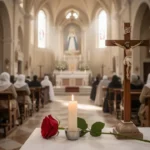
Place a rose or another flower near a cross or religious image.
Read a short biography of St. Rita and discuss one quality shown in her life.
Pray for families experiencing conflict, grief, poverty, or violence.
Write private prayer intentions and place them near the flower.
Prepare a meal for a neighbor, relative, or household member who could use support.
Contact someone who is grieving, while respecting their need for privacy and rest.
Make a donation to a local organization that supports survivors of abuse or families in crisis.
Keep the focus on compassion rather than superstition. A rose is a reminder of hope, not an object that controls events. Prayer can accompany practical care, responsible decisions, and support from qualified professionals.
Where St. Rita is especially honored
St. Rita’s devotion is especially strong in Italy, where Cascia remains the central place associated with her life and shrine. The Basilica of Saint Rita in Cascia attracts pilgrims who come to pray, attend liturgies, and seek her intercession. The surrounding town of Roccaporena is also connected with important places from her early life.
Churches and communities dedicated to St. Rita can be found in many other countries. Their customs may reflect local culture, including processions, rose blessings, parish novenas, prayer groups, and celebrations focused on families. The scale of the event varies, but the central themes remain recognizable: faith amid hardship, forgiveness, and hope for difficult situations.
If you hope to visit a shrine, check current information before traveling. Feast-day schedules, registration requirements, transportation, and rose-blessing customs can change. A local parish can also tell you whether it offers a May 22 Mass or novena.
How to approach St. Rita’s feast day with care
People often come to St. Rita’s feast day while carrying serious pain. Someone may be praying for a marriage, a child, a sick relative, a court decision, reconciliation, or relief from grief. A respectful observance makes room for that pain without making promises that devotion cannot guarantee.
It is reasonable to pray for a particular outcome, but prayer can also ask for strength, wise guidance, protection, healing, and the ability to act well. If the situation involves illness, mental health, addiction, abuse, or legal danger, combine prayer with appropriate care. Contact a doctor, counselor, attorney, clergy member, domestic violence advocate, or emergency service as the circumstances require.
May 22 can become a day to remember that difficult situations deserve more than quick explanations. St. Rita’s example points toward patient faith, courageous peacemaking, practical help, and compassion for people whose struggles may not be visible. Those are fitting ways to honor the saint whose life continues to speak to people facing the seemingly impossible.
Frequently asked questions
Is St. Rita’s feast day always on May 22?
Yes. St. Rita of Cascia is commemorated on May 22 each year. The way the date appears in a parish schedule can vary depending on the local calendar and other liturgical celebrations, but May 22 remains her established feast day. Churches may hold a Mass, novena, rose blessing, or procession on that date or on a nearby day.
Why do people bring roses to St. Rita’s feast day?
Roses are connected with a traditional story that a rose was found blooming during winter near the end of Rita’s life. The flower has come to symbolize hope during severe hardship. Some churches bless roses on or near May 22, and people may bring them home, give them to someone who is suffering, or use them as a reminder to pray.
What should I pray to St. Rita for?
People commonly ask St. Rita’s intercession for family conflict, grief, difficult marriages, reconciliation, illness, and situations that seem impossible. You can bring a specific concern to prayer while also asking for wisdom, protection, courage, and the ability to take responsible action. Prayer should accompany practical support when a problem involves danger, illness, or legal concerns.
Can I celebrate St. Rita’s feast day if I am not Catholic?
You can learn about her life, visit a public parish celebration, reflect on forgiveness and peace, or offer a charitable act in her honor. Catholic practices such as receiving Communion or participating in certain devotions have their own religious context, so visitors should follow the parish’s guidance. Quiet observation and respectful prayer are appropriate ways to participate.












Leave a Reply