Feast of St. Clare: date, meaning, and ways to observe
Feast of St. Clare: date, meaning, and ways to observe
Are you trying to find the date of the Feast of St. Clare or wondering how Catholics observe it? The feast is celebrated each year on August 11, the memorial of St. Clare of Assisi, an Italian religious foundress and close spiritual companion of St. Francis of Assisi.
St. Clare is remembered for choosing a life of poverty, prayer, humility, and joyful devotion. Her example continues through the Poor Clares, the contemplative community she founded, and through people who honor her with Mass, prayer, charitable action, or a renewed commitment to a simpler way of life.
The Catholic Church celebrates St. Clare’s memorial on August 11. The date falls near the anniversary of her death in 1253 and appears on the Roman Catholic liturgical calendar as an optional memorial in the United States, although the exact celebration can vary according to a diocese, parish, religious community, or local calendar.
For many communities, the feast is especially significant because St. Clare is the founder of the Order of Poor Ladies, now commonly called the Poor Clares. Monasteries of Poor Clare sisters may observe the day with solemn liturgies, devotional prayers, community celebrations, and special attention to the saint’s writings and spiritual legacy.
Date to remember: The Feast of St. Clare is August 11. It is not generally a Catholic holy day of obligation, so attendance at Mass depends on local parish schedules and personal devotion.
Who St. Clare was and why her feast matters
St. Clare was born in Assisi, Italy, around 1194, into a noble family. As a young woman, she was drawn to the preaching and example of St. Francis of Assisi. Rather than accept the marriage and social expectations associated with her family’s position, she chose a religious life centered on Christ and radical poverty.
According to the traditional account, Clare left home on Palm Sunday in 1212 and joined Francis and his early followers. Francis received her commitment and helped establish a community for women at San Damiano, a small church and monastery near Assisi. Her sister Agnes later joined her, and other women followed.
Clare’s community developed into the Poor Clares. The sisters lived a contemplative life marked by prayer, work, communal discipline, and dependence on God rather than personal wealth. Clare insisted that her community should preserve what she called the privilege of poverty, meaning that the sisters would not own property individually or as a community in the ordinary sense.
That commitment was unusual and difficult. Many religious communities relied on land or endowments to support their members, while Clare believed that voluntary poverty expressed trust in God and solidarity with people who had little. After years of seeking approval for her form of life, she became the first woman known to have written a rule for a religious community of women.
Clare died on August 11, 1253. Pope Alexander IV canonized her in 1255, only a few years after her death. Her feast therefore honors not only a medieval saint but also a woman whose spiritual insight, leadership, and persistence helped shape Catholic religious life.
What St. Clare is best known for
St. Clare’s reputation rests on more than one act or title. Her life brought together contemplation and courage: she prayed deeply, cared for her sisters, defended her community’s way of life, and remained faithful through illness and hardship.
Founder of the Poor Clares: She established a contemplative religious community for women at San Damiano.
Defender of poverty: She worked to preserve a life without private or communal wealth as a central part of her community’s identity.
Spiritual writer: Her letters to St. Agnes of Prague and her rule offer guidance about humility, prayer, and keeping one’s attention fixed on Christ.
Companion of St. Francis: She shared Francis’s love of poverty, simplicity, creation, and the Gospel.
Patron saint of television: She was named patroness of television because tradition says she received a vision of a Mass while too ill to attend in person.
Model of steadfast leadership: She guided her community despite prolonged illness and opposition to her preferred form of religious life.
These themes explain why the feast appeals to people in very different circumstances. A contemplative may focus on prayer, a family may remember Clare as a patron, a religious community may honor its founder, and someone facing financial pressure may find meaning in her teaching about simplicity and trust.
How to observe the Feast of St. Clare step by step
You do not need to belong to a monastery or have a large celebration to observe the feast meaningfully. A simple practice can connect the day to Clare’s central concerns: attention to God, care for others, and freedom from unnecessary possessions.
Mark August 11 on your calendar. Check your parish or diocesan schedule for a Mass, prayer service, or feast-day event.
Learn one part of Clare’s story. Read a short biography, explore the history of San Damiano, or learn about the Poor Clare monastery nearest you.
Spend quiet time in prayer. Ask for the grace to live with greater trust, humility, courage, or simplicity.
Read one of Clare’s writings. Her letters, especially those addressed to Agnes of Prague, provide a direct sense of her spiritual vision.
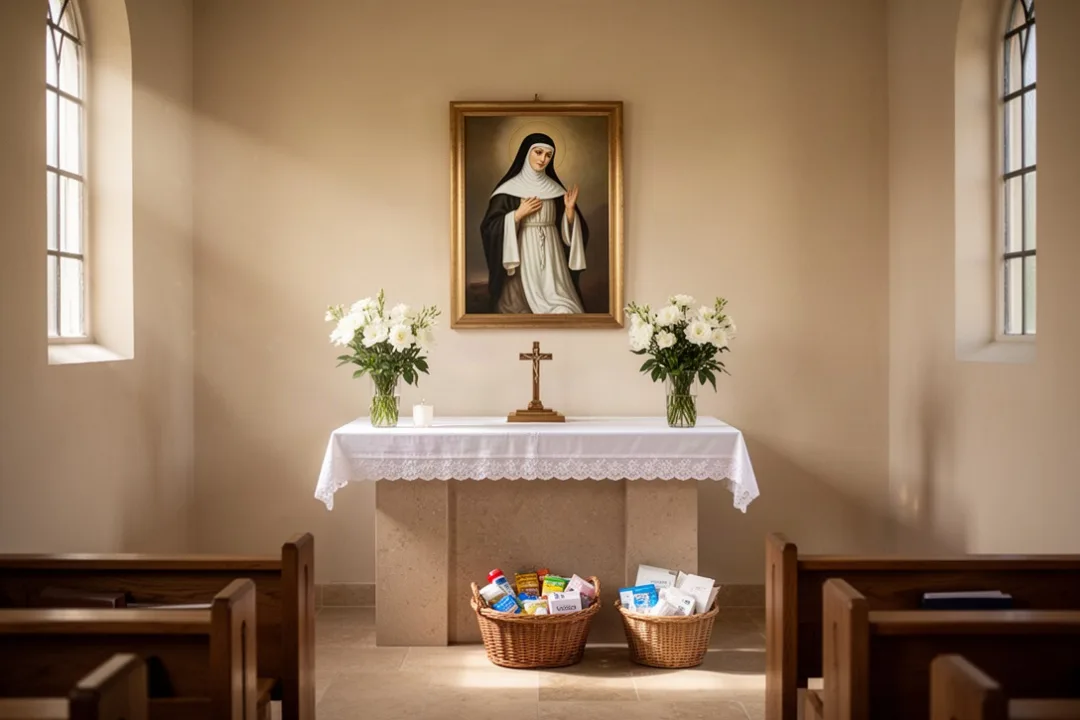
Give something practical. Donate food, money, clothing, or time to a person or organization that serves people in need.
Reduce one unnecessary burden. Set aside an avoidable purchase, clear a small area of clutter, or limit a distraction so that you can be more present to prayer and other people.
Share the feast with someone else. Tell a child, friend, or family member why Clare is remembered and invite them to choose one small act of kindness.
These steps are not meant to turn the feast into a checklist. The purpose is to let Clare’s values become concrete. A short prayer followed by a generous action can express the spirit of the day more fully than a large celebration with no connection to her example.
Prayers and readings associated with St. Clare’s feast
At Mass, the readings and prayers for St. Clare may depend on the calendar being used and the decision of the parish or celebrant. The liturgy commonly highlights themes such as faithfulness, spiritual wisdom, humility, and dedication to Christ. If August 11 falls on a Sunday or another important liturgical day, the Sunday or higher-ranking celebration may take precedence.
People praying privately can turn to several parts of the Bible that resonate with Clare’s life. The account of Mary sitting at Jesus’ feet in Luke 10:38–42 can prompt reflection on attentive listening and the place of contemplation. Matthew 6:25–34 addresses freedom from anxiety about possessions and daily needs. Matthew 5:1–12 presents the Beatitudes, including poverty of spirit, mercy, purity of heart, and perseverance under difficulty.
These passages should not be treated as proof texts for every detail of Clare’s life. They are useful because they illuminate the spiritual priorities she tried to embody: listening to Christ, trusting God, practicing mercy, and remaining faithful when a life of discipleship becomes difficult.
A personal prayer can be brief and direct:
St. Clare, teach me to see Christ more clearly, live more simply, and love more faithfully. Pray that I may use what I have for the good of others and remain steady in times of difficulty.
You can also pray for the Poor Clare sisters, for people who are discerning a vocation, for those experiencing poverty, and for families seeking peace. The feast is a suitable occasion to ask how your own habits of spending, attention, and service reflect what you claim to value.
The meaning of poverty in St. Clare’s spirituality
St. Clare’s poverty was not simply a preference for owning fewer things. It was a religious commitment to dependence on God and a refusal to let wealth determine the community’s identity. She believed that material security could never replace trust, prayer, shared life, or love.
For most people, honoring Clare does not mean copying the exact structure of a thirteenth-century monastery. It may mean examining the pressures that shape your choices. You might ask whether possessions consume too much attention, whether convenience has displaced generosity, or whether fear about having enough prevents you from sharing what you can.
Christian simplicity is not the same as neglecting legitimate responsibilities. Paying bills, caring for children, preparing for illness, and maintaining a safe home are not contrary to Clare’s example. The deeper question is whether your possessions remain tools for serving life or become measures of security, status, and personal worth.
Choose a purchase because it is useful, not merely because it is fashionable.
Repair, reuse, or donate items before buying replacements when practical.
Set aside part of your budget for direct help to people in need.
Make room for prayer, family, and community by reducing unnecessary consumption.
Receive help humbly when you are the person experiencing need.
Clare’s vision also included community. The sisters at San Damiano did not practice poverty as isolated individuals; they shared work, prayer, meals, decisions, and responsibility. That makes her feast relevant to questions about mutual care and fair use of resources, not only private decluttering.
St. Clare’s relationship with St. Francis of Assisi
Clare and Francis shared a spiritual movement, but Clare was not merely a follower in the background. Francis influenced her vocation, while Clare developed her own community, leadership, and theological understanding. Her feast offers an opportunity to recognize the distinct contribution of women to the Franciscan tradition.
Francis helped Clare begin her religious life and supported the community at San Damiano. Clare, in turn, became one of the most important witnesses to Francis’s vision of Gospel poverty. After Francis died, she continued to preserve that vision while addressing the particular needs of women living in a cloistered community.
Their relationship is often presented through shared devotion to Christ crucified, love of the poor, and reverence for creation. Yet Clare’s own writings show a strong and personal spiritual voice. She encouraged Agnes of Prague to contemplate Christ, especially the humility, poverty, and love displayed in his life.
Remembering both saints together can help prevent an overly narrow picture of Franciscan spirituality. It includes active service and hidden prayer, public preaching and quiet fidelity, care for creation and care for vulnerable people.
St. Clare is widely known as the patron saint of television and, in some settings, of television workers and communication. The connection comes from a tradition that, during an illness that kept her in bed, Clare saw or spiritually witnessed the celebration of Mass at a distance.
Pope Pius XII formally named her patroness of television in 1958. The patronage does not mean that television existed in Clare’s lifetime. Instead, her reported experience was understood as a fitting image for a technology that allows people to see and hear events taking place elsewhere.
The association can be considered thoughtfully rather than superficially. Clare’s story invites questions about how screens affect attention, how media can carry truth or harm, and how communication can bring people together. On her feast, a family might watch a respectful program about faith or service, contact someone who is isolated, or take a break from entertainment to create space for prayer.
A useful modern connection: St. Clare’s patronage of television can prompt you to use media intentionally—choosing content that informs, comforts, or serves others instead of allowing screens to consume every quiet moment.
Symbols and images connected with St. Clare
Religious art often depicts St. Clare wearing the habit of a Poor Clare and carrying a monstrance or ciborium, vessels associated with the Eucharist. This image refers to the tradition that she confronted attackers or defended San Damiano by holding the Blessed Sacrament before them. Accounts of the event contain legendary elements, so the image is best understood as a sign of her trust in Christ rather than as a modern historical report.
She may also be shown with a cross, book, lamp, or lily. A book can represent her rule and letters; a cross points to her contemplation of Christ; a lamp suggests faithful witness; and a lily is a traditional symbol of purity. Artistic symbols vary by region and period.
The most recognizable image is often Clare holding the Eucharist. For Catholics, this reflects her belief that Christ was not an abstract idea but the center of her community’s prayer and life. It also communicates the courage with which she defended her sisters and their way of life.
How parishes and Poor Clare communities may celebrate
Celebrations differ widely. A parish with a connection to a Poor Clare monastery may invite the sisters’ chaplain, display an image of Clare, or offer a special blessing. A monastery may hold a public Mass, share information about its vocation, or welcome visitors for prayer when its enclosure and local practices permit.
Common elements can include:
A Mass or Liturgy of the Word on or near August 11.
Prayers asking St. Clare’s intercession for families, religious vocations, and people in poverty.
A display or talk about Clare’s life, writings, and connection with Assisi.
Collection of food, clothing, or financial gifts for local charities.
A quiet period of Eucharistic adoration or personal reflection.
A simple meal or community gathering that emphasizes fellowship rather than elaborate spending.
Some churches may not hold a special service at all. That does not make the feast less meaningful. You can observe it through the parish’s ordinary Mass, private prayer, a charitable gift, or a conversation about faithful simplicity and compassionate service.
Ideas for families and children on August 11
Children often connect with Clare through her story of courage. A family can explain that she chose a different life because she wanted to dedicate herself to prayer and helping others. The conversation does not need to idealize hardship; it can focus on the difference between having less by choice and lacking necessities through poverty or injustice.
Try one or two age-appropriate activities:
Look at a map and find Assisi, Italy.
Tell the story of San Damiano using a children’s book or a trusted parish resource.
Choose toys, books, or clothing in good condition to donate.
Make a paper candle as a reminder to be a steady light for someone else.
Pray for people who do not have safe housing, enough food, or supportive community.
Set aside one screen-free period for conversation, reading, or quiet prayer.
For older children and teenagers, Clare’s patronage of television creates a natural discussion about media. Ask what they watch, how it affects their mood and attention, and how communication can be used to encourage people rather than embarrass or exploit them.
The lasting value of Clare’s feast is found in the questions her life raises. What would it mean to live with less fear about possessions? How can prayer shape decisions rather than remain separate from daily life? Where do you need courage to defend a worthwhile commitment or stand beside someone who is vulnerable?
Clare did not lead a life free from conflict. She faced illness, institutional pressure, and the practical challenges of supporting a religious community. Her example therefore speaks to people who are trying to remain faithful while dealing with uncertainty, limited resources, or resistance from others.
Her feast also balances hiddenness and influence. Clare spent much of her life within the enclosure of San Damiano, yet her letters, decisions, and community shaped Catholic spirituality far beyond Assisi. A life does not have to be publicly prominent to have lasting importance.
On August 11, the most fitting observance may be quiet: attend Mass, read a few pages from Clare’s letters, give help where it is needed, and make one deliberate change in how you use time or possessions. The day points toward a form of holiness grounded in focused prayer, generous relationships, and courageous simplicity.
Common mistakes about the Feast of St. Clare
People sometimes assume that the feast has one universal ceremony or that every church celebrates it with the same level of solemnity. In practice, observance depends on the liturgical calendar, local customs, and whether a parish has a connection to the Poor Clares or Franciscan communities.
Another misunderstanding is that St. Clare’s message is only about renouncing possessions. Poverty was central to her vocation, but her life also emphasized community, contemplation, leadership, perseverance, and love of Christ. Focusing on one theme alone can make her spirituality seem narrower than it was.
Finally, the feast should not be reduced to a historical commemoration. Learning facts about Clare matters, but the purpose of a saint’s memorial is also to encourage a response. A prayer, a gift, a repaired relationship, or a more disciplined use of media can make the feast part of ordinary life.
Questions to bring to personal reflection
If you want to spend several minutes reflecting on the feast, consider these questions:
What possession, habit, or worry receives more attention than it deserves?
Where can I practice generosity without waiting for perfect circumstances?
Whose quiet faithfulness do I overlook?
How can I use communication technology to strengthen, rather than weaken, relationships?
What commitment deserves patient protection even when it is inconvenient?
How might prayer change one decision I need to make this week?
St. Clare’s life does not require you to imitate a medieval religious rule in every detail. It invites you to identify what most distracts you from love and to place your resources—your time, attention, money, skills, and relationships—at the service of what is good.
Frequently asked questions
Is the Feast of St. Clare always on August 11?
Yes. The Catholic memorial of St. Clare is observed on August 11, the date associated with her death in 1253. A parish may use another liturgical celebration if the date falls on a Sunday or a higher-ranking feast. Local religious communities may also hold a special service on a nearby day for practical reasons.
Is St. Clare’s feast day a holy day of obligation?
No, August 11 is not generally a holy day of obligation for Catholics in the United States. You can still attend Mass if your parish offers one, pray privately, read Clare’s writings, or support people in need. The schedule and level of observance may differ in dioceses or religious communities connected with the Poor Clares.
What should I pray for on St. Clare’s feast day?
You might pray for deeper trust in God, freedom from excessive attachment to possessions, courage during hardship, and compassion for people experiencing poverty. It is also appropriate to pray for Poor Clare sisters, religious vocations, families, the sick, and anyone who feels isolated. A short prayer asking Clare’s intercession is perfectly suitable.
Why is St. Clare associated with television?
A longstanding tradition says that Clare, too ill to attend Mass, received a vision or spiritual experience of the celebration while in bed. Because this was understood as a form of seeing an event at a distance, Pope Pius XII named her patroness of television in 1958. The association also encourages thoughtful, responsible use of media.
















Leave a Reply