When someone asks, “St. Rose of Lima is the patron of what?” they usually want a quick list, but her patronages reflect several parts of her life. She is best known as the patron saint of Peru, the Americas, and the Philippines. She is also associated with gardeners, florists, embroiderers, needleworkers, and people who endure ridicule or hardship because of their faith.
St. Rose of Lima was born Isabel Flores de Oliva in Lima, Peru, in 1586. She became known for prayer, severe personal sacrifice, care for sick people, and a strong desire to serve God while living at home rather than entering a convent. Her example influenced the way Catholics in the Americas understood holiness, especially during the early colonial period.
Short answer: St. Rose of Lima is principally the patron saint of Peru, Lima, the Americas, and the Philippines. Florists, gardeners, embroiderers, and people facing suffering also seek her intercession.
St. Rose of Lima is the patron saint of Peru and Lima
St. Rose has a particularly close connection with Peru, the country where she was born and spent her entire life. She lived in Lima, then the capital of the Spanish Viceroyalty of Peru, and became known for a life of prayer, fasting, humility, and practical charity. Her home, family, neighborhood, and local church all shaped her reputation.
She is the patron saint of Peru and the patroness of Lima. Her feast day is observed nationally in Peru, where August 30 has long held special importance. The date remains a major religious and cultural occasion, particularly in Lima, where people honor her with Masses, processions, flowers, and visits to places associated with her life.
Many devotees visit the Sanctuary of St. Rose of Lima, which is connected with the house where she lived. A traditional well on the property is associated with prayers and petitions. People may write requests, offer flowers, or ask for help with illness, family concerns, work, and personal struggles.
Why St. Rose is patroness of the Americas and the Philippines
St. Rose is widely recognized as the first person born in the Americas to be canonized by the Catholic Church. Pope Clement X canonized her in 1671. Because of her birthplace and reputation, she became an important patroness not only for Peru but for Catholics throughout the American continents.
She is commonly called the patroness of the Americas. This title reflects her significance in the Catholic history of Central America, South America, North America, and the Caribbean. It does not mean that every country celebrates her with the same level of devotion. Her importance is especially strong in Peru and other Latin American communities.
St. Rose is also a patron saint of the Philippines. Filipino Catholics honor her as one of the saints connected with the broader Catholic world of the Americas and the Spanish-speaking missions. Churches, schools, parishes, and communities in the Philippines may bear her name or celebrate her feast day, although local customs differ from place to place.
Peru: national patroness and one of the country’s best-known saints.
Lima: patroness of the city where she was born and lived.
The Americas: an important patroness for Catholics across the Western Hemisphere.
The Philippines: a widely honored patron saint with churches and communities dedicated to her.
How her life explains her patronage
St. Rose’s patronages are easier to understand when viewed through the details of her life. She was not a queen, scholar, or religious superior. She was a young woman who lived with her family, worked to support the household, prayed intensely, and cared for people who were sick or poor.
Her birth name was Isabel Flores de Oliva, but she became known as Rose because of a change in her appearance that her family associated with a rose. Her mother reportedly saw a rose-like mark or beauty in her face and began using the name. The name later became closely connected with her religious identity.
As a young woman, Rose wanted to dedicate herself fully to God. Her family, however, depended partly on her work and expected her to marry. She remained at home and earned money through needlework and gardening. Rather than spending the income on herself, she used it to help support her family and care for people in need.
She eventually became a member of the Third Order of St. Dominic, a lay branch of the Dominican tradition. This allowed her to live a dedicated spiritual life without entering a cloistered convent. Her example shows that Catholic devotion can take place within ordinary family responsibilities, work, and service to neighbors.
Rose also cared for sick people in a room arranged in her family’s home. Her service was not limited to people who could repay her. She welcomed those who were poor, overlooked, or unable to obtain proper care. This helps explain why many people turn to her when praying for healing, compassion, or strength during difficult circumstances.
St. Rose of Lima as a patron of gardeners and florists
Gardeners and florists are associated with St. Rose because flowers and gardening played a real role in her life. She grew plants and flowers, and her name itself became linked with the rose. Her work with flowers was practical as well as symbolic: it helped provide income for her household and supported her charitable efforts.
People who work with flowers may ask for her intercession before beginning a growing season, opening a flower shop, caring for a garden, or dealing with weather and financial uncertainty. A florist might keep an image of St. Rose near a work area, while a gardener might celebrate her feast day by planting roses or giving flowers to someone who is ill.
Her connection with flowers should not be reduced to a decorative symbol. In Christian tradition, a rose can suggest beauty, sacrifice, love, and spiritual growth. St. Rose’s life brought those themes together: she cultivated flowers, accepted demanding personal discipline, served vulnerable people, and sought a life centered on God.
There is no requirement that a gardener or florist use a particular prayer or ritual. A simple prayer asking St. Rose to intercede for patience, responsible work, generous service, and care for creation is consistent with the way patron saints are honored.
Her connection with embroiderers and needleworkers
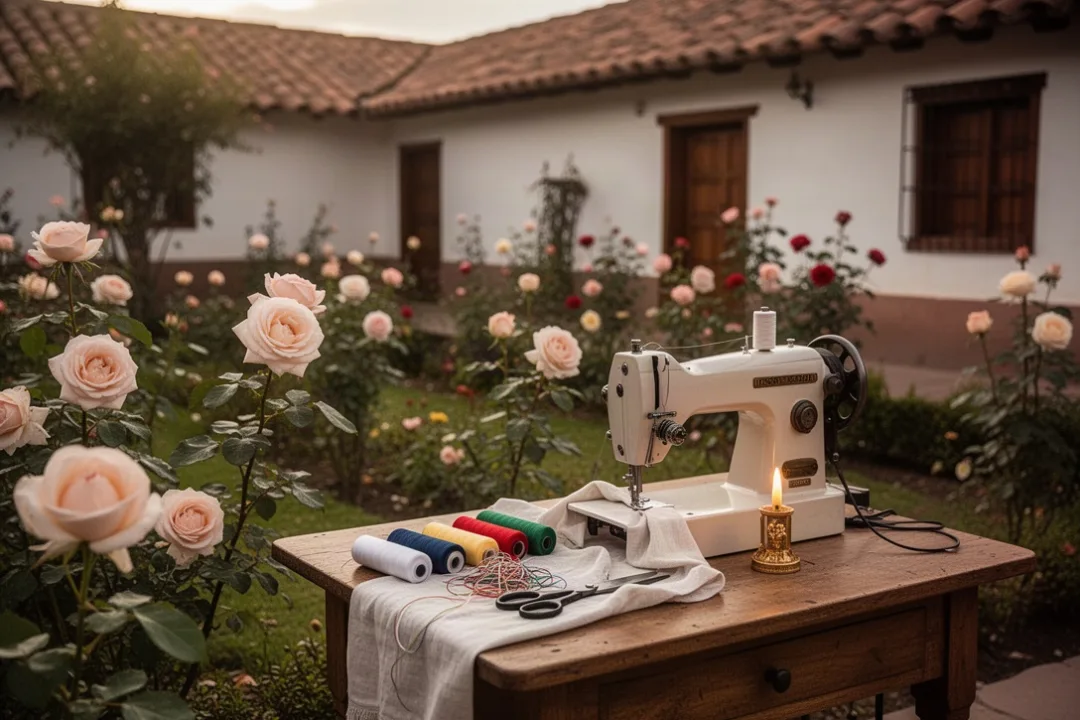
St. Rose earned money through sewing, embroidery, and other needlework. This work helped her family financially and gave her a way to support charitable service. For that reason, she is often named as a patron of embroiderers, seamstresses, needleworkers, and people whose livelihoods depend on careful handwork.
Her example can speak to anyone whose work requires patience and concentration. Sewing is repetitive, precise, and often done without public recognition. Rose treated this kind of labor as meaningful rather than insignificant. She used her skills faithfully, accepted the responsibilities of home life, and directed the results toward the welfare of others.
A person who sews may ask St. Rose for help with patience, steady hands, creativity, and fair treatment at work. Someone learning embroidery can also look to her as a model of discipline. Her patronage does not promise success in every project; it points toward a way of working with care and generosity.
Why people who suffer or face ridicule may pray to her
St. Rose practiced severe forms of penance and willingly accepted hardship as part of her spiritual life. Some of these practices can seem unfamiliar or extreme to modern readers. They should be understood in the context of the religious culture of her period and not treated as instructions for everyone today.
She also experienced opposition from people close to her. Her family needed her labor and did not always understand her religious choices. She faced criticism because of her appearance, lifestyle, and refusal to follow the ordinary path expected of a young woman. This is one reason she is often approached by people who feel misunderstood, mocked, or pressured to abandon their convictions.
People dealing with chronic illness, poverty, loneliness, family conflict, or emotional pain may also ask for her intercession. She is not officially limited to one type of suffering. Her broader example is that of a person who tried to meet pain with prayer, service, and compassion rather than indifference.
Praying to St. Rose does not mean that suffering is automatically good or that a person should refuse medical, emotional, or practical help. Her care for the sick points in the opposite direction: people who are hurting should receive appropriate support. Prayer can accompany treatment, counseling, community assistance, and honest conversations with trusted people.
Use her example carefully: St. Rose’s historical acts of penance belong to her particular time and vocation. They are not a reason to harm yourself or neglect medical care. Her care for the sick supports seeking responsible help.
St. Rose’s role as a patron of family responsibilities
St. Rose did not live apart from her family for most of her life. Her spiritual goals developed alongside household duties, financial concerns, and the expectations placed on women in her society. That makes her meaningful to people who are trying to practice their faith while caring for relatives or working to meet basic needs.
She is not always formally listed as the patron saint of family caregivers, but many people find her relevant to caregiving, household labor, and service within family life. She demonstrates that hidden work can have spiritual value. Earning money through sewing, helping her family, and nursing the sick were not separate from her devotion; they were ways she expressed it.
Parents, adult children caring for aging relatives, and people managing difficult home situations may pray with her example in mind. They can ask for patience without resentment, wisdom when setting boundaries, and strength to serve without ignoring their own health.
How Catholics ask St. Rose of Lima for intercession
In Catholic practice, a patron saint is not a replacement for God. Catholics ask saints to pray with them and for them, much as someone might ask a trusted Christian friend to pray. St. Rose’s role is therefore one of intercession and example rather than independent power.
A prayer to her can be formal or personal. You might use a novena, attend Mass on her feast day, visit a church dedicated to her, or speak plainly about a concern. The prayer can mention the part of her life that connects most closely with your situation: her work, care for the sick, family responsibilities, patience, or courage under criticism.
Common intentions include:
Strength during illness, grief, poverty, or emotional distress.
Guidance for people who feel misunderstood because of their beliefs or choices.
Patience and skill for gardeners, florists, seamstresses, and needleworkers.
Compassion for people who are poor, isolated, or unable to obtain care.
Wisdom for families facing conflict, caregiving decisions, or financial pressure.
A person does not need to be Peruvian or Catholic to learn from St. Rose’s story. Devotion to her is especially strong among Catholics, but anyone researching saints, Latin American history, Christian service, or religious art may find her life significant.
Ways to honor St. Rose of Lima in daily life
Honoring a patron saint does not have to involve elaborate arrangements. The most fitting practice is one that reflects the saint’s virtues and responds to a real need. Since St. Rose combined prayer with work and care for others, a small act of service can be especially appropriate.
Set aside time for prayer. Ask for her intercession and speak honestly about the concern you are carrying.
Help someone who is sick or isolated. A phone call, meal, ride, or visit can turn admiration into practical charity.
Care for flowers or a garden. Planting, tending, or giving flowers can recall her connection with the natural world and her name.
Use a skill generously. Sewing, repairing clothing, cooking, or another practical ability can benefit someone who needs help.
Learn about Peru. Explore Peruvian Catholic traditions, local celebrations, or the history of Lima connected with her life.
Attend a feast-day service. Many parishes celebrate St. Rose on August 23, while Peru traditionally observes her principal national celebration on August 30.
These practices are meaningful when they encourage service, patience, and compassion. Simply displaying roses or saying her name without any connection to those virtues misses the deeper reason people remember her.
Common mistakes when describing St. Rose of Lima’s patronage
Several common statements about St. Rose are incomplete or confusing. Her patronages developed through a mixture of official church recognition, local devotion, and traditional association with her work and character. The following distinctions help keep descriptions accurate.
Calling her only the patron saint of roses: Flowers are connected with her name and work, but her principal patronages are Peru, Lima, the Americas, and the Philippines.
Assuming every patronage has the same official status: Some titles are widely recognized national or regional patronages, while others are devotional associations based on her life.
Confusing her with another Rose: St. Rose of Lima is Isabel Flores de Oliva, the Peruvian Dominican tertiary canonized in the seventeenth century.
Treating her penances as instructions: Her ascetic practices belong to her historical setting and should never be used to justify self-harm or medical neglect.
Forgetting her service to the sick: Her story is not only about private prayer. She also cared for vulnerable people in practical ways.
Assuming her feast day is identical everywhere: August 23 is commonly observed in the universal Roman Catholic calendar, while Peru’s traditional national celebration is August 30.
What St. Rose of Lima represents today
St. Rose remains important because her life brings together public identity and hidden service. She is a national patroness associated with Peru and the Americas, yet much of her daily work happened in a family home through sewing, gardening, prayer, and care for people who were sick.
Her story can encourage a balanced view of religious devotion. Prayer did not remove her responsibilities; it shaped the way she approached them. Work was not merely a burden; it helped her support others. Suffering was not a reason to ignore people in need; it deepened her attention to them.
For someone seeking her intercession, the most relevant question may not be “Which occupation does she patronize?” but “Which part of her example speaks to my situation?” A gardener may connect with her flowers, a caregiver with her service, a person under criticism with her perseverance, and a Peruvian Catholic with her national heritage.
St. Rose of Lima is therefore remembered first as the patroness of Peru, Lima, the Americas, and the Philippines, and also as a companion for people whose work involves flowers, sewing, care, patience, and quiet sacrifice. Her life gives those titles a human setting: ordinary duties carried out with faith and concern for others.
Frequently asked questions
What is St. Rose of Lima most famous for?
St. Rose of Lima is most famous for being the first person born in the Americas to be canonized by the Catholic Church. She is also known for her intense prayer, charitable care for sick and poor people, gardening, needlework, and dedication to God while living with her family in Lima, Peru.
When is the feast day of St. Rose of Lima?
The feast day commonly used in the universal Roman Catholic calendar is August 23. In Peru, her major traditional celebration is held on August 30. Local parishes and communities may observe her on different dates depending on their calendar, customs, or dedication to the saint.
Why is St. Rose of Lima associated with flowers?
St. Rose is connected with flowers because she grew them and used gardening as part of her work. Her name also became associated with the rose after her family noticed a rose-like mark or beauty in her appearance. Flowers represent her name, labor, beauty, and the sacrifices associated with her devotion.
Can people pray to St. Rose of Lima for healing?
Yes. Many people ask St. Rose to intercede for those who are sick, suffering, or caring for someone who needs help. Catholic prayer to a saint is a request for intercession, not a substitute for medical treatment. A person facing illness should seek qualified healthcare alongside spiritual support.













Leave a Reply