Are you looking for a saint who understood grief, illness, temptation, and the desire to love God more deeply? Gemma Galgani is remembered for bringing those experiences into an intense life of prayer. She was a young Italian mystic from Lucca whose devotion centered on Jesus Christ’s Passion, the Eucharist, repentance, and patient suffering.
Gemma was not a nun, priest, or theologian. She lived much of her adult life as a laywoman in a family home, cared for by people who recognized her holiness. Her life included extraordinary experiences—visions, conversations with her guardian angel, and the stigmata—but her example is not limited to supernatural phenomena. Her most practical lesson is a steady one: seek holiness through prayer, humility, compassion, and faithfulness in ordinary duties.
Who Gemma Galgani was and why Catholics remember her
Gemma Galgani was born on March 12, 1878, in Camigliano near Lucca, Italy. Her family later moved into the city, where her father, Enrico Galgani, worked as a pharmacist. She was the fifth of eight children. Her mother, Aurelia Landi, helped shape Gemma’s early religious life, but Gemma lost her mother when she was still young.
Further losses followed. Gemma’s older brother Gino died while preparing for the priesthood, and her father died in 1897. These events left the family in financial difficulty and deeply affected Gemma’s spiritual outlook. She did not treat suffering as something meaningless, although she experienced real sorrow and physical hardship.
Gemma became known for her devotion to the Holy Eucharist, the sacrament of reconciliation, and the Passion of Christ. She also developed a strong relationship with the Passionist tradition, which emphasizes prayerful remembrance of Christ’s suffering and love for humanity. Although she hoped to enter a religious community, she was not accepted as a Passionist nun during her lifetime.
She instead lived with the Giannini family in Lucca. The family gave her a home, and she helped with household responsibilities while pursuing an unusually demanding spiritual life. Gemma died on April 11, 1903, at the age of 25, after a long illness commonly identified as tuberculosis.
A helpful distinction: Gemma Galgani is often called a Passionist saint because of her deep spiritual connection with the Passionists, but she was never formally professed as a Passionist religious sister.
Gemma Galgani’s life in a clear timeline
A timeline helps place her mystical experiences within the circumstances of a very human life. Her spirituality developed alongside family responsibilities, bereavement, illness, and the ordinary limits placed on a young laywoman in nineteenth-century Italy.
1878: Gemma was born near Lucca, Italy.
Childhood: She was educated by the Sisters of Saint Zita and developed a serious prayer life.
Adolescence: She experienced the deaths of her mother and brother, losses that strengthened her desire to belong completely to God.
1897: Her father died, leaving the family in serious financial difficulty.
1899: Gemma reported the first visible signs of the stigmata, traditionally understood as wounds resembling those of Christ’s Passion.
Later years: She lived with the Giannini family and received spiritual guidance connected with the Passionists.
1903: She died in Lucca after prolonged illness.
1933: Pope Pius XI beatified her.
1940: Pope Pius XII canonized her as a saint.
Some dates and details are presented differently in devotional biographies, especially when they concern visions or private spiritual experiences. The broad historical outline, however, is consistent: Gemma lived a short life marked by loss, illness, intense prayer, and a strong devotion to the Passion of Christ.
How Gemma Galgani’s spiritual life developed
Gemma’s spirituality did not appear fully formed in adulthood. It grew through family influence, religious education, personal suffering, and a deliberate decision to respond to hardship with prayer. Her mother taught her about the Christian faith, and Gemma’s schooling reinforced practices such as confession, Eucharistic devotion, and meditation.
Her early religious sensitivity became more serious as she faced bereavement. The death of her mother was especially painful, and her brother’s death added another wound. Rather than seeing prayer as an escape from grief, Gemma used prayer to place grief before God. That pattern remained important throughout her life.
She also practiced forms of self-denial and penance that were common in the devotional culture of her time. Modern readers should understand these practices within their historical and religious setting rather than imitate them casually. The central point is not physical hardship by itself, but the intention to grow in love, self-control, and compassion.
Gemma’s faith was closely connected with the Church. She valued the sacraments, sought guidance from priests, and understood private spiritual experiences as needing discernment. That point matters because Catholic tradition does not treat every vision, locution, or unusual experience as automatically divine.
What Gemma’s devotion to the Passion of Christ meant
The Passion refers to the suffering and death of Jesus. For Gemma, meditation on the Passion was not fascination with pain. It was a way of contemplating Christ’s self-giving love, solidarity with human suffering, obedience, forgiveness, and hope beyond death.
She often prayed with the Gospel accounts of Christ’s final hours. Since Bible translations are protected by different copyrights, her spiritual focus can be described without reproducing a verse: the Passion narratives show Jesus accepting suffering, remaining faithful, forgiving others, and entrusting himself to the Father.
This devotion shaped how Gemma understood her own illness and disappointments. She tried to unite her suffering with Christ’s rather than treating it as proof that God had abandoned her. That does not mean she enjoyed pain or that Christians must seek it. It means she attempted to find faithful love and spiritual meaning in suffering she did not choose.
Her connection with the Passionists deepened this focus. The congregation, founded by Saint Paul of the Cross, places special emphasis on remembering and proclaiming the Passion of Jesus. Gemma’s spiritual director, Father Germanus Ruoppolo, was a Passionist priest who helped record and evaluate aspects of her spiritual life.
For prayer today: Meditating on the Passion can begin with a quiet reading of one Gospel scene, followed by a simple question: “What does this reveal about Christ’s love, and how can I respond to it in my circumstances?”
What is known about Gemma’s visions and guardian angel
Gemma reported visions of Jesus, Mary, her guardian angel, and other heavenly figures. She described her guardian angel as a close spiritual companion who instructed, corrected, protected, and encouraged her. Accounts of these experiences appear in biographies and writings connected with her spiritual direction.
In Catholic teaching, angels are spiritual creatures who serve God and assist human beings. Devotion to a guardian angel is not meant to replace worship of God. Gemma’s reports present the angel as directing her toward humility, obedience, prayer, and love of Christ, not toward personal fame.
Readers should also distinguish between a saint’s reported private revelations and the central beliefs of Christianity. Private revelations are not required of Catholics, and a person can have a strong Christian faith without visions or unusual experiences. The Church examines such claims cautiously, considering the person’s character, doctrine, psychological state, and the fruits of the reported experiences.
Gemma’s own accounts include moments of fear, confusion, and spiritual struggle. That complexity can make her more relatable. Her life was not presented as a constant emotional experience of peace. She faced doubt, temptation, physical weakness, and the need to seek guidance.
What the stigmata meant in Gemma Galgani’s life
The stigmata are bodily marks or wounds that resemble those associated with Christ’s crucifixion. Gemma reported experiencing the stigmata beginning in 1899. Descriptions in devotional sources say that the wounds appeared periodically, particularly in connection with her meditation on the Passion, and later accounts describe other physical signs.
For believers, the stigmata may be understood as a profound participation in Christ’s suffering. They are not, however, the definition of Gemma’s holiness. Catholic tradition does not require belief in every physical or mystical claim associated with a saint in the same way it requires the profession of core Christian doctrine.
It is also wise to avoid sensationalizing the subject. Accounts of saints can become focused on unusual phenomena while neglecting their daily virtues. Gemma’s reported wounds should be considered alongside her care for others, willingness to accept correction, sacramental life, and perseverance during illness.
Contemporary readers may ask medical or psychological questions about stigmatic experiences. Those questions are legitimate, but a brief devotional biography cannot settle them. Historical records are not the same as modern clinical documentation, and descriptions vary. A responsible account presents the tradition without claiming more certainty than the evidence supports.
How Gemma responded to illness, temptation, and suffering
Gemma experienced recurring illness and physical weakness throughout her later life. Her health limited her plans, including her desire to enter religious life. Instead of measuring her worth by what she could accomplish publicly, she learned to live within the boundaries imposed by her condition.
Her writings and reported conversations describe spiritual battles as well as physical ones. She spoke of temptation, discouragement, fear, and attacks attributed in devotional language to the devil. These accounts should be read with discernment. The practical lesson is that spiritual growth can involve resisting destructive thoughts, asking for help, and returning to prayer after failure.
Gemma’s approach was active rather than passive. She did not simply wait for difficult feelings to disappear. She sought confession, guidance, prayer, and the support of trusted people. She also tried to maintain her responsibilities in the home where she lived.
Her example can be applied without copying every feature of her life:
Name the hardship honestly instead of pretending that suffering does not hurt.
Bring it to prayer through a psalm, Gospel passage, rosary, or silent conversation with God.
Ask for wise support from a priest, pastor, counselor, physician, or trusted friend as appropriate.
Choose one faithful action, such as apologizing, resting responsibly, helping someone, or keeping a necessary commitment.
Reject spiritual pride by remembering that holiness is measured by love, not by extraordinary experiences.
Why Gemma did not become a nun
Gemma strongly desired to enter a religious community, especially one connected with the Passionists. Her health and circumstances prevented that plan. She was not accepted as a Passionist sister during her life, although the congregation later became closely associated with her legacy.
This part of her story is significant because many people assume that sainthood requires a particular vocation. Gemma’s life shows that a person may pursue deep holiness as a laywoman living in a household. Her daily setting included chores, family relationships, medical suffering, visitors, prayer, and periods of dependence on others.
Her situation also illustrates the difference between a spiritual desire and a specific outcome. Gemma believed she was called toward Passionist religious life, but that desire was not fulfilled in the form she expected. Her vocation unfolded through limitations rather than around them.
That does not mean every blocked plan has a hidden spiritual explanation. It means disappointment can become part of a life of faith without erasing the disappointment itself. Gemma continued to seek God while accepting that her path would be different from the one she had imagined.
How Father Germanus influenced Gemma’s spiritual formation
Father Germanus Ruoppolo became an important spiritual guide in Gemma’s life. As a Passionist priest, he understood the tradition that shaped her prayer. He corresponded with her, listened to her reports, and helped preserve material later used in biographies of her life.
A spiritual director’s role is not to encourage every unusual experience. It includes testing motives, correcting exaggeration, encouraging obedience, and helping a person remain grounded in Christian practice. Gemma’s relationship with Father Germanus demonstrates why discernment and accountability matter when someone reports visions or other extraordinary experiences.
His writings contributed to Gemma’s reputation after her death, but readers should remember that biographies often combine historical testimony, theological interpretation, and devotional language. Reading more than one reliable account can help separate established facts from later embellishment.
What Gemma Galgani teaches about ordinary holiness
Gemma is often remembered because of the extraordinary parts of her story. Yet her usefulness as a spiritual example comes from qualities that do not require visions or stigmata. She practiced persistence when prayer felt difficult, accepted help when she was ill, and tried to respond to suffering with charity rather than resentment.
Her example highlights several forms of ordinary holiness:
Faithfulness in hidden places: A household, sickroom, or small circle of relationships can become the setting for serious spiritual growth.
Honesty before God: Prayer can include grief, fear, confusion, and requests for strength.
Respect for guidance: Mature faith welcomes correction and does not treat every inner impression as a divine command.
Compassion shaped by suffering: Personal pain can make someone more attentive to the needs of others.
Hope without denial: Christian hope does not pretend that illness or loss is easy; it trusts that suffering is not the final word.
These themes can speak to people dealing with chronic illness, bereavement, loneliness, or an unfulfilled vocation. Gemma does not offer a formula that removes suffering. She offers a witness to love that remains deliberate when circumstances are painful.
How to pray with Gemma Galgani’s spirituality
You do not need to reproduce Gemma’s devotional practices to pray with her. Begin with a practice suited to your health, responsibilities, and tradition. A short, attentive prayer may be more fruitful than an ambitious routine that quickly becomes burdensome.
Set aside a quiet period. Even five or ten minutes can create space for prayer.
Choose a Passion passage. Read a brief section from one of the Gospel accounts of Christ’s suffering and death.
Notice one quality of Christ. You might focus on mercy, courage, patience, forgiveness, or trust.
Connect the meditation with your life. Bring one current fear, loss, responsibility, or relationship before God.
Ask for a practical grace. Request help with one concrete response, such as patience with a family member or courage during treatment.
End with a simple prayer. You may ask Saint Gemma to pray for you while directing worship to God.
A prayer inspired by Gemma’s life might be: “Saint Gemma, help me bring my suffering and hopes to Christ with honesty, humility, and trust. Pray that I may respond to today’s duties with love.” This is not a quotation from Gemma; it is a modern devotional prayer based on themes associated with her spirituality.
When Saint Gemma Galgani’s feast day is observed
Saint Gemma Galgani’s feast is commonly observed on April 11. Local calendars, religious communities, and devotional organizations may mark her with different customs or additional celebrations. If you are attending Mass or a prayer service, consult the calendar used by your parish or diocese.
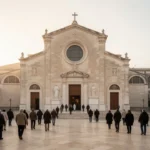
She is especially associated with Lucca, Italy, and with the Passionist family. Churches, schools, and prayer groups dedicated to her may commemorate her through Mass, the rosary, Eucharistic adoration, readings from her life, or prayers for people who are sick and suffering.
How to approach Gemma Galgani responsibly
Gemma can be approached as a canonized saint within Catholic devotion and also studied as a young woman shaped by the religious culture of her era. Both perspectives are useful. Devotion asks for her prayers and learns from her example; historical study asks how her accounts were recorded, interpreted, and transmitted.
Keep these principles in mind when reading about her:
Do not confuse extraordinary experiences with the essence of holiness.
Do not imitate severe penances without appropriate guidance from a qualified spiritual adviser and, where health is involved, a medical professional.
Do not treat reported private revelations as obligations.
Look for the fruits of the devotion: greater charity, humility, patience, honesty, and care for vulnerable people.
Use discernment with sensational accounts that present uncertain details as established fact.
Gemma Galgani’s legacy rests not only on what she reportedly saw or suffered, but on how she tried to love God and other people within the limits of her short life. Her story invites a grounded form of devotion: prayer that faces suffering honestly, confidence that seeks guidance, and love expressed through ordinary faithfulness.
Frequently asked questions
Was Gemma Galgani a nun?
No. Gemma deeply desired to enter the Passionist religious life, but she was not accepted as a professed nun. She lived as a laywoman in the home of the Giannini family in Lucca. Her story is therefore especially meaningful for people seeking holiness through family life, work, illness, and other ordinary circumstances rather than through membership in a religious order.
Why is Gemma Galgani associated with the Passionists?
Gemma’s prayer centered on the Passion of Christ, which is also central to Passionist spirituality. She received guidance from Father Germanus Ruoppolo, a Passionist priest, and her writings and legacy became closely connected with the congregation. She was never formally a Passionist sister, but the Passionists helped preserve and share her spiritual heritage.
Did Gemma Galgani really have the stigmata?
Gemma reported bodily signs associated with the stigmata, and accounts from her life describe them as part of her mystical experience. Readers should approach those reports with both respect and discernment. The stigmata are not the foundation of Christian faith, and Gemma’s holiness should not be reduced to unusual physical phenomena.
What can someone pray to Saint Gemma Galgani for?
People commonly ask Saint Gemma to pray for the sick, those facing grief, people enduring spiritual struggle, and anyone seeking deeper devotion to Christ’s Passion. You can also ask for help with patience, courage, and faithful living. Prayer to a saint is understood as asking for intercession, while worship belongs to God alone.












Leave a Reply