St. Jacinta and Francisco Marto: Their lives and message
St. Jacinta and Francisco Marto: Their lives and message
If you have heard of the Fatima apparitions, you may wonder who the two youngest children were and why the Catholic Church honors them as saints. St. Jacinta and Francisco Marto were siblings and shepherd children from Aljustrel, a village near Fatima, Portugal. In 1917, they and their cousin Lucia dos Santos reported seeing the Virgin Mary.
Their story is not simply about extraordinary visions. It is also about how two ordinary children responded to suffering, prayer, illness, and responsibility. Francisco became known for his quiet love of prayer, while Jacinta showed a particularly strong concern for sinners, the suffering, and the need for peace.
Both children died young after the events at Fatima. They were beatified in 2000 and canonized on May 13, 2017, by Pope Francis. They are remembered as the youngest non-martyr saints ever canonized by the Catholic Church.
Who St. Jacinta and Francisco Marto were before Fatima
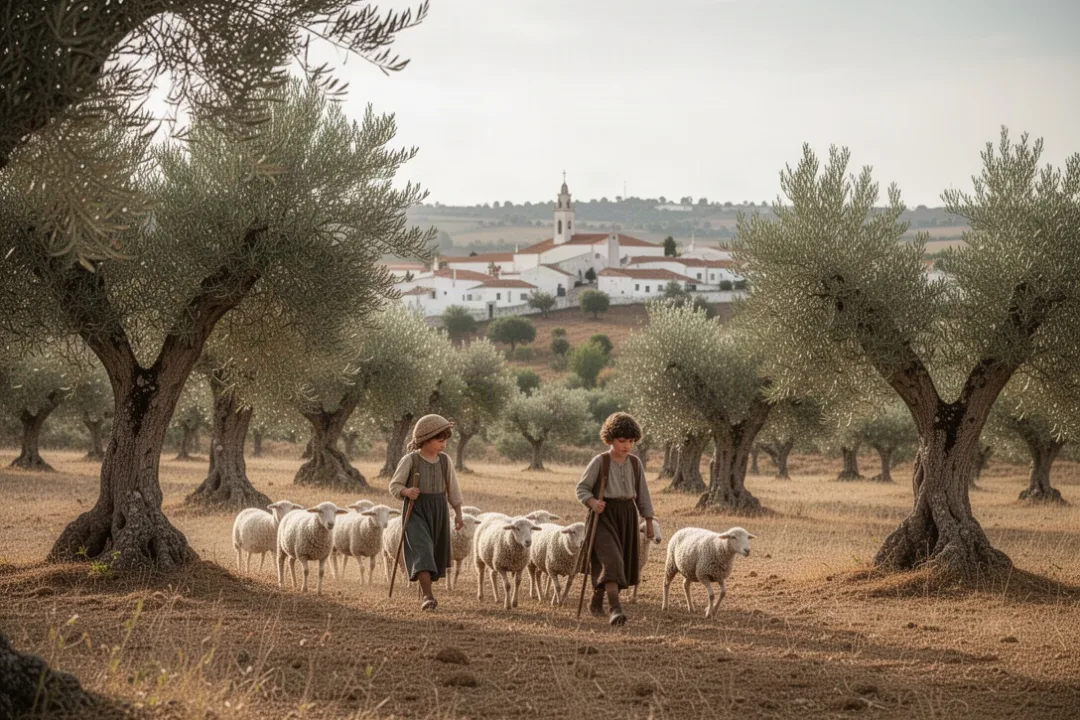
Francisco Marto was born on June 11, 1908, and Jacinta Marto was born on March 11, 1910. They were two of the children of Manuel and Olímpia Marto and lived with their family in Aljustrel. Their cousin Lucia lived nearby, and the three children often cared for sheep together in the countryside.
Their daily lives were simple and demanding. They helped their families, tended animals, played together, and learned the prayers and customs of rural Portuguese Catholic life. They were not educated theologians or public religious figures. Their importance came from the way they understood and lived their faith after the reported apparitions.
Francisco was often described as gentle, thoughtful, and reserved. He enjoyed being with his cousins but was not usually the most talkative child. Accounts of his life emphasize his love of quiet prayer, especially spending time before the Blessed Sacrament.
Jacinta was younger and more expressive. She could be lively and affectionate, but witnesses also remembered her as deeply affected by the suffering she believed she had been shown. After the apparitions began, she spoke repeatedly about praying for sinners and offering sacrifices for them.
Lucia, who was born in 1907, was the oldest of the three visionaries. The children’s family relationships matter because the events at Fatima happened in the context of ordinary companionship. They were not strangers brought together for a religious purpose; they were cousins who already knew and trusted one another.
A useful distinction: The Church’s recognition of the children does not mean every later story or popular claim about Fatima has equal authority. The central focus remains their Christian witness: prayer, repentance, the Eucharist, compassion, and trust in God.
What happened to the children at Fatima in 1916 and 1917
According to the children’s accounts, an angel appeared to them on three occasions in 1916. The angel taught them prayers and encouraged them to make sacrifices and offer themselves to God. These experiences prepared the children for the events they later associated with the Virgin Mary.
Beginning on May 13, 1917, the children reported seeing Mary in the Cova da Iria, an area outside Fatima. They said she appeared to them on the thirteenth day of each month through October, with the exception of August, when local authorities had detained them and prevented them from reaching the usual location on the expected day.
The children reported that Mary asked them to pray the Rosary for peace and for the end of the war. World War I was underway, and the message of prayer had a direct meaning for families experiencing fear, loss, and uncertainty. The reported apparitions also included calls to conversion and penance.
Francisco’s experience was distinctive. Traditional accounts state that he saw the Virgin Mary but did not hear her speaking; Lucia communicated the words, and Jacinta both saw and heard Mary. This detail is one reason the children’s individual spiritual responses are described differently.
The October gathering drew a large crowd, including people who came because of the children’s reports. Many witnesses described an unusual phenomenon involving the sun, commonly called the Miracle of the Sun. Accounts differ, and the Church’s approval of the Fatima apparitions does not require every observer’s description to be interpreted in exactly the same way.
The central message was not curiosity about a spectacle. It was a call to turn toward God through prayer, conversion, and concern for the salvation of others. The Rosary became particularly associated with Fatima because of the children’s repeated emphasis on praying it for peace.
The apparitions also included references to suffering and persecution. The children understood these matters through the religious language and experiences available to them. Their later actions show that they did not treat the message as a prediction game or a reason to speculate about dates. They tried to respond through prayer and personal sacrifice.
How Francisco lived his devotion after the apparitions
Francisco’s spiritual life was marked by silence and contemplation. The accounts of his final years often describe him seeking time alone to pray, especially in church. He wanted to console Jesus and repair, in the language of his faith, the offenses he believed people committed against God.
For Francisco, prayer was not mainly a public performance. He did not seek attention or use his experiences to gain influence. His response to the apparitions was inward and peaceful: he wanted to pray, accept hardship, and remain close to Christ.
This does not mean that he was naturally perfect or that he never behaved like a child. The stories associated with him include ordinary childhood weaknesses and the gradual effort to correct them. His holiness is presented as a process of responding faithfully, not as an absence of human development.
One of the strongest themes in Francisco’s life is his devotion to the Eucharist. He desired to spend time with Jesus in the Blessed Sacrament and saw prayer as an act of companionship. For Catholics, this makes his example especially connected to Eucharistic adoration and quiet presence before the tabernacle.
Francisco also accepted illness with a calmness that impressed people around him. He contracted the influenza pandemic that affected many communities after World War I. As his health declined, he continued to pray and to prepare for death according to the Catholic practice of his time.
He died on April 4, 1919, in Aljustrel, before reaching his eleventh birthday. Unlike Jacinta, who spent her final illness away from home for medical care, Francisco died in his family setting. His remains were eventually placed in the Basilica of Our Lady of the Rosary at the Sanctuary of Fatima.
His example can be misunderstood if it is reduced to an admiration of suffering for its own sake. Francisco did not seek pain as an end in itself. Rather, he tried to unite unavoidable hardship with prayer and love. That distinction matters for understanding Catholic ideas about offering suffering: the goal is not to pursue harm, but to respond to difficulty with faith and charity.
How Jacinta lived her compassion and courage
Jacinta’s response to Fatima was more visibly emotional and active. She became particularly concerned about people she believed were far from God. She prayed for sinners, for the Holy Father, for peace, and for those suffering from war and persecution.
Her concern often led her to accept small sacrifices. The children gave up food or comforts, endured inconveniences, and offered their difficulties in prayer. These practices should be understood within their religious setting and with prudence. Christian self-denial is meant to express love and conversion, not to encourage unsafe or excessive behavior.
Jacinta’s compassion extended beyond people she knew personally. She was moved by the thought of families affected by war and by the possibility that people might die without reconciliation with God. Her spiritual outlook became wider as she grew more aware of suffering in the world.
Jacinta also faced illness with remarkable courage for a child. She became sick during the influenza epidemic and later developed serious complications. Medical treatment took her away from her family and eventually brought her to Lisbon, where doctors attempted to help her.
She died on February 20, 1920, in Lisbon, at the age of nine. Because of the circumstances of her final illness, she died away from her parents and cousin. Her body was later moved, first within the region and eventually to the Basilica of Our Lady of the Rosary in Fatima.
Jacinta’s life is sometimes presented only through sentimental images of a little girl with a special mission. A fuller view recognizes her courage, emotional intensity, and practical concern for others. She was a child who experienced fear, separation, and illness, yet continued trying to respond through prayer and compassion.
Her example also has a social dimension. Her prayers for peace were not detached from real human suffering. They reflected the belief that personal conversion and concern for the common good belong together. A person who prays for peace is also called to treat neighbors with patience, reject cruelty, and resist indifference toward those who are vulnerable.
Francisco’s emphasis: quiet prayer, Eucharistic devotion, and the desire to console Jesus.
Jacinta’s emphasis: compassion for sinners and the suffering, prayer for peace, and generous self-denial.
Their shared witness: trust in God, devotion to Mary, acceptance of hardship, and care for others.
What the Church teaches about their sainthood
The Catholic Church does not canonize people merely because they were present at a reported apparition. Canonization examines a person’s life, reputation for holiness, writings or statements where relevant, and the evidence of miracles attributed to their intercession after beatification.
Francisco and Jacinta were beatified by Pope John Paul II on May 13, 2000, at Fatima. Their beatification recognized them as blessed and presented their lives as examples of Christian holiness. Pope Francis canonized them on May 13, 2017, during a Mass at the Sanctuary of Fatima.
The canonization followed recognition of a miracle attributed to their intercession involving a Brazilian child who had suffered a serious brain injury after a fall. The child recovered, and the case underwent the Church’s required medical and theological review. This recognition concerned the intercession of both Francisco and Jacinta.
Their canonization does not make them martyrs. They died from illness rather than being killed for the faith. Their sainthood is therefore an example of holiness lived through childhood, ordinary family life, prayer, illness, and endurance.
Their feast day is celebrated on February 20. This date reflects the liturgical commemoration of the two siblings together and gives Catholics an opportunity to remember their witness apart from the anniversary dates of the apparitions.
The Church’s recognition also distinguishes public faith from private speculation. Catholics may find spiritual value in Fatima, but they are not required to interpret every alleged prophecy, vision, or later claim as official teaching. The approved message is understood through the broader Catholic call to repentance, prayer, sacramental life, and love of neighbor.
The children’s sainthood can be especially meaningful for families. Their story shows that children are capable of serious prayer and moral responsibility, while still needing protection, guidance, education, and care. It does not require children to imitate every hardship they experienced or to take on adult burdens beyond their capacity.
How to honor St. Jacinta and Francisco Marto today
People who want to honor the two saints can begin with the practices that shaped their lives. The point is not to recreate early twentieth-century Portugal or to seek extraordinary experiences. It is to bring the same basic commitments into present circumstances.
Pray the Rosary with a clear intention. You might pray for peace, a sick person, a family in crisis, or people affected by war.
Spend a few quiet minutes in prayer. Francisco’s example encourages attentive silence rather than constant activity or many words.
Offer a safe, ordinary sacrifice. Choose a small act of self-denial, such as setting aside a distraction, and connect it with love for God or service to someone else.
Practice concrete compassion. Jacinta’s concern for suffering can lead to visiting someone lonely, helping a family in need, or learning about a cause without treating prayer as a substitute for action.
Return to the sacraments. For Catholics, Confession and the Eucharist provide the sacramental setting in which the Fatima message of conversion is best understood.
Parents and teachers can present the children’s story in an age-appropriate way. Younger children may focus on prayer, kindness, and courage. Older children can discuss the historical setting of World War I, the meaning of conscience, and the difference between genuine devotion and fascination with dramatic predictions.
Adults may find the saints helpful during illness, family stress, or uncertainty about the future. Their lives do not promise that prayer will remove every hardship. Instead, they show how prayer can shape a person’s response to circumstances that cannot be quickly changed.
Keep the message balanced: Devotion to St. Jacinta and Francisco should lead toward Christ, the sacraments, prayer, repentance, and charity—not fear, sensational predictions, or attempts to decode every world event.
Visitors to Fatima can pray at the Sanctuary of Our Lady of the Rosary, where the children are buried, and learn about the history of the apparitions and the local community. Those who cannot travel can honor them through a parish Rosary, a day of service, Eucharistic prayer, or a quiet examination of how they treat people who are suffering.
St. Jacinta and Francisco Marto remain compelling because their lives connect extraordinary religious claims with very ordinary human realities. They were children with families, responsibilities, fears, friendships, and physical limitations. Their lasting witness is found not only in what they said they saw, but in how they tried to answer it: with prayer, sacrifice, courage, and love for others.
Frequently asked questions
Were St. Jacinta and Francisco Marto siblings?
Yes. Francisco and Jacinta were brother and sister from Aljustrel, near Fatima, Portugal. They were cousins of Lucia dos Santos, who was the oldest of the three children associated with the reported apparitions. Their family relationship explains why they were together caring for sheep and why their experiences unfolded within a familiar community rather than in isolation.
Did both children hear the Virgin Mary at Fatima?
According to the traditional accounts, Francisco saw the Virgin Mary but did not hear her words. Lucia heard and spoke with her, while Jacinta both saw and heard her. Lucia therefore served as the main person who communicated the messages. This difference is part of the way the Church and Fatima tradition describe the children’s experiences.
Why are Jacinta and Francisco called child saints?
They are called child saints because they died as children and were canonized for the holiness shown during their short lives. The Church recognized their prayer, faith, sacrifice, and concern for others, not simply their connection with Fatima. Their canonization demonstrates that Christian holiness can be lived at any age, including through family life, illness, and ordinary responsibilities.
Where are St. Jacinta and Francisco Marto buried?
They are buried in the Basilica of Our Lady of the Rosary at the Sanctuary of Fatima in Portugal. Their tombs are located near that of Lucia dos Santos, who lived much longer and became a religious sister. The basilica is an important destination for pilgrims who come to pray and learn about the Fatima events.













Leave a Reply