Padre Pio: Life, miracles, prayers, and lasting legacy
Padre Pio: Life, miracles, prayers, and lasting legacy
Padre Pio was an Italian Capuchin friar, priest, and Catholic saint known for his deep prayer, spiritual counsel, charitable work, and reported stigmata—wounds resembling those of Christ’s crucifixion. Born Francesco Forgione in 1887, he spent much of his ministry at San Giovanni Rotondo and died there in 1968.
The Catholic Church canonized him on June 16, 2002, during the pontificate of Pope John Paul II. His feast day is September 23, and millions of people continue to visit his shrine, ask for his intercession, and study his emphasis on confession, the Eucharist, humility, and persistent prayer.
Padre Pio’s birth name was Francesco Forgione. He was born on May 25, 1887, in Pietrelcina, a small town in southern Italy. Raised in a Catholic family, he developed a strong devotional life while still young and entered the Capuchin Franciscan order as a teenager, taking the religious name Pio in honor of Pope Pius I.
He was ordained a priest in 1910. After periods of illness and assignments in several religious communities, he arrived at the Capuchin friary in San Giovanni Rotondo in 1916. Apart from interruptions connected with health and Church restrictions, that remote town became the center of his priestly life.
People were drawn to him because of his lengthy hours in the confessional, his celebration of Mass, his reputation for spiritual insight, and reports of extraordinary experiences. Some visitors sought healing or answers to personal problems; others wanted a priest who would challenge them to take repentance seriously.
His fame spread far beyond Italy during his lifetime. At the same time, Church authorities investigated several claims associated with him and placed restrictions on his public ministry for periods. That history matters because devotion to Padre Pio developed alongside careful institutional scrutiny, rather than outside it.
Padre Pio’s early life and Franciscan vocation
Francesco grew up in a rural setting where family life, work, and Catholic practice were closely connected. His parents, Grazio Forgione and Maria Giuseppa Di Nunzio, supported his desire to enter religious life. The family was not wealthy, and his path to the friary involved sacrifice for both Francesco and his parents.
He entered the Capuchin novitiate at Morcone in 1903. The Capuchins are a branch of the Franciscan family that places particular emphasis on poverty, fraternity, prayer, and service. Francesco made religious vows and continued his studies in preparation for the priesthood, though recurring illness complicated his formation.
His early letters and spiritual writings show a young friar wrestling with physical suffering, fear, temptation, and a desire to remain faithful. These struggles later became an important part of his appeal. Admirers did not see him only as a miracle worker; they also saw a priest who treated suffering as something to bring honestly before God.
Padre Pio’s spirituality remained strongly rooted in ordinary Catholic practices. He encouraged people to pray, receive the sacraments, examine their conscience, accept moral responsibility, and seek charity rather than spiritual excitement. His reported mystical experiences did not replace the basic duties of Christian life.
What the stigmata meant in Padre Pio’s life
The stigmata refers to wounds or bodily marks that resemble the wounds traditionally associated with Jesus’ crucifixion. Padre Pio reported experiencing painful wounds on his hands, feet, and side. In 1918, he described a profound religious experience after which the wounds became visible and remained a central part of public interest in his life.
Accounts of the wounds made him famous, but he reportedly regarded them as a source of suffering rather than personal distinction. He used a practical covering over his hands, and photographs often show him wearing gloves. His physical condition was examined by physicians during his lifetime, although observers differed in how they interpreted what they saw.
The Church does not require Catholics to believe every private revelation or extraordinary report connected with a saint. Canonization means that the person may be honored publicly as a saint and held up as an example of Christian virtue; it does not mean every claim made about that person has received the same level of definition.
A useful distinction: Padre Pio’s holiness is not based only on the stigmata. His canonization also reflects his life of prayer, sacramental ministry, obedience, service to the sick, and sustained commitment to Christian charity.
For many devotees, the wounds point to Padre Pio’s union with Christ’s suffering. For others, the subject requires caution and respectful discernment. Both perspectives can recognize that the heart of his message was not fascination with unusual phenomena, but a call to conversion, compassion, and trust in God.
Padre Pio as a confessor and spiritual guide
Padre Pio spent many hours hearing confessions, sometimes welcoming a long line of penitents each day. People remembered him as direct and demanding, particularly when someone treated confession casually or tried to avoid responsibility. His manner could be severe, but his purpose was described as helping people return sincerely to God.
In Catholic practice, confession includes more than listing mistakes. It involves contrition, an honest acknowledgment of sin, a willingness to change, and reconciliation through the ministry of the priest. Padre Pio’s approach emphasized that mercy should not be separated from truth.
He also became known for what supporters described as an ability to perceive hidden details about a person’s life. Such accounts are part of his devotional tradition, but they should not encourage unhealthy dependence on a religious figure. A person seeking guidance should still use conscience, sound judgment, Scripture, Church teaching, and appropriate professional help when needed.
His advice frequently returned to familiar themes: pray consistently, remain close to the sacraments, accept daily duties, forgive others, and avoid anxiety about matters outside your control. Devotion to him is most faithful to that pattern when it leads you toward a more responsible and charitable life.
How Padre Pio served the sick through Casa Sollievo della Sofferenza
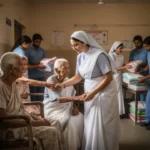
One of Padre Pio’s most significant achievements was the creation of Casa Sollievo della Sofferenza, commonly translated as the Home for the Relief of Suffering. The hospital opened in San Giovanni Rotondo in 1956 after years of fundraising, planning, and support from benefactors.
Padre Pio believed that Christian compassion should address the whole person. A hospital could provide medical care while also treating patients with dignity, kindness, and respect. The project was especially meaningful in a region where access to modern health care had been limited.
The hospital became a lasting expression of his pastoral vision. It was not simply a monument built around his reputation. Its purpose was concrete: to relieve physical suffering and offer competent care. For that reason, the hospital remains an important part of understanding Padre Pio’s legacy.
His charitable work also challenges a narrow picture of sainthood. Prayer and mystical experiences were prominent in the stories told about him, but so were fundraising, administration, attention to the sick, and the practical needs of a local community. His example joined spiritual concern with organized service.
Why the Church investigated Padre Pio
As reports about Padre Pio spread, Church authorities had to assess his public reputation, mystical claims, relationships with visitors, and the conduct of those managing access to him. Restrictions were placed on him at different times, including limitations on public ministry and communication. The details of these measures changed over the years.
Such investigations are not unusual when a religious figure attracts large crowds or becomes associated with supernatural claims. The Church’s process seeks to protect the faithful, examine evidence, and prevent a person’s reputation from being shaped solely by rumor, commercial interest, or emotional enthusiasm.
Padre Pio’s supporters sometimes experienced these investigations as painful or unfair. Yet his response, as described in accounts of his life, included an emphasis on obedience and perseverance. His story therefore includes not only public admiration but also periods of suspicion, isolation, and institutional limitation.
When considering claims about him, separate documented facts from devotional stories. His birth, religious formation, priestly ordination, ministry in San Giovanni Rotondo, founding of the hospital, death, beatification, and canonization are historical parts of his public record. Individual stories about bilocation, healings, predictions, or supernatural knowledge require more careful treatment.
Padre Pio’s path to beatification and canonization
Padre Pio died on September 23, 1968, in San Giovanni Rotondo. His funeral drew a large crowd, showing how deeply people had already identified him with the town and with the wider Catholic devotional world.
The cause for his canonization advanced over the following decades. He was declared Venerable in 1997 and beatified by Pope John Paul II on May 2, 1999. He was canonized on June 16, 2002, in Saint Peter’s Square.
Canonization recognizes a person as a saint for public veneration in the Catholic Church. It also presents that person as an example of holiness. In Padre Pio’s case, the Church highlighted his prayer, sacramental ministry, suffering, pastoral dedication, love for the Eucharist, and service to people in need.
The canonization ceremony drew enormous attention, but the formal recognition did not erase the complexity of his life. A balanced understanding includes his strong devotion, his influence on penitents, the hospital he founded, the controversies surrounding extraordinary claims, and the Church’s long process of evaluation.
What Padre Pio taught about prayer and suffering
Padre Pio’s spirituality centered on persistent prayer. He encouraged people to pray even when they felt distracted, discouraged, or spiritually dry. Prayer, in this view, is not measured only by emotional comfort. It is a practice of placing yourself before God with honesty and returning repeatedly to that relationship.
He also treated suffering as something that should be united with faith rather than romanticized. Christian teaching does not require you to seek pain or refuse medical treatment. Instead, it asks how suffering can be met with compassion, patience, courage, and care for others.
His devotion to the Mass and Eucharist reflected the Catholic belief that Christ is truly present in the sacrament. He encouraged reverence, preparation, and participation rather than treating worship as a private performance. The confessional and altar were central to his ministry because he saw them as places of reconciliation and communion.
Padre Pio’s approach to suffering can be applied carefully in daily life:
Name the difficulty honestly instead of pretending that pain, grief, illness, or fear does not exist.
Seek appropriate help, including medical, psychological, pastoral, or practical support.
Pray without demanding a particular outcome, asking for strength, wisdom, healing, and faithful action.
Keep compassion active by noticing the needs of other people rather than becoming absorbed only in your own distress.
How to pray with Padre Pio’s intercession
Catholics who ask Padre Pio for intercession are not worshiping him. They are asking a saint, understood as a person alive with God, to pray for them. Worship belongs to God alone, while honoring a saint means recognizing God’s work in that person’s life.
You can keep the practice simple. Begin by stating your intention clearly, then spend a few quiet minutes in prayer. You might use the Our Father, Hail Mary, or another familiar prayer, read a Gospel passage, or speak to God in your own words before asking Padre Pio to pray with you.
A prayer inspired by his spirituality might ask for faithfulness in hardship, honesty in repentance, patience with other people, and courage to serve someone who is suffering. It can also include a request for healing, while leaving the outcome in God’s hands.
Many people associate Padre Pio with the “Stay with me, Lord” prayer, which is often attributed to him in devotional materials. Because attributions and versions can vary, check the source if you want to use a particular text. The prayer’s themes—Christ’s presence, humility, trust, and perseverance—fit naturally with his spirituality.
Practical approach: Let a prayer to Padre Pio lead to one concrete act of charity, such as calling someone who is ill, forgiving a grievance, attending Mass, making a sincere confession, or supporting a person in need.
Common mistakes when learning about Padre Pio
Interest in Padre Pio can deepen faith, but sensational stories sometimes obscure the person’s actual priorities. These habits help you approach his life with greater balance:
Do not reduce him to the stigmata. His priesthood, prayer, confession ministry, and care for the sick were equally central.
Do not treat every online story as verified. Devotional websites may repeat anecdotes without identifying their source or historical basis.
Do not confuse intercession with magic. A medal, image, or prayer card is a devotional aid, not a guarantee of a particular result.
Do not use religious advice to replace health care. Prayer can accompany treatment, counseling, and medical attention but should not be used as a reason to delay needed help.
Do not ignore the Church’s discernment. Restrictions and investigations are part of the historical record and should not be erased from a serious account.
Do not measure faith only by extraordinary experiences. Ordinary fidelity, forgiveness, service, and honesty are reliable signs of spiritual growth.
These cautions do not require disrespect toward Padre Pio. They protect devotion from exaggeration and keep attention on the virtues the Church presents him as embodying. A careful admirer can appreciate his influence without claiming certainty about every reported event.
Visiting the Padre Pio shrine in San Giovanni Rotondo
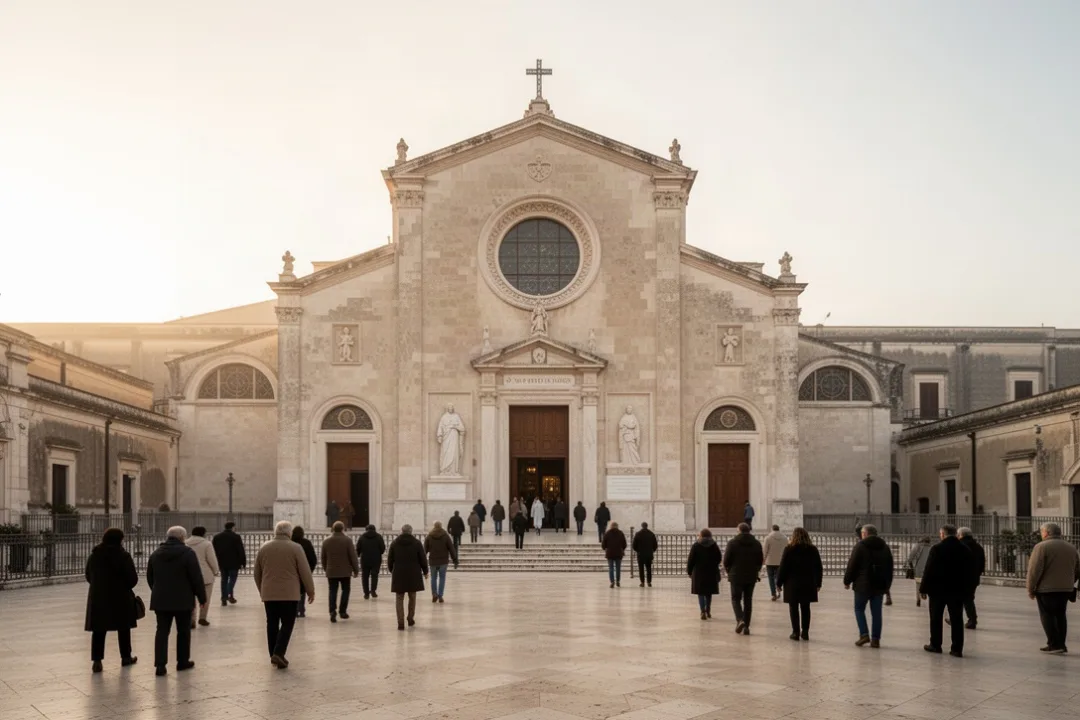
San Giovanni Rotondo in Italy is the principal place associated with Padre Pio. Visitors go to pray at the Sanctuary of Saint Pio of Pietrelcina, participate in liturgies, learn about his life, and see places connected with his ministry. The area also includes the hospital he founded and buildings linked to the Capuchin community.
A pilgrimage is more meaningful when it is planned as prayer rather than tourism alone. Check current schedules, admission arrangements, transportation, and guidance from official sanctuary sources before traveling. Liturgical times, access to particular areas, and visitor procedures can change.
Respectful visitors should dress appropriately for a place of worship, follow instructions about silence and photography, and avoid treating sacred spaces as entertainment. If you are visiting with a particular intention, write it down beforehand so the trip does not become overwhelmed by crowds or logistics.
You do not need to travel to Italy to practice the spirituality associated with Padre Pio. A parish church, a period of quiet prayer, a sincere confession, or an act of care for someone who is sick can express the same basic priorities in an ordinary setting.
Padre Pio’s continuing legacy
Padre Pio remains influential because his life connects several forms of Catholic devotion: the Franciscan commitment to simplicity, the priest’s ministry of reconciliation, reverence for the Eucharist, prayer during suffering, and concrete care for the sick. Different people are drawn to different parts of that legacy.
Some know him through a family prayer tradition or a medal carried for comfort. Others encounter him through the hospital in San Giovanni Rotondo, biographies, letters, or a personal experience of confession. For many Catholics, his example provides a language for bringing physical pain, guilt, uncertainty, and hope into prayer.
His legacy is strongest when it produces action. Remembering Padre Pio can mean taking repentance seriously, remaining faithful through discouragement, offering patient care to the vulnerable, or choosing mercy over resentment. Those practices are less dramatic than stories of miracles, but they are closer to the steady shape of Christian discipleship.
Padre Pio was neither a spiritual celebrity nor a shortcut around hardship. He was a Catholic priest whose life included extraordinary reports, serious suffering, institutional scrutiny, and sustained service. His enduring message is found in the combination: pray faithfully, seek reconciliation, accept help, serve the suffering, and trust God without turning faith into a demand for spectacle.
Frequently asked questions
What is Padre Pio the patron saint of?
Padre Pio is commonly invoked by Catholics for healing, sick people, suffering, and those seeking reconciliation. He is also closely associated with confessors and people facing difficult spiritual or physical trials. The Church does not limit his intercession to one official category, so individuals may ask for his prayers for many personal needs while directing worship to God alone.
What happened to Padre Pio’s stigmata after his death?
Accounts state that the visible wounds were no longer present when his body was prepared for burial. Reports about their appearance during his life remain part of the historical and devotional discussion surrounding him. The Church’s recognition of Padre Pio as a saint should not be interpreted as requiring belief in every explanation or anecdote concerning the stigmata.
Where is Padre Pio buried?
Padre Pio is buried in the crypt of the Sanctuary of Saint Pio of Pietrelcina in San Giovanni Rotondo, Italy. The sanctuary is the main pilgrimage site connected with his ministry and attracts visitors who come for prayer, liturgy, and reflection. Travel arrangements and access rules can change, so visitors should consult official local information before going.
What prayer is Padre Pio best known for?
Padre Pio is often associated with the prayer commonly titled “Stay with me, Lord,” which asks Christ to remain close through weakness, suffering, and daily life. Different versions and attributions circulate, so wording may vary. His broader devotional legacy also emphasizes the Rosary, confession, Eucharistic worship, perseverance, and simple personal prayer.











Leave a Reply