You may know Philip Neri as the cheerful Catholic saint with a talent for surprising people, but you may still wonder what made him important. Philip Neri was a sixteenth-century priest, spiritual guide, and founder of the Congregation of the Oratory whose ministry helped renew Christian life in Rome during the Catholic Reformation.
His approach joined serious prayer with human warmth. He encouraged confession, frequent Communion, Scripture, music, friendship, and practical acts of humility. Rather than treating holiness as a withdrawn life reserved for a few, he showed how ordinary Christians could grow closer to God through faithful habits, honest self-knowledge, and joyful service.
Who Philip Neri was and why he became known as the apostle of Rome
Philip Neri was born in Florence in 1515. His family belonged to the middle class, and he received a Christian upbringing before leaving Florence as a young man. He spent time in San Germano, near Monte Cassino, and later traveled to Rome, where he would spend almost the rest of his life.
In Rome, Philip studied for a period and supported himself while pursuing prayer and service. He was not known for building a career around academic distinction. Instead, he developed a deep concern for the spiritual condition of ordinary people, especially those who had little connection with formal religious institutions.
He prayed in churches, visited the ancient catacombs, cared for the sick, and spoke with people from many walks of life. Rome was filled with pilgrims, clergy, nobles, laborers, students, beggars, and travelers. Philip’s ministry grew through personal encounters, particularly through conversation and confession.
People often called him the “apostle of Rome” because of the breadth and influence of his work there. The title does not mean that he was the city’s first evangelizer. It reflects the way he helped renew faith in Rome through preaching, spiritual direction, charity, and a close relationship with people who sought his advice.
Philip had a reputation for joy, but his joy was not shallow cheerfulness. He understood that people could carry guilt, fear, vanity, loneliness, and discouragement. His manner made it easier for them to speak honestly, while his guidance directed them toward repentance and a more faithful life.
Philip Neri in one sentence: He was a Roman priest who helped people seek holiness through prayer, confession, humility, friendship, and a joyful love of God.
His personality could be playful and unpredictable. He might use an unusual instruction to expose someone’s pride or prevent people from admiring him too much. These actions were not meant to make light of religion. They were forms of spiritual medicine, carefully adapted to the person in front of him.
At the center of his ministry was a conviction that grace works through ordinary relationships. A person did not need to withdraw from every human setting to begin changing. A sincere confession, a visit to someone who was ill, a few minutes of prayer, or a decision to accept an embarrassment without complaint could become a real step toward God.
How Philip Neri came to Rome and entered the priesthood
Philip arrived in Rome during a period of significant religious tension and reform. The Protestant Reformation had challenged the Catholic Church across Europe, while many Catholics were also calling for better preaching, more responsible clergy, clearer religious education, and renewed discipline. Philip responded to this environment not mainly through public controversy, but through personal conversion and patient pastoral care.
Before becoming a priest, he spent years praying and working among the people of Rome. He developed a particular affection for young men, students, craftsmen, and others who needed guidance and companionship. He also formed a small circle that met for prayer and spiritual conversation.
Philip was ordained a priest in 1551. After ordination, his ministry of hearing confessions became especially influential. People were drawn to him because he combined direct advice with compassion. He could identify self-deception, but he did not treat a penitent as a problem to be dismissed.
His confessional ministry reflected a practical understanding of human weakness. Philip encouraged people to return to God repeatedly rather than assume that one failure had permanently separated them from grace. At the same time, he did not reduce repentance to a passing emotion. He urged people to make concrete changes in conduct and to accept the discipline required for growth.
Philip also advised people to receive the Eucharist frequently, according to the pastoral practice permitted in his time. He regarded Communion as a source of strength for Christians who were trying to live faithfully, not as a reward reserved only for those who believed themselves perfect.
His ministry extended beyond the confessional. He visited hospitals, served the poor, and encouraged his companions to practice charity in direct and sometimes demanding ways. These works were connected to prayer rather than separated from it. Contemplation and service belonged together in his vision of Christian life.
Several elements shaped his spiritual outlook:
Prayer: quiet attention to God, including short prayers repeated throughout the day.
Confession: honest examination of conscience and a willingness to begin again.
Charity: practical care for sick, poor, and neglected people.
Humility: resistance to vanity, status, and the desire to appear impressive.
Community: spiritual growth supported by trustworthy friendships and conversation.
Joy: confidence that Christian faith should not become a performance of gloom.
Philip’s approach was especially effective because he did not offer identical advice to everyone. He considered a person’s temperament, responsibilities, habits, and stage of spiritual development. A practice that helped one person might harm another if it encouraged pride or ignored a serious duty.
Accounts of Philip’s life also describe experiences of intense prayer, including bodily signs associated with mystical ecstasy. Some reports say that his heart was found to be unusually enlarged after his death. These accounts contributed to his reputation for extraordinary holiness, but the main emphasis of his public ministry remained accessible: pray faithfully, confess honestly, serve others, and become less attached to personal recognition.
What Philip Neri taught about prayer, humility, and joy
Philip Neri’s spirituality is often described as joyful, but joy was only one part of a broader discipline. He wanted people to develop a living relationship with God rather than merely collect religious information. Prayer, for him, was not a way to impress others. It was a way to become truthful before God.
He valued short, repeated prayers that could be used during daily work. These prayers helped people turn their attention back to God when they were distracted or anxious. His advice suited people who had ordinary jobs and obligations, not only those living in monasteries.
Philip was also realistic about distraction. He did not assume that prayer would always feel peaceful or inspiring. He encouraged perseverance even when a person felt dry, bored, or spiritually discouraged. Faithfulness mattered more than emotional intensity.
Humility was one of his central themes. Philip knew that religious activity could become another form of vanity. Someone might pray, fast, preach, or perform acts of charity partly because they wanted admiration. For that reason, he sometimes gave his companions tasks that seemed awkward or unimpressive.
These unusual instructions had a purpose: they helped people discover how strongly they depended on approval. A person who could not bear a small embarrassment might learn that pride had more control over the heart than expected. Philip’s method was personal and should not be copied casually without wise guidance.
His humor and playfulness served a similar purpose. He could interrupt excessive seriousness, expose pretension, or create enough ease for a person to admit the truth. He did not use humor to ridicule suffering or avoid responsibility. His goal was to loosen the grip of vanity and make room for conversion.
Philip’s understanding of joy also included sorrow. Christian joy did not mean denying grief, illness, temptation, or injustice. It meant trusting that God remained present in the middle of those realities. A joyful person could still mourn, repent, and take difficult responsibilities seriously.
His spiritual advice often directed people away from dramatic self-display and toward steady practices. Someone asking how to become holy might be encouraged to:
Set aside regular time for prayer and protect it from unnecessary distractions.
Examine personal motives, especially the desire to be praised.
Use confession as a place for truth rather than vague self-accusation.
Serve a real person who needs help, patience, or companionship.
Accept ordinary inconveniences without turning them into occasions for resentment.
Stay close to a sound spiritual guide or community.
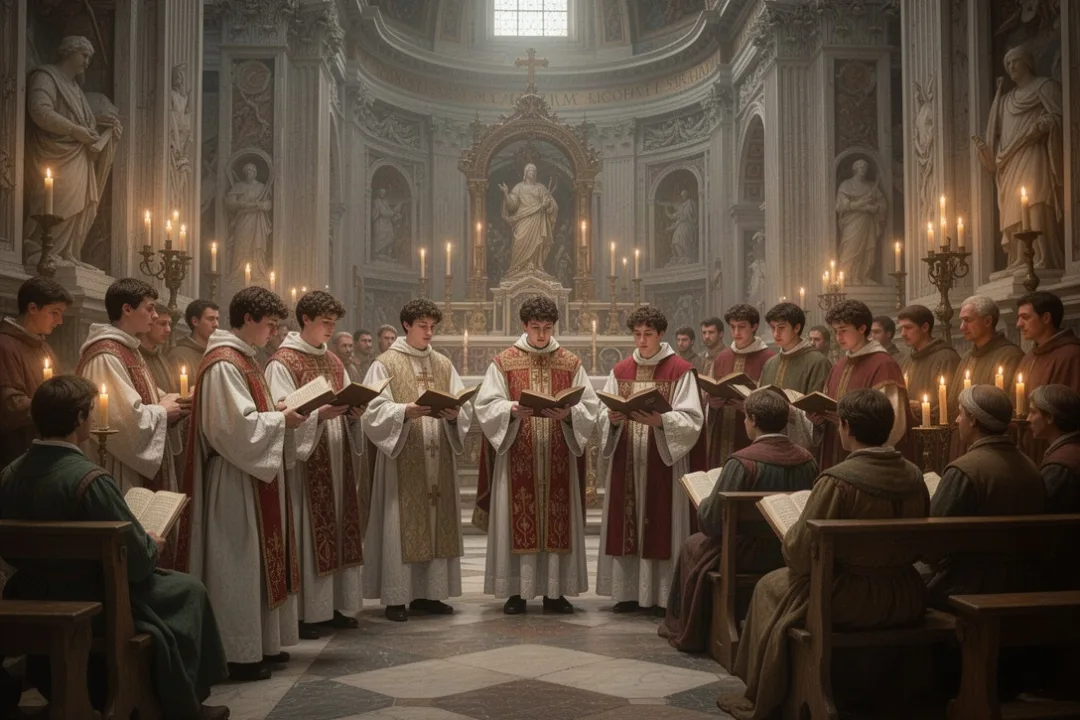
Philip also encouraged the use of music and shared spiritual conversation. These gatherings could include prayer, a sermon or reflection, sacred music, and discussion. Such a format allowed participants to learn together while building friendships that supported Christian practice.
His ministry suggests that spiritual formation involves both interior and social habits. A person may pray alone, but that person also needs to learn how to speak truthfully, listen well, forgive, accept correction, and care for people whose needs are inconvenient. Holiness was not an escape from community; it was tested and expressed within community.
A useful caution: Philip’s famous acts of eccentricity were aimed at specific spiritual problems. His example supports humility and discernment, not attention-seeking behavior or reckless imitation.
How Philip Neri founded the Congregation of the Oratory
The group around Philip gradually developed into the Congregation of the Oratory. It began with informal meetings for prayer, religious instruction, spiritual reading, music, and conversation. The name “Oratory” comes from the place where these gatherings took place and became associated with the community that grew from them.
The Oratory was not organized in exactly the same way as a traditional monastery or a religious order. Its priests lived in community and shared a common apostolic purpose, but the structure emphasized freedom, personal responsibility, and pastoral friendship. Members were not bound by the same type of vows used by many religious communities.
Pope Gregory XIII formally approved the Congregation of the Oratory in 1575. The community’s work included preaching, hearing confessions, spiritual direction, religious education, and the use of music as part of devotional gatherings. The form varied from place to place, but the central character remained connected to Philip’s original vision.
Music was significant because it could teach and move people while drawing them into shared prayer. The musical form associated with the Oratory later became known as the oratorio. The development of the genre involved composers and communities over time, so it should not be described as the work of Philip alone. His contribution was the spiritual and communal setting in which music became an important part of formation.
The Oratory also reflected Philip’s confidence in the value of conversation. Participants were not simply passive listeners. They could ask questions, discuss spiritual texts, and learn how faith related to everyday decisions. This approach helped connect the life of the Church with the experiences of laypeople.
Philip did not attempt to create a highly centralized movement under his personal control. He valued local relationships and allowed the Oratory to develop according to the needs of its setting. That flexibility helped the community spread beyond Rome after his death.
Oratorians eventually established communities in different countries. Their work has included parish ministry, education, preaching, music, spiritual direction, and care for the intellectual and devotional life of local communities. The details differ among houses, but the tradition remains marked by community life without the same form of religious vows found in orders such as the Franciscans or Dominicans.
The Oratory’s enduring principles include:
Priests living together for mutual support and shared ministry.
Regular prayer and spiritual reading as foundations for pastoral work.
Personal guidance shaped by the needs of individual people.
Preaching and instruction presented in an accessible form.
Music and conversation as tools for religious formation.
Respect for local circumstances rather than a rigid universal program.
The community’s structure also reveals something about Philip himself. He understood that spiritual work could become unhealthy if it depended entirely on one charismatic leader. A stable community, shared prayer, and mutual correction could preserve the mission after the founder was gone.
Philip Neri’s canonization, feast day, and continuing influence
Philip Neri died in Rome on May 26, 1595. The Church canonized him in 1622 under Pope Gregory XV. He was canonized in the same ceremony as Ignatius of Loyola, Francis Xavier, Teresa of Ávila, and Isidore the Laborer, a group that reflected the breadth of Catholic renewal during that era.
His liturgical memorial is celebrated on May 26. Some churches and communities mark the day with Mass, prayer, music, talks about his life, or gatherings shaped by the Oratorian tradition. The exact customs vary according to local practice.
Philip is particularly associated with Rome, priests, spiritual directors, and the Congregation of the Oratory. He has also become a patron for people seeking a healthy Christian joy and for those involved in music and religious education. Patronage can vary by region and devotional tradition, so local calendars may emphasize different aspects of his life.
Images of Philip often show him wearing the black clothing of a priest, sometimes with a hand near his heart. This imagery relates to the tradition of his mystical experience and to his deep love for God. Artistic details should not distract from the central message of his life: deep prayer can produce greater charity, humility, and attentiveness to others.
His influence can be seen in several ways. First, he offered a model of priesthood centered on availability. He was willing to listen, accompany people over time, and address the concrete habits that shaped their lives. Second, he showed that religious renewal could begin through small groups and personal relationships rather than only through official speeches or large institutions.
Third, Philip offered a balanced view of seriousness and joy. He did not believe that a person had to become harsh, gloomy, or socially isolated in order to be holy. He also did not confuse joy with entertainment or denial. For him, joy grew from a heart becoming freer from vanity and more open to God and neighbor.
His example remains useful for people who feel divided between spiritual ideals and ordinary life. Philip’s methods point toward practices that can fit into a normal week:
Make a brief prayer at the beginning and end of the day.
Speak with a trusted priest, pastor, or spiritual mentor when guilt becomes confusing.
Choose one quiet act of service that will probably receive no public credit.
Notice when the desire to look impressive is shaping a good activity.
Use music, reading, or thoughtful conversation to deepen your faith.
Allow appropriate humor to soften pride without making light of another person’s pain.
Philip Neri’s life does not offer a single personality type for holiness. His warmth and spontaneity may appeal to some people, while his disciplined prayer and demanding humility challenge others. The lasting value of his example lies less in imitating his mannerisms than in adopting his priorities.
Those priorities were clear: seek God sincerely, return after failure, accept correction, serve people directly, and resist the need to be admired. His joy became credible because it was joined to sacrifice, confession, prayer, and love. That combination explains why Philip Neri continues to be remembered not merely as a colorful historical figure, but as a serious guide to Christian renewal.
How to pray with Philip Neri’s example in mind
A simple prayer inspired by Philip Neri can begin with honest attention to the day. Ask where you noticed God, where you avoided responsibility, and where the desire for praise affected your choices. The purpose is not to produce shame, but to become more truthful and available to grace.
You might then choose one small action that expresses charity. Contact someone who is isolated, complete an unpleasant duty without complaint, give practical help, or listen without redirecting the conversation toward yourself. Philip’s spirituality places value on small acts performed with a sincere heart.
Finally, bring your limitations to God without pretending that change will happen instantly. A short prayer such as “Lord, make me humble and joyful in serving you” can gather the main direction of his spirituality. Regular repetition matters more than finding perfect words.
Philip Neri’s example is especially fitting when faith has become either heavy with self-importance or thin and distracted. He points toward a middle path: reverent but not gloomy, disciplined but not performative, social but not superficial, and joyful because love has become more important than the self.
Frequently asked questions
What is Philip Neri best known for?
Philip Neri is best known for his ministry as a priest in Rome and for founding the Congregation of the Oratory. He became famous for hearing confessions, guiding young people, serving the sick and poor, and using warmth, music, conversation, and carefully chosen acts of humility to help people grow spiritually.
When is Saint Philip Neri’s feast day?
Saint Philip Neri’s feast day is May 26, the date associated with his death in Rome in 1595. Churches and Oratorian communities may observe the day with Mass, prayer, music, religious instruction, or other local devotional customs.
Was Philip Neri a member of a religious order?
Philip Neri was a diocesan priest, not a member of a traditional religious order. He founded the Congregation of the Oratory, a community of priests who live together and share ministry but do not follow the same vow structure as many religious orders.
Why is Philip Neri associated with music?
Music became part of the prayerful gatherings connected with Philip Neri’s Oratory. These gatherings helped form people through sacred music, reflection, and conversation. Over time, the musical tradition associated with the Oratory contributed to the development of the oratorio, although that genre was shaped by later composers and communities as well.














Leave a Reply