If you have heard someone call an unexpected gift “manna from heaven,” you may wonder where that expression came from. In the Bible, manna is the food God provided for the Israelites after they escaped slavery in Egypt and traveled through the wilderness.
The word is closely connected with the question the Israelites asked when they first saw it: “What is it?” Exodus 16 describes a fine substance appearing on the ground each morning, like thin flakes or frost. The people gathered it, prepared it as food, and depended on it throughout their years in the desert.
Manna is more than a mysterious food in an ancient story. It illustrates God’s provision, teaches the Israelites to trust him one day at a time, and later becomes an image for spiritual nourishment. The New Testament connects the story of manna with Jesus, who describes himself as the true bread from heaven in John 6.
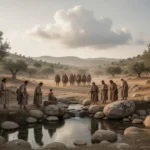
Manna first appears in Exodus 16, shortly after the Israelites leave Egypt. They are traveling through a harsh wilderness with limited food supplies, and the people begin complaining to Moses and Aaron. Their concern is practical: a large community cannot survive for long without reliable food.
God responds by promising to provide bread from heaven. In the evening, quail arrive, and in the morning, a fine substance covers the ground around the camp. The Israelites do not recognize it, so they ask one another what it is. Moses tells them that it is the bread God has given them to eat.
The description includes several details:
Manna appeared with the morning dew and was available for gathering after the dew evaporated.
It was described as a fine, flaky substance, comparable in appearance to frost on the ground.
Its taste was compared with something sweet, including honey in Exodus 16 and cakes made with oil in Numbers 11.
The Israelites ground or crushed it, cooked it, and made it into cakes.
It had to be collected regularly rather than stored as a permanent personal supply.
The people gathered manna according to their needs. Each person was to receive an appropriate amount, and those who gathered much did not end up with too much while those who gathered little did not lack. The account presents this as an expression of equal provision rather than an invitation to compete.
Manna was not simply food that appeared once. According to Exodus 16, it became a repeated provision during Israel’s wilderness years. Joshua 5:12 says that it stopped after the Israelites began eating food from the land of Canaan. The Bible therefore presents manna as a special provision for a particular season, not as the ordinary diet of all God’s people for all time.
Short answer: Manna was the miraculous bread-like food God supplied to the Israelites in the wilderness after the exodus from Egypt. The name reflects their first reaction: they did not know what they were seeing.
Why the Israelites received manna in the wilderness
The immediate reason for manna was hunger. The Israelites had left Egypt, entered the wilderness, and faced the reality that freedom did not remove every physical danger. Their journey required food, water, guidance, and endurance. Manna met one of those basic needs each day.
At the same time, Exodus 16 presents manna as a test of trust and obedience. God gave instructions about when and how much to gather. The Israelites were generally to collect enough for the day, but they were told to gather twice as much on the sixth day because the Sabbath was a day of rest and no manna would appear for gathering.
This pattern challenged two common fears. Some people tried to keep extra manna overnight, perhaps because they were afraid that none would come the next day. The stored manna spoiled. Others apparently went out to gather on the Sabbath and found nothing. The story uses both responses to show the tension between anxiety about scarcity and confidence in daily provision.
There was one exception to the normal daily pattern. On the sixth day, the Israelites were instructed to prepare and preserve an additional portion for the Sabbath. That portion did not spoil in the same way. The difference reinforced the specific instruction rather than making ordinary hoarding acceptable.
Deuteronomy 8 looks back on the wilderness experience and explains its spiritual purpose. The text says that God allowed the Israelites to experience hunger and then fed them with manna so they would learn that human beings do not live by physical food alone, but by everything God provides and commands. This does not dismiss the importance of food. Instead, it places physical survival within a larger dependence on God.
Manna also formed part of Israel’s memory. According to Exodus 16, a portion was kept in a container as a reminder for future generations. It represented the way God had sustained the people before they possessed settled land, harvests, or established homes.
What manna looked and tasted like
The biblical descriptions do not give enough information to identify manna with certainty by modern scientific standards. Exodus calls it a fine, flaky substance, while Numbers 11 compares its appearance with coriander seed and its color with a pale or resin-like substance, depending on how the Hebrew wording is translated. These descriptions provide an impression, not a laboratory specification.
The people gathered manna from the ground. They could grind it, pound it, boil it, or make cakes from it. Its flavor is described as sweet in Exodus and as having a taste resembling cakes made with oil in Numbers. The differences between these descriptions may reflect different preparations, poetic emphasis, or the way the ancient language conveys flavor.
Several natural substances have been proposed as possible comparisons. Some desert plants produce sweet excretions associated with insects, and some edible lichens or resins have been suggested as analogies. Certain foods found in desert regions can appear in small quantities and have a sweet taste.
Those comparisons can help readers imagine the setting, but they do not settle the biblical question. Proposed natural explanations often do not account for every feature in the story, including the large community involved, the regular timing, the Sabbath pattern, the spoilage of ordinary leftovers, and the preservation of the sixth-day portion.
Some readers understand manna as an extraordinary form of a natural substance. Others regard it as a direct miracle that does not need a natural equivalent. The biblical text emphasizes what manna did for Israel and what it taught them more than the biological identity of the substance.
The name itself is often explained through the Hebrew expression associated with the Israelites asking, “What is it?” The precise linguistic relationship is discussed by scholars, and translations may phrase the connection differently. Still, the popular meaning captures the scene well: the Israelites encountered something unfamiliar and had to learn to receive it according to God’s instructions.
What the manna story teaches about daily provision
Manna is one of the Bible’s clearest images of daily dependence. The Israelites could not build a permanent stockpile that removed every future uncertainty. They had to gather what was needed, prepare it, and return the next morning. The repeated rhythm made provision visible as a continuing gift rather than a one-time rescue.
That rhythm also gave shape to the Israelites’ week. The sixth-day double portion provided food for the Sabbath, linking nourishment with rest. The people were not expected to gather every day without stopping. They were taught to trust God’s provision while also following a practical pattern of preparation.
The account does not make the wilderness experience easy. The Israelites still faced discomfort, uncertainty, and fear. Manna did not turn the desert into a comfortable place. It gave them enough food to continue the journey, which is different from giving them luxury or removing every hardship.
This distinction matters when people use “manna” as a metaphor today. The phrase usually means an unexpected resource that arrives when it is urgently needed. Yet the biblical story includes work and discipline: the people had to gather, prepare, follow limits, and observe the instructions connected with the Sabbath.
Manna also addresses the human tendency to measure security by accumulation. Saving resources can be wise in many circumstances, and the Bible does not treat all planning as wrong. In Exodus 16, however, the Israelites were given a particular command for a particular setting. Their attempt to store ordinary manna overnight showed distrust because it rejected the provision pattern God had established.
Several themes stand out in the story:
Provision: God supplied food when the Israelites had no ordinary source of food in the wilderness.
Dependence: The people learned to receive enough for each day instead of controlling the entire future.
Obedience: The instructions about gathering, leftovers, and the Sabbath were part of the gift.
Equality: The account presents enough for everyone rather than rewarding the strongest gatherers with permanent abundance.
Remembrance: The preserved portion served as a sign of how God had sustained the community.
Manna therefore combines material and spiritual meanings. It was real food for hungry people, but it also became a lesson about humility, trust, community, and the limits of self-sufficiency.
A useful distinction: The manna story is not a promise that every person will receive exactly what they want without effort. It describes God’s provision for Israel in a specific wilderness period and calls attention to trust, obedience, and enough for the day.
How manna is used elsewhere in the Bible
After Exodus 16, later biblical books refer back to manna as evidence that God cared for Israel during the wilderness years. Nehemiah 9 recalls that God gave food from heaven when the people were hungry. Psalm 78 remembers manna as heavenly grain and food associated with angels, using poetic language to celebrate God’s generosity.
These references do not introduce a completely different food. They interpret the original event for later worship and teaching. Manna becomes part of Israel’s account of deliverance: God brought the people out of Egypt, guided them through the wilderness, and sustained them on the way to the promised land.
The story also appears in the New Testament. In John 6, people refer to the manna given to their ancestors in the wilderness while discussing the sign of bread. Jesus responds by directing attention beyond Moses and the earlier provision. He identifies himself as the bread of life and describes the life he gives as lasting nourishment.
John 6 does not say that manna was worthless or unreal. It treats manna as genuine food that sustained the Israelites for a time, while contrasting it with the deeper and enduring life associated with Jesus. The central comparison is between food that meets physical hunger temporarily and spiritual life that continues beyond ordinary earthly needs.
The book of Revelation also mentions hidden manna in its message to the church at Pergamum. The phrase is symbolic and connected with God’s promised reward. It draws on the earlier story of wilderness provision while presenting manna as part of a future promise known fully by God.
These later references show why manna has such lasting importance in biblical theology. It is simultaneously:
A reminder that God can sustain people in places where normal resources fail.
A lesson about receiving enough day by day.
A symbol of spiritual nourishment and life with God.
A picture that later writers use to point toward a greater promise.
The most direct Christian interpretation comes from John 6, where manna prepares the way for Jesus’ teaching about himself. Christians differ on how they explain the details of that chapter, but the broad connection is clear: the wilderness bread becomes a figure for a more profound kind of nourishment.
What “manna from heaven” means today
In everyday American English, manna from heaven means an unexpected blessing or resource that arrives when it is badly needed. A family might use the phrase for emergency help, a job opportunity after a long search, or food delivered during a crisis. The expression comes from the biblical account, but it is often used without making a specific theological claim.
Using the phrase accurately requires some care. Biblical manna was not simply random good luck. It was provision connected with a community’s journey, a set of instructions, and a relationship with God. The expression works best when it describes help that arrives at a critical moment, especially when the recipient could not have supplied it alone.
The story can also shape a thoughtful approach to uncertainty. It encourages people to recognize present needs without pretending to control every future outcome. It reminds communities to consider whether resources are being shared fairly. It points toward gratitude for ordinary nourishment rather than treating abundance as proof of personal superiority.
At the same time, manna should not be used to blame people who are hungry or struggling. The biblical story does not authorize a simplistic claim that every hardship results from weak faith. The Israelites themselves experienced hunger, fear, complaint, and uncertainty during a journey God was leading. Manna represents care within hardship, not a denial that hardship exists.
For Jewish readers, manna remains part of the Torah’s account of Israel’s formation and God’s care in the wilderness. For Christians, it also carries a connection to Jesus’ teaching about the bread of life. For many other readers, it is a powerful cultural image of provision, mystery, and learning to live with enough for today.
If you want to understand the biblical story directly, read Exodus 16 first, then Numbers 11 and Deuteronomy 8. Joshua 5:12 explains when the provision ended, while John 6 develops the New Testament connection. Read together, these passages show both the practical story of food in the wilderness and the larger meanings later communities found in it.
Frequently asked questions
Did manna really come from heaven?
The Bible describes manna as bread or food from heaven because it was understood as God’s provision for Israel. The phrase expresses its divine source and significance, not necessarily a claim that the substance traveled physically through the sky. Some readers connect it with natural desert substances, while others understand it as a direct miracle. The biblical text emphasizes God’s provision more than its scientific classification.
How long did the Israelites eat manna?
According to Exodus, Numbers, and Joshua, the Israelites ate manna during their wilderness years after leaving Egypt. Joshua 5:12 says it stopped when they began eating produce from the land of Canaan. The Bible does not present manna as their permanent food or as a provision intended for every generation. It belonged to their specific wilderness journey and ended when their circumstances changed.
What is the difference between manna and bread?
Bread is a general food made from ingredients such as ground grain, water, and often yeast. Manna was a distinctive wilderness food that the Israelites gathered from the ground and prepared in several ways. The Bible compares it to bread because it nourished them, but it also describes its unusual appearance, arrival, taste, and gathering instructions. Later biblical writers use “bread” symbolically when discussing its meaning.
Why did Jesus compare himself with manna?
In John 6, Jesus uses the wilderness manna as a comparison for the life he offers. Manna kept the Israelites alive physically but did not prevent them from eventually dying. Jesus presents himself as the bread of life, pointing to a deeper and lasting spiritual nourishment. The comparison shows that the earlier gift mattered while also directing attention to what Christian teaching understands as a greater source of life.













Leave a Reply