“Out of Egypt I called my son”: Meaning and context
“Out of Egypt I called my son”: Meaning and context
When you read “out of Egypt I called my son”, you may wonder whether the phrase predicts Jesus’ childhood, describes Israel’s exodus, or somehow means both. The answer is both, but not in exactly the same way. The words come from Hosea 11:1, where “my son” refers to Israel. Matthew later applies the same line to Jesus after Joseph takes Him back from Egypt, presenting Jesus as the Son who relives Israel’s story and fulfills it faithfully.
The phrase therefore cannot be understood well by pulling it out of either book. Hosea is remembering God’s rescue of Israel from slavery, while Matthew is showing how Jesus’ life echoes and completes the history of Israel. The connection is not that Hosea gave a simple prediction containing every detail of Jesus’ childhood. It is a deeper biblical pattern involving exodus, sonship, obedience, and redemption.
Where “out of Egypt I called my son” appears in the Bible
The wording is found in Hosea 11:1. In that chapter, God speaks about Israel as a child whom He loved and brought out of Egypt. The surrounding passage then describes Israel turning away from God despite that earlier love and care.
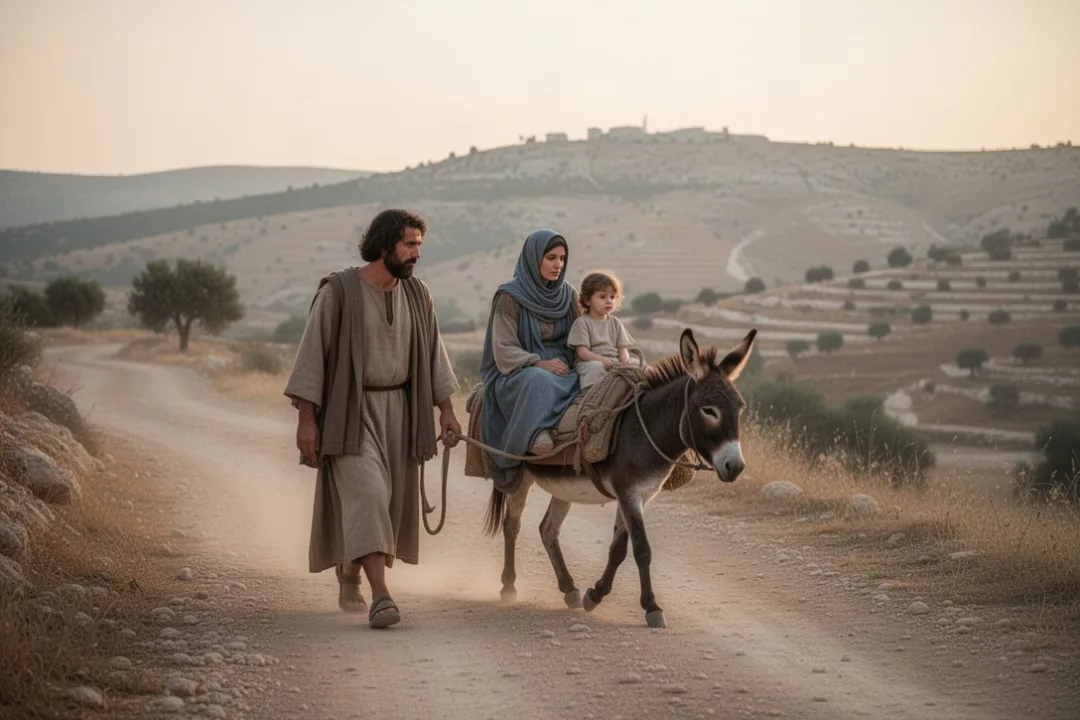
The phrase appears again in Matthew 2:15. Matthew describes Joseph taking Mary and Jesus to Egypt to protect the child from Herod. After Herod dies, Joseph brings Jesus back to the land of Israel. Matthew says this happened so that what the Lord had spoken through the prophet might be fulfilled.
These two passages have different immediate settings:
Hosea 11: God looks back at Israel’s deliverance from Egypt and grieves Israel’s later rebellion.
Matthew 2: Joseph returns with Jesus from Egypt after danger from Herod has passed.
The shared theme: God calls His son out of Egypt and continues His saving purpose despite human opposition.
Essential distinction: In Hosea’s original context, “my son” means Israel. Matthew uses the passage to show that Jesus embodies Israel’s calling and brings its story to its intended fulfillment.
What Hosea meant by “my son”
Hosea was speaking to the northern kingdom of Israel during a period of spiritual and political decline. Israel had once been enslaved in Egypt, but God had delivered the nation through the exodus. By calling Israel His son, God described a relationship of love, belonging, and special care.
The image of Israel as God’s son is not unique to Hosea. Earlier biblical passages use family language for the nation. In Exodus 4:22, Moses is instructed to describe Israel as God’s firstborn son. That language explains why the exodus was more than a political escape: it was the rescue of a people claimed by God.
Hosea’s point is painful rather than merely celebratory. God loved Israel, taught the nation to walk, and brought it out of Egypt, yet Israel repeatedly followed other gods. Hosea 11 moves between affection, judgment, and compassion. The chapter remembers the nation’s early relationship with God while exposing its unfaithfulness.
That context matters because the phrase carries a history. “My son” recalls a rescued people, not simply an individual child. “Egypt” recalls bondage and deliverance, while the act of calling suggests God’s initiative. God is the one who summons His son from a place of oppression into a new stage of life and vocation.
How Matthew applies Hosea to Jesus
Matthew’s Gospel presents Jesus as the central figure in Israel’s story. Jesus is born as Israel’s king, threatened by a ruler, taken to Egypt, and later brought back to the land. This pattern resembles the experience of Israel, but Jesus’ role is personal and decisive: He is the faithful Son who succeeds where Israel failed.
Matthew’s use of Hosea is sometimes confusing because Hosea was not obviously describing a future event in its immediate setting. Matthew is not necessarily claiming that Hosea’s first readers would have identified a detailed prediction about a later infant. Instead, he sees a correspondence between Israel and Jesus and recognizes Jesus as the fullest expression of Israel’s calling.
This way of reading Scripture is often called typology. A type is an earlier person, event, or pattern that points forward to a later and greater fulfillment. The earlier event remains real in its own historical setting, but it also becomes part of a larger design that reaches its fullness later.
Israel was called God’s son and brought out of Egypt. Jesus is the beloved Son and is brought out of Egypt. Israel passed through the waters and later entered the wilderness. Jesus is baptized and then tested in the wilderness. These parallels invite readers to see Jesus as the representative Israelite who remains loyal to God.
Read Hosea 11:1 in its paragraph. The verse refers to Israel’s past deliverance from Egypt, not to an isolated prediction detached from the rest of the chapter.
Identify the original “son.” Hosea’s son is the nation of Israel, loved and rescued by God.
Read Matthew 2:13–15 in its narrative setting. Jesus has been taken to Egypt because Herod seeks to destroy Him, and He later returns to Israel.
Notice Matthew’s fulfillment language. Matthew sees a meaningful connection between Israel’s history and Jesus’ experience.
Trace the larger pattern. Jesus repeats Israel’s journey—birth, rescue, wilderness, testing, and mission—but remains obedient to God.
Hold both meanings together. The passage is about Israel in Hosea and about Jesus’ fulfillment of Israel’s vocation in Matthew.
This approach avoids two common mistakes. The first is saying that Hosea had nothing to do with Jesus because its original subject was Israel. The second is saying that Hosea was only a coded prediction about Jesus and had no meaning for the people of Hosea’s own time.
Why Egypt matters in the biblical story
Egypt has more than one meaning in Scripture. It is the place where Jacob’s family found refuge during famine, the land where Israel later became oppressed, and the setting from which God delivered Israel through Moses. In Matthew 2, Egypt becomes a temporary place of safety for Jesus while Herod’s violence threatens Him.
That combination makes the setting significant. Jesus is not sent to Egypt because Egypt itself is presented as spiritually superior or permanently safe. He is taken there under God’s protection, and He returns when the danger has passed. The location connects His life with Israel’s national history while also showing God’s preservation of the promised king.
Matthew’s account also recalls the pattern of a threatened child and a hostile ruler. In Exodus, Pharaoh orders the killing of Hebrew boys, but Moses is preserved and later becomes the deliverer of Israel. In Matthew, Herod seeks to kill the children around Bethlehem, but Jesus is preserved and later becomes the Messiah who brings salvation.
The parallel should not be pressed into an exact one-to-one comparison. Moses and Jesus are not identical figures, and the Gospel does not say that every detail of Moses’ infancy is repeated. The point is that God preserves His chosen deliverer and advances His purpose despite the actions of a violent ruler.
Jesus as the faithful Son of Israel
Matthew repeatedly uses events in Jesus’ life to identify Him with Israel while showing His faithfulness. After His baptism, Jesus enters the wilderness and faces temptation. Israel had also passed through the sea and spent years in the wilderness, but the nation repeatedly tested God and turned aside.
Jesus answers temptation by drawing on the book of Deuteronomy, which records lessons from Israel’s wilderness experience. He refuses to use power selfishly, to test God, or to worship anyone other than God. In this way, He lives out the obedience Israel was called to practice.
This pattern helps explain why Matthew connects Jesus with Hosea 11:1. The quotation is not simply about a geographical move. It identifies Jesus with the son whom God rescued from Egypt, then shows Jesus carrying that identity faithfully through the next stages of His mission.
The theme continues through Matthew’s Gospel. Jesus teaches from a mountain, calls twelve disciples, and announces the kingdom of heaven. These details echo Israel’s formation as a covenant people, including the twelve tribes. Jesus does not merely stand outside Israel’s story as an unrelated individual; He gathers and represents God’s people.
At the same time, Jesus is more than a repeat of Israel. He is the Messiah, the promised king, and the Son whose obedience brings the story toward its goal. Matthew’s presentation includes both identification and distinction: Jesus belongs to Israel, embodies Israel’s calling, and fulfills it in a unique way.
What “fulfilled” means in Matthew 2:15
When Matthew says Scripture was fulfilled, he is using fulfillment in a broad biblical sense. The word can describe the completion of a promise, the realization of a pattern, or the arrival of an event that brings an earlier Scripture to its full significance.
Readers sometimes assume that “fulfilled” must always mean “predicted in detail and later reproduced.” That definition is too narrow for Matthew’s use of the Old Testament. Matthew often shows how Jesus’ life corresponds to earlier biblical events and themes. The earlier text remains meaningful in its original context, but Jesus reveals its wider reach.
Hosea remembered the exodus and Israel’s sonship. Matthew sees Jesus’ return from Egypt as the climactic expression of that pattern. The first exodus was a foundational act of redemption; Jesus’ return belongs to the story of the Messiah through whom God will bring a deeper and more complete salvation.
This does not require readers to choose between historical meaning and later significance. A passage can speak genuinely about Israel’s past and also participate in a developing scriptural pattern. The New Testament writers regularly read Israel’s Scriptures as a unified story that reaches its center in Christ.
Read “fulfilled” as completion, not erasure: Matthew does not cancel Hosea’s reference to Israel. He shows how Israel’s story finds a representative and faithful fulfillment in Jesus.
How the passage relates to Herod and the threat to Jesus
Matthew 2 places the quotation within a story of political violence. Herod hears that a child has been born as king of the Jews and treats the news as a threat to his own rule. Joseph therefore takes Mary and Jesus to Egypt after receiving a warning in a dream.
The return from Egypt happens after Herod’s death. Joseph is warned again and settles the family in Nazareth rather than returning to Judea, where Herod’s son rules. Matthew links these movements to God’s protection and to the prophetic shape of Jesus’ life.
The passage shows that Jesus’ mission begins under danger, not comfort. The child is preserved through Joseph’s obedience, and the family’s movements are directed by God. Yet Matthew’s main emphasis is not simply that Jesus escaped danger. It is that the events fit the biblical identity of the one who has come to save Israel.
Herod’s opposition also introduces a recurring Gospel theme: earthly rulers may resist God’s kingdom, but they cannot finally prevent God’s purpose. The infant Jesus appears vulnerable, but Matthew presents Him as the true king whose life is held within God’s providence.
How Hosea 11 should shape your reading of the phrase
Hosea 11 is not only a background reference for Matthew. It reveals the emotional and theological depth behind the words. God’s relationship with Israel includes genuine love, patient care, grief over rebellion, and judgment against persistent sin.
Reading the passage in context prevents a shallow interpretation of Jesus as merely repeating a travel itinerary. The phrase carries the memory of a God who rescues His son and remains committed to His purposes even when that son has been unfaithful. In Matthew, Jesus enters this history as the faithful Son.
Hosea also makes clear that sonship is connected to responsibility. Being called God’s son is not merely a title of privilege. It involves belonging to God, receiving His instruction, and living in faithful response to His love. Jesus’ obedience gives the title its fullest expression.
For Christian readers, this means the passage points beyond the fact that Jesus visited Egypt. It speaks about His identity and mission. He is the one who represents God’s people, bears their story, and fulfills their calling through perfect faithfulness.
Common interpretations that miss the passage’s meaning
“Hosea was only predicting Jesus”
This view overlooks Hosea’s original audience and grammar. Hosea 11:1 looks back to the exodus of Israel. The chapter’s following verses describe the nation’s response to God, so the immediate reference is clearly Israel’s history.
A better explanation recognizes the original meaning while also taking Matthew seriously. Matthew sees Jesus as the one who fulfills the pattern Hosea recalls. The passage is not reduced to a hidden prediction, and its application to Jesus is not dismissed.
“The verse has nothing to do with Jesus”
This view protects the original context but fails to account for Matthew’s explicit use of the passage. The Gospel writer intentionally connects Jesus’ return from Egypt with Hosea’s statement about God’s son.
The connection is theological rather than merely lexical. Both passages involve God’s son, Egypt, and divine action. Matthew’s reading depends on the conviction that Israel’s history forms a pattern that Jesus brings to completion.
“The phrase proves that every Old Testament verse has only one possible meaning”
Scripture has stable meanings in context, but biblical authors can also draw out patterns and correspondences across the canon. Matthew does not treat Hosea as meaningless before Jesus, nor does he use it without regard for its original setting.
Careful interpretation asks two questions together: What did this passage mean in its first context? And how does the New Testament show its fuller significance in Christ? Those questions produce a more faithful reading than either extreme.
What Christians can learn from Jesus’ return from Egypt
The passage teaches that Jesus is closely identified with God’s people. He does not save from a distance as though Israel’s history were irrelevant to Him. He enters that history, shares its patterns, and remains faithful where Israel failed.
It also shows the continuity of God’s saving work. The God who delivered Israel from Egypt is the God who protects Jesus in Egypt. The setting changes, but the central actor remains God. His purposes move from the exodus toward the mission of the Messiah.
The passage highlights the significance of obedience. Joseph listens to God’s warnings and acts quickly, while Jesus grows within the story of faithful submission to the Father. The narrative presents divine protection working through ordinary human actions such as travel, shelter, and responsible care.
Finally, the phrase points toward a larger hope. Jesus’ return from Egypt is an early sign that God is preserving the one through whom redemption will come. The event is small in physical scale—a family returning home—but large in biblical meaning because it belongs to the story of salvation.
How to study this passage in its wider context
If you want to understand the phrase more deeply, read the connected passages rather than relying on the single line. Compare the exodus story, Hosea’s reflection on Israel, and Matthew’s account of Jesus’ early life.
Read Exodus 4:22–23 for the language of Israel as God’s son.
Read Exodus 12–14 for the central events of Israel’s deliverance from Egypt.
Read Hosea 11 to see the love, rebellion, judgment, and compassion surrounding the quotation.
Read Matthew 2:13–23 for the flight to Egypt and the return to Israel.
Read Matthew 3–4 to trace Jesus’ baptism and wilderness testing after His return.
Compare how Jesus’ obedience contrasts with Israel’s repeated unfaithfulness.
As you read, mark repeated ideas such as son, Egypt, calling, wilderness, and obedience. These themes help you see why Matthew considers the Hosea passage fulfilled in Jesus even though Hosea first addressed Israel’s past.
The most balanced interpretation is also the most useful one: Hosea 11:1 remembers Israel’s exodus, and Matthew 2:15 shows Jesus as the faithful Son who embodies and completes Israel’s story. “Out of Egypt I called my son” is therefore a statement about historical deliverance, messianic identity, and the unity of God’s saving purpose.
Frequently asked questions
Does “my son” in Hosea 11:1 refer to Jesus?
In Hosea’s immediate context, “my son” refers to Israel, the nation God brought out of Egypt. Matthew later applies the passage to Jesus, not by denying Hosea’s original meaning, but by presenting Jesus as the faithful Son who represents Israel and fulfills its calling. The phrase has an original national reference and a later messianic fulfillment.
Is Matthew saying Hosea predicted Jesus’ trip to Egypt?
Matthew treats Hosea’s words as fulfilled in Jesus’ return from Egypt, but the relationship is more than a simple prediction of travel. Hosea recalls Israel’s exodus, and Matthew sees Jesus reliving that pattern as Israel’s representative and Messiah. The Gospel identifies a larger scriptural correspondence rather than claiming that Hosea described every detail of Jesus’ childhood.
Why did Joseph take Jesus to Egypt?
Joseph took Mary and Jesus to Egypt after receiving a warning that Herod intended to kill the child. Egypt provided temporary safety until Herod died. Matthew presents Joseph’s actions as obedient responses to divine guidance and connects Jesus’ return from Egypt with Israel’s exodus story and the preservation of God’s promised king.
What does this passage teach about Jesus?
It teaches that Jesus is deeply connected to Israel’s history and calling. He is the Son who enters Israel’s story, repeats important parts of its journey, and remains faithful where Israel was unfaithful. His return from Egypt therefore points to more than a location; it identifies Him as the Messiah through whom God’s saving purpose reaches its fulfillment.















Leave a Reply