Anthony of Egypt: Life, teachings, and lasting legacy
Anthony of Egypt: Life, teachings, and lasting legacy
If you have heard the name Anthony of Egypt connected with monks, the desert, or spiritual temptations, you may be wondering which Anthony people mean. He is usually Saint Anthony the Great, also called Anthony of the Desert or Anthony the Abbot, an Egyptian Christian who became one of the most influential early monastic figures.
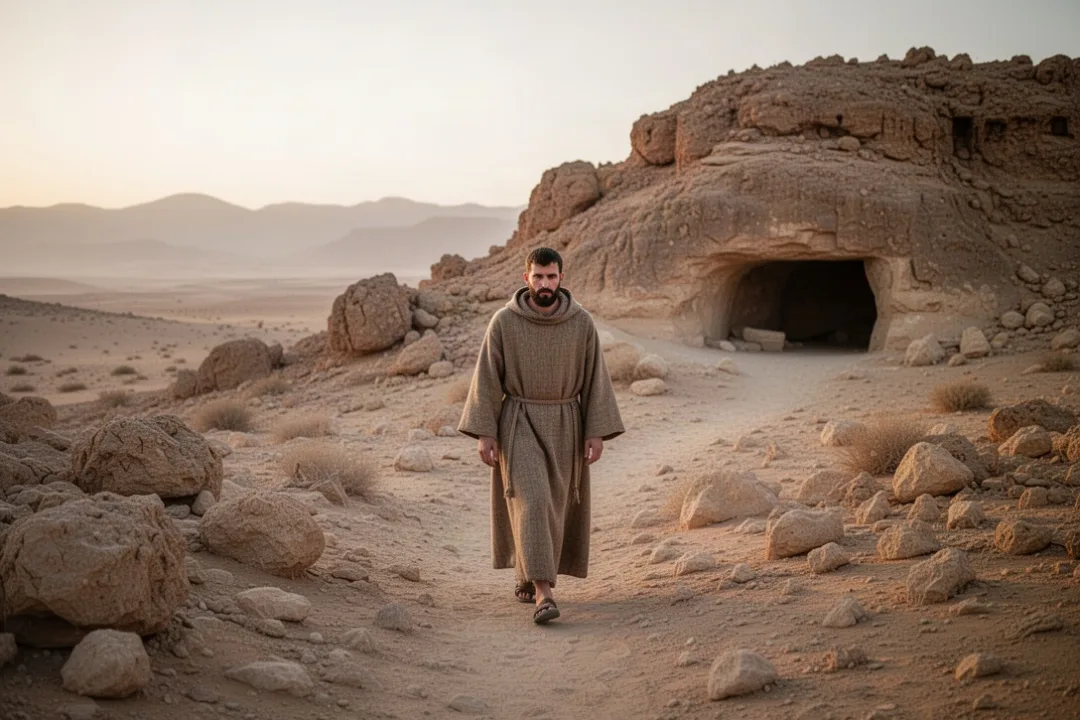
Anthony lived approximately from 251 to 356. He spent much of his life seeking solitude, prayer, and disciplined work in the Egyptian desert, yet he did not live as an isolated spiritual celebrity. Other Christians came to him for counsel, and his example helped shape the organized forms of monastic life that later spread across the Christian world.
Name clarification: Anthony of Egypt is not the same person as Saint Anthony of Padua, the later Franciscan preacher commonly invoked to help find lost objects. Anthony of Egypt is associated with early Christian monasticism and the desert fathers.
Anthony was born in the village of Coma in Upper Egypt, probably to a prosperous Christian family. His parents died when he was still young, leaving him responsible for his household and younger sister. According to the early account of his life, he eventually chose to give away his property, arrange care for his sister, and devote himself to prayer.
His decision was based on Jesus’ teaching about selling possessions, giving to the poor, and following him, traditionally associated with Matthew 19:21. Rather than treating that teaching as an abstract ideal, Anthony understood it as a direct call to change his way of life. He began by practicing ascetic discipline near his home and learning from older believers who pursued prayer and self-control.
The Greek word askesis, from which “asceticism” comes, refers to training or disciplined practice. Anthony’s asceticism was not meant to display suffering for its own sake. Its purpose was to loosen the grip of possessions, fear, appetite, reputation, and distraction so that he could give himself more fully to God.
His importance rests on several connected achievements:
He became an early model of the solitary Christian monk living in the Egyptian desert.
He showed how prayer, manual labor, simplicity, and self-examination could form a sustained way of life.
He offered guidance to other Christians without turning solitude into complete separation from the church.
His reputation helped make Egyptian monasticism known throughout the wider Christian world.
His life became a major example of resisting temptation through patience, humility, and trust in God.
Anthony did not invent Christian renunciation. Other believers had already pursued celibacy, poverty, martyrdom, and prayer. His distinctive contribution was the force of his example and the way later generations remembered him as a spiritual father whose life brought together solitude and service.
Anthony’s early life and decision to give up wealth
The principal source for Anthony’s life is the Life of Antony, written by Athanasius of Alexandria after Anthony’s death. Athanasius was a bishop and a major defender of Nicene Christianity, and his biography had a powerful influence on later Christian readers. It presents Anthony as a model of holiness, courage, and perseverance.
Like many ancient biographies of saints, the Life of Antony has a theological purpose rather than the style of a modern documentary biography. It describes Anthony’s spiritual development, struggles, miracles, and encounters with demons in order to show how a Christian might pursue faithfulness. Readers should therefore distinguish between historical information and the book’s devotional presentation.
After hearing the Gospel passage about giving possessions to the poor, Anthony distributed much of what he owned. He did not simply abandon responsibility. The traditional account says he made provision for his sister and placed her with women committed to a life of prayer. He then moved closer to the margins of society, choosing work and prayer over social status and financial security.
At first, Anthony learned through contact with other ascetics. He visited people known for particular virtues, observing one person’s gentleness, another’s endurance, and another’s prayerfulness. This detail matters because it shows that his spiritual formation did not begin with the assumption that he already knew everything. He watched, listened, practiced, and gradually developed his own discipline.
His early pattern also included manual labor. He supported himself by making baskets or performing similar work, depending on how the ancient sources are interpreted, and shared what he had with the poor. Work gave structure to his days and helped prevent idleness from becoming another form of distraction.
Why Anthony entered the Egyptian desert
The Egyptian desert was not an empty fantasy landscape. It included difficult terrain, abandoned places, cultivated areas near the Nile, and routes used by travelers. For Anthony, the desert offered distance from ordinary social pressures and a setting in which the demands of prayer could become more focused.
He first lived near a cemetery, according to Athanasius, and later moved farther into the wilderness. The progression suggests a deliberate intensification of solitude. Anthony wanted to confront his inner life without the comforts and interruptions that had shaped him before.
Desert monasticism was not simply an attempt to escape other people. Anthony’s solitude became a way to examine the motives that continued to follow him: fear, pride, anger, sexual desire, attachment to wealth, and the wish to be admired. The desert removed many external distractions, but it did not remove the human tendency toward distraction from within.
Later Christian writers described the desert as a place of spiritual conflict. Anthony’s battles with demons should be read within the symbolic and theological world of late antique Christianity. They express the belief that evil can attack a person through fear, confusion, discouragement, and false promises. They also show that spiritual maturity was understood as a long process rather than a single dramatic victory.
A useful way to read the desert stories: They are not instructions to imitate every extreme action literally. Their central lesson is that lasting change requires honesty about temptation, steady practice, wise guidance, and a return to prayer after failure.
Anthony’s spiritual practices and daily discipline
Anthony’s life centered on a small number of practices repeated over a long period. These practices were demanding, but they were also ordinary in structure: prayer, work, fasting, silence, Scripture, and care for others. The power of his example came less from novelty than from consistency.
Prayer and attention
Prayer was not limited to formal words. Anthony sought an attentive relationship with God throughout the day. He prayed at set times, reflected on Scripture, and tried to bring his thoughts back when they wandered. This kind of attention is one reason later monastic traditions regarded him as a spiritual teacher.
He also warned against pride in spiritual accomplishments. A monk who fasted, kept vigil, or lived in solitude could still become controlled by vanity. In Anthony’s example, discipline was valuable only when joined to humility and love.
Fasting and bodily restraint
Anthony practiced fasting and limited his comforts. Early Christian ascetics saw moderation as a way to weaken compulsive desire and strengthen freedom. Yet the purpose was not to despise the body. Christian teaching generally treats the body as part of God’s creation, even when ascetics impose strict limits on food, sleep, clothing, or shelter.
Extreme forms of fasting can be unsafe for many people today, particularly those with medical conditions, a history of disordered eating, or demanding physical work. The responsible lesson is not to copy a historical monk’s diet. It is to examine what controls your attention and to practice restraint in a way that supports health, prayer, and service.
Manual labor and simplicity
Work helped Anthony remain grounded. He earned what he needed, avoided unnecessary possessions, and used his resources to assist people in poverty. Manual labor also gave his solitude a practical rhythm. The desert was not a place where he waited passively for spiritual experiences.
His approach can be translated into modern terms without pretending that a busy household or workplace is the same as the Egyptian desert. Simple routines, limited consumption, honest work, and time away from constant entertainment can create room for reflection.
Scripture and memory
Anthony relied heavily on Scripture, especially the teachings of Jesus and the Psalms. In an age when books were scarce and literacy was limited, memorizing passages allowed believers to carry sacred words into work, prayer, and hardship. The Life of Antony portrays Scripture as a practical defense against fear and temptation rather than merely an object of study.
That approach remains useful. Reading a short passage slowly, remembering one central idea, and returning to it during the day can be more formative than rushing through a large amount of material. Anthony’s method favored repeated practice over collecting information.
Anthony’s encounters with temptation and spiritual struggle
Stories of Anthony’s temptations form some of the best-known parts of his biography. The accounts describe assaults by demons, terrifying visions, physical attacks, seductive distractions, and discouraging thoughts. These episodes are not presented as entertainment. They illustrate how the early monks understood the mind’s vulnerability when a person leaves familiar supports behind.
Anthony’s response was usually not curiosity or dramatic confrontation. He prayed, refused to panic, remembered God’s authority, and continued his discipline. The stories repeatedly connect victory with patience rather than instant power. A temptation might return, but Anthony learned not to treat its return as proof that his spiritual life had failed.
Several themes run through these accounts:
Fear can exaggerate danger. Anthony learns not to accept every frightening thought as a message that deserves obedience.
Desire can disguise itself. Temptation may promise freedom while creating deeper dependence.
Pride can follow success. Even an apparently victorious monk can become arrogant about his discipline.
Persistence matters. Spiritual progress is described as repeated faithfulness rather than a permanent absence of struggle.
Community still matters. Anthony seeks counsel and speaks with other Christians, showing that solitude does not eliminate the need for wise relationships.
Modern readers may interpret these stories psychologically, spiritually, or both. They can represent intrusive thoughts, addictive patterns, anxiety, anger, loneliness, and the ways people externalize inner conflict. A careful reading does not require choosing between a strictly literal and a strictly symbolic interpretation in every case.
People experiencing hallucinations, severe fear, compulsive behavior, or thoughts of self-harm should seek qualified medical or mental health care. Anthony’s example should never be used to discourage treatment or to label a serious health condition as a moral failure.
Anthony’s relationship with other monks and church leaders
Although Anthony sought solitude, people repeatedly came to him for advice. Some asked him to pray for them; others wanted to imitate his way of life. Over time, a community of monks grew around his example. This community was not a monastery in the later, fully organized sense, but it helped establish patterns of shared discipline and spiritual guidance.
Anthony taught that a monk should not trust every thought automatically. He encouraged discernment: examining an impulse, asking where it leads, and comparing it with the character of Christ. He also emphasized humility and warned against becoming fascinated with visions or unusual experiences.
His relationship with Athanasius is especially significant. Athanasius was involved in the theological conflicts of the fourth century, including disputes about the nature of Christ. The Life of Antony presents Anthony as loyal to the faith defended at the Council of Nicaea and as an opponent of teachings Athanasius regarded as false.
Anthony’s role was not that of a trained academic theologian. His authority came from a life of prayer, endurance, and moral seriousness. When he entered public controversy, the story presents him as supporting what he understood to be orthodox Christian teaching rather than seeking influence for himself.
This balance between withdrawal and responsibility became important in Christian history. The monk could leave ordinary society without abandoning the wider church. Solitude was meant to purify service, not replace love of neighbor.
What Anthony of Egypt taught about holiness
Anthony’s teaching can be condensed into several principles, although no single modern list captures the whole of his life. He believed that holiness involved the transformation of the person, not simply the performance of religious exercises.
Freedom from possessions
Anthony treated wealth as spiritually dangerous when it became a source of identity or control. Giving away property was his personal vocation, but the broader principle is freedom from possessiveness. Someone may own little and still be consumed by status; someone else may have responsibilities and practice generosity without abandoning them.
Humility after spiritual progress
For Anthony, humility was not self-hatred. It was accurate self-knowledge: recognizing dependence on God, accepting correction, and refusing to treat discipline as a reason to despise others. He understood pride as especially dangerous because it can grow from genuine accomplishments.
Discernment before action
Not every thought deserves belief, and not every spiritual impression deserves immediate action. Anthony’s approach asks a person to test motives by their results. Do they lead to peace, patience, truth, and love, or to panic, cruelty, vanity, and isolation?
Perseverance instead of novelty
Anthony did not present holiness as a sequence of dramatic experiences. Repetition mattered: returning to prayer, doing honest work, resisting resentment, and beginning again after failure. This emphasis makes his example more practical than the supernatural stories surrounding it might initially suggest.
Love that survives solitude
Anthony’s withdrawal was not a rejection of every human relationship. People sought his counsel because his solitude eventually produced compassion and wisdom. If a religious practice makes a person more contemptuous, cruel, or indifferent to suffering, it has missed the purpose Anthony associated with spiritual discipline.
Common mistakes when learning about Anthony of Egypt
Anthony’s popularity has generated several misunderstandings. Keeping these distinctions clear makes it easier to appreciate his historical importance without turning him into a simplified symbol.
Confusing him with Anthony of Padua: They lived in different centuries and belonged to different Christian movements. Anthony of Padua was a Portuguese-born Franciscan preacher who died in 1231.
Assuming he lived alone from the beginning: Anthony learned from other ascetics, maintained ties with Christians, and eventually advised a growing circle of monks.
Reading every detail as a modern biography: Athanasius wrote to present a spiritual model. The work includes theology, symbolism, and accounts of miracles alongside historical memory.
Reducing his life to extreme fasting: His discipline also included work, Scripture, humility, charity, and discernment. Physical deprivation was not the whole message.
Thinking the desert means contempt for society: Anthony criticized destructive attachments, but his influence supported the church and encouraged care for others.
Copying severe practices without guidance: Ancient ascetic methods can be physically or psychologically harmful when imitated without context, health awareness, and experienced pastoral or professional support.
Assuming solitude is always the answer: Anthony’s life included solitude, but many people are called to family, work, community, and service. His principles can be practiced without leaving ordinary life.
How to apply Anthony’s example in ordinary life
Most people cannot and should not reproduce Anthony’s desert existence. His example becomes useful when translated into modest practices that address the same concerns: distraction, attachment, fear, pride, and the need for sustained attention.
You might begin with one practice rather than attempting a complete lifestyle change. For example, set aside a short period each morning for quiet prayer, keep one screen-free period during the day, or give regularly to someone in need. The goal is not to create a performance that makes you feel superior. It is to become more available to God and other people.
Practical applications include:
Practice intentional simplicity: Before buying something, ask whether it serves a real need or reinforces an impulse you are trying to control.
Create a quiet interval: Spend a few minutes without music, notifications, or conversation, using the time for prayer or honest reflection.
Give your work a spiritual purpose: Treat routine labor as a way to support others and practice patience rather than as a distraction from faith.
Examine recurring thoughts: Write down a fear or desire, then ask whether following it would lead toward truth, love, and responsibility.
Seek wise counsel: Talk with a trusted pastor, spiritual director, therapist, or mature friend when a struggle becomes repetitive or overwhelming.
Pair restraint with generosity: Giving up a comfort is more constructive when it creates resources, time, or attention for someone else.
Anthony’s example also supports a regular review of your habits. Consider what you reach for when you feel bored, anxious, lonely, or praised. The answer may reveal an attachment more clearly than your stated beliefs do.
Do not measure spiritual growth only by how calm or disciplined you feel. A better measure is whether you are becoming more truthful, patient, generous, and capable of receiving correction. Those qualities were central to the kind of holiness Anthony represented.
Anthony’s influence on Christian monasticism
Anthony is often called the father of monasticism, but the title needs context. He was not the first Christian to renounce wealth or live in solitude, and he was not the founder of every later monastic institution. His influence came from becoming one of the clearest and most widely remembered models of the desert monk.
Egypt produced several forms of early monastic life. Some monks lived alone in scattered cells, while others formed communities with shared rules and worship. Anthony’s reputation belonged especially to the solitary tradition, but his relationship with groups of disciples helped connect solitude with communal structures.
Other Egyptian figures, including Pachomius, became associated with more organized communal monasticism. The two patterns were not identical. A solitary monk sought an intense life of prayer apart from society, while a cenobitic community gathered monks under common leadership, schedule, and discipline.
Later monastic traditions drew from both patterns. Christian communities in Syria, Palestine, Asia Minor, Western Europe, and elsewhere read accounts of the Egyptian fathers and adapted their principles to local settings. Anthony’s name therefore became part of a much wider conversation about prayer, work, poverty, obedience, and community.
His influence extended beyond monasteries. Athanasius’s biography reached educated Christians who had never visited Egypt. Its stories helped readers imagine a life ordered around God rather than wealth or public honor. The book was translated and circulated broadly, contributing to the spread of monastic ideals across late antique Christianity.
Feast day, symbols, and artistic representations
Many Western Christian traditions observe Anthony’s feast on January 17. Eastern Christian calendars may commemorate him under different calendar conventions or liturgical arrangements, so the exact observance can vary by church. The date is associated with the traditional anniversary of his death.
Art commonly portrays Anthony as an elderly bearded monk wearing a simple habit. He may hold a staff shaped like a cross, a bell, a book, or a small flame. A pig may appear beside him because of later associations with the disease known as Saint Anthony’s fire and with charitable care connected to institutions dedicated to him.
Another familiar subject is the temptation of Saint Anthony. Artists have used the theme to depict demons, strange creatures, and psychological terror. These images reflect the accounts of spiritual conflict in his biography, but the visual details often come from later artistic imagination rather than direct historical description.
When visiting a church or museum display, look for the clues that distinguish Anthony of Egypt from other saints named Anthony. A desert setting, a monk’s habit, a staff, a book, or scenes of demonic temptation usually point toward the Egyptian ascetic.
What sources tell us about Anthony today
The Life of Antony by Athanasius remains the central source for understanding Anthony’s reputation and spiritual legacy. It should be read alongside broader knowledge of fourth-century Egypt, early Christian worship, ascetic communities, and the literary conventions of ancient saints’ biographies.
Other collections of sayings from the desert fathers may preserve teachings attributed to Anthony or stories associated with his circle. Attribution can be difficult because sayings were transmitted, translated, edited, and compiled over time. A quotation presented as “Anthony said” may reflect a later tradition rather than a securely documented sentence from his lifetime.
Readers can approach these sources with both respect and care. They preserve the memory of a person who clearly mattered to early Christians, but they are not modern transcripts. Asking who wrote a text, for whom it was written, and what spiritual purpose it served helps distinguish Anthony’s historical setting from later interpretations.
Anthony’s legacy endures because his central questions remain recognizable. What owns your attention? What do you do when fear returns? Can discipline make you kinder rather than prouder? His desert life offers one early Christian answer: freedom grows through prayer, simplicity, honest self-examination, and faithful care for others.
Frequently asked questions
Is Anthony of Egypt the same saint as Anthony of Padua?
No. Anthony of Egypt, also called Anthony the Great, was a fourth-century Egyptian monk and desert ascetic. Anthony of Padua was a thirteenth-century Franciscan preacher associated with Portugal and Italy. Their names are similar, but their lives, historical settings, ministries, and common symbols are different.
What is Saint Anthony of Egypt the patron saint of?
Anthony of Egypt is especially associated with monks, hermits, and people pursuing monastic or contemplative vocations. Later traditions also connect him with protection from certain diseases and with animals, particularly pigs. Patronage customs vary among churches and regions, so local traditions may emphasize different aspects of his legacy.
Did Anthony of Egypt write any books?
No complete book by Anthony is securely known to survive. His teachings and reputation were preserved through works such as Athanasius’s Life of Antony, collections of sayings from the desert fathers, and later monastic traditions. Some letters are attributed to him, but their transmission and authenticity require careful scholarly evaluation.
Why did Anthony live in the desert?
He sought distance from wealth, social status, distraction, and ordinary obligations so he could devote himself to prayer and spiritual discipline. The desert was also a setting where he could confront fear, temptation, and pride directly. His choice was a particular vocation, not a universal command for every Christian.















Leave a Reply