Saint Sabas: life, monastery, feast day, and legacy
Saint Sabas: life, monastery, feast day, and legacy
Saint Sabas the Sanctified was a fifth-century Christian monk whose prayer, leadership, and desert community helped shape Eastern Christian monasticism.
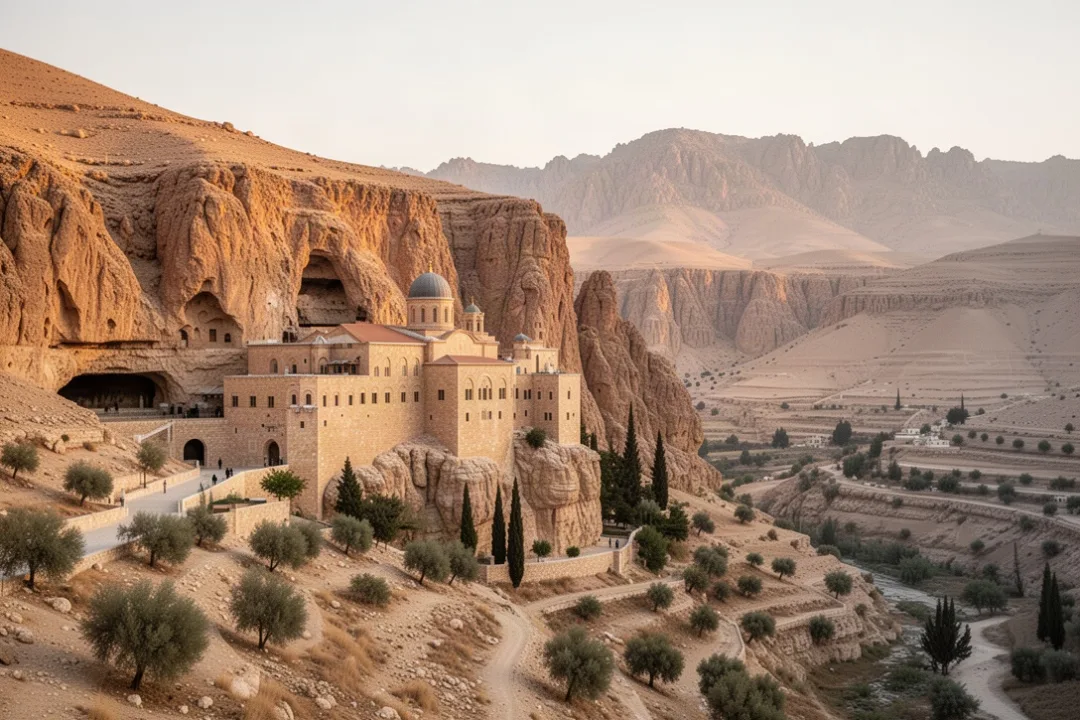
He is best known for founding the Great Lavra of Saint Sabas, a monastery in the Judean desert southeast of Jerusalem. The monastery is commonly called Mar Saba, from the Aramaic word for “holy father.” Built into the cliffs of the Kidron Valley, it remains one of the most recognizable centers of Orthodox monastic life in the Holy Land.
Saint Sabas was born around 439 in Mutalaska, a village in Cappadocia, in what is now central Turkey. He grew up during a period when Christian monasticism was spreading across Egypt, Syria, Palestine, and Asia Minor. Monks sought a life of prayer, fasting, silence, and spiritual discipline, often in remote places outside major cities.
As a child, Sabas was drawn to the religious life. According to accounts of his life, he entered a monastery at a young age and eventually traveled to Jerusalem, where he joined the monastic community of Saint Euthymius the Great. Euthymius recognized Sabas’s unusual maturity and gave him opportunities to develop through solitude and service.
Sabas did not become influential because he held a political office or wrote a large body of theological works. His influence came primarily through the communities he formed, the monks he trained, and the pattern of worship and discipline associated with his monasteries. He combined the solitary life of a hermit with the responsibilities of a spiritual father who guided others.
The central idea: Saint Sabas treated solitude as preparation for deeper service, not as an escape from responsibility. His life joined private prayer, communal worship, hospitality, and practical leadership.
Saint Sabas’s early monastic training
Accounts of Sabas’s life describe a demanding spiritual formation. He learned to practice obedience, manual labor, fasting, and prayer under experienced monks. These disciplines were not intended as displays of suffering. They were meant to loosen a monk’s dependence on comfort, status, personal preference, and constant entertainment.
In his youth, Sabas reportedly tried to live as a hermit before he had the necessary maturity. His elders directed him to return to community life and learn from other monks. This detail expresses an important principle in desert monasticism: solitude required discernment. A person could not simply withdraw from society and assume that isolation would produce wisdom.
When he was about eighteen, Sabas became connected with Euthymius, who traditionally gave him the nickname “the young old man.” The phrase referred to his seriousness and spiritual focus despite his age. Sabas spent periods in the wilderness, returning to the community for worship and guidance.
His routine included extended prayer, gathering or carrying supplies, weaving baskets, and other forms of work that supported the community. The desert was not a romantic landscape free from hardship. Water was scarce, food was limited, travel was difficult, and the heat could be severe. Monastic discipline depended on ordinary perseverance as much as on dramatic acts of devotion.
How Saint Sabas founded Mar Saba
After Euthymius died, Sabas increasingly sought a solitary life. He settled in the wilderness near Jerusalem, where small groups of hermits already lived in caves and shelters. Over time, disciples gathered around him, and the informal settlement developed into a more organized monastery.
The Great Lavra was founded in the late fifth century, traditionally dated to about 484. A lavra was a type of monastic settlement in which monks lived in separate cells or caves during the week but gathered for common worship, especially on weekends and feast days. This structure allowed both solitude and community.
Mar Saba was built into the steep cliffs of the Kidron Valley. Its location offered isolation from urban life while keeping it within reach of Jerusalem and other Christian communities. The dramatic terrain also shaped the monks’ daily practices: paths were narrow, water had to be managed carefully, and movement between cells and chapels demanded effort.
Sabas eventually became the spiritual father of a large community. The monastery attracted men from different regions and backgrounds, including monks who spoke different languages and brought different customs. His task was not simply to inspire them but to establish a stable pattern of worship, work, discipline, and mutual responsibility.
Hermits lived in individual cells or caves for much of the week.
Community worship brought the monks together for the Eucharist and the chanting of the daily offices.
Manual work helped support the monastery and gave structure to the day.
Spiritual guidance helped monks distinguish genuine growth from pride or impulsive self-denial.
What daily life at Mar Saba represented
The life associated with Mar Saba was built around a careful rhythm. Monks prayed privately, gathered for communal services, worked with their hands, fasted according to the season and local custom, and practiced silence when appropriate. The goal was not simply to spend more hours in religious activity. The goal was to form a person whose habits pointed toward humility, patience, compassion, and attention to God.
Solitary prayer was central, but it did not eliminate the need for relationships. A monk needed to receive instruction, accept correction, share resources, and care for visitors. The monastery therefore became both a place of withdrawal and a place of welcome.
Saint Sabas’s example also shows that Christian asceticism was not limited to dramatic fasting or physical hardship. It included the less visible work of listening, keeping promises, forgiving offenses, completing assigned tasks, and remaining faithful when prayer felt dry. Consistency mattered more than spiritual excitement.
Monastic life in the Judean desert was also connected to the wider Church. Monks prayed for the world, received pilgrims, preserved worship practices, and supported nearby Christian communities. Their separation from ordinary society did not mean that they considered other people unimportant.
Saint Sabas as a spiritual father and organizer
As more disciples joined him, Sabas had to respond to problems that every community faces: disagreements, unequal abilities, unrealistic expectations, and conflicts over authority. His leadership required both firmness and patience. A spiritual father was expected to correct harmful behavior while helping each monk grow according to his particular needs.
Some monks preferred complete solitude, while others needed the stability of shared life. Sabas’s monastic model made room for both forms of vocation. The lavra arrangement offered a middle path between a fully communal monastery and total isolation. Common worship created unity, while separate cells allowed a deeper measure of quiet.
Tradition also remembers Sabas as a defender of orthodox teaching. In the sixth century, Christian communities in the region faced theological disputes, including controversy connected with Origenist ideas. Sabas was involved in efforts to protect the teachings and worship traditions he believed the Church had received.
His role in these disputes was not separate from his prayer. For him, doctrine was not merely an academic subject. Beliefs about Christ, salvation, the Church, and human transformation shaped how monks prayed and how they understood their responsibilities to one another.
Saint Sabas and the Church in Jerusalem
Sabas became an important figure beyond his monastery. He was consulted by church leaders and was involved in addressing disputes affecting Palestinian Christians. His influence grew because he represented a respected monastic tradition while remaining connected to the needs of the wider Church.
He is remembered as having traveled to Constantinople to speak on behalf of Palestinian monasteries and communities. Such journeys were a major undertaking in the ancient world. They required long travel, physical endurance, and the ability to communicate the concerns of people living far from the imperial capital.
These activities reveal a broader picture of desert monasticism. The ideal monk might seek silence, but an experienced abbot could also be called upon to advise bishops, support local churches, welcome travelers, and defend the faith. Spiritual authority often carried practical obligations.
Sabas died in 532. By then, the community he founded had become a lasting center of Christian life. His disciples carried his approach to other monasteries, and the memory of his leadership continued through worship, biographies, and the traditions of the monastery that bears his name.
What “the Sanctified” means in Saint Sabas’s title
Saint Sabas is often called Sabas the Sanctified. The title distinguishes him from other saints named Sabas and reflects his reputation as a monk whose life was dedicated to holiness. It does not mean that he was regarded as perfect in a simplistic sense. Christian descriptions of saints usually emphasize a person’s long formation through repentance, discipline, prayer, and service.
The title also connects him with the distinctive tradition of Palestinian monasticism. Many saints are remembered by a place, occupation, physical characteristic, or major event in their lives. “The Sanctified” points to the spiritual purpose for which Sabas was known: becoming increasingly devoted to God and helping others pursue the same path.
Saint Sabas’s connection with the Mar Saba monastery
Mar Saba stands as the clearest physical expression of Sabas’s legacy. Its buildings, chapels, caves, and cliffside paths reflect centuries of monastic continuity. The site has undergone changes over time, and the monastery seen today includes structures from different periods rather than representing an untouched fifth-century settlement.
The monastery is traditionally associated with the Orthodox Church of Jerusalem and remains a male monastic community. Visitors may encounter restrictions on access, photography, dress, or movement within the site. These rules protect the monks’ prayer and work, so travelers should check current guidance before making plans.
Mar Saba is also known for its striking landscape. The monastery’s stone walls appear to rise directly from the desert cliffs, with the Kidron Valley extending below. The setting helps explain why early monks chose the area: it offered physical separation from the crowded settlements while remaining close enough to Jerusalem for contact with the Church.
For pilgrims, the site can represent several things at once: the endurance of Christian worship, the seriousness of monastic vocation, the beauty of desert spirituality, and the cost of maintaining a life centered on prayer. For historians, it provides evidence of how organized monastic communities developed in late antique Palestine.
Saint Sabas’s feast day and how it is observed
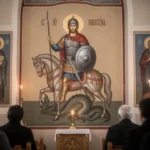
Saint Sabas the Sanctified is commonly commemorated on December 5 in Eastern Christian calendars. The exact way the feast is observed depends on the local church and calendar tradition. Services may include hymns, readings about his life, prayers for monastics, and a commemoration of the community he founded.
A feast day is more than a date for remembering a historical figure. In Christian practice, it is an opportunity to give thanks for a saint’s witness and to ask how that witness can shape present conduct. Saint Sabas’s commemoration naturally draws attention to prayer, simplicity, hospitality, perseverance, and wise spiritual guidance.
Churches or families marking the day may read a biography of Sabas, attend the Divine Liturgy, pray for monks and religious communities, or set aside time for quiet prayer. Some people also remember the needs of travelers, refugees, the poor, or anyone living in physical and spiritual isolation.
Practical ways to learn from Saint Sabas
You do not need to imitate the physical extremes of a desert monk to benefit from his example. His life can be approached through small practices that make prayer more deliberate and service more dependable.
Set a regular prayer time. Choose a realistic period in the morning or evening and protect it from unnecessary interruptions.
Practice useful silence. Spend a short period without music, social media, or conversation, allowing your attention to settle.
Pair prayer with work. Complete a necessary task carefully rather than treating work as separate from spiritual life.
Ask for guidance. A trusted pastor, priest, spiritual director, or mature Christian can help you test your motives and avoid extreme decisions.
Make room for hospitality. Welcome someone, share a meal, or offer practical help without expecting recognition.
Choose consistency over intensity. A modest practice continued for months is usually more formative than a demanding practice abandoned after a few days.
These practices reflect the balance found in Sabas’s life. Prayer was personal, but it was not selfish. Discipline was demanding, but it was intended to produce love. Solitude had value, but so did obedience and care for the community.
Common mistakes when interpreting Saint Sabas
Modern readers can misunderstand desert monasticism if they focus only on its dramatic features. The harsh landscape and severe disciplines attract attention, but they do not tell the whole story. Sabas’s spirituality also involved patience, relationships, worship, and responsible leadership.
Reducing him to a hermit: Sabas valued solitude, but he also founded and governed a large monastic community.
Treating asceticism as self-punishment: Fasting and simplicity were intended to train freedom and attentiveness, not to glorify suffering for its own sake.
Assuming Mar Saba looks exactly as it did in the fifth century: The monastery has a long history of construction, repair, and adaptation.
Confusing different saints named Sabas: Saint Sabas the Sanctified is not the same person as Saint Sava of Serbia.
Using his life to justify isolation: Sabas’s example includes accountability, shared worship, hospitality, and service.
Ignoring the historical setting: His choices make more sense when viewed within late antique Palestinian Christianity and its monastic traditions.
For visitors: Mar Saba is an active monastery, not simply an archaeological attraction. Dress modestly, follow posted instructions, respect areas closed to visitors, and confirm access arrangements before traveling.
Saint Sabas and Saint Sava of Serbia are different saints
The names Sabas and Sava can create confusion because they are related forms in different languages and traditions. Saint Sabas the Sanctified was a Cappadocian monk who lived mainly in the Palestinian desert and died in 532.
Saint Sava of Serbia, also called Saint Sabbas in some contexts, lived many centuries later. He was born into the medieval Serbian royal family, became a monk, helped establish the Serbian Church as an autocephalous church, and is regarded as a major national and religious figure in Serbia. His feast is celebrated on January 27 in the Serbian Orthodox tradition.
The two saints are connected by monastic and Christian naming traditions, but they had different lives, historical settings, and ministries. When searching for a church service, icon, monastery, or biography, include the saint’s full name or region to find the correct information.
Why Saint Sabas remains relevant
Saint Sabas remains significant because he addressed tensions that still affect religious life: solitude and community, personal prayer and public responsibility, strict discipline and compassion, inherited tradition and changing circumstances. He did not solve these tensions by choosing only one side. He built a form of life in which each element supported the others.
His legacy also challenges the assumption that meaningful spiritual work must be visible or impressive. Much of monastic formation consists of repeated actions: rising for prayer, doing assigned work, receiving correction, welcoming visitors, and returning to the discipline after failure. Faithfulness grows through ordinary repetition.
For Christians interested in prayer, Saint Sabas offers an example of focused attention. For church leaders, he demonstrates that authority should be joined to service and discernment. For visitors to the Holy Land, Mar Saba provides a concrete connection to the ancient monastic communities that helped shape Christian worship and theology.
The most enduring lesson of Saint Sabas is not that everyone should live in a desert cave. It is that a life becomes coherent when prayer, conduct, relationships, and responsibilities point in the same direction. His monastery survived because a spiritual ideal was expressed through daily practices, shared worship, and patient community-building.
Frequently asked questions
When is Saint Sabas’s feast day?
Saint Sabas the Sanctified is commonly commemorated on December 5 in Eastern Christian calendars. Local churches may use different calendar systems or observe the feast with local variations. Services often include hymns and readings about his life, with prayers that honor monastic vocation, perseverance, spiritual guidance, and the Christian community he established near Jerusalem.
Where is Saint Sabas buried?
Saint Sabas’s monastery, Mar Saba, is traditionally associated with his relics and memory, but arrangements and access can vary. The monastery is an active Orthodox community in the Judean desert, so visitors should not assume that every chapel or relic area is open. Check current information through reliable church or pilgrimage sources before visiting.
Can women visit Mar Saba?
Mar Saba has traditionally maintained restrictions on access to its monastic grounds, including restrictions affecting women. Rules can vary by area and may change, so travelers should confirm current policies before planning a visit. The surrounding landscape and viewpoints may offer ways to appreciate the site without entering areas reserved for the monastic community.
What is Saint Sabas the patron saint of?
Saint Sabas is especially associated with monks, monasteries, hermits, and the monastic tradition of the Holy Land. Patron-saint customs vary among churches, and he may not have one universally recognized patronage in every denomination. His life is most often invoked as an example of disciplined prayer, wise spiritual leadership, solitude joined with community, and faithful service.











Leave a Reply