Have you heard the name Saint Columba connected with Iona, Scotland, and wondered who he was? Columba was a sixth-century Irish monk, abbot, missionary, and church founder whose work helped establish Christianity across much of northern Britain. He is also known by the Irish name Colum Cille, meaning “dove of the church.”
Born in Ireland around 521, Columba belonged to a powerful aristocratic family but chose a religious life. After establishing important monasteries in Ireland, he left for the western Scottish island of Iona around 563. From there, he and his community supported Christian mission among the Picts and became part of a religious network that influenced worship, learning, art, politics, and place names for centuries.
Saint Columba was born in what is now County Donegal, Ireland, although the exact location is described differently in early sources. His birth name was likely Crimthann, while Columba or Colum Cille became the name associated with his religious life. He was trained in the Christian schools and monasteries of Ireland, where he studied Scripture, prayer, Latin learning, poetry, and the traditions of Irish monasticism.
Columba lived during a period when monasteries were becoming major centers of education and culture. They were places of worship, but they also preserved books, trained clergy, sheltered travelers, managed farmland, and maintained relationships with local rulers. An abbot could therefore exercise spiritual authority while also leading a large and practical community.
Before leaving Ireland, Columba was associated with several foundations, including Derry and Durrow. These communities became important religious sites. Later tradition also connects him with other monasteries, although the details of individual foundations are not always easy to separate from stories that developed after his death.
In 563, Columba traveled to the island of Iona, off the western coast of Scotland. The island’s position made it a useful base for travel by sea. It was close enough to Ireland for continued contact and near the territory of the northern Picts, giving Columba’s community a strategic location for mission and diplomacy.
Names to know: Saint Columba is often called Colum Cille in Irish tradition and Columba of Iona to distinguish him from other saints with similar names, especially Saint Columbanus.
Why Columba left Ireland for Iona
Traditional accounts say Columba left Ireland because of a dispute connected with a copied manuscript and a later political conflict. The most famous version involves a disagreement with Saint Finnian over the ownership of a copy Columba made of a psalter. A ruling reportedly favored Finnian, and the dispute became connected with a battle between rival groups.
That story should be treated carefully. The surviving sources were written later and present Columba through a strongly devotional lens. They may preserve memories of real conflicts while arranging them into a moral narrative about repentance, exile, and service. Modern historians also debate the precise relationship between the manuscript dispute, the battle, and Columba’s departure.
What is clearer is that Columba relocated to Iona and made the island the center of his later work. Medieval tradition describes this move as a form of penance: Columba would remain away from Ireland and devote himself to missionary labor. Whether every detail is historically verifiable, the story captures how later Christians understood his life—as a movement from conflict toward disciplined service.
Iona was not a completely isolated wilderness. It stood within a region shaped by sea travel, royal power, local communities, and competing religious traditions. Columba’s success depended not only on preaching but also on relationships with kings, families, monks, farmers, and travelers.
Saint Columba’s work in Ireland and Scotland
Columba’s influence came through a network rather than through one dramatic event. His monasteries trained people, copied texts, sent missionaries, welcomed visitors, and maintained connections across the Irish Sea. This made Iona part of a wider movement of Christian communities rather than a single mission station.
His work can be understood through several related activities:
Founding and leading monasteries: Columba helped establish communities that became centers of prayer, work, education, and administration.
Teaching Christian belief: Monks associated with Iona preached and instructed communities in regions where Christianity had different levels of organization and acceptance.
Supporting rulers and diplomats: Columba appears in stories involving kings and political negotiations, showing that abbots could act as advisers and intermediaries.
Training future leaders: The community’s influence continued through monks and abbots who followed Columba’s example.
Preserving learning: The copying and use of manuscripts helped connect Irish and Scottish Christianity with broader Christian scholarship.
Columba’s mission should not be imagined as a simple replacement of one religion by another. Northern Britain contained varied local customs, political groups, and Christian communities. Conversion often developed gradually, through relationships with influential leaders and through the steady presence of worshiping communities.
Iona mattered because it was both a physical community and a symbol. During Columba’s lifetime, it served as a base for prayer, learning, travel, and mission. After his death, its importance grew as people remembered it as the place where he lived, worked, died, and was buried.
The monastery’s location gave it influence beyond the island itself. Its monks could travel by boat along the western seaways, reaching islands and coastal settlements. The community also maintained connections with Ireland, making Iona a bridge between Irish and Scottish Christianity.
Iona later became associated with the burial of Scottish kings, although the precise history of royal burials is complex and some traditional claims are difficult to confirm. The island nevertheless remained a major pilgrimage destination. Its name became inseparable from ideas of sanctity, scholarship, kingship, and sacred landscape.
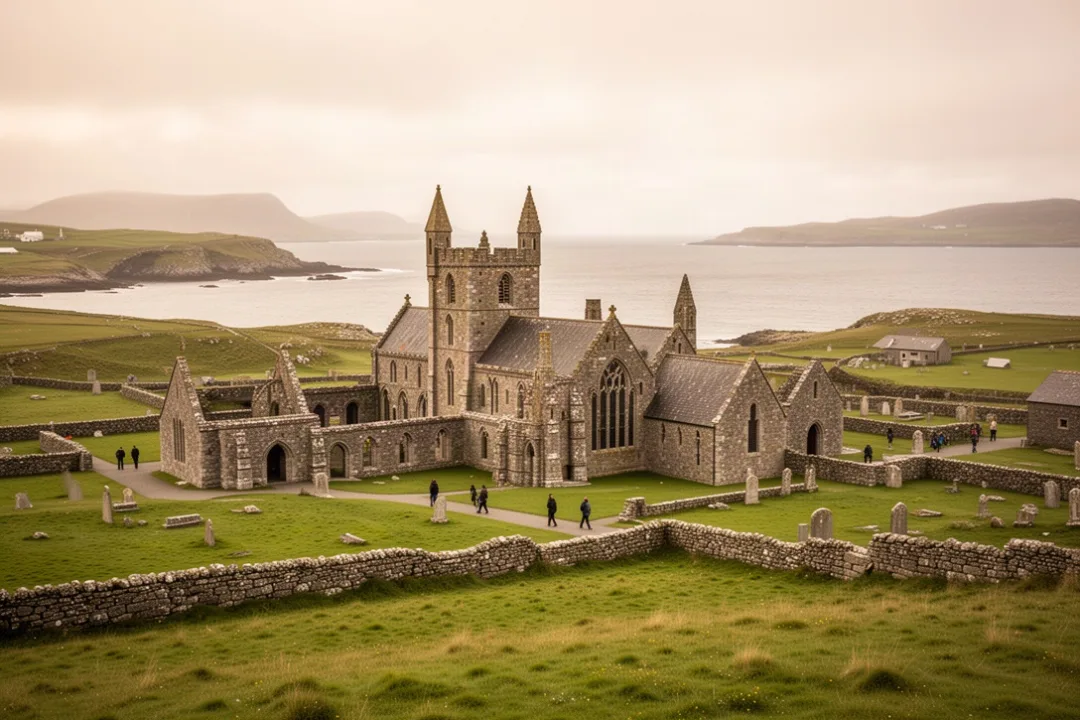
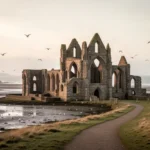
The medieval abbey visible on Iona today is not simply the building Columba knew. The site was rebuilt and developed over many centuries. Even so, the location preserves a strong connection with the early monastery and offers a way to understand how later generations continued to honor Columba’s memory.
A step-by-step way to understand Saint Columba
Columba’s story can seem crowded with unfamiliar names, legends, and political details. These steps provide a practical way to read his life without treating every tradition as equally certain.
Start with the historical setting. Place Columba in sixth-century Ireland and northern Britain, when monasteries were important religious and cultural institutions.
Separate his Irish foundations from Iona. His work began in Ireland; Iona became the base of his later mission and the main symbol of his legacy.
Identify the source behind each story. Some details come from early church records, while others appear in a later saint’s life written for devotional purposes.
Look beyond miracles. Stories of healing, visions, animals, and prophecy express religious beliefs, but Columba’s historical influence also rested on organization, teaching, travel, and leadership.
Consider the wider network. Columba did not act alone. His community and successors carried the mission forward across Ireland and Scotland.
Connect the past with Iona today. The island’s ruins, church, graveyard, and landscape show how a sixth-century foundation continued to shape later religious memory.
This approach allows you to appreciate both dimensions of Columba’s story: the historical monk and leader who worked within real communities, and the saint remembered through centuries of prayer, storytelling, and pilgrimage.
Adomnán’s Life of Saint Columba
The most important source for Columba’s life is the Life of Saint Columba, written by Adomnán of Iona near the end of the seventh century, roughly a century after Columba died. Adomnán was a later abbot of Iona and wrote to honor Columba, strengthen the community’s reputation, and present its founder as a holy model.
The work contains accounts of Columba’s prayers, prophecies, miracles, encounters with rulers, and care for his monks. It is not a modern biography. Its purpose was religious and institutional as well as historical, so readers should not expect the source to follow modern standards of chronology, documentation, or skepticism.
That does not make the book useless as a historical source. It preserves information about places, people, political relationships, monastic practices, and local traditions. Historians compare it with other evidence, including annals, archaeology, place names, manuscripts, and later records.
Adomnán’s work also reveals how Iona wanted Columba to be remembered. He appears as a strict but compassionate abbot, a powerful intercessor, a wise adviser to rulers, and a person whose spiritual authority extended into the natural world. The book shaped Columba’s image for generations.
Saint Columba and the story of Loch Ness
One of the best-known stories connected with Columba concerns a dangerous creature in the River Ness. According to Adomnán, Columba encountered people mourning a man who had been attacked in the water. The saint reportedly commanded the creature to leave, and the story presents this as a sign of God’s power.
This account is often described as the earliest written reference to the Loch Ness monster, although the episode takes place in a river and belongs to a seventh-century saint’s life. It should not be treated as scientific evidence for a surviving unknown animal. Its main purpose in the source is to show Columba protecting people and demonstrating Christian authority.
The story also reveals the kind of material medieval audiences valued. A saint’s life could describe miracles involving illness, weather, animals, visions, or death. These accounts helped listeners understand holiness as an active power that affected the world around the Christian community.
Reading the Loch Ness story: The episode is a valuable part of Columba’s literary legacy, but it is not a verified zoological report. It belongs to a devotional narrative written about a century after the event it describes.
Columba’s relationship with kings and political power
Columba lived in a society where religious and political authority were closely connected. Monasteries often depended on land grants and protection from rulers, while kings could benefit from the counsel and prestige of respected church leaders. Columba’s position allowed him to move between spiritual and political worlds.
Adomnán describes meetings between Columba and rulers, including Áedán mac Gabráin, a king associated with the Gaelic kingdom of Dál Riata. One well-known tradition says Columba was involved in Áedán’s inauguration or blessing as king. Scholars debate the exact historical details, but the tradition reflects Iona’s connection with royal legitimacy.
Columba is also associated with a meeting at Druim Cett in Ireland, where political and ecclesiastical questions were discussed. The precise role he played is debated, but the account fits the broader picture of an abbot whose reputation gave him influence beyond his monastery.
His relationship with rulers was not simply a sign that the church served royal interests. Religious leaders could challenge rulers, negotiate between groups, offer protection, and remind powerful people of moral obligations. Columba’s authority came partly from his status as a monk who was believed to possess spiritual independence.
Columba as a teacher, writer, and patron of learning
Columba belonged to a culture that valued memorization, recitation, manuscript copying, and skilled use of language. Monastic education trained people to read Scripture and liturgical texts, but it also preserved poetry, genealogy, legal knowledge, and historical memory.
Tradition credits Columba with writing hymns, poems, prayers, and letters. Some works associated with him may preserve genuine elements of his literary activity, while others are harder to authenticate. It is safer to say that he was part of a highly literate monastic culture than to assign every surviving text to his own hand.
The famous Book of Kells is often connected with Columba because of the importance of Columban monasteries and the tradition that it began at Iona. However, its exact place of production and movement remain subjects of scholarly discussion. The manuscript was probably created later than Columba’s lifetime, so calling it “Columba’s book” is misleading.
The connection still matters because it shows how Columba’s name became associated with a broader tradition of insular Christian art and manuscript culture. Elaborate initials, interlaced patterns, Gospel writing, and decorated pages expressed the learning and devotion of communities that inherited the Columban tradition.
What “Columban” means in Christian history
The adjective Columban refers to the tradition connected with Columba and the communities influenced by his foundations. It does not describe a single centralized order in the same way that later religious orders were organized. Instead, it points to a network of monasteries, leaders, customs, texts, and memories linked to Iona and other Columban foundations.
Columban communities were known for their commitment to prayer, manual work, learning, hospitality, and mission. Their organization developed over time, and practices could differ from one place to another. The phrase “Celtic Christianity” is sometimes used for this world, but that label can oversimplify the diverse churches of Ireland, Scotland, Wales, and northern Britain.
Some older accounts portray Irish and Scottish Christianity as completely separate from Roman Christianity. The reality was more connected. Communities exchanged books, ideas, clergy, and practices with churches elsewhere in Europe. Disagreements existed over matters such as the calculation of Easter, but these should be understood within a larger Christian network.
Columba’s final days and death on Iona
Columba died on Iona in 597, according to the traditional chronology. Adomnán presents his final days as a period of prayer, instruction, and preparation for death. The account emphasizes his concern for the monastic community and his desire to remain faithful to his calling.
His death did not end Iona’s influence. The community continued under later abbots, and Columba’s reputation became a source of authority for the monastery. His burial place attracted visitors and helped establish Iona as one of the major sacred sites of the medieval western seaways.
The date of June 9 is traditionally observed as Saint Columba’s feast day. Churches and communities that honor him may mark the day with worship, readings, processions, pilgrimages, or prayers for the church and for places connected with his ministry.
Where Saint Columba is honored today
Columba is remembered in Ireland, Scotland, and other places connected with Irish and Scottish Christianity. His name appears in churches, schools, streets, wells, islands, mountains, and towns. These place names often preserve layers of history: some reflect early foundations, while others were chosen much later in tribute to the saint.
Iona Abbey remains the most recognizable site associated with him. Visitors can see the island’s religious buildings, graveyard, carved stones, and surrounding landscape. The modern site reflects many periods, so it should be read as a continuing sacred center rather than a perfectly preserved sixth-century monastery.
Columba is also honored in the Eastern Orthodox, Roman Catholic, Anglican, and other Christian traditions, though customs differ by denomination. He is commonly remembered as a missionary, abbot, scholar, and patron of communities seeking to combine disciplined prayer with service and learning.
For Christians, his legacy may prompt reflection on repentance, hospitality, courage, and responsibility. For historians and visitors, it offers insight into how monasteries shaped early medieval society. For people interested in literature and folklore, his life shows how historical memory develops through texts, place, ritual, and story.
What Saint Columba can teach modern readers
Columba’s life does not fit neatly into one modern category. He was a religious leader, but also an organizer and political intermediary. He was associated with learning and manuscripts, yet his world depended on oral storytelling and personal relationships. He was remembered as a missionary, although mission in his period often unfolded through communities and alliances rather than through one-time public events.
Several themes make his story especially durable:
Communities carry ideas farther than individuals. Columba’s influence survived because monks, students, abbots, rulers, and local communities continued the work.
Places shape memory. Iona became powerful not only because Columba lived there but because generations returned to the site and gave it new meaning.
Spiritual authority can involve practical leadership. Columba’s role included managing people, property, travel, education, and relationships with rulers.
Stories need context. Miracles and legends can reveal what a community believed about holiness even when they cannot be verified as ordinary historical reports.
Learning was part of mission. Prayer, reading, copying texts, teaching, and preserving knowledge were all connected in Columban monastic culture.
Saint Columba’s legacy therefore reaches beyond the question of whether every story about him happened exactly as later sources describe. His monasteries and successors helped shape the religious and cultural history of Ireland and Scotland, while Iona remains a visible reminder of how one community can influence a much larger region.
Frequently asked questions
Is Saint Columba the same person as Saint Columbanus?
No. Saint Columba, or Colum Cille, was an Irish monk associated with Iona who lived from about 521 to 597. Saint Columbanus was a different Irish missionary, born later in the sixth century, who founded monasteries in parts of continental Europe. Their names are related, which can cause confusion, but their lives and missionary networks were distinct.
What is Saint Columba the patron saint of?
Columba is especially associated with Ireland, Scotland, Iona, and communities connected with Irish and Scottish monastic Christianity. He is also invoked in connection with missionaries, poets, scholars, and people involved in church leadership. Patronage can vary by denomination and local tradition, so there is not one universally defined list for every Christian community.
Can you visit the place where Saint Columba lived?
Yes. Iona, located off Scotland’s western coast, is open to visitors and contains the historic abbey site, a graveyard, carved stones, and the surrounding landscape associated with Columba. The surviving buildings come from different periods, so they do not represent the original sixth-century monastery exactly, but the island remains an important pilgrimage and heritage destination.
Why is Saint Columba connected with the Loch Ness monster?
A story in Adomnán’s seventh-century Life of Saint Columba describes Columba confronting a dangerous creature in the River Ness. The account presents the event as a miracle demonstrating Christian power and protecting local people. Because the story predates modern interest in the Loch Ness monster, it is often cited as an early written reference, but it is not scientific proof of an unknown animal.










Leave a Reply