St. Abigail is an Irish saint, traditionally identified with St. Gobnait, a sixth-century religious woman associated with bees, healing, and the village of Ballyvourney in County Cork.
The name Abigail can refer to more than one religious figure. In the Bible, Abigail is a wise woman who appears in 1 Samuel 25 and later becomes one of King David’s wives. St. Abigail of Ireland, however, is generally understood to be a different person: the Irish saint called Gobnait, Gobnata, Gobnet, or Gobnait of Ballyvourney.
Irish names often developed several English spellings as they were recorded in different places and periods. As a result, you may see this saint listed as St. Gobnait in Irish sources, St. Gobnata in historical writing, or St. Abigail in devotional calendars. The names do not always reflect completely separate saints; they often represent related forms or translations of the same local tradition.
Much of what is known about her comes from Irish hagiography, local tradition, place-name evidence, and the continuing devotion centered on Ballyvourney. These sources preserve a meaningful picture of her life, but they do not provide the same kind of detailed, independently documented biography available for some later saints.
Most useful distinction: If you are searching for St. Abigail of Ireland, search for St. Gobnait of Ballyvourney as well. That name leads to the churches, holy well, shrine, feast-day customs, and local history connected with her.
The traditional story of St. Abigail’s calling
According to tradition, Gobnait was born in or associated with Ireland and left her original home after receiving a spiritual calling. The stories about her early life vary, but they describe a woman seeking a place where she could establish a religious community and devote herself to prayer and service.
One well-known tradition says that an angel directed her to travel until she found nine white deer. She is said to have encountered them at several locations before reaching Ballyvourney in County Cork. There, the sign was fulfilled, and she remained. This account belongs to the saint’s traditional story rather than to a securely documented biography, but it has become central to her identity.
The deer story carries a simple spiritual meaning. Gobnait’s destination was not chosen merely for comfort or personal preference; she was understood to be following a vocation that unfolded gradually. The journey also reflects a common pattern in early Irish saint stories, where a person leaves one place, receives guidance, and establishes a community in a landscape marked by prayer.
Ballyvourney became the place most closely associated with her. The site was linked with a religious settlement, and the memory of Gobnait continued through local worship, pilgrimage, and the preservation of sacred landmarks. Her story is therefore tied not only to a person but also to a particular landscape in western County Cork.
What St. Abigail is known for
St. Abigail is especially associated with bees. Irish tradition presents her as someone who kept bees or had a special relationship with them. Some legends say that she used a swarm to protect the community or drive away danger. Other accounts emphasize her skill as a beekeeper and her ability to provide honey for food or healing.
These stories should not be read as technical records of beekeeping practices. They are devotional legends that communicate qualities such as courage, practical wisdom, protection, and care for living creatures. The bee became a recognizable symbol of Gobnait because it connected her spiritual life with daily work and the natural world.
She is also remembered as a healer. Local traditions associate her with caring for the sick and with the holy well at Ballyvourney. People who pray to her may ask for healing, protection, or strength while dealing with illness. Her reputation is particularly meaningful to those who see faith and practical care as closely connected.
Healing: She is remembered as a compassionate helper of the sick.
Protection: The bee legends portray her as defending people and sacred space.
Steady work: Beekeeping represents patience, responsibility, and service.
Community: Her religious life is connected with a settlement that served people in a particular place.
Care for creation: Her association with bees gives her devotion a strong connection to the natural world.
Why bees are central to her symbolism
The bee is not an incidental detail in the story of St. Abigail. It is the image most often used to identify her. A traditional account describes bees as part of her protection of the community, while other traditions connect her with honey and the work of a beekeeper.
For Christians who pray with her, the bee can represent organized service. Bees work together, contribute to a shared life, and produce something that sustains others. That symbolism fits the image of Gobnait as a religious founder who served a community rather than living only for private devotion.
Honey also carries a long religious association with nourishment and healing. It was a valuable food in the ancient and medieval world, and it could be used in household remedies. The connection does not mean that every story about Gobnait should be treated as a medical claim. Instead, it helps explain why people came to see her as a saint who cared for both spiritual and physical needs.
Modern devotion can extend this symbolism to the protection of pollinators and the environment. Someone praying to St. Abigail may also be prompted to support healthy habitats, avoid unnecessary harm to bees, and recognize the importance of small forms of life in the wider ecosystem. That application respects the traditional imagery while addressing a present-day concern.
Where St. Abigail is honored in Ireland
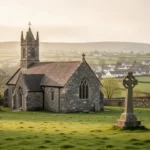
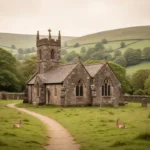
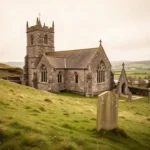
Ballyvourney, in County Cork, is the principal place associated with St. Abigail. The site includes the remains of an old church, a holy well, and the area traditionally known as the saint’s religious settlement. It has remained a place of pilgrimage and prayer for many generations.
The old church site helps visitors connect the saint with the physical setting in which her story developed. Ruins, stones, paths, and wells are not simply historical objects in this context. They form part of a living devotional landscape where people have continued to pray, reflect, and perform traditional acts of reverence.
The holy well is especially important. Visitors may come quietly to pray, ask for healing, or remember family members who are ill. Practices at holy wells differ, and some customs are local rather than universal. A respectful visitor should observe the character of the place and follow any current guidance provided by the parish or local custodians.
Other churches and religious communities in Ireland may also preserve her name or imagery. Her cult is strongest in the region connected with Ballyvourney, but references to Gobnait can be found in discussions of Irish saints, early monastic settlements, traditional healing, and local pilgrimage.
How to visit Ballyvourney respectfully
A visit to the places associated with St. Abigail can combine history, prayer, and quiet observation. You do not need to follow every traditional practice to make the visit meaningful. The essential point is to approach the site as both a religious place and a cultural landmark.
Plan before you go. Check current access information, local services, weather conditions, and any parish guidance.
Allow time for silence. The site is best experienced slowly rather than treated as a quick sightseeing stop.
Read the local history. Understanding the connection between Gobnait, Ballyvourney, the church, and the well adds depth to the visit.
Respect worshippers. Keep voices low, avoid interrupting prayer, and follow instructions around sacred objects or structures.
Protect the site. Do not remove stones, plants, water, or devotional items, and stay on appropriate paths.
Make a personal response. You might offer a prayer, write the name of someone who needs healing, or spend time reflecting on service and care.
Some traditional pilgrimages involve walking a particular route or moving around a holy site in a prescribed way. Customs can change over time and may not be obvious to visitors. If you want to participate in a local practice, ask a parish representative or follow information displayed at the site rather than guessing.
St. Abigail’s feast day and devotional calendar
St. Abigail or St. Gobnait is commonly associated with February 11. Feast-day observance may include Mass, prayer, a local pilgrimage, or remembrance at a church connected with her. The scale and form of observance can differ by parish and region.
For someone praying at home, the feast day can be a simple opportunity to remember her qualities. You might focus on healing for a loved one, protection for a family, care for animals, or the responsible stewardship of land and living creatures.
A home observance does not require a special object. You could read about Ballyvourney, light a candle where this is safe and appropriate, pray for someone who is sick, or spend time outdoors noticing pollinators and other forms of life. The purpose is not to reproduce a local pilgrimage but to connect the saint’s traditional themes with a sincere act of prayer or service.
Prayer intention: A short prayer to St. Abigail can ask for compassionate care of the sick, courage in protecting others, wisdom in serving a community, and respect for the natural world. Use your own words rather than treating a particular formula as required.
How Catholics may understand devotion to St. Abigail
In Catholic practice, devotion to a saint does not mean worshiping the saint. Worship belongs to God. Asking St. Abigail to pray for you means seeking the intercession of a Christian remembered for faithfulness, much as you might ask a living friend to pray for a need.
Her story can be approached through several forms of prayer:
Intercessory prayer: Ask her to pray for a person who is sick, frightened, or in need of protection.
Prayer for caregivers: Remember nurses, doctors, family members, and others who provide daily care.
Prayer for communities: Ask for cooperation, patience, and courage among neighbors or church members.
Prayer for creation: Reflect on the responsibility to protect bees, habitats, and the living world.
Prayer of thanksgiving: Give thanks for healing, support, or the people who have helped you.
Devotion should complement responsible action. If you are concerned about a medical problem, prayer can accompany appropriate professional treatment but should not replace it. The traditional reputation of St. Abigail as a healer is a reason to ask for compassionate care and strength, not a guarantee of a particular medical result.
What St. Abigail can mean for beekeepers and environmental care
Beekeepers may feel a natural connection with Gobnait because her name is linked with bees and honey. Her example can encourage patient, attentive work and respect for the needs of a living colony. It can also remind people that beekeeping is not only about producing honey; it involves responsibility for animal health, habitat, seasonal conditions, and the surrounding environment.
You do not need to keep bees to honor this aspect of her tradition. Small actions can express the same concern:
Plant flowers that provide nectar and pollen across different seasons.
Avoid using pesticides when safer alternatives are available.
Learn to distinguish bees from other flying insects before reacting to them.
Support responsible local beekeepers and habitat projects.
Leave suitable areas of a garden less manicured when they can sustain pollinators.
These actions are not formal requirements of devotion. They are practical ways to respond to the symbolism associated with St. Abigail. Her story links prayer with work, and care for the natural world gives that connection a concrete expression.
St. Abigail compared with the biblical Abigail
The biblical Abigail and the Irish St. Abigail are distinct figures. The biblical Abigail appears in the Hebrew Scriptures as a woman known for wisdom and decisive action during a conflict involving David and Nabal. Her story is found in 1 Samuel 25, and she later becomes connected with David’s household.
The Irish saint, by contrast, belongs to the Christian traditions surrounding early medieval Ireland. She is associated with Gobnait, Ballyvourney, bees, a holy well, and a religious community. The similarity of the English name can create confusion, especially in searches for prayers, artwork, or feast days.
When researching the Irish saint, include terms such as Gobnait, Gobnata, Ballyvourney, and County Cork. When researching the woman in the Bible, use terms such as Abigail in 1 Samuel or David and Abigail. Checking the context will usually make clear which figure a source is discussing.
What is historically certain and what belongs to tradition
It is reasonable to say that St. Abigail is traditionally identified with St. Gobnait and that Ballyvourney is the central place associated with her. Her connection with bees, healing, pilgrimage, and a religious settlement is also well established within the tradition surrounding her.
More detailed claims require care. The exact dates of her birth and death, the precise route of her journey, and the literal details of the deer and bee stories are not known with the certainty of a modern biography. Different accounts may present these details in different ways.
This distinction does not make the tradition worthless. Saints’ stories often preserve a community’s understanding of a holy person through symbols, place, ritual, and memory. Reading the accounts carefully allows you to appreciate their spiritual meaning without presenting every legendary detail as verified history.
A balanced description therefore uses phrases such as “according to tradition” and “she is associated with” when discussing uncertain details. That approach respects both the religious tradition and the historical evidence.
Ways to remember St. Abigail in daily life
You can draw on the themes connected with St. Abigail without traveling to Ireland. Her story offers a practical pattern: seek wisdom, serve the people around you, protect what is vulnerable, and remain attentive to the natural world.
Consider choosing one of these practices:
Pray for a person who is sick or for someone providing long-term care.
Send practical help to a neighbor, family member, or community organization.
Learn more about pollinator-friendly gardening in your area.
Visit a church or holy well connected with local history, if one is nearby.
Keep February 11 as a personal day of prayer or charitable service.
Read about Irish saints and the landscapes that shaped their communities.
The most faithful response to her tradition is not to treat bees as a lucky charm or healing as an automatic promise. It is to embody the qualities her story highlights: compassion, courage, attentiveness, and service. Those qualities give St. Abigail’s devotion meaning beyond a name on a calendar.
Why St. Abigail remains a meaningful saint today
St. Abigail continues to attract interest because her tradition brings together several concerns that remain deeply human: illness, community, work, landscape, and the need to protect fragile life. She is remembered not primarily through grand political events but through a local religious setting and stories of practical care.
Her association with bees gives her a distinctive identity, while her reputation as a healer makes her relevant to people facing sickness or supporting loved ones. Ballyvourney provides a physical place where history, devotion, and the natural environment meet.
Whether you know her as St. Abigail, St. Gobnait, or St. Gobnata, the central tradition is consistent: she is an Irish holy woman remembered for faith, protection, healing, and service. Her story invites prayer, careful historical reading, and concrete care for people and the living world.
Frequently asked questions
Is St. Abigail the same person as St. Gobnait?
In the Irish tradition, St. Abigail is generally identified with St. Gobnait, also spelled Gobnata or Gobnet. Gobnait is the name most closely connected with Ballyvourney in County Cork, her principal place of devotion. The English name Abigail can cause confusion because it is also the name of a biblical woman in 1 Samuel 25.
What is St. Abigail the patron saint of?
St. Abigail is especially associated with bees, beekeeping, healing, and protection. Her traditional stories connect her with a religious community, care for the sick, and the use or keeping of bees. Some modern devotees also turn to her when praying for environmental responsibility and the protection of pollinators.
When is St. Abigail’s feast day?
St. Abigail, or St. Gobnait, is commonly commemorated on February 11. Local observances may include Mass, prayer, or pilgrimage, particularly in places connected with Ballyvourney. Customs can vary, so anyone planning a visit should check current information from the relevant parish or local heritage organization.
Where can I visit a site connected with St. Abigail?
The principal site is Ballyvourney in County Cork, Ireland. Visitors can find the area associated with the old church, the saint’s religious settlement, and a holy well. Because it is both a sacred place and a historic site, visitors should respect worshippers, local customs, structures, and any access guidance.















Leave a Reply