St Athanasius: life, teachings, and lasting influence
St Athanasius: life, teachings, and lasting influence
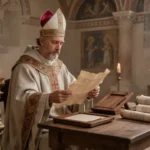
St Athanasius was the fourth-century bishop of Alexandria who defended the belief that Jesus Christ is truly divine. His opposition to Arianism helped preserve the central teaching of the Council of Nicaea: the Son is not a created being but shares the same divine nature as the Father.
Athanasius lived during a period when Christian doctrine, imperial politics, and church leadership were closely connected. He became bishop while still relatively young, endured repeated exile, and spent much of his life answering arguments against Nicene faith. His writings also influenced Christian teaching about the incarnation, the monastic life, and the books of the New Testament.
Athanasius was born in Alexandria, Egypt, probably near the end of the third century. Alexandria was one of the most important Christian centers in the Roman world, known for its teachers, biblical scholarship, and vigorous debates about theology. Athanasius received his education there and became closely associated with Alexander, the bishop of Alexandria.
As a young church leader, Athanasius took part in the Council of Nicaea in 325. The council met after Emperor Constantine sought to resolve a dispute over the identity of Christ. The controversy had begun when Arius, a presbyter from Alexandria, taught that the Son of God had been created and therefore did not exist eternally in the same way as the Father.
Athanasius rejected that position because he believed it changed the meaning of salvation. If Christ were only a created being, even the highest created being, then Christ could not fully unite humanity with God. For Athanasius, Christians were saved because the eternal Son truly entered human life, not because a remarkable creature acted as an intermediary.
After Alexander died, Athanasius became bishop of Alexandria around 328. He inherited responsibility for a large and influential church, but also inherited the conflict surrounding Arius and his supporters. His firm defense of Nicene teaching made him a target for opponents who wanted Arius restored to church fellowship or who preferred a less precise statement about Christ.
His office: bishop of Alexandria in Egypt.
His central concern: the full divinity of Jesus Christ.
His major setting: the theological conflicts that followed the Council of Nicaea.
His lasting title: “Father of Orthodoxy,” especially in Eastern Christian traditions.
The phrase Athanasius contra mundum, meaning “Athanasius against the world,” reflects the later image of a solitary defender surrounded by opponents. The historical situation was more complicated than the phrase suggests. Athanasius had allies among bishops and clergy, and the disputes involved several different theological positions, not merely two simple camps. Still, the phrase captures his determination to defend what he considered the essential Christian confession.
The central question: Athanasius was not arguing over a minor technical detail. He believed that the church’s understanding of who Jesus is determined what Christians mean by salvation, worship, and communion with God.
How Athanasius defended the Nicene faith
The Council of Nicaea used the word homoousios, usually translated as “of the same essence” or “of one substance,” to describe the relationship between the Son and the Father. This language stated that the Son is fully divine, not a lesser deity and not a creature brought into existence at a particular time.
Arius and some of his supporters were concerned that such language might erase the distinction between the Father and the Son. Athanasius answered that affirming the Son’s full divinity did not mean confusing the persons of the Trinity. The Father is Father, and the Son is Son, yet both share the one divine nature.
For Athanasius, the biblical witness supported this confession. He interpreted passages such as John 1, which presents the Word as existing with God and sharing divine identity, as evidence that Christ is eternal. He also connected the worship offered to Christ, the language of baptism, and the church’s experience of prayer with the conviction that the Son is truly God.
His argument can be expressed in a simple sequence:
Human beings are separated from God by sin, corruption, and death.
Christ enters human existence as the eternal Word, taking a real human nature.
Christ defeats corruption and death through his life, death, and resurrection.
Humanity is brought into fellowship with God because the one who acts for humanity is truly divine.
Athanasius did not mean that human beings become God by nature. Rather, he taught that through Christ, human beings receive participation in divine life by grace. This theme appears throughout his writings and became especially influential in Eastern Christian theology.
His defense of Nicene Christianity was also connected to worship. Christians prayed through Christ, were baptized in the name of the Father, Son, and Holy Spirit, and gathered to celebrate Christ’s resurrection. Athanasius argued that the church’s worship would be misleading if Christ were merely a creature. A created being could not rightly receive the honor due to God.
The controversy continued long after Nicaea. Different emperors supported different groups at different times, and bishops were pressured to sign statements that weakened or avoided the Nicene formula. Athanasius often found himself accused of disturbing peace when he refused to accept arrangements that he believed compromised the truth about Christ.
He also defended the church’s authority to recognize its own bishops. Opponents accused him of serious misconduct, including violence and misuse of power. At a church gathering held at Tyre in 335, a series of charges was brought against him. Athanasius maintained that the proceedings were politically motivated and refused to accept a judgment that he considered unjust.
Emperor Constantine sent him into exile in Gaul, although the emperor did not settle the theological conflict permanently. Athanasius eventually returned to Alexandria, but further accusations and political changes led to additional removals. He was exiled five times during his episcopate, spending roughly seventeen years away from his church.
What happened during Athanasius’s five exiles
Athanasius’s life cannot be separated from the imperial politics of the fourth century. After Constantine’s death, his sons governed different parts of the Roman Empire, and the balance of power repeatedly shifted. Some emperors favored bishops opposed to Athanasius, while others permitted him to return.
First exile: the years in Gaul
His first exile began after the Council of Tyre and lasted until Constantine’s death in 337. Athanasius spent this period in Trier, in present-day Germany. His removal did not end his influence. He continued to communicate with supporters and explain why he believed the Nicene confession was essential.
Second exile: Rome and the Western church
After returning to Alexandria, Athanasius was again forced out under Emperor Constantius II. He went to Rome, where he was received by the bishop of Rome and took part in a gathering of Western bishops. His presence helped many Western Christians understand the Alexandrian position and the complexity of the Eastern disputes.
While in the West, Athanasius also encountered Egyptian monks and shared information about the growing ascetic movement. This connection contributed to the wider circulation of stories about the desert fathers and the spiritual practices developing in Egypt.
Third exile: hiding among Egyptian supporters
His third exile began when imperial authorities attempted to remove him from Alexandria by force. Athanasius spent several years hidden among supporters in the Egyptian countryside, including communities connected with monks. During this period, he continued writing letters and defending his position.
His survival depended on networks of clergy, laypeople, and monastic communities. These years strengthened the association between Athanasius and the Egyptian ascetic movement, although he remained a bishop responsible for doctrine and church order rather than a monk himself.
Fourth exile: the reign of Julian
Emperor Julian, who rejected Christianity, allowed exiled Christian leaders to return as part of a broader policy shift. Athanasius went back to Alexandria, but his return did not last. Julian soon regarded him as a political and religious threat and ordered him into exile again.
Athanasius withdrew to the Egyptian desert, where he continued pastoral and theological work. Julian’s death changed the situation, and Athanasius returned to Alexandria under the new imperial administration.
Fifth exile and return to Alexandria
A final exile occurred during the reign of Emperor Valens, who supported a theological policy opposed to Athanasius’s Nicene position. This exile was comparatively brief. Athanasius returned to Alexandria in 366 and remained bishop there until his death in 373.
These repeated removals shaped his understanding of Christian leadership. He believed a bishop had to remain faithful even when political authorities, influential clergy, or public opinion demanded compromise. His example later became important to Christians who viewed doctrinal resistance as a responsibility rather than a personal quest for influence.
Historical caution: The fourth-century controversy involved several theological formulas and shifting alliances. Calling every opponent of Athanasius an “Arian” can oversimplify the period, since many bishops disagreed with Nicene wording for reasons that were not identical to Arius’s original teaching.
Athanasius wrote theological treatises, pastoral letters, defenses of his conduct, and works about Christian spirituality. His most influential writings present one connected vision: the Son of God truly became human, and this incarnation brings restoration to a fallen creation.
On the Incarnation
On the Incarnation is his best-known theological work. Written relatively early in his career, it explains why the Word became human and how Christ’s death and resurrection overcome sin and death. Athanasius describes humanity as created for knowledge of God but damaged by disobedience and corruption.
He does not present salvation merely as a legal declaration that removes guilt. He also describes it as healing and renewal. Because the Word takes a real human body, human nature is restored from within. Christ’s resurrection reveals that death no longer has the final authority it appeared to possess.
Athanasius also argues that the incarnation makes God known. In Christ, the invisible God is revealed in a form accessible to human beings. His argument draws on passages such as John 14, where Jesus is presented as making the Father known, but Athanasius explains the biblical idea in his own words rather than treating it as an abstract philosophical claim.
Four Discourses Against the Arians
These writings offer a detailed defense of the Son’s eternal divinity. Athanasius examines biblical passages that opponents used to suggest that Christ was inferior to the Father. He argues that such passages must be interpreted in light of the incarnation: some describe Christ’s genuine human condition, while others speak of his eternal divine identity.
His method became influential because it held together two truths that Christians sometimes separated: Jesus is fully God, and Jesus is fully human. Athanasius rejected interpretations that protected one truth by weakening the other.
Life of Antony
Life of Antony tells the story of Antony of Egypt, a Christian ascetic commonly associated with the beginnings of organized monasticism. Athanasius presents Antony as a man who abandoned wealth, resisted temptation, practiced prayer and discipline, and grew in wisdom and charity.
The work was not intended as a modern biography in the strict historical sense. It functions as a spiritual portrait and a model of Christian discipleship. Its popularity helped spread knowledge of Egyptian monasticism throughout the Greek- and Latin-speaking churches.
Athanasius portrays Antony as more than a solitary miracle worker. The monk remains connected to the church, respects the faith handed down by the bishops, and seeks humility rather than public recognition. This balance mattered to Athanasius because he wanted ascetic devotion to serve the gospel rather than become a source of spiritual pride.
Letters and teaching about the Holy Spirit
Athanasius also wrote letters defending the divinity of the Holy Spirit. In his Letters to Serapion, he argued that the Spirit belongs with the Father and the Son in the one divine life. These letters contributed to the church’s developing articulation of Trinitarian doctrine after Nicaea.
His teaching about the Trinity was not a detached exercise in terminology. Athanasius connected the Spirit’s work with baptism, sanctification, prayer, and the transformation of believers. If the Spirit were only a created power, he reasoned, the church’s experience of receiving divine life would be misunderstood.
How Athanasius influenced the Bible and Christian traditions
Athanasius is often connected with the history of the New Testament canon because of his Festal Letter 39, written for Easter in 367. In that letter, he listed the twenty-seven books that are now commonly recognized as the New Testament. This is the earliest surviving document known to give that exact list.
His list did not create the canon by itself, and different Christian communities had used some books differently before and after his time. The development of the canon involved long-standing patterns of worship, teaching, copying, and ecclesial recognition. Athanasius’s letter is nevertheless an important witness to the books accepted in his church.
He distinguished the canonical books from other writings that could be useful for instruction but did not carry the same authority. This distinction shows that early Christians did not treat every respected religious text as Scripture. Athanasius wanted churches to know which writings were read as the authoritative foundation of Christian faith.
His influence remains especially strong in churches with ancient roots in Alexandria, including the Coptic Orthodox Church, which honors him as one of its major teachers. Eastern Orthodox churches commemorate him as a bishop and defender of the faith. Many Western churches also remember him for his role in the Nicene controversy and his writings on Christ’s incarnation.
His feast day is commonly observed on May 2, the anniversary associated with his death. Some calendars and traditions may use different commemorations, especially when honoring him together with other teachers of the church.
Athanasius continues to matter because his questions remain central to Christian theology:
Who is Jesus Christ: a creature, a prophet, an inspired teacher, or God truly present among humanity?
What does salvation mean: forgiveness alone, moral improvement, victory over death, or participation in divine life?
How should the church interpret biblical passages that describe Christ’s human weakness alongside his divine authority?
What should a church leader do when political pressure conflicts with theological conviction?
His answers were shaped by Scripture, worship, pastoral responsibility, and the inherited faith of the church. That combination explains why his work has endured beyond the particular imperial disputes of his lifetime.
How to read St Athanasius today
Athanasius is most helpful when read as a theologian of the incarnation rather than only as a controversial church politician. His central claim is that Christianity depends on the identity of Christ. The life, death, and resurrection of Jesus have their full meaning only if the one who acts in them is truly God and truly human.
Readers should also place his writings in their historical setting. His language can be forceful, and some of his descriptions of opponents reflect the intense character of fourth-century religious debate. Studying the wider conflict helps prevent modern readers from reducing the controversy to a simple story of one heroic figure against a completely uniform opposition.
A useful reading order is:
Begin with On the Incarnation to understand his central account of Christ and salvation.
Read selected sections of Life of Antony to see how he connected theology with Christian practice.
Examine the anti-Arian writings for his detailed interpretation of biblical passages about Christ.
Read the Festal Letter 39 for insight into how one fourth-century bishop described the church’s recognized books.
Compare his arguments with Nicene and later Trinitarian formulations to see how Christian language developed over time.
When reading any translation, remember that terms such as “substance,” “essence,” “nature,” and “person” may be used differently by different translators. The underlying issue is the relationship between the Father and the Son: Athanasius insisted that the Son is eternally divine while remaining distinct from the Father.
St Athanasius’s influence comes from the way he joined doctrinal precision to a pastoral concern. He defended a technical theological formula because he believed it protected the church’s knowledge of God, its worship of Christ, and its hope that human beings can be healed and brought into communion with divine life.
Frequently asked questions
Was St Athanasius present at the Council of Nicaea?
Yes. Athanasius attended the Council of Nicaea in 325 as a deacon and assistant to Alexander, the bishop of Alexandria. Although he was not yet a bishop, he played an important role in defending the council’s confession about the Son. He became bishop of Alexandria a few years later, after Alexander’s death.
Why was Athanasius exiled so many times?
Athanasius was exiled because powerful bishops and emperors opposed his leadership and his insistence on Nicene teaching. Charges against him included political and personal accusations, but the disputes were deeply connected to the question of Christ’s divinity. Imperial policies changed repeatedly, leading to his removal and restoration five times.
What is Athanasius’s most famous book?
His most famous theological book is On the Incarnation, which explains why the eternal Word became human and how Christ defeats sin, corruption, and death. His Life of Antony is also highly influential, especially in the history of Christian monasticism and spiritual writing.
Did Athanasius create the New Testament canon?
No. The New Testament canon developed through the long-term use and recognition of Christian writings by churches. Athanasius’s Festal Letter 39, written in 367, is significant because it gives the same twenty-seven-book New Testament list used by many Christians today, but it did not single-handedly establish the canon.












Leave a Reply