John Vianney: Life, teachings, and lasting influence
John Vianney: Life, teachings, and lasting influence
You may have heard the name John Vianney connected with priests, confession, or the small French village of Ars. But who was he, and why does a parish priest who died more than a century ago still matter? The short answer is that Vianney became known for an unusually devoted ministry to ordinary people, especially through prayer, preaching, and the sacrament of reconciliation.
Born Jean-Marie Vianney in France, he served as the parish priest of Ars for more than forty years. His ministry was not built on wealth, education, or public influence. Instead, he became known for a disciplined spiritual life, compassionate attention to penitents, simple but direct preaching, and a deep conviction that a priest should help people return to God.
John Vianney was born on May 8, 1786, in Dardilly, near Lyon, France. He grew up in a Catholic family during a period when the French Revolution had disrupted religious life. As a young man, he felt called to the priesthood, although his path toward ordination was difficult.
Vianney struggled with formal studies, particularly the Latin required for theological training. His academic difficulties did not mean that he lacked intelligence or spiritual understanding. They showed that his gifts were expressed more through practical wisdom, spiritual discipline, and personal holiness than through scholarly achievement.
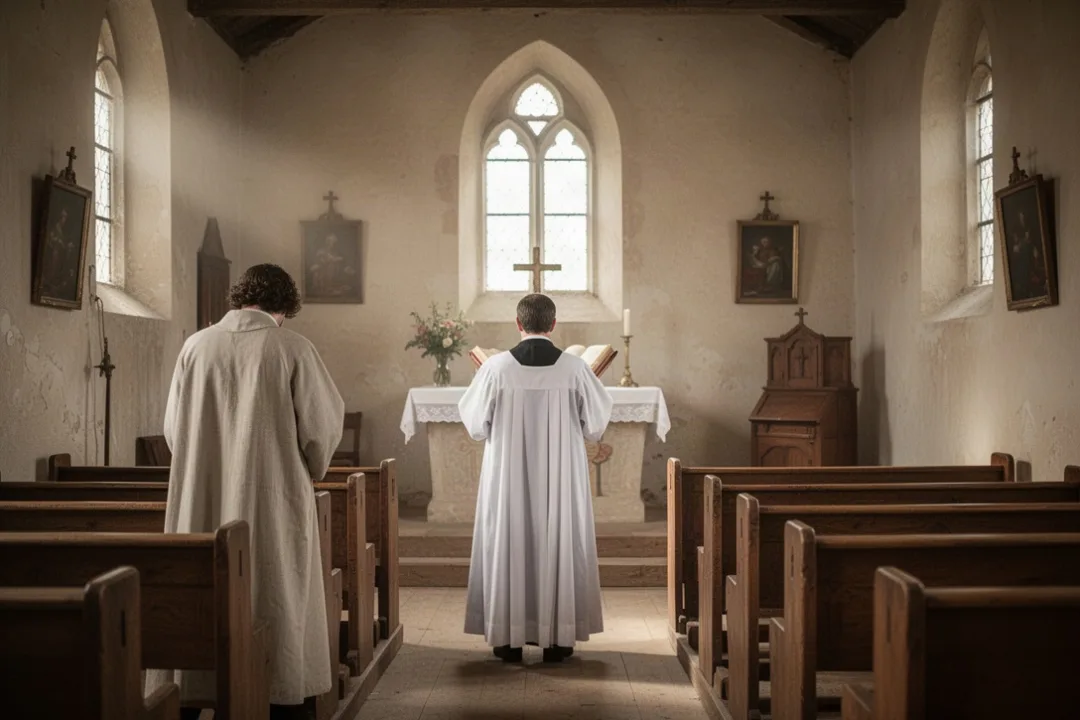
He was ordained a Catholic priest in 1815. In 1818, he was assigned to the village of Ars-en-Dombes, commonly called Ars. The community was small, and religious practice had weakened there. Vianney began his ministry with a focus on visiting parishioners, teaching the faith, caring for the poor, and encouraging people to return to regular worship.
Over time, people from other towns began traveling to Ars to hear him preach and to receive his counsel in confession. The village became associated with the Curé of Ars, meaning the parish priest of Ars. “Curé” is a traditional French term for a parish priest.
The central point: John Vianney’s reputation grew from the way he served a particular parish. His influence began with ordinary responsibilities—celebrating Mass, hearing confessions, teaching, visiting families, and caring for people in need.
Important moments in John Vianney’s life
Vianney’s life can be understood through several major stages. Each one helps explain how his ministry developed and why Catholics later recognized him as a saint.
1786: Jean-Marie Vianney was born in Dardilly, France.
Early adulthood: He pursued the priesthood despite interrupted education and serious academic challenges.
1815: He was ordained a priest.
1818: He began serving the parish of Ars.
Parish ministry: He devoted himself to preaching, prayer, catechesis, charity, and hearing confessions.
1859: He died in Ars after decades of ministry.
1925: Pope Pius XI canonized him.
1929: Pope Pius XI declared him the patron saint of parish priests.
These dates provide a framework, but they do not fully describe his contribution. The enduring story is less about public honors than about a priest who treated the spiritual needs of his parish as a serious responsibility.
How John Vianney approached parish ministry
Vianney did not treat parish work as a set of administrative duties. He saw the parish as a community of people who needed truth, mercy, instruction, and companionship. His daily ministry included tasks that are familiar to priests today: preparing homilies, celebrating the sacraments, visiting the sick, instructing children, and supporting families.
He was especially concerned about people who had become indifferent to religion. Rather than assuming that they did not care, he tried to call them back through clear teaching and personal example. His preaching could be direct and demanding, but it was connected to his belief that people were made for communion with God.
Vianney also paid attention to the material needs of the people around him. He helped establish institutions connected with the care and education of children, including a school for girls that became known as La Providence. His response to poverty was not limited to words; he used parish resources and personal sacrifice to assist those who were vulnerable.
Presence: He made himself available to parishioners and visitors, even when that required long hours.
Plain teaching: He explained Christian beliefs in accessible language rather than relying on technical terms.
Personal attention: He tried to understand the circumstances and conscience of each person who sought his help.
Prayerful responsibility: He viewed spiritual care as something that required preparation, perseverance, and humility.
Practical charity: He connected religious faith with concrete care for people in need.
Why confession was central to John Vianney’s ministry
John Vianney became especially associated with the sacrament of confession, also called reconciliation. He spent many hours hearing confessions, sometimes serving large numbers of pilgrims who traveled to Ars specifically to meet him. For Vianney, confession was not merely a legal or ceremonial process. It was an encounter in which a person could acknowledge sin, receive forgiveness, and begin again.
His approach combined seriousness about sin with confidence in divine mercy. He did not present forgiveness as permission to ignore moral responsibility. Instead, he encouraged people to make an honest examination of conscience, express genuine sorrow, and seek practical change.
That balance remains useful today. Some people avoid confession because they fear condemnation. Others may feel that their choices do not matter. Vianney’s ministry addressed both concerns: sin should be taken seriously, but no one should assume that failure places them beyond God’s mercy.
He also recognized that people often need patient guidance. A good confessor does more than repeat rules. The confessor listens, asks appropriate questions, helps a person identify patterns, and offers advice suited to the situation. Vianney’s reputation grew because many people believed he took their spiritual struggles seriously without treating them as hopeless cases.
John Vianney is remembered not because he made confession easy, but because he presented it as a real path toward healing and renewed life.
For personal reflection: Before confession or another serious conversation about faith, consider what you need to acknowledge, what change you are prepared to make, and where you need help rather than relying only on willpower.
What John Vianney taught about prayer
Prayer was the foundation of Vianney’s ministry. He believed a priest could not effectively guide others while neglecting his own relationship with God. His example emphasized regular prayer, silence, adoration, and participation in the Mass rather than occasional religious enthusiasm.
Vianney’s teaching on prayer was simple enough for people with busy lives. Prayer did not require impressive language or a complicated method. It involved turning attention toward God honestly and consistently. A person could pray with words, in silence, through Scripture, or by remaining peacefully present before God.
His understanding reflects the wider Christian tradition. The Gospels frequently show Jesus withdrawing to pray, and passages such as Mark 1:35 present prayer as a deliberate practice rather than an afterthought. References such as Matthew 6:6 also emphasize private prayer and sincerity rather than performing religion for public approval.
Vianney’s example suggests several practical ways to strengthen prayer:
Choose a regular time. A brief period that you can keep consistently is more useful than an unrealistic plan.
Begin with attention. Put aside distractions and recognize that you are entering a time of prayer.
Use a simple form. You might read a short Gospel passage, pray a familiar prayer, or speak honestly about your day.
Allow silence. Prayer is not measured by the number of words you say.
End with one response. Identify a concrete act of patience, honesty, service, or repentance that follows from your prayer.
For Vianney, prayer and action belonged together. Prayer was not an escape from responsibility. It was meant to shape the way a person treated family members, neighbors, strangers, and people who were difficult to understand.
John Vianney’s view of the priesthood
John Vianney is often remembered as a model for Catholic priests because he understood the priesthood as a vocation of service rather than status. He believed the priest represented Christ’s care for the Church through preaching, the sacraments, spiritual counsel, and daily presence among the people.
His view placed strong demands on priests. A priest, in his understanding, should continue learning, pray for the people entrusted to him, prepare carefully, live with integrity, and remain available to those who are hurting. The role is not simply public leadership. It involves accompanying people through illness, grief, family conflict, moral failure, doubt, and hope.
Vianney also understood that priests are human beings who need humility. His own struggles with study and the pressures of ministry made his example different from that of a naturally gifted religious celebrity. His life suggests that faithful service does not require perfect circumstances or impressive personal advantages.
For this reason, he was named patron saint of parish priests. The title does not mean that every priest should copy every detail of his lifestyle. Rather, it highlights virtues that can guide parish ministry: dedication, compassion, courage, prayer, and fidelity to the people one serves.
How John Vianney responded to his personal limitations
Vianney’s educational difficulties are an important part of his story because they show how vocation and ability are not identical. He had trouble with the academic demands of seminary, and his path to ordination required support from people who recognized his character and calling.
This does not make education unimportant. Priests need theological knowledge, communication skills, and sound judgment. Vianney’s story instead shows that formal achievement is only one part of preparation for ministry. Knowledge must be joined to humility, compassion, and a willingness to keep learning.
His example can also help people who feel disqualified by a weakness. A limitation may require additional support, a different method, or greater patience. It should not automatically be treated as proof that a person has nothing valuable to offer.
At the same time, Vianney did not present difficulty as an excuse for passivity. He continued his studies, accepted help, and persisted through discouragement. His life combines dependence on grace with disciplined effort.
What happened in Ars during Vianney’s ministry
When Vianney arrived in Ars, the village had a relatively small population and a weakened religious culture. He began by learning the community, visiting homes, and encouraging attendance at worship. His ministry gradually attracted attention beyond the parish as word spread about his preaching and spiritual guidance.
Pilgrims came to Ars from different parts of France. Many wanted to confess, ask for advice, or hear the parish priest speak. This created a demanding schedule. Vianney spent extensive periods in the confessional and continued preaching and parish responsibilities despite fatigue.
The growth of Ars also created a risk: people could focus on the personality of the priest rather than on the Christian message he intended to serve. Vianney’s own teaching consistently directed attention toward Christ, the Eucharist, repentance, prayer, and the life of the Church.
Today, Ars remains associated with his ministry. Visitors can learn about his life, pray in places connected with his service, and reflect on the responsibilities of parish life. The setting is historically significant, but the central lesson is transferable: a community can be renewed through persistent care rather than occasional publicity.
What Catholics can learn from John Vianney today
Vianney’s example is particularly relevant to people who want a faith that is both serious and practical. His life does not suggest that holiness means withdrawing from ordinary duties. He worked within a community, met people with complicated problems, and dealt with the limits of time, energy, and personal ability.
Several lessons stand out:
Small responsibilities matter. Serving one parish faithfully can have effects far beyond what a person initially sees.
Mercy requires honesty. Forgiveness is not denial; it begins with facing the truth about harm, sin, and responsibility.
Prayer needs regularity. A stable practice often matters more than intense but infrequent emotion.
People need personal care. General advice cannot replace listening to an individual’s circumstances.
Weakness does not end a vocation. Difficulties may require help, but they do not automatically erase a calling to serve.
Faith should become visible in conduct. Worship and belief should influence how you treat people who need patience or practical support.
These lessons can apply beyond ordained ministry. Parents, teachers, volunteers, catechists, and community leaders all face the challenge of serving people consistently. Vianney’s life asks whether your religious beliefs are shaping your schedule, attention, speech, and treatment of others.
You do not need to imitate every practice associated with Vianney to learn from him. A realistic response begins with one area of life rather than an attempt to reproduce an entire historical vocation.
Set aside a dependable time for prayer. Keep it short enough to sustain, and protect it from unnecessary interruptions.
Examine one recurring weakness. Ask how it affects other people and what specific change would address it.
Seek wise guidance. A priest, pastor, spiritual director, counselor, or trusted mature Christian may help you see what you overlook.
Practice a concrete work of mercy. Visit someone isolated, help with a practical need, or offer patient attention without expecting recognition.
Return after failure. Vianney’s ministry centered on restoration, so do not treat one setback as a reason to abandon the effort.
These practices work best when they remain connected to real relationships. Prayer should make you more truthful and patient, not merely more preoccupied with your private religious routine. Likewise, service should respect boundaries and seek appropriate help when a problem involves abuse, addiction, serious illness, or danger.
John Vianney’s place in Catholic history
The Catholic Church canonized John Vianney in 1925, recognizing him as a saint. Four years later, he was named patron saint of parish priests. These honors reflect the Church’s view that his life offers a model of priestly faithfulness.
His historical importance does not depend on the idea that every story told about him should be treated in exactly the same way. Devotional traditions may emphasize extraordinary events or dramatic details, while historical study examines available evidence and context. The strongest and most consistent account of his importance rests on his long service in Ars, commitment to confession, prayerful discipline, and care for parishioners.
He is commemorated in the Catholic liturgical calendar on August 4. Priests and parish communities may mark the day with Mass, prayer, education, or reflection on the ministry of parish clergy. The date also provides an opportunity to pray for priests and for the communities they serve.
Why John Vianney remains a compelling example
John Vianney remains compelling because his ministry joined high spiritual expectations with attention to individual people. He spoke about holiness, repentance, and the love of God, but he also sat with people, listened to their troubles, taught children, supported the poor, and carried out the repetitive work of parish life.
His story also challenges the assumption that influence always begins with exceptional resources. Vianney did not begin as a famous preacher or influential leader. He became known through years of faithful presence in one place. His example encourages a more grounded view of religious service: showing up, listening carefully, telling the truth with charity, and continuing to serve.
For Catholics, he is a model of the parish priest as a servant of reconciliation. For anyone interested in spiritual formation, he offers a picture of a life shaped by prayer, responsibility, and mercy. His legacy points back to a question that remains personal for every believer: how can faith become visible in the way you care for the people already placed in your life?
Frequently asked questions
What is John Vianney best known for?
John Vianney is best known for serving as the parish priest of Ars in France and for his extraordinary dedication to hearing confessions. He is also remembered for preaching, prayer, catechesis, charity, and spiritual counseling. The Catholic Church recognizes him as the patron saint of parish priests because his life emphasized faithful pastoral service and personal holiness.
When is the feast day of John Vianney?
The Catholic Church celebrates John Vianney’s feast day on August 4. The date can be observed through Mass, prayer, religious education, or special appreciation for parish priests. Many Catholic communities use the occasion to pray for priests, encourage vocations, and reflect on the responsibilities involved in caring for a parish.
Where did John Vianney serve as a priest?
John Vianney served most famously in Ars-en-Dombes, France, usually called Ars. He was assigned there in 1818 and remained connected with the parish until his death in 1859. His ministry transformed the village into a destination for people seeking confession, preaching, and spiritual guidance.
Why is John Vianney the patron saint of parish priests?
He is the patron saint of parish priests because he devoted decades to the daily needs of one parish. His ministry included worship, preaching, confession, education, charity, and personal care for parishioners. He demonstrated that priestly leadership involves steady presence and service, not only public speaking or formal administration.











Leave a Reply