St. Irenaeus: life, teachings, and lasting influence
St. Irenaeus: life, teachings, and lasting influence
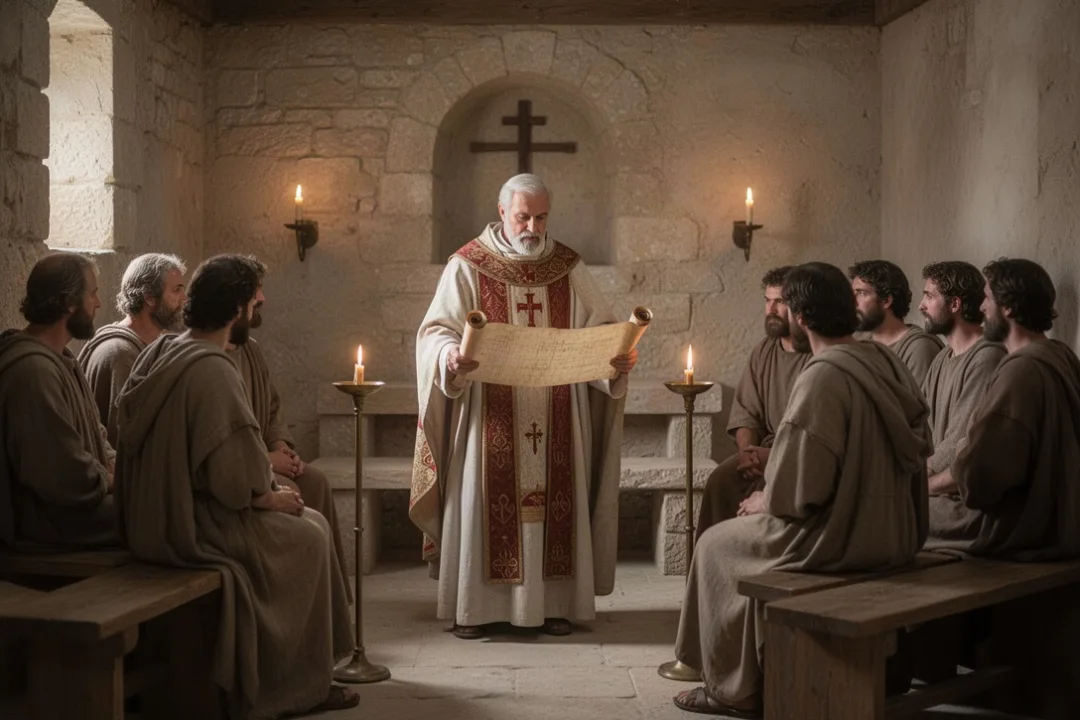
St. Irenaeus was a second-century Christian bishop and theologian best known for defending the apostolic faith against Gnostic teachers. As bishop of Lyons in Roman Gaul, he argued that the same God created the world, spoke through Israel’s Scriptures, and revealed himself fully in Jesus Christ.
His most influential work, Against Heresies, explains Christian belief through Scripture, apostolic tradition, the rule of faith, and the unity of the Church. Irenaeus is also remembered for his teaching on “recapitulation”: Christ restores and gathers up the whole human story by becoming truly human, obeying God, overcoming sin, and bringing humanity toward communion with God.
Irenaeus lived during the second century, probably from about 130 to 202. He was born in or near Smyrna in Asia Minor, in the region of modern-day western Turkey. His youth placed him close to the churches of Asia Minor, where Christian teaching was preserved through leaders connected with the apostles.
As a young man, Irenaeus knew Polycarp of Smyrna, an important Christian bishop who had himself been connected with the apostle John’s circle. Irenaeus later emphasized this kind of personal and ecclesial continuity because he believed Christian truth was not a collection of private theories. It was a public faith handed down through worshiping communities and their recognized teachers.
Irenaeus eventually traveled west and served the Christian community at Lugdunum, known today as Lyons, France. At that time, Christianity in Gaul was still developing, and the churches faced both external pressure and internal disputes. Irenaeus became bishop of Lyons after the persecution associated with the local church in the late second century.
He wrote to clarify Christian teaching, preserve church unity, and answer movements that claimed to possess a higher or more secret wisdom than the faith proclaimed publicly. His work gives modern readers valuable information about early Christian worship, biblical interpretation, leadership, and doctrinal debates.
At a glance: St. Irenaeus was a bishop of Lyons, a student of Polycarp, an opponent of Gnostic teaching, and one of the earliest Christian writers to explain the faith as a unified story centered on the incarnation of Christ.
St. Irenaeus’s connection to Polycarp and the apostles
Irenaeus’s authority came partly from his relationship with Polycarp. In a letter preserved by the fourth-century historian Eusebius, Irenaeus recalled Polycarp’s manner of life, teaching, and public connection to earlier Christian witnesses. He presented Polycarp as someone who had received the faith through a living chain of instruction rather than through an isolated spiritual experience.
This connection mattered because the second century included many competing teachers. Some claimed that their doctrines came from secret revelations or from a spiritual elite. Irenaeus responded that the Church’s teaching could be tested through continuity with the apostles, agreement among established churches, and fidelity to the Scriptures read in their proper context.
He did not mean that every Christian leader was perfect or that age alone proved a doctrine true. His argument was that the Christian message had a recognizable public shape. It was proclaimed in churches founded through apostolic preaching, expressed in baptism and the Eucharist, and summarized in the shared confession of faith.
For Irenaeus, the link between Polycarp and earlier Christian witnesses also protected the meaning of the Gospel. The Church was not inventing a new interpretation each generation. It was receiving, proclaiming, and handing on the same central confession: the one God created the world, Jesus Christ truly became human, and the Holy Spirit gives life and renewal.
What Against Heresies teaches
Irenaeus’s best-known book is commonly called Against Heresies, although its longer title describes the exposure and overthrow of what he regarded as false knowledge. The work was written to answer several movements associated with Gnosticism, a broad modern label for groups that differed from one another but often shared certain themes.
Some of these teachers described the material world as defective, corrupt, or created by a lesser being rather than by the supreme God. They could also distinguish sharply between the spiritual Christ and the human Jesus, treating Christ’s bodily life, suffering, or resurrection as less than fully real. Irenaeus saw these ideas as a direct challenge to the Christian message.
His response was not merely to list errors. He presented a positive account of the faith using the biblical narrative from creation to redemption. God is one. Creation is good, though damaged by sin. Humanity needs healing rather than escape from embodiment. Jesus Christ is both truly divine and truly human. The Holy Spirit works through history, Scripture, and the Church.
Irenaeus also criticized the way some teachers selected isolated biblical passages while ignoring the larger story. He compared Scripture to a coherent work whose individual parts must be interpreted according to the design of the whole. A distorted reading could use genuine biblical words but rearrange them into a message the apostles never taught.
His method remains significant because it joins doctrine and biblical interpretation. Irenaeus did not defend tradition as an alternative to Scripture. He argued that the Church’s apostolic tradition provides the framework in which Scripture is read faithfully.
How Irenaeus described the rule of faith
The “rule of faith” was a concise pattern of Christian belief that helped churches recognize the boundaries of apostolic teaching. Irenaeus did not always present it in one fixed wording, but its central themes are consistent: one God the Father, the creation of all things, Jesus Christ the Son who became human for salvation, and the Holy Spirit who spoke through the prophets and gives believers new life.
This rule was not a substitute for the whole Bible. Instead, it functioned as a summary of the Bible’s central confession. It helped Christians read individual passages in harmony with the wider Gospel rather than allowing a single difficult text to overturn the Church’s entire understanding of God and salvation.
The rule also showed that Christian faith was public rather than secret. A person did not need access to a hidden spiritual code reserved for an advanced group. The central message was proclaimed in the churches, taught to new believers, and expressed in Christian worship.
Why Irenaeus defended the goodness of creation
One of Irenaeus’s most important themes is the goodness of the created world. Because some opponents treated matter and the body as inherently inferior, he repeatedly insisted that the God revealed in Jesus Christ is the same God who made heaven, earth, humanity, and the history of Israel.
This conviction shaped his understanding of the incarnation. If the Son of God truly became human, then the human body is not a disposable container for the soul. Human nature is capable of being healed, sanctified, and brought into fellowship with God. The Christian hope is not permanent escape from creation but its restoration and fulfillment.
Irenaeus therefore treated the resurrection of the body as a serious part of Christian belief. Salvation involves the whole person, not only the mind or an invisible inner self. Baptism, the Eucharist, physical acts of love, and the resurrection all make sense within this vision of a God who works through material creation.
His argument also gives Christian ethics a concrete foundation. If creation belongs to God, human life cannot be dismissed as spiritually irrelevant. The body, relationships, work, suffering, and care for the vulnerable all matter before God. Irenaeus’s theology resists both the worship of material possessions and the contempt of physical existence.
What Irenaeus meant by recapitulation
Recapitulation is the idea most closely associated with Irenaeus. The term can mean gathering together under a head or bringing a story to its proper completion. Irenaeus used it to describe how Christ retraces and renews the human story from within.
Adam’s disobedience represents humanity’s turning away from God. Christ, the new Adam, enters human history and offers faithful obedience. Where humanity has become divided and wounded by sin, Christ gathers humanity back toward God through his incarnation, death, resurrection, and continuing work of renewal.
This does not mean that Jesus simply repeats every event in Adam’s life. It means that Christ becomes the beginning of a restored humanity. He takes up human existence and directs it toward the purpose for which it was created. Salvation is therefore restoration and transformation, not merely the cancellation of a legal penalty.
Irenaeus also connected this pattern with the history of Israel. God’s work unfolds progressively: creation, covenant, prophecy, incarnation, redemption, and the gift of the Spirit belong to one divine plan. The Gospel does not abandon the Old Testament. It reveals its fulfillment in Christ.
Irenaeus presents Christ as the one who gathers humanity back into communion with God by becoming what we are and renewing human life from within.
How Irenaeus understood Jesus Christ
For Irenaeus, the central Christian claim is that the eternal Son truly became human. Jesus was not merely a temporary appearance of a spiritual being, nor was he a specially inspired human who later received divine status. The one who lived, suffered, died, and rose was genuinely the Son of God in human flesh.
This teaching protected several connected truths. First, God is not distant from human suffering. In Christ, God enters human history. Second, the life of Jesus is not an illusion or a symbolic story detached from physical reality. Third, human nature can be healed because the Son has truly taken human nature to himself.
Irenaeus used the language of exchange to express this mystery: Christ enters our condition so that human beings may share in the life of God. This does not erase the distinction between Creator and creature. Instead, it describes the gift of grace by which people are adopted, renewed, and brought into communion with God.
He also emphasized the Holy Spirit’s role in this renewal. The Spirit, sometimes described by Irenaeus as God’s “two hands” together with the Son, acts in creation, prophecy, the Church, and the sanctification of believers. The image shows his conviction that God’s saving work is personal and active throughout history.
Irenaeus on Mary and the new Eve
Irenaeus is among the earliest Christian writers to develop a comparison between Mary and Eve. Eve’s disobedience participates in humanity’s fall, while Mary’s faithful response participates in the coming of Christ. Irenaeus does not treat Mary as a rival to Christ; Christ remains the Savior. Rather, Mary’s obedience illustrates how God’s saving work is received through trust and cooperation.
This comparison is sometimes called the “new Eve” theme. Irenaeus uses it to show that the incarnation occurred within real human history and through the consent of a real human mother. Mary’s role supports his broader argument that salvation does not bypass humanity. God restores human life from within human history.
The theme also fits his understanding of reversal and recapitulation. What was damaged through disobedience begins to be repaired through obedience. The contrast between Eve and Mary is not a claim that one woman explains all human sin or that Mary saves independently. It is part of Irenaeus’s larger account of how Christ renews the human story.
How Irenaeus described apostolic succession and church unity
Irenaeus appealed to the succession of bishops as evidence that the churches had preserved apostolic teaching. In his view, recognized leaders were not important simply because of their office. Their importance came from their responsibility to guard and publicly teach the faith received by the churches.
He pointed especially to churches with known connections to the apostles and to the agreement of churches spread across different regions. This did not mean that every local custom had to be identical. Christian communities could differ in language, calendar, and local practice while sharing the same faith.
He also gave special attention to the church at Rome because of its historical prominence and its connection with the apostles Peter and Paul. Readers should be careful about projecting later definitions of papal authority directly onto Irenaeus. His writing clearly supports the importance of apostolic continuity and church unity, but the precise development of later church structures took place over many centuries.
For Irenaeus, unity was not uniformity imposed from above. It was agreement in the central confession of faith, participation in the sacraments, and communion among churches. A Christian teacher who claimed private revelation while rejecting the common faith placed himself outside that public pattern.
St. Irenaeus and the date of Easter
Irenaeus also played a role in a dispute over the proper date for celebrating Easter. Some Christian communities in Asia Minor observed the Paschal feast according to a date associated with the Jewish calendar, while other communities celebrated the resurrection on the Sunday following that observance.
The disagreement became especially tense when Bishop Victor of Rome sought to separate from churches that followed the Asian practice. Irenaeus urged restraint and reminded Victor that earlier Christian leaders had tolerated differences in this matter while maintaining communion.
This episode reveals an important feature of Irenaeus’s thought: unity should not be broken over every legitimate difference in practice. He defended the importance of the Easter celebration but also recognized that a shared faith could exist alongside some regional customs. His intervention is an early example of a Christian leader distinguishing essential doctrine from a disciplinary or calendrical dispute.
How St. Irenaeus died and how the Church remembers him
Ancient Christian tradition identifies Irenaeus as a martyr during the persecution of Christians in the Roman Empire around the beginning of the third century. The surviving historical evidence about the details of his death is limited, so it is safest to say that he is traditionally honored as a martyr rather than to present an elaborate account as certain fact.
His feast is observed on June 28 in the Roman Catholic calendar. In 2022, Pope Francis declared Irenaeus a Doctor of the Church, giving him the title “Doctor of Unity.” This recognition reflects his continuing importance as a teacher who defended the harmony of Scripture, tradition, theology, and the worldwide Church.
Irenaeus is also honored in Eastern Christian traditions, though calendars and feast dates can differ. His writings remain important across denominational boundaries because they offer an early witness to beliefs about Christ, the Trinity, creation, resurrection, Mary, the Eucharist, and the public teaching of the Church.
Irenaeus can be difficult to read because Against Heresies responds to debates that are unfamiliar to many modern readers. The book also contains long arguments, repeated summaries, and references to teachers whose works have not survived in full. A clear reading plan helps.
Begin with the central Christian claims. Notice how often Irenaeus returns to one God, one creation, one Christ, one saving plan, and one Church.
Read the criticism alongside the positive teaching. His answer to Gnostic ideas is not only rejection; it is a vision of creation, incarnation, resurrection, and spiritual growth.
Track his use of Scripture. Ask how he connects creation, the prophets, the Gospels, Paul’s letters, and the resurrection into one narrative.
Pay attention to the body. His defense of bodily resurrection explains why incarnation and the Eucharist matter so much in his theology.
Separate historical context from permanent principles. Some arguments address second-century movements directly, while his teachings on Christ and creation have much broader relevance.
Common mistakes when interpreting St. Irenaeus
Several misunderstandings can make Irenaeus appear to say something he does not. Reading him carefully requires attention to his vocabulary, the controversies he faced, and the difference between early Christian language and later theological formulas.
Do not treat “Gnosticism” as one perfectly unified religion. The label covers several movements and teachers with different beliefs.
Do not reduce Irenaeus to an anti-heretical writer. His main purpose was to explain the beauty and coherence of the Christian faith.
Do not interpret recapitulation as automatic salvation for everyone. Irenaeus describes Christ as renewing humanity, while still calling people to faith, obedience, and life in the Spirit.
Do not confuse tradition with unexamined custom. For Irenaeus, apostolic tradition is a public, Christ-centered pattern of teaching rooted in Scripture and the Church’s worship.
Do not erase the distinction between Irenaeus and later doctrines. He helped shape Christian theology, but later councils and theologians developed technical definitions in response to later controversies.
Reading tip: When Irenaeus uses the language of “knowledge,” he is not rejecting knowledge itself. He is challenging secret claims that separate spiritual insight from the public Gospel of the apostles.
Where to start with Irenaeus’s writings
Against Heresies is the essential starting point. The first sections describe and critique the teachings of various opponents. Later books offer Irenaeus’s positive account of Scripture, Christ, salvation, resurrection, and the Church. Readers who want a shorter and more direct introduction can begin with The Demonstration of the Apostolic Preaching.
The Demonstration presents the Christian faith as a biblical history centered on God’s work in creation, the promises to Israel, the incarnation, the cross, the resurrection, and the Spirit. It is less focused on refuting specific opponents and more focused on explaining what Christians believe.
When choosing an edition, look for a reliable translation with introductions and notes. Helpful annotations can explain second-century groups, biblical references, ancient geography, and technical terms. Reading selected chapters with guidance is often more productive than trying to move quickly through every argument.
Why St. Irenaeus remains relevant
Irenaeus speaks to modern questions about whether Christianity is mainly a private spiritual experience, whether the body matters, and whether the Old Testament belongs with the Gospel. His answer is consistent: Christianity concerns the whole of life because God created the world, entered human history, and promises the renewal of creation.
He also offers a model for handling disagreement. Irenaeus firmly opposed teachings he believed distorted the Gospel, yet he could urge patience when Christians differed over a practice that did not destroy their shared faith. His approach combines doctrinal clarity with concern for communion.
Most of all, Irenaeus directs attention to Jesus Christ. His theology is not built around abstract speculation detached from the biblical story. It centers on the Son who becomes human, gathers humanity into himself, defeats death, and gives the Holy Spirit for the renewal of the world.
That vision explains why St. Irenaeus continues to matter. He stands close enough to the apostolic age to preserve an early Christian witness, yet his questions remain recognizable: How should Scripture be read? What makes teaching genuinely Christian? What does salvation do to the body and the world? For Irenaeus, the answer begins and ends with the unity of God’s saving work in Christ.
Frequently asked questions
What is St. Irenaeus best known for?
St. Irenaeus is best known for writing Against Heresies, a major second-century defense of apostolic Christianity. He challenged teachings that separated the spiritual world from the material creation or denied that Jesus was truly human. He is also recognized for explaining recapitulation, the idea that Christ renews humanity and gathers the whole human story into God’s saving plan.
Was St. Irenaeus a disciple of the apostle John?
Irenaeus was not generally described as a direct disciple of John. He did, however, identify himself as a student of Polycarp of Smyrna, who belonged to a generation connected with the apostolic witnesses. This relationship supported Irenaeus’s emphasis on continuity between the apostles, church leaders, Scripture, and the Christian communities of his own time.
What does recapitulation mean in Irenaeus’s theology?
Recapitulation means that Christ gathers up and renews the human story. By becoming truly human, living in obedience, dying, and rising again, Christ reverses humanity’s movement away from God and begins restored human life. Irenaeus uses this idea to connect creation, the history of Israel, the incarnation, resurrection, and the future renewal of creation.
Why was Irenaeus named a Doctor of the Church?
Pope Francis declared Irenaeus a Doctor of the Church in 2022, giving him the title “Doctor of Unity.” The designation recognizes his lasting contribution to Christian teaching, especially his defense of one God, one saving plan, apostolic tradition, and communion among churches. His theology also helps connect Eastern and Western Christian traditions through a shared early witness.









Leave a Reply