Moses in the Bible: His Life, Leadership, and Legacy
Moses in the Bible: His Life, Leadership, and Legacy
If you are reading the Bible and keep seeing Moses’ name, you may wonder where his story begins, what he actually did, and why he matters so much. Moses is the central human leader of the Exodus, the prophet who confronted Pharaoh, and the mediator through whom God gave Israel the covenant at Mount Sinai.
His life moves through several major stages: rescue from danger, preparation in the wilderness, confrontation with Egypt, leadership of Israel, and faithful but imperfect service. Most of his story appears in Exodus, Leviticus, Numbers, and Deuteronomy, while later biblical writers repeatedly refer to him as a model of prophecy, obedience, and trust in God.
Moses first appears in Exodus 2, during a period when the Israelites were oppressed in Egypt. His story continues through the rest of Exodus and then through Leviticus, Numbers, and Deuteronomy. The final chapter of Deuteronomy records his death and the beginning of Joshua’s leadership.
The Bible also mentions Moses in many later books. The Psalms remember the Exodus and God’s work through Moses, the prophets refer to the law and covenant associated with him, and the New Testament presents him as an important figure in Israel’s history. Jesus, the apostles, and the writer of Hebrews all refer to Moses in different theological contexts.
Traditionally, Moses is associated with the first five books of the Bible, often called the Pentateuch or Torah. Those books present the laws, stories, worship instructions, covenant teachings, and wilderness events that shape Israel’s identity.
Quick answer: Moses was an Israelite prophet and leader whom God used to bring the Israelites out of slavery in Egypt, establish a covenant with them, and guide them toward the promised land.
How Moses’ life unfolds step by step
Moses’ story is easier to understand when you follow its major movements. Each stage adds something important to his character and to the Bible’s wider message about God’s relationship with Israel.
He is born under a royal threat. Pharaoh has ordered the killing of Israelite baby boys, but Moses’ mother places him in a basket on the Nile. Pharaoh’s daughter finds him and raises him in the Egyptian royal household.
He identifies with his Israelite people. As an adult, Moses sees an Egyptian beating a Hebrew slave. He intervenes, kills the Egyptian, and then flees Egypt when the act becomes known.
He spends years in Midian. Moses settles in Midian, marries Zipporah, and works as a shepherd. This quiet period becomes preparation for a much larger responsibility.
God calls him from the burning bush. At Mount Horeb, God speaks to Moses through a bush that burns without being consumed. God sends him back to Egypt to lead Israel out of slavery.
He confronts Pharaoh. Moses and Aaron demand that Pharaoh release the Israelites. Pharaoh refuses, and Egypt experiences the plagues described in Exodus.
He leads Israel through the sea. After the first Passover, the Israelites leave Egypt. When Pharaoh pursues them, God makes a path through the sea, allowing Israel to escape.
He receives the covenant at Sinai. At Mount Sinai, God gives Israel the Ten Commandments and many other covenant instructions. Moses serves as the representative who goes between God and the people.
He leads the people through the wilderness. Israel struggles with hunger, thirst, fear, conflict, and idolatry. Moses repeatedly intercedes for the people and helps organize the community.
He responds to rebellion and failure. The people resist God’s direction, and Moses himself disobeys God at the rock in Meribah. Because of that failure, he will see the promised land but not enter it.
He prepares a new generation. Near the end of his life, Moses teaches Israel, renews the covenant, commissions Joshua, and blesses the tribes before his death.
Why Moses was born into danger
Exodus begins with a growing Israelite population in Egypt and a new Pharaoh who sees the Israelites as a political threat. Pharaoh subjects them to forced labor and eventually orders that Hebrew boys be killed. Moses’ birth takes place under this policy of fear and violence.
His mother hides him for three months and then places him in a basket among the reeds along the Nile. His sister watches from a distance, and Pharaoh’s daughter discovers the child. Through an arrangement involving Moses’ own mother, he is nursed and then brought into Pharaoh’s household.
This setting gives Moses a complex identity. He is an Israelite by birth, yet he grows up with access to Egyptian culture and the royal environment. His later decision to identify with the oppressed Hebrews becomes a major turning point in the story.
What Moses’ years in Midian reveal about preparation
Moses’ first attempt to defend an Israelite ends in violence and exile. He flees to Midian, where he helps the daughters of Jethro, also called Reuel, and later marries Zipporah. Moses becomes a shepherd, a role that places him far from Egypt’s power and public life.
The years in Midian show that Moses is not presented as naturally ready for leadership. He has made a serious mistake, lost his position, and spent a long period in obscurity. Yet the biblical story treats this season as part of his preparation rather than as wasted time.
When God calls Moses, he is no longer the confident royal insider who might have imagined changing Egypt through personal force. He has become cautious and reluctant. That change helps explain why he asks several questions and raises objections during the calling at the burning bush.
What happened at the burning bush
In Exodus 3, Moses encounters a bush that burns without being destroyed. God tells him that the suffering of the Israelites has been seen and heard. Moses is instructed to return to Egypt and bring the people out.
Moses responds with questions about his identity, his authority, and the people’s likely reaction. He asks what he should say if the Israelites want to know who sent him. God reveals his name in a profound statement about his being and presence, commonly represented in English as “I AM.” The passage connects God’s name with faithfulness, holiness, and self-existence.
Moses also worries that the people will not believe him and says he is not an effective speaker. God answers by giving him signs and by appointing Aaron, his brother, to speak alongside him. The arrangement shows that God’s calling does not depend on Moses having every natural ability or feeling fully confident.
Reading tip: Moses’ reluctance should not be confused with complete unwillingness. He eventually obeys, but his questions show the cost and seriousness of being sent to confront both Pharaoh and a fearful people.
How Moses confronted Pharaoh and led the Exodus
Moses and Aaron go to Pharaoh with God’s command to release the Israelites. Pharaoh refuses and increases the people’s labor, making the situation appear worse before it improves. This pattern is central to Exodus: liberation does not happen through a quick negotiation but through a prolonged conflict between Pharaoh’s claimed authority and God’s power.
The plagues that follow are judgments on Egypt and its ruler. They expose the weakness of Egypt’s gods and institutions while showing that Pharaoh cannot control the outcome. The final plague leads to the institution of Passover, when Israel marks its homes and is spared from the destruction that strikes Egypt.
Passover becomes more than a single night of escape. It becomes an annual memorial through which later generations remember that God brought Israel out of slavery. Moses’ role is to receive the instructions, communicate them to the people, and lead the community in obeying them.
After Pharaoh finally allows Israel to leave, he changes his mind and pursues them. The Israelites find themselves trapped between the Egyptian army and the sea. Exodus presents their passage through the sea as God’s decisive act of rescue, after which Israel is no longer simply a group of slaves leaving Egypt but a people beginning a new national and covenant identity.
What Moses did at Mount Sinai
At Sinai, the Exodus story becomes a covenant story. God does not merely remove Israel from oppression; he forms Israel into a people with a defined relationship, moral obligations, worship practices, and social responsibilities.
The Ten Commandments establish foundational commitments involving worship, family, human life, marriage, property, truth, and desire. Other instructions address worship, justice, servants, restitution, festivals, the priesthood, the tabernacle, and community life.
Moses serves as a mediator between God and the Israelites. He goes up the mountain, receives instructions, returns to the people, and helps establish the covenant. His position is significant because he does not replace God as ruler. He communicates God’s commands and calls the people to respond faithfully.
The covenant also explains why Moses’ relationship with God matters so much. The Bible portrays him as someone who meets with God in an unusually direct way, yet Moses remains a servant rather than a rival. His authority comes from being sent by God, not from personal ambition.
Why the golden calf became a defining crisis
While Moses is on Mount Sinai, the Israelites make a golden calf and worship it. The episode in Exodus 32 shows how quickly fear and uncertainty can lead the community toward a visible substitute for God. The people have witnessed the Exodus, but they still struggle to trust an unseen God during Moses’ absence.
Moses comes down from the mountain carrying the covenant tablets and sees the idolatry. He breaks the tablets, confronts Aaron and the people, and then returns to God to intercede for Israel. His response combines moral seriousness and deep concern for the community.
This event also reveals the limits of Moses’ leadership. He can confront sin, but he cannot create faith by force. The people must continue learning what it means to live as a covenant community, and their repeated failures remain a major theme of the wilderness narrative.
How Moses handled complaints in the wilderness
The wilderness years are marked by recurring complaints. The people worry about food, water, enemies, leadership, and the possibility of returning to Egypt. God provides manna and quail, water, guidance, and protection, but the people repeatedly interpret hardship as evidence that they have been abandoned.
Moses often brings these complaints before God. He asks for help when the burden of leadership becomes too heavy, and God provides elders to share responsibility. This detail matters because the Bible does not depict leadership as solitary strength. Moses needs support, delegation, and divine help.
Some conflicts are political. Korah and other leaders challenge Moses and Aaron, questioning their authority. Other conflicts arise from fear, especially when the spies return from Canaan and most of them discourage the people from entering the land. Israel’s refusal to trust God results in a long wilderness period before a new generation can move forward.
Provision: God gives food, water, and direction despite the people’s complaints.
Intercession: Moses repeatedly asks God to show mercy after Israel’s rebellion.
Organization: Moses appoints leaders and establishes procedures for resolving disputes.
Instruction: He teaches the people how covenant life should shape worship and conduct.
Correction: He confronts idolatry, injustice, fear, and rebellion rather than ignoring them.
Why Moses could not enter the promised land
One of the most difficult parts of Moses’ story appears in Numbers 20. The people again lack water and complain. God tells Moses to speak to a rock, but Moses strikes it instead and speaks harshly to the people. The biblical account presents this as a failure to honor God before the community.
As a result, Moses is told that he will see the land of Canaan but will not lead Israel into it. This consequence can feel severe, especially because Moses has carried the people through decades of hardship. Yet the story emphasizes that even a major leader remains accountable to God.
Moses’ failure does not erase his faithfulness or usefulness. It shows that biblical leadership is not based on the idea that a leader is beyond correction. His story holds together great service, genuine weakness, and real accountability.
What Moses taught in Deuteronomy
Deuteronomy presents Moses’ final teaching to Israel on the plains of Moab. The people are preparing to enter the promised land under Joshua, and Moses reviews the covenant for a new generation. He reminds them of their history, repeats central commands, and urges them to remain loyal to God.
These speeches are not simply a record of old laws. They connect obedience with memory. Israel must remember slavery, remember God’s rescue, remember its failures, and remember that life in the land carries responsibilities toward God and neighbor.
Moses also warns against prosperity becoming a source of forgetfulness. Once Israel has homes, crops, and stability, the people could begin to believe that their success came entirely from their own strength. Deuteronomy therefore links gratitude, justice, worship, and humility.
Near the end, Moses commissions Joshua as his successor. This transition is important because the mission belongs to God and the covenant community, not permanently to one human leader. Moses has a crucial role, but Israel must continue after him.
How Moses died and what happened afterward
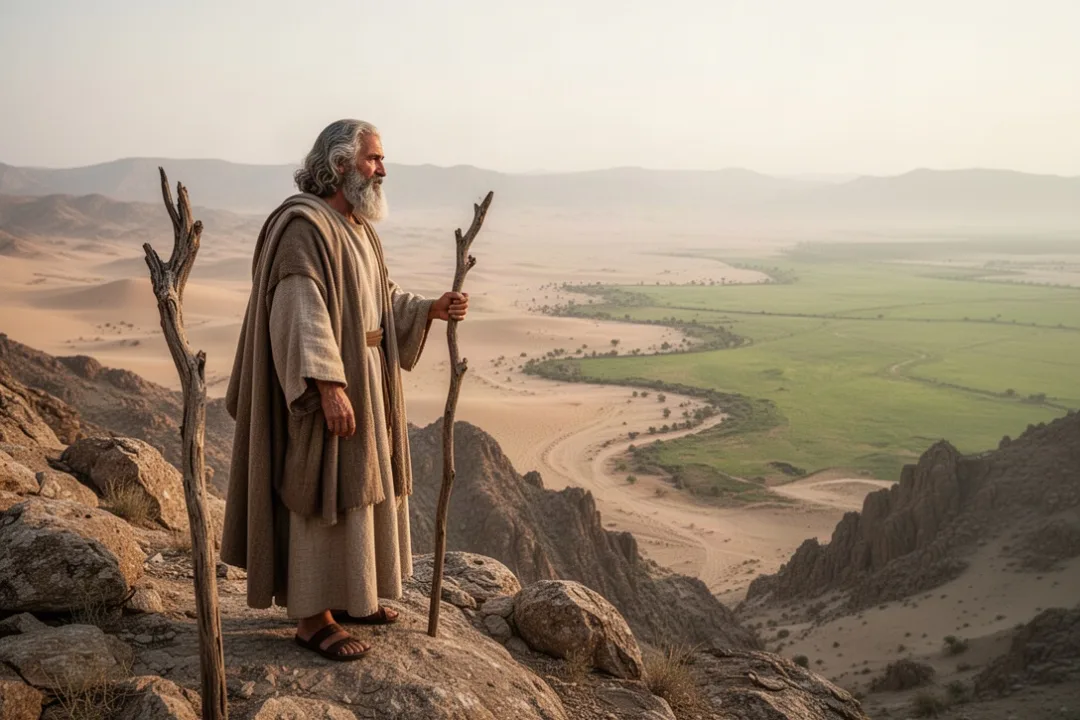
Deuteronomy 34 describes Moses climbing Mount Nebo, where God shows him the promised land. Moses dies there, and the text records that he was 120 years old, with his strength and vision still intact. He does not enter the land, but he is allowed to see it from a distance.
Joshua succeeds Moses and leads Israel across the Jordan. Deuteronomy describes Moses as an exceptional prophet with whom God had a unique relationship. The ending honors Moses while also making clear that his generation has ended and the people must move forward.
The burial account is deliberately restrained. The location of Moses’ grave is not made into a pilgrimage center or political symbol. The focus remains on God’s faithfulness and on the next stage of Israel’s calling.
What Moses teaches about faith and leadership
Moses’ life offers several lessons that apply beyond the historical events themselves. His story does not present leadership as charisma, perfection, or constant certainty. Instead, it shows a person who is called, corrected, supported, and sometimes overwhelmed.
Calling can begin with reluctance
Moses does not immediately welcome his assignment. He questions whether he is qualified and asks for help. His hesitation makes the calling more believable as a demanding responsibility rather than a personal opportunity.
Deliverance creates responsibility
The Israelites are freed from slavery, but freedom is not portrayed as unlimited self-direction. They become responsible to God and to one another through the covenant. The laws address worship, honesty, economic behavior, justice, and treatment of vulnerable people.
Intercession is part of leadership
Moses frequently stands between God and the people, asking for mercy after serious failures. His prayers do not excuse wrongdoing, but they reveal a leader who remains committed to the people even when they are difficult, fearful, or rebellious.
Leaders need succession and shared work
Moses does not lead Israel forever. He works with Aaron, the elders, judges, and eventually Joshua. The transfer of responsibility to Joshua shows that wise leadership prepares others to serve rather than treating personal control as the goal.
Faithfulness does not remove accountability
Moses is honored as a great servant of God, but he is still disciplined for disobedience. The Bible’s portrayal is realistic: a person may be deeply faithful and still make a serious mistake that carries consequences.
The New Testament frequently refers to Moses because he represents the law, the Exodus, and Israel’s covenant history. Jesus’ life is connected with Moses through themes such as deliverance, testing in the wilderness, teaching, and God’s covenant purposes.
In the Gospel accounts, Jesus discusses Moses when responding to questions about the law, marriage, resurrection, and Scripture. The Transfiguration includes Moses and Elijah, symbolizing the law and the prophets in conversation with Jesus. These passages do not erase Moses’ importance; they place his role within the larger story the New Testament tells about Jesus.
The Gospel of John contrasts the gift associated with Moses and the grace and truth revealed through Jesus, while Hebrews presents Moses as a faithful servant in God’s household. The comparison preserves Moses’ honor but describes Jesus as having a greater status within the household.
For Christian readers, Moses therefore remains essential for understanding sinai covenant, Passover, sacrifice, prophecy, and redemption. His story provides the background for many New Testament images and arguments.
Which Bible passages to read about Moses
If you want to study Moses directly, reading selected passages in order gives a clear picture without requiring you to begin with every law and census. These sections cover the main events and themes:
Exodus 1–2: Moses’ birth, rescue, upbringing, and flight from Egypt.
Exodus 3–4: The burning bush and Moses’ call.
Exodus 5–15: Pharaoh, the plagues, Passover, and the crossing of the sea.
Exodus 19–24: The covenant and the Ten Commandments at Sinai.
Exodus 32–34: The golden calf and Moses’ intercession.
Numbers 12–14: Leadership conflict, the spies, and Israel’s refusal to enter Canaan.
Numbers 20: Moses’ failure at Meribah.
Deuteronomy 5–8: Covenant teaching, memory, obedience, and dependence on God.
Deuteronomy 31–34: Joshua’s commission, Moses’ final blessing, and his death.
As you read, pay attention to how Moses speaks with God, how he responds under pressure, and how the people respond to both miracles and hardship. The story is not only about spectacular events; it is also about trust, memory, community, and obedience over time.
Common misunderstandings about Moses
One misunderstanding is that Moses single-handedly freed Israel. The Bible consistently presents God as the deliverer, while Moses acts as the appointed human leader. Moses is essential, but the Exodus is described as God’s work.
Another misunderstanding is that Moses was always calm and confident. He experiences fear, anger, frustration, loneliness, and uncertainty. His emotional struggles do not make him irrelevant; they show why dependence on God and cooperation with others are necessary.
It is also inaccurate to treat Moses as flawless. His actions at Meribah have consequences, and his anger sometimes leads him into poor judgment. The Bible honors him without turning him into an idealized hero who never fails.
Finally, Moses should not be reduced to a lawgiver disconnected from compassion. His leadership includes repeated pleas for mercy, concern for the oppressed, attention to justice, and a desire for God’s presence to remain with the people.
Frequently asked questions
What was Moses best known for in the Bible?
Moses is best known for leading the Israelites out of slavery in Egypt, receiving God’s covenant at Mount Sinai, and guiding the people through the wilderness. He also delivered God’s laws, interceded for Israel after major failures, and prepared Joshua to lead the next generation into the promised land.
How old was Moses when he died?
Deuteronomy 34 says Moses was 120 years old when he died. The biblical narrative also divides his life into three broad periods of about forty years: time in Egypt, time in Midian, and time leading Israel. This pattern helps organize the story, though the exact chronology should be read according to the biblical text’s presentation.
Did Moses enter the promised land?
No. Moses saw the promised land from Mount Nebo but did not enter it. Numbers 20 connects this consequence with his disobedience at Meribah, where he struck the rock instead of following God’s instruction. Joshua later led the Israelites across the Jordan and into the land.
Why is Moses important to Christians today?
Moses provides essential background for understanding the Exodus, Passover, covenant, law, worship, and many themes used in the New Testament. His story also presents enduring questions about leadership, faith, justice, repentance, obedience, and dependence on God. Christian readings often understand Moses’ role in relation to Jesus and the new covenant.















Leave a Reply