Numbers is about Israel’s journey from Mount Sinai to the edge of the promised land, and about how God remains faithful despite the people’s repeated rebellion.
Numbers is the fourth book of the Bible and the fourth book of the Pentateuch, the five books traditionally associated with Moses. Its Hebrew name, Bemidbar, means “in the wilderness,” which describes both the setting and the spiritual condition of the people. The English name comes from the censuses recorded near the beginning and end of the book.
The story begins at Mount Sinai, where the Israelites have received God’s covenant and built the tabernacle, the portable sanctuary representing his presence among them. It ends on the plains of Moab, across the Jordan River from Canaan. Numbers therefore connects the events at Sinai with Israel’s later entrance into the land promised to Abraham, Isaac, and Jacob.
The book is not simply a travel diary. It combines narrative, laws, worship instructions, censuses, poetry, and genealogical details. Together, these parts show what it means for a large, formerly enslaved people to live as a covenant community under God’s direction.
The central message: Israel’s unbelief brings serious consequences, but human failure does not cancel God’s covenant faithfulness or his purpose for the next generation.
Numbers in four major movements
The book becomes easier to understand when you follow its movement from preparation, to failure, to renewal, and finally to readiness. Its main sections are organized around where Israel is located and what the people are learning.
Preparation at Sinai: Israel is counted, arranged around the tabernacle, instructed in worship, and prepared to leave.
Failure in the wilderness: The people complain, resist Moses, distrust God’s promise, and lose the opportunity to enter Canaan.
God’s continued care: Despite judgment, God provides food, water, protection, guidance, and a new generation.
Readiness on the plains of Moab: The new generation is counted, leadership is prepared, and the tribes receive instructions for life in the land.
This pattern explains why Numbers includes both severe warnings and encouraging promises. The wilderness years are marked by loss, but the story does not end there. God continues moving the people toward the land he promised.
What happens in the first section at Mount Sinai
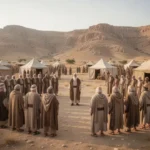
The opening chapters focus on order. God commands a census of the Israelite men eligible for military service, organizes the tribes around the tabernacle, and assigns the Levites responsibility for transporting and caring for the sacred tent. The arrangement places the tabernacle at the center of Israel’s camp.
This arrangement carries a theological point. Israel is not merely a group traveling together; it is a people whose communal life is supposed to be shaped by God’s presence. The camp has an organized structure because holiness is not treated casually. The Levites form a protective boundary around the sanctuary, while the other tribes camp according to their assigned positions.
Numbers also describes duties for priests and Levites, regulations involving purity, restitution, suspected marital unfaithfulness, and the Nazirite vow. These laws can seem disconnected from the story, but they address a practical question: How can a holy God dwell among an imperfect people?
The answer involves worship, responsibility, repentance, and boundaries. The people are reminded that God’s presence is a gift, but it also calls for reverence. The priestly blessing in Numbers 6 presents God as the one who protects, shows favor, and gives peace to his people.
Why the censuses matter
The censuses do more than record population figures. They identify the tribes, establish the military organization, and show that Israel is becoming a structured nation rather than remaining a group of former slaves. The second census near the end of the book marks a significant change: most of the adults counted at Sinai have died during the wilderness years, and a new generation is ready to inherit the promise.
The lists also emphasize that God knows his people by tribe and family. The long names and numbers may slow modern readers, but they help establish identity, responsibility, inheritance, and continuity. The community is not anonymous, and its future is not accidental.
Why Israel’s journey becomes a story of rebellion
After leaving Sinai, Israel repeatedly struggles with fear, dissatisfaction, and distrust. The people complain about their hardships and the food they have received. Moses becomes burdened by the demands of leadership, and God provides seventy elders to share the responsibility of guiding the community.
These scenes reveal a conflict between what God has promised and what the people can see. The Israelites have witnessed God’s power in the exodus, yet the wilderness creates new pressures. They remember aspects of life in Egypt more favorably than they should and question whether freedom under God is better than slavery under Pharaoh.
Numbers does not present faith as the absence of difficulty. The people face hunger, thirst, enemies, uncertainty, and exhausting travel. Their central failure is not that they notice hardship; it is that they interpret hardship as evidence that God has abandoned them.
What the spies reveal about fear and unbelief
One of the book’s decisive episodes occurs when Moses sends twelve leaders to explore Canaan. They return with evidence that the land is fertile and productive, but they also report that its cities are fortified and its inhabitants appear powerful. Ten of the spies focus on the danger, while Joshua and Caleb urge the people to trust God’s promise.
The community chooses fear. The Israelites reject the prospect of entering the land, speak of returning to Egypt, and threaten to replace Moses with another leader. Their refusal is treated as a serious act of unbelief, because they have received both God’s promise and repeated evidence of his care.
As a result, that generation will not enter Canaan. The people must remain in the wilderness until a new generation rises. Joshua and Caleb are the notable exceptions among the adult community counted at Sinai, because they continue to trust that God can give Israel the land.
How to read the judgment: Numbers presents the wilderness sentence as both punishment and preservation. The unbelieving generation does not enter the land, yet God does not abandon Israel or withdraw the promise from the nation.
How the major rebellion stories develop the book’s message
Numbers includes several challenges to Moses and Aaron. These episodes are not identical, but they all raise questions about authority, holiness, leadership, and trust. They also show that rebellion affects the whole community, not only the person who begins it.
Miriam and Aaron challenge Moses: Their criticism raises questions about Moses’ unique role. Miriam is judged with a skin disease, and Moses intercedes for her.
Korah, Dathan, and Abiram rebel: They dispute the leadership of Moses and the priestly authority of Aaron. The story strongly affirms that sacred responsibility is assigned by God rather than seized by ambition.
The people complain after the judgment: Instead of accepting the seriousness of the rebellion, the community accuses Moses and Aaron of causing the deaths. A plague follows, and Aaron’s priestly intercession is connected with stopping it.
The people oppose God over food and water: Their repeated dissatisfaction shows that even after judgment, the same distrust can return.
These stories do not portray Moses as flawless. He becomes angry, speaks rashly, and fails to honor God properly when bringing water from the rock at Meribah. Because of this act, Moses will see the land but will not lead the people into it. Even the central human leader remains accountable to God.
What the bronze serpent means in Numbers
During another period of complaint, the people are attacked by venomous snakes. God instructs Moses to make a bronze serpent and lift it up. Those who look at it live. The object itself is not presented as a magical power; healing comes through God’s appointed means and through the people’s obedient response.
The episode holds together judgment, confession, trust, and mercy. The snakes expose the seriousness of the people’s words and attitude, while the bronze serpent provides a way to live. Later, the bronze object becomes a problem when people treat it as an idol, demonstrating that a symbol intended by God can be misused when it receives worship that belongs to God alone.
In the Gospel of John, Jesus refers to this event as a pattern for his own being lifted up, connecting the Numbers story with salvation through faith. Christian interpretation should still recognize the original setting: Numbers first presents God healing a rebellious community in the wilderness.
How God’s presence guides and sustains Israel
Although Numbers contains many failures, it repeatedly shows God caring for the people. The cloud over the tabernacle signals when Israel should remain in place and when it should travel. The people do not decide their route simply according to convenience; their movement is directed by God’s presence.
That guidance can mean waiting. If the cloud remains over the tabernacle, the Israelites stay encamped. If it lifts, they depart. The arrangement teaches that faithfulness includes both moving when God leads and remaining when he has not yet given a new direction.
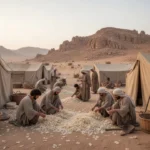
God also provides manna, water, protection, and instruction. These provisions do not remove every hardship, but they show that the wilderness is not outside God’s care. The people’s complaints often overlook the evidence that they are being sustained day after day.
The priestly blessing in chapter 6 reinforces this picture of divine care. It asks God to guard his people, show them favor, turn toward them, and grant peace. The blessing comes within a book filled with danger and judgment, making its message especially significant: God’s presence is not limited to easy circumstances.
What the Balaam narrative says about blessing
Near the end of Numbers, the king of Moab hires Balaam, a non-Israelite diviner, to curse Israel. Balaam appears willing to accept the assignment, but God prevents him from speaking the curse the king wants. The famous episode involving Balaam’s donkey exposes Balaam’s spiritual blindness and shows that God can restrain a person who does not fully understand what is happening.
When Balaam finally speaks, his words bless Israel rather than curse the nation. The point is not that Israel has earned blessing through perfect behavior. The people have already complained, rebelled, and suffered judgment. Instead, the narrative shows that God’s covenant purpose cannot be overturned by an enemy’s scheme.
The story also makes clear that Israel’s protection does not come from military strength or magical control. The nation is vulnerable, yet God remains able to preserve his promise. Later biblical writers treat the episode as a warning against greed and moral compromise, because Balaam’s influence is associated with leading Israel into idolatry and sexual wrongdoing.
How the second generation prepares to enter the land
After the wilderness years, Numbers records a second census. This new count marks a transition from the generation that left Egypt to the generation that will receive the inheritance. The book then addresses several practical matters necessary for settlement: family inheritance, leadership succession, worship offerings, vows, military action, tribal land, and towns for the Levites.
The case of Zelophehad’s daughters is especially important. They ask for an inheritance because their father died without sons. Their request is heard, and a legal provision is established for daughters in such circumstances, while later rules address how inherited land remains connected to the tribe. This passage shows that the law is applied to a real family situation rather than existing only as an abstract rule.
Numbers also records God’s appointment of Joshua as Moses’ successor. Moses asks for a leader who can guide the people and prevent them from being like sheep without a shepherd. Joshua is commissioned before the whole community, showing that the mission depends on God’s faithfulness rather than on Moses remaining in office forever.
The repeated offerings and worship instructions point forward to life in the land. Israel is not only preparing to fight; it is preparing to live as a worshiping community. Possessing territory is not the final purpose. The people are meant to order their time, resources, relationships, and public life around God.
Why the land east of the Jordan creates a moral question
Two and a half tribes—Reuben, Gad, and half of Manasseh—notice that the land east of the Jordan is suitable for their large herds. They ask to settle there rather than receive territory west of the river. Moses initially reacts strongly because he fears they will discourage the other tribes just as the spies did.
The tribes clarify that they will send their fighting men across the Jordan to help the rest of Israel. They may build homes for their families and livestock east of the river, but they must not withdraw from the shared mission. The agreement is accepted on that condition.
This episode emphasizes community responsibility. A tribe cannot treat its own prosperity as sufficient while the rest of the nation faces danger. The arrangement also shows that the promised inheritance includes different locations, but shared loyalty still binds the tribes together.
What Numbers teaches about holiness and community life
Holiness in Numbers is not limited to private religious feeling. It affects the camp, worship, leadership, justice, inheritance, military obligations, and treatment of sacred objects. The book presents God’s holiness as both dangerous to approach carelessly and generous toward those who seek him according to his instructions.
Some laws regulate accidental killing and provide cities of refuge. These provisions distinguish intentional murder from an unintended death and create a process for protecting people from revenge. Other rules preserve the rights of families and tribes. The community is expected to practice justice while recognizing the seriousness of bloodshed.
Numbers also warns that spiritual privilege does not make anyone immune from accountability. Priests, Levites, prophets, tribal leaders, and ordinary citizens all answer to God. The book’s repeated emphasis on responsibility challenges any idea that religious status automatically guarantees faithfulness.
How Christians commonly read Numbers
For Christians, Numbers forms part of the larger biblical story that leads to Jesus, but it should first be read in its own setting: Israel’s covenant life after the exodus. The New Testament refers to several Numbers themes, including the wilderness generation, the bronze serpent, Balaam, and the danger of testing God.
Paul uses Israel’s wilderness failures in 1 Corinthians 10 as warnings for Christian communities. The point is not merely to criticize ancient Israel; it is to show that receiving spiritual privileges does not remove the need for faithfulness. The writer of Hebrews also uses the wilderness generation as an example of the danger of hardened unbelief.
Christian readers may see patterns involving sin, judgment, intercession, mercy, and promised rest. Yet these connections should not erase the original story. Numbers is also a foundational account of Israel’s identity, worship, leadership, tribal life, and relationship with the land.
How to read Numbers without getting lost in the lists
The book can feel difficult because its story is interrupted by censuses and regulations. A focused reading plan helps you see how the parts fit together. Pay attention to location, generation, and the repeated response of the people whenever circumstances become difficult.
Mark the locations: Notice the movement from Sinai, through the wilderness, to the plains of Moab.
Track the generations: Distinguish the adult generation counted at Sinai from the younger generation counted near the end.
Watch for repeated patterns: Complaint, warning, judgment, intercession, and renewed provision occur more than once.
Notice the center: The tabernacle, priesthood, cloud, offerings, and holiness laws all point to God dwelling among the people.
Read the leadership stories together: Moses, Aaron, Miriam, Joshua, Korah, Balaam, and the tribal leaders each reveal different responses to authority.
Keep the promise in view: The wilderness is not the destination. The narrative continues toward inheritance in the land.
It also helps to ask a few simple questions as you read: What has God promised? What are the people afraid of? How does God respond to rebellion? Where do judgment and mercy appear together? These questions bring the main message into focus even when a chapter contains detailed instructions.
Why Numbers still matters
Numbers speaks to communities that have received a calling but face a long, uncertain process before seeing its fulfillment. It shows that fear can distort memory, making slavery seem preferable to faithful dependence. It also shows that leadership is demanding, that shared responsibilities matter, and that outward membership in a community does not replace inward trust.
The book offers a balanced picture of God. He is patient and provides for his people, but he does not treat rebellion as harmless. He judges unbelief, yet he preserves the covenant and prepares a new generation. He disciplines leaders, answers intercession, protects the vulnerable, and continues guiding the community.
Numbers therefore asks you to hold together two truths: God’s promises are dependable, and human beings are genuinely responsible for how they respond to those promises. The wilderness exposes what is in the people, but it also becomes the place where God teaches, sustains, corrects, and prepares them.
Frequently asked questions
Why is the book called Numbers?
It is called Numbers because it includes two major censuses of the Israelites, one near the beginning and one near the end. These counts identify the tribes and organize the community for military service, worship responsibilities, and inheritance. The Hebrew title, Bemidbar, meaning “in the wilderness,” highlights the setting and broader story more directly.
How long were the Israelites in the wilderness?
Numbers describes a wilderness period lasting forty years, though the book does not narrate every year in equal detail. The extended period results from the first generation’s refusal to enter Canaan after hearing the spies’ report. During those years, the older generation dies and a new generation becomes prepared to enter the land.
Did Moses enter the promised land?
Moses did not enter Canaan. At Meribah, he failed to honor God’s instructions while bringing water from the rock, and God told him he would see the land but not lead Israel into it. Moses’ successor, Joshua, would guide the people across the Jordan. The episode shows that even Israel’s greatest human leader remained accountable.
Is Numbers mainly a history book or a book of laws?
Numbers combines both. Its narrative follows Israel’s travel, rebellions, leadership changes, and preparation to enter Canaan, while its laws regulate worship, purity, inheritance, vows, justice, and community responsibilities. The laws are part of the story because they show how Israel was meant to live as a people with God’s presence among them.














Leave a Reply