The Protestant Bible contains 66 books: 39 in the Old Testament and 27 in the New Testament. In standard English order, the Old Testament begins with Genesis and ends with Malachi; the New Testament begins with Matthew and ends with Revelation.
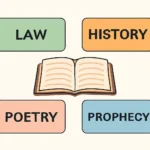
The Bible is a collection of writings rather than one single book written at one time. Its books include law, history, poetry, prophecy, Gospel accounts, letters, and apocalyptic literature. Catholic and Orthodox Bibles include additional Old Testament books, so the exact total depends on the Christian tradition.
The usual Protestant arrangement groups the books by literary type and subject. This order is not the same as the order in which the books were necessarily written, and it does not always match the order used in Jewish or Catholic Bibles.
The Pentateuch: Genesis through Deuteronomy, traditionally associated with Moses and centered on creation, covenant, law, and Israel’s beginnings.
Historical books: Joshua through Esther, describing Israel’s settlement, monarchy, division, exile, and restoration.
Poetry and wisdom: Job through Song of Solomon, exploring suffering, worship, practical wisdom, love, and the meaning of life.
Major and Minor Prophets: Isaiah through Malachi, containing prophetic warnings, promises, calls to justice, and hope for restoration.
The Gospels and Acts: Matthew through Acts, focusing on Jesus’ life, death, resurrection, and the growth of the early church.
The Epistles: Romans through Jude, letters addressing Christian belief, ethics, worship, leadership, and perseverance.
Apocalyptic literature: Revelation, a symbolic vision about judgment, endurance, and God’s final victory.
Quick answer: The 66 books are not all the same length or literary style. A short letter such as Philemon and a long prophetic work such as Isaiah each count as one book.
The Old Testament books from Genesis through Esther
The Old Testament, also called the Hebrew Scriptures or Hebrew Bible in many contexts, contains the foundational story of God’s relationship with Israel. Its books address creation, human rebellion, covenant, worship, law, kingship, exile, and the hope of renewal.
The Pentateuch: Genesis through Deuteronomy
Genesis: Describes creation, humanity’s early history, the flood, the call of Abraham, and the families of Isaac, Jacob, and Joseph.
Exodus: Tells how God delivers Israel from Egypt, establishes the covenant at Sinai, and gives instructions for worship and the tabernacle.
Leviticus: Presents laws about sacrifices, priests, ritual cleanliness, festivals, holiness, and life within the covenant community.
Numbers: Follows Israel’s wilderness journey, including censuses, rebellion, testing, judgment, and preparation to enter the promised land.
Deuteronomy: Records Moses’ speeches to Israel before entering Canaan, restating the law and urging faithfulness to the covenant.
These five books form the foundation of the biblical narrative. Genesis explains the origins of the world and the patriarchal family; Exodus through Deuteronomy develop Israel’s identity as a rescued and covenant-bound people.
Historical books: Joshua through Esther
Joshua: Describes Israel’s entry into Canaan, military campaigns, distribution of the land, and renewal of the covenant.
Judges: Portrays a repeated cycle of rebellion, oppression, cries for help, and deliverance through leaders called judges.
Ruth: Tells the story of a loyal Moabite widow whose faithfulness leads to a new family and a place in David’s ancestry.
1 Samuel: Covers Samuel’s leadership, Saul’s rise and failure as king, and David’s early years.
2 Samuel: Focuses on David’s reign, his covenant, military successes, personal failures, and family turmoil.
1 Kings: Describes Solomon’s reign and temple, the kingdom’s division, and the ministries of prophets including Elijah.
2 Kings: Continues the history of the divided kingdoms until Israel and Judah fall to foreign powers and Jerusalem is destroyed.
1 Chronicles: Retells Israel’s history with special attention to genealogies, David, worship, and preparations for the temple.
2 Chronicles: Follows the kings of Judah, emphasizing the temple, reforms, faithfulness, judgment, exile, and the beginning of return.
Ezra: Describes Jewish return from exile, rebuilding the temple, and Ezra’s work teaching the law.
Nehemiah: Records the rebuilding of Jerusalem’s walls and efforts to restore the community’s religious and social commitments.
Esther: Tells how Esther and Mordecai help preserve the Jewish people from a plot to destroy them while living in Persia.
These books combine national history, family stories, speeches, prayers, and theological interpretation. They do not present every event in Israel’s past; instead, they select events to show how leaders and communities respond to God, covenant obligations, injustice, fear, and foreign power.
The poetic and wisdom books speak in a different register from the historical narratives. They ask how people should live, worship, suffer, love, make decisions, and understand the limits of human knowledge.
Poetry and wisdom: Job through Song of Solomon
Job: Explores undeserved suffering, human limitations, friendship, protest, and the mystery of divine wisdom.
Psalms: A collection of prayers and songs expressing praise, grief, trust, confession, thanksgiving, anger, and hope.
Proverbs: Offers practical instruction about wisdom, speech, work, relationships, money, discipline, and the fear of the Lord.
Ecclesiastes: Reflects on mortality, work, pleasure, injustice, time, and the difficulty of finding lasting meaning through earthly pursuits.
Song of Solomon: Uses lyrical poetry to celebrate romantic love, desire, beauty, and mutual affection.
These books are useful for readers who want language for personal prayer or reflection. Psalms give words to many emotional experiences, Proverbs gathers short teachings for daily conduct, and Job and Ecclesiastes resist simplistic answers to difficult questions.
The Major Prophets: Isaiah through Daniel
Isaiah: Addresses Judah’s sin and coming judgment while proclaiming God’s holiness, comfort, restoration, and future peace.
Jeremiah: Warns Judah before Jerusalem’s fall, mourns the nation’s unfaithfulness, and announces hope for a renewed covenant.
Lamentations: Presents five poetic laments over the destruction of Jerusalem, combining grief, confession, and appeals for mercy.
Ezekiel: Uses visions and symbolic actions to address exile, judgment, personal responsibility, restoration, and the renewal of God’s presence.
Daniel: Combines stories of faithfulness in exile with symbolic visions concerning kingdoms, suffering, judgment, and God’s rule.
The labels Major Prophets and Minor Prophets refer mainly to length, not importance. Isaiah is longer than many prophetic books, while Daniel includes both narrative episodes and visions. Prophetic writing commonly addresses a specific historical crisis while also reaching toward future restoration.
The Minor Prophets: Hosea through Malachi
Hosea: Uses the prophet’s troubled marriage as an image of Israel’s unfaithfulness and God’s persistent concern.
Joel: Interprets a devastating plague through calls to repentance and promises concerning God’s future action.
Amos: Condemns exploitation, empty religious ritual, and economic injustice while calling for righteousness.
Obadiah: Announces judgment against Edom for hostility toward Judah and looks toward restoration for God’s people.
Jonah: Tells of a reluctant prophet sent to Nineveh and challenges narrow ideas about mercy and national enemies.
Micah: Criticizes corrupt leaders and oppression while promising restoration and describing faithful living through justice, mercy, and humility.
Nahum: Announces the fall of Nineveh and presents judgment against a violent imperial power.
Habakkuk: Records a prophet’s questions about violence and injustice and develops a response centered on trust and faithful endurance.
Zephaniah: Warns of a coming day of judgment but also promises purification, restoration, and joy for a remnant.
Haggai: Encourages the returned exiles to rebuild the temple and renew their priorities.
Zechariah: Uses visions and symbolic messages to encourage restoration and point toward God’s future reign.
Malachi: Challenges careless worship, unfaithful leadership, and social wrongdoing while anticipating renewed preparation for God’s work.
Reading tip: Prophetic books often move between immediate events and future hope. Check the surrounding passage before treating every image as a direct prediction of a modern event.
The New Testament books from Matthew through Revelation
The New Testament contains 27 books. It begins with four accounts of Jesus’ ministry, followed by the history of the early church, letters to churches and individuals, and Revelation’s symbolic vision of judgment and renewal.
The four Gospels and Acts
Matthew: Presents Jesus as the promised Messiah and emphasizes his teaching, the kingdom of heaven, fulfillment of Scripture, death, and resurrection.
Mark: Gives a fast-moving account of Jesus’ deeds, authority, suffering, death, and resurrection.
Luke: Highlights Jesus’ compassion, prayer, concern for outsiders, the work of the Holy Spirit, and God’s saving purpose.
John: Uses distinctive signs and extended conversations to explore Jesus’ identity, relationship with the Father, love, belief, and eternal life.
Acts: Continues Luke’s story by describing the Holy Spirit’s work, the spread of the Christian message, and the ministries of Peter and Paul.
The four Gospels are not four unrelated biographies. Each presents the life and significance of Jesus with its own selection, structure, vocabulary, and emphasis. Reading them together allows you to notice both shared events and distinctive perspectives.
Paul’s letters: Romans through Philemon
Romans: Explains the universal problem of sin, God’s grace, faith, life in the Spirit, Israel’s place in God’s purposes, and Christian ethics.
1 Corinthians: Addresses division, sexuality, worship, spiritual gifts, the Lord’s Supper, love, and resurrection within a troubled church.
2 Corinthians: Defends Paul’s ministry while discussing weakness, suffering, reconciliation, generosity, and the character of Christian service.
Galatians: Argues that people are made right with God through faith in Christ rather than dependence on circumcision or ethnic boundary markers.
Ephesians: Describes salvation, unity in Christ, the church, spiritual maturity, family relationships, and faithful conduct.
Philippians: Encourages joy, humility, unity, perseverance, and contentment while Paul writes from imprisonment.
Colossians: Emphasizes Christ’s supremacy and calls believers to reject teachings that diminish Christ’s sufficiency.
1 Thessalonians: Encourages a young church in faithfulness, holiness, mutual love, and hope concerning the Lord’s return.
2 Thessalonians: Clarifies questions about the day of the Lord and urges steady work, endurance, and responsible living.
1 Timothy: Gives guidance about church leadership, worship, teaching, care for vulnerable people, and personal conduct.
2 Timothy: Encourages endurance, faithful teaching, courage, and perseverance as Paul approaches the end of his ministry.
Titus: Discusses appointing leaders, sound teaching, good works, and orderly life within churches on Crete.
Philemon: Appeals for reconciliation and a changed relationship between a Christian master and Onesimus, an enslaved person who had become a believer.
Paul’s letters were written to real congregations and individuals facing concrete situations. When reading them, identify the original problem before applying a principle to your own life. A command addressing a particular dispute may still offer wisdom, but its context affects how it should be understood.
3 John: Commends hospitality and faithful cooperation while criticizing a church leader’s abuse of authority.
Jude: Warns against corrupt teachers and calls believers to contend for the faith while showing appropriate mercy.
Revelation: Uses visions, symbols, letters, and worship scenes to encourage faithful endurance and proclaim God’s ultimate judgment and renewal.
Revelation belongs to a type of writing that uses vivid symbols, heavenly scenes, numbers, beasts, and dramatic contrasts. It should be read alongside its original setting of pressure and persecution, with care not to reduce every symbol to a modern headline or prediction.
Why Catholic and Orthodox Bibles have more books
The phrase all the books of the Bible can refer to different canons. Most Protestant Bibles contain 66 books, while Catholic Bibles contain 73: the same 27 New Testament books and 46 Old Testament books. Catholic editions include books often called deuterocanonical, meaning that their canonical status was recognized in a later or secondary stage of the tradition.
The additional books in Catholic Bibles are:
Tobit: A family story involving faithfulness, hardship, prayer, healing, and guidance through an angelic companion.
Judith: Describes a courageous Jewish widow who helps save her people from a powerful enemy.
1 Maccabees: Records the Jewish revolt against Seleucid rule and the establishment of the Hasmonean dynasty.
2 Maccabees: Retells part of that period with emphasis on martyrdom, resurrection hope, prayer, and faithfulness.
Wisdom of Solomon: Reflects on wisdom, righteousness, immortality, and the contrast between the faithful and the wicked.
Sirach: Offers extensive practical instruction about family, speech, friendship, work, worship, and wise character.
Baruch: Contains prayers of confession, reflections on wisdom, and encouragement for a community experiencing exile.
Catholic editions also include additions to Esther and Daniel. These include the Prayer of Azariah and the Song of the Three Young Men, Susanna, and Bel and the Dragon. The names and arrangement can vary by edition and language.
Orthodox Christian traditions generally include the 66 books found in Protestant Bibles plus several additional texts, but the exact canon is not identical across all Orthodox churches. Commonly included works may include 1 Esdras, Tobit, Judith, 1–3 Maccabees, Wisdom of Solomon, Sirach, and the Prayer of Manasseh, among others.
These differences do not mean that readers are using entirely different versions of Christianity’s central writings. All major Christian traditions include the four Gospels, Acts, the apostolic letters, and Revelation. The main difference concerns which additional Jewish writings are included in the Old Testament collection and how they are arranged.
How to choose a starting point and keep track of the books
Reading the Bible from Genesis to Revelation is one option, but it is not the only sensible approach. Some readers begin with a Gospel to learn about Jesus, then read Acts to follow the early church. Others combine a narrative book with Psalms or Proverbs so that the reading includes both story and reflection.
Start with a clear purpose: Choose whether you want to understand the overall story, study Christian beliefs, pray with biblical language, or explore a particular historical period.
Read a complete book when possible: A letter or short prophetic book makes more sense when you see its full argument rather than isolated verses.
Mark the type of writing: Treat a poem as poetry, a proverb as a general wisdom saying, a letter as correspondence, and a vision as symbolic literature.
Track people and places: Names such as David, Jerusalem, Paul, Corinth, Babylon, and Rome recur across several books and help connect the larger story.
Use cross-references carefully: Related passages can illuminate a theme, but a similar word does not always mean two passages have exactly the same purpose.
Compare translations when needed: A second modern translation can clarify a difficult sentence without requiring you to know the original languages.
A simple way to remember the Protestant order is to divide it into large blocks: law, history, poetry, prophets, Gospels, Acts, letters, and Revelation. The sequence becomes easier when you learn the groups rather than trying to memorize 66 separate names at once.
If you are using a Catholic or Orthodox Bible, check the table of contents before planning a reading schedule. The extra books may appear between familiar Old Testament sections, in a separate section labeled Apocrypha or Deuterocanonical Books, or in an arrangement specific to that edition.
Frequently asked questions
How many books are in the Bible?
Most Protestant Bibles contain 66 books: 39 in the Old Testament and 27 in the New Testament. Catholic Bibles generally contain 73 books, while Orthodox Bibles may contain a different number depending on the church and edition. The variation comes mainly from differences over which Old Testament writings belong in the biblical canon.
What is the shortest book of the Bible?
In the New Testament, 3 John is usually considered the shortest book by word count, although the exact count varies by translation. Obadiah is the shortest book in the Old Testament. Book length can be measured by words, verses, or chapters, so different lists may use slightly different standards.
What is the best order for reading all the books of the Bible?
Reading from Genesis through Revelation shows the Bible’s broad narrative order, but many readers find it helpful to begin with one Gospel, continue with Acts, and then read selected letters. You can also combine historical books with Psalms or Proverbs. The best plan is one that preserves context and can be followed consistently.
Are the Apocrypha and Deuterocanonical Books part of the Bible?
Their status depends on the Christian tradition. Catholic Bibles include the Deuterocanonical Books as Scripture, and many Orthodox traditions include a broader collection. Most Protestant Bibles do not place these writings within the Old Testament, though some Protestant editions print them in a separate section called the Apocrypha.









Leave a Reply