Introduction: Understanding the Organization of the Bible
The Bible is a collection of sacred writings that spans centuries, languages, and genres. Because it contains a wide range of literary forms—from narrative history to poetry, from inspirational letters to prophetic visions—readers often benefit from thinking in terms of categories or genres rather than trying to read it as a single contiguous book. In this article, we explore the major bible book categories, how they are used to organize both the Old and New Testaments, and why those divisions matter for study, teaching, and personal reflection. We will also look at how different traditions arrange the books, which terms scholars use to describe the divisions, and practical ways to approach reading by category.
How the Bible Is Generally Organized
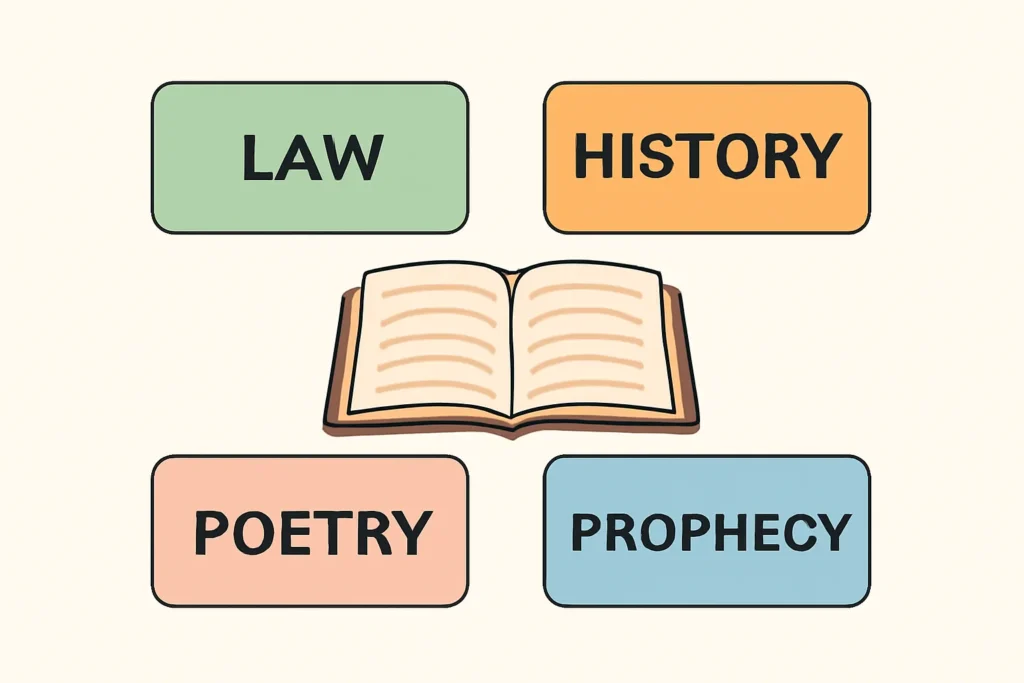
Across most Christian traditions, the Bible is divided into two large sections: the Old Testament (or Hebrew Bible in Jewish tradition) and the New Testament. Within each section, books are grouped by literary type and by thematic content. Some of the most common groupings you will encounter include:
Law (Pentateuch/Torah) and related historical narrative
Historical writings that recount the history of Israel or the early church
Wisdom literature and poetry that reflect on life, worship, and human experience
Prophets who deliver messages from God, often addressing social justice, covenant faithfulness, and future hope
Gospels about the life, teaching, death, and resurrection of Jesus
Acts describing the early Christian movement
Epistles or letters written to congregations or individuals for instruction and encouragement
Apocalyptic literature that uses symbolic imagery to convey divine sovereignty and future expectations
In addition to these categories, many Christian traditions highlight differences in canonical order and in the status of certain books, especially between Protestant, Catholic, and Orthodox canons. The next sections walk through these categories in more detail, with representative examples from each group.
Old Testament Categories: From Law to Prophets
The Law (Pentateuch or Torah)
At the core of the Old Testament is the Pentateuch, also called the Torah in Jewish tradition. These five books tell foundational stories, establish the covenantal relationship between God and Israel, and lay down the laws and rituals that guided life in ancient Israel. The material is deeply formative for Jewish and Christian faith alike.
Genesis—creation, the early history of humanity, and the origins of Israel
Exodus—deliverance from Egypt, the giving of the Law at Sinai
Leviticus—ritual instructions, priestly duties, and holiness codes
Numbers—journeys of the wilderness generation and census data
Deuteronomy—reaffirmation of the covenant and a reminder of the law before entering the land
Within academic and devotional circles, you may also see references to the Pentateuchal narrative and the legal corpus as two strands within the same book family. The emphasis may differ by tradition, but the overarching sense is clear: these five books establish the framework of God’s plan for humanity and for Israel as a people.
Historical Books
Following the Pentateuch, the Historical Books narrate the rise and fall of kingdoms, the fortunes of the people of Israel, and the life of the early post-exilic community. These books present a mix of battlefield history, royal records, and reform movements, often highlighting the consequences of faithfulness or unfaithfulness to the covenant.
Joshua and Judges cover the conquest and the period of tribal leadership
Ruth offers a short story of loyalty and lineage within the Israelite story
1–2 Samuel trace the transition from judges to a united monarchy under David
1–2 Kings recount the history of the Israelite and Judahite kingdoms
1–2 Chronicles retell some of the same events with different emphasis
Ezra and Nehemiah describe the return from exile and rebuilding
Esther offers a narrative of deliverance during a period of exile
These books emphasize the covenant relationship with God, national identity, leadership, prayer, worship, and the dangers of turning away from divine guidance. They also set the stage for prophetic voices to speak into ongoing national life.
Wisdom Literature and the Writings
The Wisdom Literature section invites reflection on life from a moral and spiritual perspective. It includes poetry, songs, and proverbs that explore human experience in relation to God.
Job grapples with suffering and faith in the midst of confusion
Psalms are prayers, songs, and meditations that cover the full range of human emotion
Proverbs offers practical wisdom about living well
Ecclesiastes wrestles with meaning, time, and purpose
Song of Songs presents an intimate poetic celebration of love
In some traditions, additional books such as Wisdom (the Wisdom of Solomon) and Sirach (Ecclesiasticus) are considered part of the wisdom corpus and appear in the Catholic and Orthodox canons as deuterocanonical portions. These writings enrich themes of prudence, devotion, and the fear of the Lord.
The Prophets
The Prophetic Books bring messages from God that address both immediate historical situations and long-term hope. They are commonly divided into Major Prophets and Minor Prophets, not by importance but by the length of the books.
Major Prophets include Isaiah, Jeremiah, Lamentations, Ezekiel (often spelled Ezra in some texts; correct spelling: Ezekiel), and Daniel
Minor Prophets include the twelve shorter books such as Hosea, Joel, Amos, Obadiah, Jonah, Micah, Nahum, Habakkuk, Zephaniah, Haggai, Zechariah, and Malachi
Prophetic literature often features calls to repentance, critiques of social injustice, visions of divine justice, and promises of future restoration. Some traditions distinguish between the historical context of the prophets and their enduring messages about God’s character and plan for nations and individuals.
Canonical Variations Within the Old Testament
While the broad categories above are common, the exact ordering and inclusion of certain books can differ among traditions. The Hebrew Bible organized the material differently from most Christian Bibles, and Catholic and Orthodox canons include additional deuterocanonical/apocryphal writings in some places. When you study the Bible in different communities, you may encounter terms such as Ketuvim (Writings), Nevi’im (Prophets), or Tanakh (an acronym for the three-part Hebrew canon: Torah, Nevi'im, Ketuvim). Recognizing these variations helps in understanding why a given edition presents the books in a slightly different order or includes extra books.
New Testament Categories: From Gospels to Revelation
The Gospels
At the heart of the New Testament are the Gospels, four accounts of Jesus’ life, ministry, death, and resurrection. Each Gospel offers a distinctive perspective while bearing unified testimony to the core events of the Christ story.
Matthew emphasizes Jesus as the fulfillment of Jewish expectation and includes the Sermon on the Mount
Mark presents a concise, action-oriented narrative focusing on Jesus’ deeds
Luke highlights mercy, social concern, and prayer, often with careful historical detail
John emphasizes identity and proclamation, with theological depth and symbolic language
Acts of the Apostles
Acts tells the story of the early church after Jesus’ ascension. It traces the spread of the gospel, the work of the Holy Spirit, and the formation of Christian communities across the Mediterranean world.
Key themes include mission, fellowship, and the role of the apostles and leaders like Peter and Paul
Acts provides historical bridge material between the Gospels and the Epistles, illustrating how early believers interpreted Jesus’ life and teachings in real communities
The Epistles
The Epistles are letters written to churches or individuals to offer instruction, encouragement, and theological reflection. They come in two broad subgroups: Pentecostal-Pauline letters and General Epistles.
Pauline Letters (also called Pauline Epistles) include Romans, 1 & 2 Corinthians, Galatians, Ephesians, Philippians, Colossians, 1 & 2 Thessalonians, 1 & 2 Timothy, Titus, and Philemon
General Epistles include James, 1 & 2 Peter, 1–3 John, and Jude
The Epistles address a range of topics: doctrine (what Christians should believe), ethics (how to live as a community and as individuals), church leadership and order, and practical guidance for navigating trials and conflicts within communities of faith.
The Book of Revelation is the primary example of apocalyptic writing in the New Testament. It uses symbolic imagery, visions, and cosmic language to present God’s ultimate victory over evil and the coming of a restored creation. For readers, Revelation invites contemplation of hope, perseverance, and fidelity in the midst of present difficulties.
Canonical Variations in the New Testament
Most modern Christian Bibles share the same core New Testament books, but there are minor variations in the ordering of epistles, and some traditions include additional notes or deuterocanonical sections in study editions. The central, non-negotiable core for most Christian groups includes the Gospels, Acts, the Epistles, and Revelation. Understanding the function of each category helps readers approach the New Testament with appropriate expectations—narrative faith formation in the Gospels, foundational teaching in the Epistles, and hopeful vision in Revelation.
Cross-Tradition Differences: Canons, Orders, and Terminology
Protestant, Catholic, and Orthodox Canons
One of the most important category distinctions concerns the canon—which books are considered authoritative Scripture in a given tradition. In broad terms:
Protestant canons typically include 39 Old Testament books and 27 New Testament books, excluding the deuterocanonical writings
Catholic canons include the same 39 Old Testament books plus a set of deuterocanonical works such as Tobit, Judith, Wisdom, Sirach, Baruch, and 1–2 Maccabees, which are placed in a separatesection or integrated in Catholic editions
Orthodox canons often include additional texts beyond the Catholic list, such as 3 Maccabees or Psalm 151 in some orders, depending on the national church tradition
These variations illustrate how the same material can be grouped under different headings or included as part of the canonical body. Still, the core narrative arcs—the historical/prophetic storyline of Israel and the life and teaching of Jesus and his followers—remain central across traditions.
Terminology: Deuterocanonical, Apocrypha, and Pseudepigrapha
Readers will encounter several terms that describe older writings related to the biblical canon but with different status. It helps to keep these terms distinct:
Deuterocanonical books are included in Catholic and some Orthodox canons but are not part of most Protestant Bibles
Apocrypha is often used in Protestant contexts to refer to these non-canonical or disputed books, depending on the edition
Pseudepigrapha refers to a broader body of ancient writings attributed to biblical figures but not considered canonical by any major tradition
Understanding these terms helps you interpret study notes, cross-references, and scholarly discussion without conflating authoritative Scripture with other ancient writings.
Practical Ways to Use Bible Categories in Study
Reading Plans by Category
Choosing a study plan that targets a specific category can deepen comprehension and retention. Some practical approaches include:
Category-based plan: Focus on a single category for a month (e.g., a “Poetry and Wisdom” month with Psalms, Proverbs, Job, Ecclesiastes, Song of Songs)
Historical narrative plan: Read through the Historical Books in order to understand the storyline of Israel from conquest through exile and return
Gospel-focused plan: Read all four Gospels side by side or sequentially to compare accounts of Jesus’ life
Epistle study: Alternate Paul’s letters with the General Epistles to see how early Christians addressed both doctrinal issues and practical living
Thematic vs. Sequential Reading
There are two common strategies for approaching the Bible by category:
Thematic study asks questions like “What does the Old Testament say about covenant faithfulness?” or “What patterns of leadership emerge in the historical books?”
Sequential study follows the order of the books or the order of a canonical list to understand continuity and progression in biblical history and teaching
Many readers find it helpful to combine approaches: study a category thematically, then read through the adjacent books sequentially to notice how themes develop over time.
Common Misunderstandings About Bible Categories
Two frequent misconceptions can hinder interpretation or study efficiency:
All books in the Old Testament are equally ancient or the same in style. In fact, the Old Testament is a library with a wide range of genres, as outlined above, and each sub-collection serves different purposes in spiritual formation and historical memory.
New Testament letters are only for church leaders. While many letters address church governance and leadership, they also offer practical guidance for communities and individuals facing everyday faith challenges, moral decisions, and spiritual growth.
Glossary of Terms You Will Encounter
Canon: the official list of books recognized as sacred scripture
Covenant: a binding agreement between God and a people, central to many biblical narratives
Ketuvim: the Writings, a section within the Hebrew Bible
Nevi’im: the Prophets, a major grouping within the Hebrew Bible
Tanakh: an acronym for Torah, Nevi’im, and Ketuvim
Deuterocanonical: books considered canonical in Catholic and Orthodox traditions but not in the Protestant canon
Apocrypha: term used in Protestant contexts for certain non-canonical or disputed writings
Pseudepigrapha: a broad category of ancient writings attributed to biblical figures but not part of the canonical Bible
Prophets: spokespersons for God who convey messages about justice, mercy, judgment, and hope
Epistles: letters addressed to churches or individuals to teach, correct, or encourage
Apocalyptic: a genre involving visions, symbols, and cosmic revelations about final things
Final Thoughts: Why Categorization Matters
The categories in the Bible are not just labels; they reflect the way ancient communities understood God’s communication across generations. By recognizing the genres and thematic clusters, modern readers can approach the text with a method that honors its diversity while remaining faithful to its core message. Whether you are studying for personal growth, teaching others, or engaging in scholarly exploration, the bible book categories provide a practical roadmap for navigating a document that spans multiple genres, cultures, and centuries.
Sample Reading Paths: Quick Recommendations
To help you start exploring the categories, here are a few sample reading paths that emphasize different aspects of the Bible’s organization:
Wisdom and devotion: Psalms → Proverbs → Job → Ecclesiastes → Song of Songs
New Testament gospel perspective: all four Gospels read in parallel or sequence (Matthew, Mark, Luke, John) taken together with Acts and then moving to the Epiecow (Epistles) and Revelation
Canon and tradition exploration: compare a Protestant edition with a Catholic edition to observe how deuterocanonical books are presented and discussed in notes
Conclusion
The Bible’s categories are a durable guide for grasping its structure, appreciating its literary variety, and enabling more thoughtful reading. Whether you are new to the Bible or revisiting it after years of study, understanding the major divisions—Law, Historical Books, Wisdom Literature, Prophets, Gospels, Acts, Epistles, and Apocalyptic Revelation—helps you see how each part contributes to a larger, cohesive narrative about God’s relationship with humanity. Remember that traditions differ in the details of which books are considered canonical, how they are ordered, and which additional writings are included. Yet the overarching goal remains the same: to invite readers into a transformative encounter with the biblical text, longestablished in faith and shared across generations.















Leave a Reply