Catholic New Testament: Books, order, and how to read it
Catholic New Testament: Books, order, and how to read it
You may have opened a Catholic Bible and wondered why the New Testament begins with Matthew, how its books are organized, or whether a “Catholic New Testament” differs from the New Testament used by other Christians. The answer is straightforward: the Catholic New Testament contains the same 27 books recognized by most Christian traditions, from Matthew through Revelation. The distinctly Catholic differences are found mainly in the Old Testament, the notes and introductions in the Bible edition, and the way the New Testament is read within the Church’s larger tradition.
The New Testament tells the story of Jesus Christ, the first Christian communities, and the hope of salvation. It includes four Gospels, the Acts of the Apostles, letters attributed to apostles and their coworkers, and the Book of Revelation. A good Catholic edition also helps you understand how these writings fit together, how they are used in the liturgy, and how faith, history, worship, and daily discipleship connect.
A Catholic New Testament is not a separate set of Christian books with a different number of writings. Catholic Bibles contain the same New Testament books as Protestant Bibles and Eastern Orthodox Bibles, although editions may vary in translation, notes, study resources, and the order of some supplementary material.
The word Catholic describes the Bible’s ecclesial setting and interpretation. Catholic editions generally present Scripture as part of the Church’s living tradition, alongside the sacraments, the liturgy, the teachings of the apostles, and the guidance of the Church. They commonly include introductions, cross-references, maps, doctrinal notes, and explanations of passages that are especially important in Catholic worship and theology.
The Catholic canon includes 46 books in the Old Testament and 27 books in the New Testament, for a total of 73 books. The additional Old Testament books are sometimes called the deuterocanonical books. They do not create a difference in the New Testament itself, but they help explain why a Catholic Bible is usually longer than many Protestant Bibles.
Central answer: If you are looking for the Catholic New Testament, look for an edition containing the 27 standard New Testament books, along with Catholic approval and notes that reflect the Church’s interpretation.
How the 27 Catholic New Testament books are organized
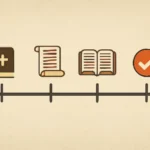
The New Testament is arranged by literary type and traditional importance rather than strict chronological order. The four Gospels come first because they present the life, teaching, death, and resurrection of Jesus. Acts follows because it continues the story of the disciples and the growth of the Church.
Four Gospels: Matthew, Mark, Luke, and John.
One historical narrative: Acts of the Apostles.
Pauline letters: Romans through Philemon.
Other apostolic letters: Hebrews, James, 1 and 2 Peter, 1, 2, and 3 John, and Jude.
One apocalyptic book: Revelation.
These categories are useful, but they should not make the books seem disconnected. The Gospels provide the foundation. Acts shows how Jesus’ mission continued through the apostles. The letters address real questions in Christian communities, and Revelation uses symbolic language to encourage believers facing suffering while proclaiming God’s ultimate victory.
What each part of the Catholic New Testament contains
The four Gospels present four portraits of Jesus
Matthew, Mark, Luke, and John are called Gospels because they proclaim the good news of Jesus Christ. They are not four unrelated biographies. Each Gospel selects and arranges material to communicate a particular theological perspective while remaining centered on Jesus’ ministry, crucifixion, and resurrection.
Matthew emphasizes Jesus as the fulfillment of Israel’s Scriptures and presents him as a teacher who forms a community of disciples.
Mark is direct and urgent, showing Jesus’ authority, suffering, and call to faithful discipleship.
Luke highlights God’s mercy, concern for the poor and marginalized, prayer, the Holy Spirit, and the universal reach of salvation.
John uses distinctive imagery and extended conversations to explore Jesus’ identity, signs, relationship with the Father, and gift of eternal life.
A Catholic reader does not need to force every difference among the Gospels into a single flattened account. Their differences can reveal what each evangelist wants the community to notice. Reading the same event in more than one Gospel often gives a fuller understanding of Jesus’ words and actions.
Acts of the Apostles follows the Church after Easter
Acts describes the disciples’ witness after Jesus’ resurrection and ascension. It begins in Jerusalem and follows the spread of the Christian message through places such as Samaria, Antioch, and the wider Roman world. Peter has a major role in the early chapters, while Paul becomes central in the latter part of the book.
The book emphasizes the Holy Spirit, preaching, baptism, prayer, community life, and mission. It also shows that the early Church faced disagreement, persecution, practical needs, and difficult decisions. That realism makes Acts useful for understanding both the Church’s divine calling and the ordinary human challenges of communal life.
Paul’s letters address faith and community problems
The letters associated with Paul were written to particular communities or individuals. They respond to concrete circumstances, so they should not be read as abstract theological textbooks detached from history. Paul discusses the Gospel, grace, faith, moral conduct, worship, unity, suffering, resurrection, and the relationship between Jewish and Gentile believers.
Romans offers an extended explanation of sin, grace, faith, Israel, and God’s saving plan.
1 and 2 Corinthians address division, worship, spiritual gifts, sexual ethics, the resurrection, reconciliation, and Christian ministry.
Galatians defends the freedom of the Gospel and the transforming power of faith working through love.
Ephesians reflects on the Church as Christ’s body and calls Christians to unity and holy living.
Philippians stresses joy, humility, perseverance, and Christlike self-giving.
Colossians focuses on Christ’s supremacy and the new life believers receive in him.
1 and 2 Thessalonians encourage a community awaiting the Lord while continuing faithful daily work.
1 and 2 Timothy and Titus offer guidance concerning leadership, teaching, conduct, and pastoral responsibility.
Philemon is a short appeal concerning Onesimus and the transformation of relationships within Christian faith.
When reading Paul, pay attention to the people and problem behind each letter. A passage about a particular dispute may still offer lasting wisdom, but its first meaning becomes clearer when you know what situation prompted it.
The other letters address the wider Church
Hebrews, James, 1 and 2 Peter, 1, 2, and 3 John, and Jude are often called the Catholic or general epistles, although Hebrews is not formally addressed in the same way as several of the others. These writings speak to broader Christian concerns such as perseverance, suffering, practical holiness, false teaching, love, moral responsibility, and the relationship between belief and action.
James is especially direct about the need for faith to become visible in works of mercy and obedience. 1 Peter encourages Christians facing hardship. 1 John connects love of God with love of fellow believers and warns against separating spiritual claims from moral life.
Hebrews presents Jesus as the definitive mediator and priest while drawing heavily on Israel’s Scriptures and worship. It calls readers to confidence, endurance, and faithful participation in God’s promise. Jude and 2 Peter warn communities about destructive teaching and urge them to remain grounded in the apostolic faith.
Revelation uses symbols to strengthen hope
Revelation is the final book of the New Testament and the most frequently misunderstood. It is not best approached as a coded newspaper predicting every modern event. It is an apocalyptic work filled with visions, symbols, worship scenes, warnings, judgments, and promises.
The book was written to communities living under pressure and calls them to remain faithful to Christ rather than surrender to fear or idolatry. Its images draw deeply from the Old Testament. A Catholic reading takes its message seriously while recognizing that symbolic literature should not always be interpreted as a literal sequence of future events.
Read Revelation slowly, notice repeated themes, and use the notes and cross-references in a Catholic study Bible. The book’s central hope is that God is sovereign, evil does not have the last word, and those who remain faithful will share in renewed life with God.
How the Catholic New Testament differs from Protestant editions
The New Testament book list is generally the same in Catholic and Protestant Bibles. The more visible differences usually concern the Old Testament canon, translation choices, explanatory notes, and the treatment of passages related to Catholic teaching.
A Catholic Bible may include notes that connect passages with the Mass, the sacraments, apostolic succession, Mary, the saints, the authority of the Church, and the relationship between faith and works. A Protestant study Bible may explain the same passages from a different theological tradition. The underlying text can be similar while the interpretive framework differs.
Some editions also use different names or numbering conventions for certain passages. Psalm numbering is a familiar example: Catholic liturgical resources may follow the Greek-based numbering used in the Septuagint tradition, while many Protestant Bibles follow the Hebrew numbering. The difference can affect how a psalm reference appears without changing the prayer or subject of the psalm.
Translation style also matters. Some Catholic readers prefer a more formal translation that stays close to traditional phrasing. Others choose a translation in contemporary English. The best choice depends on whether you want a Bible primarily for personal prayer, public worship, study, or a combination of these purposes.
How to choose a Catholic New Testament edition
Start by deciding how you plan to use it. A compact New Testament may be convenient for travel or carrying to class. A study Bible may be better if you want historical notes, maps, introductions, and cross-references. A large-print edition can make sustained reading easier, while a liturgical edition may help you follow readings used at Mass.
Check the translation: Choose language you can understand and read consistently.
Look for Catholic approval: A Catholic edition commonly identifies its ecclesial approval or imprimatur in the front matter.
Review the notes: Make sure the notes match the level of explanation you want rather than overwhelming the text.
Consider the format: Print, audio, and digital editions each support different reading habits.
Inspect the layout: Clear headings, readable type, cross-references, and durable binding affect long-term use.
Choose a manageable size: The Bible you actually carry and open is more useful than an edition that remains on a shelf.
No single edition is perfect for every purpose. You may use one Bible for prayer and another for detailed study. If you compare translations, read complete paragraphs rather than isolated verses so you can notice how wording affects the flow and emphasis.
Buying tip: Before choosing an edition, read its publisher’s description and several sample pages. A Bible’s notes, type size, translation style, and cross-references can matter as much as its cover.
How to start reading the Catholic New Testament step by step
A first reading becomes easier when you have a modest plan. You do not need to understand every historical question or theological term before beginning. Read attentively, mark what you do not understand, and return to difficult passages later.
Begin with the Gospel of Mark or Luke. Mark gives a concise, energetic account of Jesus. Luke offers a broad narrative with strong attention to mercy, prayer, and the Holy Spirit.
Read a short passage at a regular time. One chapter or a few paragraphs can be enough. Consistency is more helpful than attempting a large amount once.
Identify the scene and the people. Ask where Jesus is, who is present, what problem has arisen, and how the passage changes the situation.
Notice repeated words and actions. Repetition often signals an important theme, such as faith, forgiveness, seeing, hearing, or following.
Read the study notes after reading the passage. Notes can supply context, but first allowing the text to speak helps you avoid reading only someone else’s explanation.
Connect the passage with the rest of Scripture. Use cross-references to see how the New Testament echoes Israel’s Scriptures and how related Gospel accounts illuminate each other.
Respond in prayer and practice. Ask what the passage reveals about God, what it asks of you, and how it might shape a concrete action.
For a structured path, read Mark, then Acts, Luke, Matthew, and John. Follow with selected letters such as Philippians, James, Romans, and 1 Peter. After gaining familiarity with the central story, read the remaining books in order, using introductions to understand their setting.
How Catholics read the New Testament at Mass
The New Testament is not used only for private study. It is proclaimed publicly during the liturgy, where Scripture is heard within prayer, the sacraments, the homily, and the Eucharistic celebration. The Sunday readings usually include a Gospel passage, a reading from another New Testament book, and a reading from the Old Testament, along with a psalm.
Listening at Mass differs from reading alone. The passage is heard as part of a larger act of worship and is interpreted in relation to Christ’s death and resurrection. A short Gospel reading may gain meaning from the season of the Church year, the feast being celebrated, and the other readings chosen with it.
You can prepare by reading the assigned passages before Mass and noticing one question or phrase that stays with you. During the homily, listen for how the readings connect with Christian life rather than treating each passage as an isolated quotation. After Mass, return to the text and consider how the liturgy shaped your understanding.
How to understand difficult passages responsibly
The New Testament contains teachings that can seem difficult because of language, culture, history, or the difference between ancient literary forms and modern expectations. A careful reader avoids two extremes: assuming every passage is immediately obvious, or deciding that a difficult passage has no meaningful interpretation.
Begin with the literal sense, meaning what the human author communicates through the text’s words, genre, and historical setting. Then consider the passage in its wider biblical context and in the Church’s tradition. A parable, a hymn, a letter addressing a local conflict, and an apocalyptic vision should not all be interpreted in precisely the same way.
Read the entire section before focusing on one sentence.
Check the introduction and notes for historical and literary context.
Compare parallel passages in the other Gospels when available.
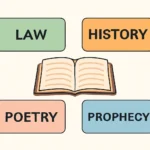
Notice whether the language is narrative, poetry, wisdom, exhortation, symbol, or argument.
Distinguish what the passage directly says from an interpretation imposed on it.
Discuss persistent questions with a priest, deacon, catechist, or knowledgeable Catholic teacher.
Catholic interpretation also considers the unity of Scripture. A passage should not be used to cancel the central message of the Gospel or to support an interpretation that ignores the rest of the biblical witness. The Church reads Scripture within the faith handed on through worship, teaching, and the lives of faithful Christians.
Important Catholic themes found in the New Testament
Several themes appear throughout the books and help explain why the New Testament is central to Catholic faith. Jesus is both the center and the fulfillment of the biblical story. The Gospels present his words and actions, while the letters and Acts explain how his saving work shaped the apostolic community.
Grace comes first, but grace changes how people live. The New Testament repeatedly presents salvation as God’s gift, while also calling believers to repentance, love, obedience, works of mercy, and perseverance. Catholic reading therefore avoids treating faith as either mere intellectual agreement or a way of earning God’s favor.
The Church is a visible community. Acts and the letters describe baptism, shared worship, leadership, discipline, service, teaching, and care for the poor. Christianity is not portrayed only as a private relationship between an individual and God.
The sacraments have biblical roots. The New Testament does not present a complete systematic manual of Catholic sacramental theology, but it provides the scriptural foundations and patterns that the Church has received and developed in its worship. Baptism, the Eucharist, reconciliation, anointing, marriage, ordination, and the life of prayer are understood within this wider apostolic setting.
Love is practical and communal. The command to love God and neighbor is expressed through forgiveness, generosity, truthfulness, hospitality, care for the vulnerable, and patient endurance. Reading the New Testament well means allowing its moral vision to challenge habits, relationships, and priorities.
Why the Catholic New Testament is read with tradition
Catholic faith does not treat Scripture as a text detached from the community that preserved, proclaimed, and interpreted it. The Bible was written within the life of Israel and the early Church, and it continues to be read within the Church’s worship and teaching. This is why Catholic study often brings Scripture into conversation with the Church Fathers, councils, liturgical readings, and the Catechism.
Tradition does not mean adding random ideas to the Bible. In Catholic theology, apostolic Tradition is the living transmission of the faith received from Christ through the apostles. Scripture and Tradition are closely related ways by which the Church receives and hands on God’s revelation, with the Church’s teaching office serving their authentic interpretation.
This approach can help when a passage has been debated for centuries. It encourages humility, historical awareness, and attention to the whole faith rather than relying on a verse removed from its context. It also reminds readers that biblical understanding grows through prayer, study, worship, and faithful practice.
Practical ways to get more from your reading
Keep a simple notebook with three headings: what the passage says, what it means, and how I should respond. This prevents your reading from becoming either a purely academic exercise or a vague search for personal inspiration. Write down unfamiliar names, places, and questions, then return to them after finishing the section.
Use the footnotes selectively. They may explain a manuscript variation, a quotation from the Old Testament, a cultural practice, or a Catholic interpretation. You do not need to follow every reference immediately. Mark the most useful ones and continue reading so that you preserve the narrative flow.
Read aloud occasionally, especially the Gospels, Psalms quoted in the New Testament, and the letters. The early Christian communities often heard these writings proclaimed rather than reading them silently in private. Hearing the rhythm and repetition can reveal emphasis that is easy to miss on the page.
Finally, let difficult passages remain difficult for a while. Understanding often develops through repeated reading and conversation. A Catholic New Testament is not merely a reference book; it is a text for worship, prayer, moral formation, and encounter with Christ.
Frequently asked questions
Does the Catholic New Testament have different books from the Protestant New Testament?
No. Catholic and Protestant Bibles generally contain the same 27 New Testament books. The major difference in the number of books concerns the Old Testament, where Catholic Bibles include the deuterocanonical books. Catholic editions may still differ through translation, study notes, introductions, cross-references, and explanations shaped by Catholic teaching.
Which Catholic Gospel should I read first?
Mark is a good starting point if you want a concise and fast-moving account of Jesus’ ministry. Luke may suit you if you want a fuller narrative that emphasizes mercy, prayer, the poor, and the Holy Spirit. John is especially helpful after you know the basic story because it uses distinctive symbolism and extended theological reflection.
What does “imprimatur” mean in a Catholic Bible?
An imprimatur is an official declaration that a publication contains nothing contrary to Catholic faith or morals, issued by an authorized Church authority. It does not mean every editorial choice is the only possible explanation, nor does it replace careful reading. Check the Bible’s front matter to see whether approval or related ecclesial authorization is listed.
Should I read the Catholic New Testament straight through?
You can, but a planned order may make the experience clearer. Many readers begin with Mark or Luke, continue with Acts, and then read John and selected letters. If you read straight through, use the introductions to understand changes in genre and setting, especially when moving from the Gospels to letters and Revelation.










Leave a Reply