Catholic Old Testament: Books, Canon, and How to Read It
Catholic Old Testament: Books, Canon, and How to Read It
The Catholic Old Testament contains 46 books, including seven books that are not found in most Protestant Bibles: Tobit, Judith, 1 Maccabees, 2 Maccabees, Wisdom, Sirach, and Baruch. It also includes longer versions of Esther and Daniel. Together with the 27 books of the New Testament, these make up the 73-book Catholic Bible.
For Catholics, the Old Testament is not a discarded set of writings replaced by Christianity. It is the first part of the one biblical story of creation, covenant, sin, redemption, and hope. Its promises and patterns prepare for Jesus Christ, while its prayers, wisdom, laws, and accounts of Israel continue to shape Catholic worship and belief.
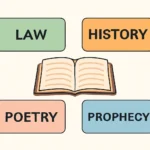
The Catholic Old Testament is commonly arranged into four broad groups: the Pentateuch, historical books, wisdom and poetic books, and prophetic books. This arrangement helps you locate a book, although it does not imply that every book was written in a single period or follows a simple chronological order.
The Pentateuch: the first five books
The Pentateuch, also called the Torah, consists of the first five books of the Bible. These books establish the central foundations of biblical faith: creation, humanity’s fall, God’s covenant with Abraham, Israel’s liberation from Egypt, and the giving of the Law through Moses.
Genesis describes creation, the early human story, the flood, and the ancestors Abraham, Isaac, Jacob, and Joseph.
Exodus recounts Israel’s slavery in Egypt, the Passover, the covenant at Sinai, and the construction of the sanctuary.
Leviticus presents laws concerning worship, holiness, sacrifice, priests, and life within the covenant.
Numbers follows Israel through the wilderness and explores rebellion, trust, judgment, and God’s continued guidance.
Deuteronomy presents Moses’ final teachings and renews the covenant before Israel enters the promised land.
These books are not merely a rulebook. Their laws are set within a relationship between God and a people. The narrative gives the commandments a setting: Israel has been rescued, brought into covenant, and called to live as a holy community.
Historical books
The historical books describe Israel’s settlement in the land, its kings and prophets, periods of national crisis, exile, and restoration. They include both national history and theological interpretation. The writers repeatedly ask how faithfulness or unfaithfulness affects the people’s life with God.
Joshua tells of Israel’s entry into and division of the promised land.
Judges portrays repeated cycles of rebellion, oppression, rescue, and decline.
Ruth follows a Moabite woman whose loyalty becomes part of the story of David’s family.
1 and 2 Samuel focus on Samuel, Saul, David, the monarchy, and the consequences of royal choices.
1 and 2 Kings trace the kingdoms of Israel and Judah through political conflict, prophetic warnings, and exile.
1 and 2 Chronicles retell much of Israel’s history with special attention to David, the Temple, worship, and the community of Judah.
Ezra and Nehemiah describe the rebuilding of the Temple, Jerusalem, and the religious community after exile.
Tobit presents family faith, prayer, charity, marriage, and divine care through the story of Tobiah and his family.
Judith tells of a courageous widow who acts to protect her people in a time of danger.
Esther describes the preservation of the Jewish people from destruction; Catholic editions include passages that emphasize prayer and God’s providence.
1 and 2 Maccabees recount Jewish resistance to religious persecution and reflect on martyrdom, resurrection, the Temple, and fidelity to the covenant.
The books of Tobit, Judith, and the Maccabees are especially useful for seeing how biblical faith appears in ordinary and extreme circumstances. They address family responsibilities, courage, almsgiving, religious persecution, prayer for the dead, and hope in resurrection.
Wisdom and poetic books
The wisdom and poetic books speak through prayer, reflection, poetry, proverbs, and philosophical questioning. They do not all answer suffering in the same way. Instead, they give believers language for praise, grief, doubt, repentance, love, and trust.
Job wrestles with innocent suffering and rejects simplistic explanations for tragedy.
Psalms provide prayers of praise, lament, thanksgiving, repentance, trust, and petition.
Proverbs offers practical instruction about wisdom, speech, work, justice, family, and self-control.
Ecclesiastes reflects on mortality, human effort, pleasure, injustice, and the limits of worldly achievement.
Song of Songs celebrates mutual love through lyrical poetry and has also received spiritual interpretations.
Wisdom praises divine wisdom, describes the destiny of the righteous, and reflects on justice, immortality, and God’s action in history.
Sirach gives extensive moral and religious instruction about friendship, speech, humility, family life, worship, and wisdom.
Wisdom and Sirach are two of the deuterocanonical books accepted as Scripture in the Catholic Church. Their teaching often sounds close to the moral and spiritual concerns found in Proverbs, but they also reflect the experience of Jewish communities living in a later historical period.
Prophetic books
The prophetic books contain warnings, promises, symbolic actions, visions, prayers, and calls to conversion. A prophet is not simply someone who predicts the future. Prophets speak God’s word to a particular people facing injustice, idolatry, violence, political danger, or spiritual apathy.
Isaiah addresses judgment, holiness, comfort, restoration, and the future hope of God’s servant and kingdom.
Jeremiah warns Judah before its fall and speaks of a renewed covenant written within the heart.
Lamentations mourns Jerusalem’s destruction and expresses grief before God.
Baruch combines confession, encouragement, wisdom, and hope for a scattered people.
Ezekiel uses striking visions to address judgment, responsibility, restoration, and a renewed Temple.
Daniel presents stories of faithfulness under foreign rule and visions of God’s sovereignty over earthly kingdoms.
Hosea through Malachi are the twelve shorter prophetic books, addressing covenant faithfulness, justice, repentance, worship, and hope.
Catholic editions include Baruch and additional sections of Daniel: the Prayer of Azariah and the Song of the Three Young Men, Susanna, and Bel and the Dragon. These passages are part of the Catholic Old Testament even though they are absent from many Protestant editions.
Why does the Catholic Bible have more Old Testament books?
The difference comes from the history of the biblical canon, especially the relationship between the Hebrew Scriptures and the Greek translation known as the Septuagint. Early Christians commonly used Greek Scripture, and the Septuagint tradition included books and passages that were not part of the later standard Jewish Hebrew collection used by many Protestant translators.
The seven additional Catholic books are often called deuterocanonical, meaning “second canon” in a historical classification. The term does not mean that Catholics consider them less inspired or less authoritative. It distinguishes them from the protocanonical books, whose acceptance was less disputed in later Christian discussions.
The Catholic Church formally reaffirmed its list of biblical books at the Council of Trent in the 16th century, responding in part to disputes raised during the Protestant Reformation. This was a definition of the Church’s received canon, not the moment when Catholics first began reading these writings as Scripture.
Canon reminder: Catholic Bibles contain 46 Old Testament books and 27 New Testament books. Protestant Bibles generally contain 39 Old Testament books and the same 27 New Testament books, while Orthodox canons may include additional differences.
The distinction between Catholic and Protestant Old Testaments should not be reduced to a simple question of which side “added” or “removed” books. The history involves different communities, languages, manuscript traditions, worship practices, and decisions about which writings carried scriptural authority. Ancient Christians did not all use one identical list from the beginning.
For Catholics, the canon is received within the life of the Church. Scripture is read together with the Church’s Tradition, liturgy, teaching, and rule of faith. This does not make the Bible secondary. It provides the interpretive setting in which Catholic readers understand what the biblical books are and how they should be used.
How the Catholic Old Testament points toward Christ
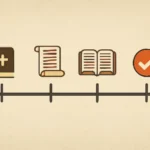
Catholic interpretation reads the Old and New Testaments as parts of a unified revelation. The Old Testament has its own historical setting and meaning, but its events, promises, institutions, and patterns also prepare for Christ. The New Testament repeatedly interprets Israel’s Scriptures in this way.
Several connections are especially important:
Creation and new creation: Genesis presents God as the source of life, while Christian faith sees Christ’s resurrection as the beginning of renewed creation.
Adam and humanity: The first human story explains sin and alienation; the New Testament presents Christ as the obedient representative who restores humanity.
Abraham and faith: God’s promise to Abraham becomes part of the biblical explanation for how blessing reaches all nations.
Passover and deliverance: Israel’s rescue from Egypt provides a pattern for understanding salvation and the Christian celebration of the Eucharist.
Exodus and covenant: God forms a people through liberation and covenant, a pattern completed and broadened through the new covenant in Christ.
Temple and presence: The Temple represents God dwelling among his people; Christian interpretation connects this theme with Christ, the Church, and sacramental worship.
Davidic kingship: The promises associated with David help explain the New Testament presentation of Jesus as the Messiah and King.
Prophetic hope: Promises of restoration, justice, peace, and a renewed covenant become central to Christian hope.
This approach is sometimes called typology. A biblical type is a person, event, or institution that has its own meaning in the Old Testament while also foreshadowing a later fulfillment. The Exodus, manna, the Temple, the sacrificial system, Jonah’s three days, and the Passover are among the themes that Christian tradition reads in relation to Christ.
Typology should not erase the original meaning of the Old Testament. Israel’s deliverance from Egypt was a real act of salvation for Israel, not merely a disguised prediction. Catholic reading holds together both levels: the original context and the fuller meaning revealed through Christ.
The Old Testament also helps prevent a shallow understanding of the New Testament. Jesus’ teachings about prayer, mercy, marriage, justice, the kingdom of God, and love of neighbor arise within Israel’s Scriptures. Familiarity with the Old Testament gives those teachings their historical and theological depth.
“The New Testament lies hidden in the Old and the Old Testament is unveiled in the New.”
This well-known Christian principle, associated with Augustine, expresses how Catholics read the two Testaments together. The Old Testament is not treated as an embarrassing preliminary stage. It is a living witness to God’s work and a necessary foundation for understanding Christian faith.
What themes should you look for while reading?
A first reading can feel difficult because the Catholic Old Testament includes ancient customs, long genealogies, unfamiliar political settings, and passages about warfare or ritual purity. A few recurring themes provide useful orientation without forcing every book into the same pattern.
Covenant is one of the Bible’s central organizing ideas. God makes promises to Noah, Abraham, Moses, and David, and the people are called to respond with worship and faithful living. The prophets often describe idolatry and injustice as forms of covenant betrayal, while restoration is presented as a renewal of the relationship.
Holiness and worship
Leviticus and other legal books may seem remote, but they ask a question that remains important: What does it mean for a people to belong to a holy God? Ritual laws, sacrifices, priesthood, feasts, and purity regulations gave Israel a structured way to worship and live as a distinct covenant community.
Catholics do not follow the Mosaic law as a complete civil and ritual code. Christian interpretation sees the law in relation to Christ and the new covenant. At the same time, its concern for worship, justice, mercy, care for the poor, and fidelity continues to inform Catholic moral and sacramental life.
Justice and care for the vulnerable
The Old Testament repeatedly links worship with ethical conduct. Widows, orphans, immigrants, debtors, the poor, and the powerless receive particular attention. The prophets condemn religious observance that coexists with exploitation or violence.
Books such as Amos, Isaiah, Jeremiah, Micah, Tobit, and Sirach offer different perspectives on almsgiving, honest business, fair judgment, generosity, and responsibility toward neighbors. These themes contribute to Catholic social teaching and show that biblical faith is not limited to private belief.
Suffering, prayer, and hope
Job, many Psalms, Lamentations, and several prophetic writings refuse to pretend that faithful people avoid suffering. They give you permission to bring fear, anger, confusion, and grief into prayer without treating honest lament as a rejection of God.
At the same time, the Old Testament develops a durable hope: God can restore what appears lost, preserve a faithful remnant, forgive sin, and bring life out of death. Second Maccabees is particularly significant for Catholic reflection on martyrdom, resurrection, and prayer for the dead.
How to read the Catholic Old Testament with context
Reading from Genesis straight through can be rewarding, but it is not the only useful approach. A Catholic reader benefits from knowing the genre, historical setting, intended audience, and place in the whole canon. A psalm should not be read exactly like a legal code, and a prophetic vision should not be treated like a modern newspaper report.
Before beginning a book, ask a few practical questions:
What kind of book is this? Identify whether it is narrative, law, poetry, wisdom literature, prophecy, or a later historical account.
Who is speaking? Distinguish the narrator, a character, a prophet, a poet, and a voice within a vision.
What problem or need does the book address? Look for exile, persecution, injustice, religious confusion, family conflict, or a call to renewed worship.
What does the book reveal about God and human beings? Notice themes of mercy, judgment, patience, holiness, freedom, and responsibility.
How does the Church use this book? The Sunday and daily lectionaries can show which passages Catholics hear in worship and how they are paired with Gospel readings.
A study Bible with Catholic notes can help explain names, geography, literary structure, and differences between translations. A reliable Catholic commentary or Bible course is also useful for difficult passages. When reading a study note, keep the distinction clear between the biblical text itself and a commentator’s interpretation.
It is also helpful to read in manageable units. Try one narrative section, one psalm, or one short prophetic passage at a time. Write down repeated words and questions rather than trying to resolve every difficulty immediately.
Practical reading tip: Start with Genesis, Exodus, Ruth, 1 Samuel, Tobit, Psalms, Proverbs, Isaiah, and Daniel, then return to the more technical legal and prophetic sections with a guide.
Prayerful reading does not require ignoring historical or literary questions. Catholics traditionally read Scripture through several connected senses: the literal meaning of the text, its moral significance, its relationship to Christ and the Church, and its orientation toward humanity’s final hope. Good interpretation respects the words on the page while asking how they form a life of faith.
For prayer, the Psalms are the natural starting point. They appear throughout the Liturgy of the Hours and the Mass, and they cover nearly every condition of life. Psalm 23 is associated with trust in God’s guidance, Psalm 51 with repentance, and Psalm 137 with the raw grief of exile. You do not need to force every psalm into a cheerful mood; the collection includes both celebration and anguish.
How the Catholic Old Testament is used in worship and teaching
The Catholic Old Testament is heard regularly at Mass. On Sundays and major feast days, the first reading is ordinarily taken from the Old Testament and placed in relationship with the Gospel. The responsorial psalm gives the assembly a prayerful response, while other readings may draw from the prophetic, historical, or wisdom books.
The readings are selected to show connections across Scripture. A passage about creation, Abraham, the Exodus, David, the prophets, or wisdom may illuminate the Gospel proclaimed the same day. This means Catholics often encounter the Old Testament not as an isolated academic subject but as part of public prayer and sacramental worship.
The books also influence Catholic doctrine and practice. Creation supports belief in the goodness of the created world and the dignity of human life. Exodus and the prophets shape ideas of liberation and justice. Wisdom literature contributes to reflection on virtue. The Psalms teach the language of prayer, and prophetic hope informs Christian expectation of God’s kingdom.
Several deuterocanonical passages have a particularly visible place in Catholic teaching. Wisdom contributes to reflection on the righteous person’s endurance and the destiny of the soul. Sirach offers guidance about virtue and community life. Second Maccabees supports the Catholic practice of praying for the dead by describing prayer connected with those who have died.
Although Catholics honor the Old Testament as inspired Scripture, they do not treat every command as a direct instruction for modern civil life. Interpretation considers the covenant in which a command was given, the literary form of the passage, the development of revelation, and its relationship to Christ. This is why a Catholic approach can take Scripture seriously without applying every ancient regulation in a literal, isolated way.
The best reading produces more than information. It forms reverence, repentance, justice, courage, patience, and hope. It teaches you to recognize God’s action through long stretches of history, including periods when the people’s response is confused or unfaithful. That honest account of human weakness is one reason the Old Testament remains spiritually and intellectually important for Catholics.
Frequently asked questions
Is the Catholic Old Testament the same as the Jewish Bible?
The Catholic Old Testament shares most of its books and many of its traditions with the Jewish Scriptures, but the collections are arranged differently and do not have exactly the same boundaries. Catholic Bibles include the deuterocanonical books, while the Jewish Tanakh does not include those writings in its canon. The order and grouping of books also differ.
Why are the books called deuterocanonical?
“Deuterocanonical” is a historical term used for books accepted as Scripture by Catholics but disputed or excluded from some other Christian canons. It means “second canon,” not “less inspired.” Catholics regard Tobit, Judith, Wisdom, Sirach, Baruch, 1 and 2 Maccabees, and the Greek additions to Esther and Daniel as fully canonical Scripture.
Should Catholics read the Old Testament literally?
Catholics read each passage according to its literary form and context. Poetry, law, prophecy, historical narrative, wisdom writing, and symbolic visions communicate in different ways. A literal reading seeks the intended meaning of the text, not an overly simplistic interpretation that ignores genre, culture, figures of speech, or the Bible’s development across different periods.
Which Catholic Old Testament book is best for someone starting out?
Genesis offers the foundational stories, Ruth is brief and accessible, and Tobit introduces prayer, family life, charity, and divine guidance in a compact narrative. Psalms work well for prayer, while Marking Isaiah passages alongside a Gospel can show how Catholics connect the Testaments. A Catholic study Bible can clarify unfamiliar names and customs.











Leave a Reply