Saint Jeanne Jugan was a French Catholic woman who founded the Little Sisters of the Poor, a religious community serving elderly people who lack family support or financial resources. Born in 1792 in Cancale, Brittany, she spent her life practicing humble, practical charity and trusting in divine providence.
The Church canonized her on October 11, 2009, recognizing a vocation centered on welcoming older people with dignity. Her religious name was Sister Mary of the Cross, and her feast is celebrated on August 30. Her story is especially striking because she founded a major work but was later removed from public leadership and spent much of her final life in obscurity.
Who Saint Jeanne Jugan was and why she is remembered
Jeanne Jugan was born on October 25, 1792, in Cancale, a coastal town in Brittany, France. Her father worked as a fisherman and was lost at sea when Jeanne was still young. Her mother then raised the family, and Jeanne grew up with a firsthand understanding of financial hardship, responsibility, and the insecurity faced by families without a dependable income.
As a young woman, Jeanne worked as a domestic servant and later as a nurse. She was offered an opportunity to marry but chose a life devoted to God and service. That decision did not lead immediately to a religious congregation or a public ministry. For years, her vocation took shape through ordinary work, prayer, and attention to people who were easily overlooked.
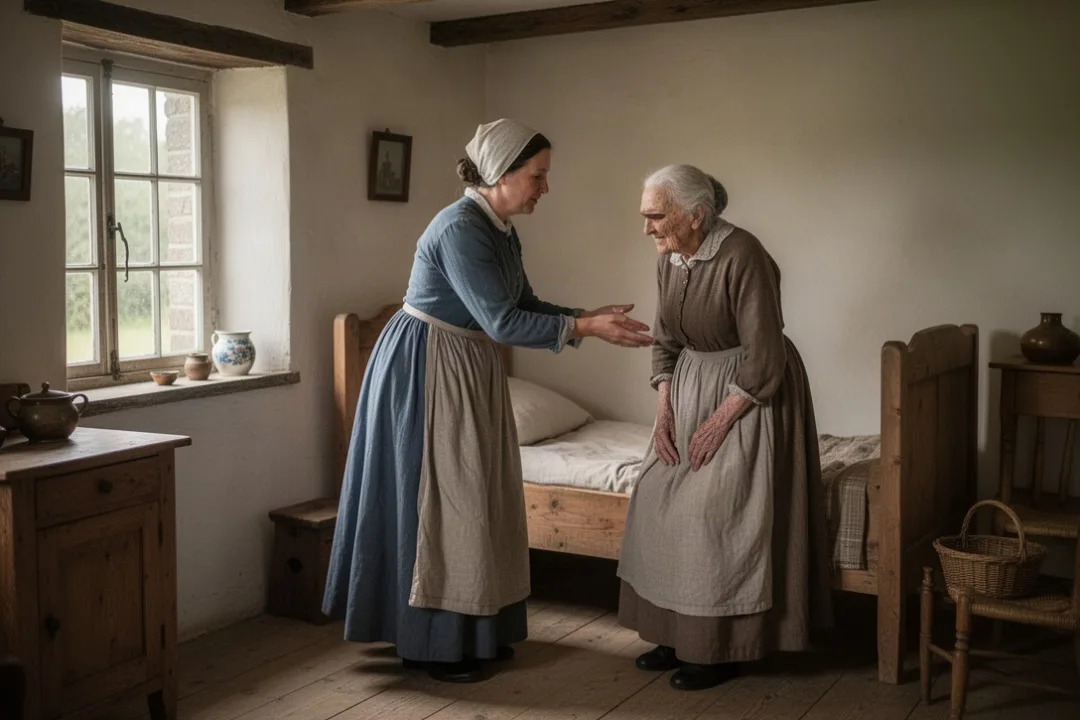
Her lasting recognition began in 1839, when she welcomed an elderly, blind woman named Anne Chauvin into her small home. Jeanne gave the woman her own bed and slept elsewhere. This simple act became the beginning of a mission that would grow into the Little Sisters of the Poor.
The central act: Jeanne did not begin with a large building, a fundraising plan, or an established organization. She responded to one vulnerable person directly, offering shelter, care, and human respect.
Jeanne’s work developed alongside two younger women, Françoise Aubert and Virginie Trédaniel. Together, they welcomed additional elderly people and organized a household where residents could receive food, companionship, and care. The early community soon needed more space, and the women began seeking help from neighbors and benefactors.
That pattern remained characteristic of Jeanne’s approach. She saw the elderly poor not as a problem to be managed but as people with names, histories, and spiritual worth. The practical needs were real—housing, meals, clothing, medical attention, and companionship—but the purpose was broader: to restore a sense of belonging to people who had been pushed to the edges of society.
How Jeanne Jugan founded the Little Sisters of the Poor
The small household in Brittany gradually became a structured religious community. Jeanne and her companions cared for older residents while relying on donations and the generosity of local people. Rather than treating charitable support as an embarrassment, Jeanne regarded asking for help as a way to invite the wider community into a shared responsibility.
Her method of collecting alms was direct and personal. She traveled, spoke with people, and accepted whatever they could offer. Money was useful, but so were food, firewood, clothing, household supplies, and other practical gifts. This approach allowed the homes to serve residents who had little or nothing to contribute financially.
The community was first associated with names such as the Servants of the Poor. As more women joined, its work expanded beyond Jeanne’s original home. The group developed a recognizable habit, a rule of life, and a mission focused on elderly people who were poor, abandoned, or unable to live independently.
In 1842, the community established itself more formally. The women adopted religious commitments and continued developing the organization under ecclesial guidance. Their homes became places where older residents could receive daily care while preserving their religious and personal identity.
Hospitality: elderly people were received as members of a household rather than treated as anonymous cases.
Providence: the community trusted that necessary resources would arrive through prayer, work, and generous people.
Respect: care included conversation, cleanliness, comfort, spiritual support, and attention to personal dignity.
Shared service: sisters, volunteers, benefactors, and residents each had a place in the community’s life.
The homes were not designed merely to provide emergency shelter. They aimed to create a stable family-like environment for people who might otherwise face isolation, institutional neglect, or homelessness. This distinction helps explain why the Little Sisters of the Poor became known not only for charitable relief but also for a distinctive form of community care.
Jeanne’s spirituality shaped the community’s fundraising as much as its caregiving. She encouraged the sisters to approach people with confidence but without entitlement. The poor resident and the donor were both understood as recipients of God’s care, and each person could offer something meaningful to the other.
Why Jeanne Jugan was removed from leadership
Jeanne Jugan’s life also includes a painful period of misunderstanding and injustice. As the community grew, Father Auguste Le Pailleur became an important figure in its organization. He eventually took control of the developing congregation and presented himself as its founder, while Jeanne’s role was minimized.
Jeanne was assigned to collect alms rather than direct the community she had begun. Later, she was sent to La Tour Saint-Joseph, the congregation’s motherhouse near Saint-Pern. There she lived quietly, teaching novices and performing modest tasks. For many years, younger sisters were not told the full truth about her foundational role.
This treatment did not produce a public campaign for recognition. Jeanne continued to pray, work, and encourage the sisters. Her silence should not be confused with approval of falsehood; rather, it reflected her commitment to the community’s mission and her refusal to make personal status the measure of service.
“God has chosen me to be the instrument of his work.”
Accounts of Jeanne’s life emphasize her humility, but humility did not mean passivity. She had already taken decisive action when an elderly woman needed help, built a network of support, and helped establish a religious family. Her example shows that quiet service can be courageous, especially when recognition is absent.
Jeanne spent her later years away from public administration, but she remained spiritually influential. She taught the novices by her conduct and encouraged them to care for the elderly with patience. The hidden years became part of the message associated with her: a person’s worth does not depend on authority, visibility, or public credit.
A useful distinction: Jeanne’s humility was not indifference to the poor. It was a way of keeping attention on the people she served rather than on her own reputation.
Her story can be difficult to read because it involves real institutional failure. Yet it also reveals a form of perseverance that does not depend on controlling the outcome. Jeanne continued to live the mission even after others denied her place in its history.
What Saint Jeanne Jugan believed about dignity and care
Jeanne’s spirituality was shaped by the Catholic tradition of seeing every human person as made in the image of God. In practice, that belief meant making room for people who were poor, elderly, sick, lonely, or dependent on others. She did not separate spiritual care from physical care.
A meal, a clean room, a warm garment, and a patient conversation were not minor details. They were ways of affirming that an older person remained worthy of love and attention. Jeanne’s approach challenges any system that measures people primarily by productivity, independence, or financial value.
The residents welcomed by the Little Sisters of the Poor often had limited resources and few relatives able to care for them. Jeanne’s response was not to romanticize poverty. She recognized its harshness and organized concrete assistance. At the same time, she believed that material support should be offered with respect rather than condescension.
Her understanding of dependence is also relevant to modern caregiving. Everyone becomes dependent at some point through childhood, illness, disability, or age. Jeanne’s work treated dependence not as a loss of human worth but as a condition that calls for mutual responsibility.
Several qualities stand out in her example:
Immediate compassion: she acted when a need was directly in front of her.
Long-term commitment: she did not stop after one charitable gesture but helped create a lasting home.
Personal presence: she valued relationships, conversation, and companionship alongside material aid.
Trust: she believed people would respond when invited to support a worthy cause.
Patience under pressure: she continued serving even when her own contribution was misunderstood.
Jeanne also understood that charitable work requires organization. Compassion must be translated into schedules, meals, beds, staff, supplies, records, and reliable routines. Her legacy therefore combines tenderness with discipline: the elderly are honored not only through good intentions but through consistent care.
How her spirituality can guide ordinary service
You do not need to work in a religious home for the principles associated with Jeanne to become practical. A family member may need help with transportation, meals, medication reminders, or companionship. A neighbor may be isolated, and a local senior center may need volunteers or donated supplies.
Jeanne’s example suggests beginning with the person rather than the category. Instead of thinking only about “the elderly” or “the poor,” learn someone’s name, listen to what that person actually needs, and offer help that protects independence whenever possible.
Her approach also encourages communities to share responsibility. One person may provide transportation, another may cook, another may handle paperwork, and another may simply visit. A dependable network often serves vulnerable people better than one dramatic act of charity.
Jeanne Jugan’s beatification, canonization, and feast day
The Catholic Church recognized Jeanne Jugan as a model of Christian holiness through a formal process. She was beatified in 1982 by Pope John Paul II. She was canonized by Pope Benedict XVI on October 11, 2009, in Saint Peter’s Square in Rome.
Canonization does not mean that a saint lived without hardship or made every decision in a perfect situation. It means the Church proposes that person as an example of faithful Christian life and recognizes the significance of the person’s witness. In Jeanne’s case, the witness centers on service to elderly people, trust in God, humility, and perseverance.
Her liturgical feast is observed on August 30. The date follows her death on August 29, 1879, at La Tour Saint-Joseph. Celebrating her feast can include attending Mass, praying for older people and caregivers, visiting someone who is isolated, or supporting organizations that provide dignified elder care.
Jeanne is closely associated with the Little Sisters of the Poor, whose homes continue her mission in different countries. Their ministry includes residential care, community life, spiritual support, and cooperation with volunteers and benefactors. The details of care vary by location, but the underlying purpose remains the same: to accompany elderly people who are poor or vulnerable.
Her canonization also helped bring historical attention to the way her role had been obscured during her lifetime. The Church’s recognition did not erase the painful parts of her story. Instead, it highlighted how holiness may be found in fidelity when a person is denied credit or authority.
People may turn to Saint Jeanne Jugan when praying about several concerns:
the needs of elderly parents, grandparents, or neighbors;
loneliness, abandonment, and social isolation;
patience for family caregivers and professional caregivers;
wisdom in serving without seeking recognition;
strength when good work is misunderstood or unfairly overlooked.
A simple prayer may ask God to help you see older people as persons deserving time, patience, and respect; to strengthen those who provide daily care; and to teach you to serve generously without making your own recognition the goal. There is no required formula for honoring Jeanne. The most fitting response is often a concrete act of attention toward someone who is alone.
How to honor Saint Jeanne Jugan through practical service
Learning Jeanne Jugan’s name has the greatest value when it changes how vulnerable people are treated. Her example points toward steady actions rather than occasional concern. Even a small commitment can matter when it is reliable and shaped by the other person’s needs.
Contact an older person regularly. A weekly phone call or visit can reduce isolation, especially when you listen without rushing.
Ask before deciding what help is needed. An older adult may prefer assistance with errands, paperwork, meals, or transportation rather than having everything done for them.
Support a local care ministry. Consider volunteering, donating supplies, preparing meals, or helping with transportation at a senior center, parish, or residential home.
Include older people in community life. Invite them to gatherings, worship, family meals, and ordinary conversations instead of treating them as separate from the wider community.
Protect dignity in daily details. Use a person’s preferred name, respect privacy, explain decisions, and allow time for responses.
Share responsibility with others. Caregiving becomes more sustainable when relatives, friends, professionals, and community groups coordinate their help.
Service also requires boundaries and good judgment. If someone faces abuse, neglect, medical danger, or immediate homelessness, contact appropriate professionals or emergency services rather than trying to manage the situation alone. Respect for dignity includes making sure vulnerable people receive qualified help.
Saint Jeanne Jugan’s legacy is not limited to the story of one French woman or one religious congregation. It asks a direct question: what happens when a community decides that older people will not be discarded? Her answer was a home built through prayer, work, generosity, and persistent personal care.
That answer remains practical. A person who visits, listens, cooks, advocates, donates, or welcomes an isolated neighbor helps create the kind of community Jeanne imagined. Her life shows that a lasting ministry can begin with one bed given to one person in need.
Frequently asked questions
What is Saint Jeanne Jugan the patron saint of?
Saint Jeanne Jugan is especially associated with elderly people who are poor or abandoned, as well as caregivers and those who serve older adults. She is not commonly assigned a single narrowly defined patronage in the way some saints are. People often ask for her intercession when facing loneliness, caregiving responsibilities, or the need to serve vulnerable seniors with patience and respect.
What religious order did Jeanne Jugan found?
Jeanne Jugan founded the Little Sisters of the Poor, a Catholic religious congregation devoted to caring for elderly people who lack adequate resources or family support. The sisters operate homes and ministries with help from staff, volunteers, and benefactors. Their work combines residential care, hospitality, spiritual support, and a strong emphasis on treating older residents as members of a family.
Why was Jeanne Jugan not recognized as the founder during her lifetime?
As the community expanded, Father Auguste Le Pailleur assumed control of its organization and presented himself as its founder. Jeanne was removed from leadership, assigned to almsgiving, and later sent to the motherhouse, where she lived quietly. Her foundational role was minimized for years, although later historical and ecclesial recognition restored her place in the congregation’s story.
How can someone pray to Saint Jeanne Jugan?
You can ask Saint Jeanne Jugan to pray for an elderly relative, a caregiver, or a person experiencing loneliness and poverty. You may use a traditional prayer to her or speak simply in your own words. A fitting devotion also includes a concrete act of service, such as visiting someone isolated, helping with an errand, or supporting dignified elder care.

















Leave a Reply