Good Friday is the Christian day of remembrance for Jesus Christ’s crucifixion and death. Christians observe it during Holy Week, the days leading up to Easter, by reflecting on Jesus’ suffering, his sacrificial love, and the meaning of the cross.
Although the name sounds positive, Good Friday is a solemn day, not a celebration of death. The word “good” is commonly understood to refer to the spiritual good Christians believe came through Jesus’ sacrifice: reconciliation with God, forgiveness of sin, and the hope of salvation. The day is painful in its subject, but hopeful in its meaning.
According to the New Testament, Jesus was arrested after the Last Supper, questioned by religious and political authorities, sentenced to death, and crucified in Jerusalem. The Gospel accounts describe his followers watching him suffer and die on a cross, which was a humiliating and brutal form of execution in the ancient Roman world.
Christians believe Jesus’ death was more than the tragic end of a teacher’s life. They understand it as a deliberate act of self-giving love through which Jesus took upon himself the consequences of human sin. Different Christian traditions explain the meaning of the cross in different ways, but the central belief is that Jesus’ death opens the way to restored fellowship with God.
Good Friday therefore brings together two realities: the seriousness of human violence and sin, and the Christian conviction that God can bring redemption through suffering. Easter Sunday follows with the celebration of Jesus’ resurrection, but Good Friday gives that celebration its depth and context.
What happened on the first Good Friday
The phrase “Good Friday” refers to the day Jesus was crucified, although the Bible does not use that English name for the day. The events are recorded in all four Gospels: Matthew 27, Mark 15, Luke 23, and John 18–19. Each account presents the same central event while emphasizing different details about Jesus, his followers, and the meaning of his death.
The day began after Jesus had been arrested. He was brought before the Jewish council and later taken to Pontius Pilate, the Roman governor. Pilate authorized the crucifixion, and Roman soldiers mocked Jesus, beat him, and led him outside the city to be executed.
At the place called Golgotha, Jesus was nailed to a cross between two other condemned men. The Gospel accounts describe darkness over the land, Jesus’ care for his mother, and his final death. Afterward, Joseph of Arimathea placed Jesus’ body in a tomb before the Sabbath began.
The details matter because Good Friday is not based only on a general idea of sacrifice. It remembers a specific set of events that Christians regard as the turning point of God’s work of salvation. The empty tomb, celebrated on Easter, cannot be separated from the cross remembered on Friday.
How Christians understand the meaning of Good Friday
Christian teaching about Good Friday has several closely related themes. You may hear churches use different words for them, but each points to the significance Christians find in Jesus’ death.
Sacrifice: Jesus gives his life for others rather than saving himself through force or escape.
Atonement: His death is understood as dealing with the separation between sinful humanity and a holy God.
Forgiveness: The cross expresses God’s willingness to forgive and restore people.
Love: Jesus’ suffering is seen as an act of self-giving love rather than a meaningless defeat.
Victory: Even before Easter, Christians see the cross as the beginning of sin’s and death’s defeat.
Solidarity with suffering people: Jesus’ pain shows that God is not distant from grief, injustice, rejection, or death.
These themes are often connected to passages such as Isaiah 53, Psalm 22, Romans 5, and 1 Peter 2. Churches may read these texts during Good Friday services and explain how they point toward Jesus’ suffering and the Christian understanding of redemption. The passages are interpreted differently across denominations, but they all contribute to the day’s biblical focus.
The central meaning: Good Friday remembers Jesus’ death on the cross as an act of sacrificial love that Christians believe brings forgiveness and reconciliation with God.
How Good Friday is observed in churches
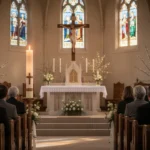
Good Friday worship is usually quieter and more reflective than an ordinary Sunday service. The atmosphere may include subdued music, periods of silence, readings from the Passion narratives, and prayers focused on repentance, suffering, mercy, and the cross.
There is no single service used by every church, but many observances include several familiar elements:
Reading the Passion story: The congregation hears the account of Jesus’ arrest, trial, crucifixion, and death, sometimes with different readers taking the parts of the narrator and other speakers.
Praying at the cross: Worshipers may kneel, stand in silence, or approach a cross as a sign of reverence and personal reflection.
Hearing a sermon or meditation: The pastor or priest explains the meaning of Jesus’ death and connects it with human sin, suffering, grace, and hope.
Observing silence: Some services end without a hymn, blessing, or musical closing to preserve the sense that the story has not yet reached Easter.
Sharing communion: Some churches celebrate the Lord’s Supper on Good Friday, while others reserve communion for Easter or another service.
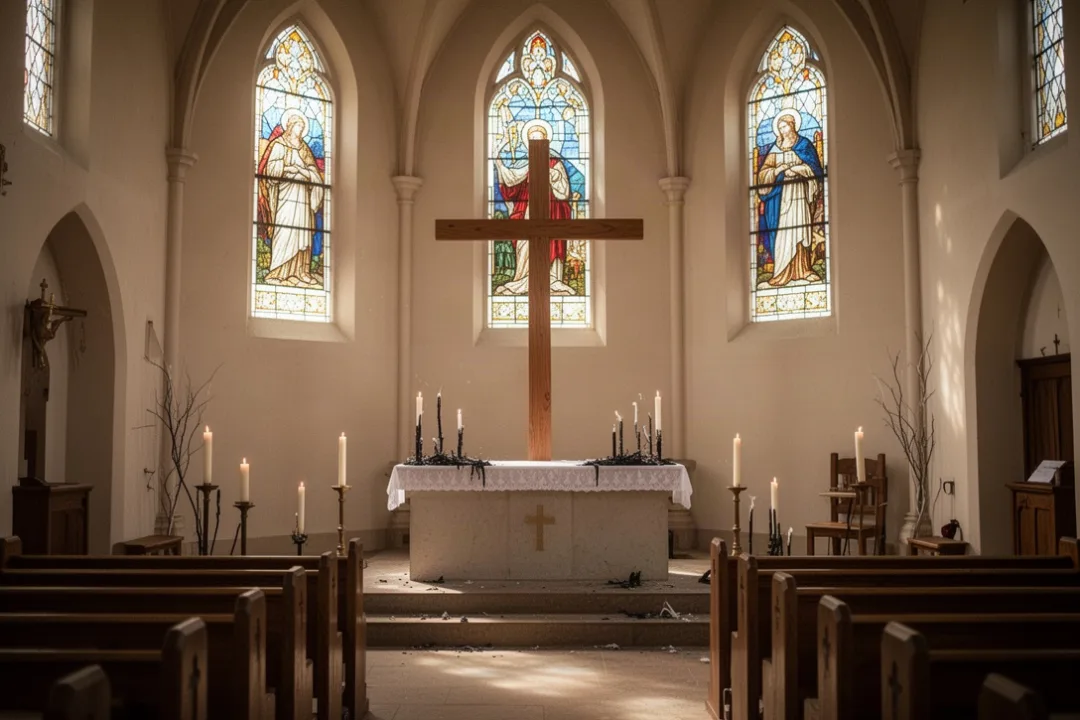
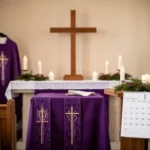
In many churches, the altar is left bare, candles are extinguished, and decorative items are removed. These choices create a visual sense of loss and absence. Other congregations use red or black cloth, a plain wooden cross, or a gradual darkening of the sanctuary.
Why Good Friday services can feel so different
Good Friday does not try to make the crucifixion comfortable. Its readings and prayers often allow room for grief, confusion, anger, and silence. The service may feel more serious because it asks worshipers to face suffering directly instead of quickly moving toward celebration.
For many Christians, this solemnity is not meant to produce hopelessness. It acknowledges that faith does not require people to deny pain. The crucifixion becomes a place where Christians bring their own experiences of loss, injustice, guilt, fear, and disappointment.
This is also why the day can speak to people who are grieving. Good Friday does not offer a shallow promise that suffering is easy or immediately explained. Instead, Christians see Jesus as one who experienced betrayal, physical pain, public shame, abandonment, and death. The story presents God’s compassion as reaching into the darkest parts of human life.
What the cross represents on Good Friday
The cross is the central symbol of Good Friday. Historically, it was an instrument of Roman execution designed to cause pain and humiliation. In Christian worship, it has become a sign of Jesus’ sacrifice, God’s mercy, and the hope of redemption.
Christians do not generally view the cross as valuable because suffering is good in itself. Abuse, cruelty, and injustice are not made virtuous simply because Jesus suffered. Rather, the cross is meaningful because Jesus responds to violence with faithfulness and love, and because Christians believe God brings life from what appears to be defeat.
The cross can also represent a call to discipleship. Jesus’ followers are asked to practice humility, forgiveness, compassion, and faithfulness, especially when doing so is costly. Good Friday therefore points beyond private belief toward the way Christians are expected to treat other people.
Good Friday holds grief and hope together: the cross shows the depth of suffering, while the Christian message says suffering does not have the last word.
Why the day is called “Good” Friday
The name has prompted questions for centuries because the event remembered was tragic. One widely accepted explanation is that “good” once carried the sense of something holy, sacred, or set apart. In that understanding, the name identifies a holy Friday.
Another explanation focuses on the outcome Christians associate with Jesus’ death. The day is “good” because Christians believe it achieved a great spiritual good: the possibility of forgiveness and renewed relationship with God. Some people describe it as good not because the crucifixion was pleasant, but because God’s saving purpose was accomplished through it.
The exact history of the English expression is not completely settled, and other languages use different names. Some call it Holy Friday, Great Friday, or a term that directly refers to Jesus’ suffering. Regardless of the label, the focus remains the same: the death of Jesus on the cross and its meaning for Christian faith.
How Good Friday relates to Holy Week
Good Friday is the fifth day traditionally associated with Holy Week, which begins with Palm Sunday. The week follows the final events of Jesus’ earthly ministry in Jerusalem and leads to Easter Sunday.
Palm Sunday: Christians remember Jesus’ entry into Jerusalem, when crowds welcomed him with branches.
Holy Monday through Wednesday: Churches may remember Jesus’ teaching, confrontations, and preparation for his final days, although observances vary.
Maundy Thursday: Christians remember the Last Supper, Jesus’ command to love and serve, and his prayer before arrest.
Good Friday: Christians remember Jesus’ trial, crucifixion, and death.
Holy Saturday: Christians wait in a quiet period associated with Jesus’ burial and the disciples’ grief.
Easter Sunday: Christians celebrate Jesus’ resurrection from the dead.
The sequence is meaningful. Palm Sunday shows public welcome, while Good Friday shows rejection and execution. Maundy Thursday emphasizes service and communion, while the cross reveals the cost of Jesus’ mission. Holy Saturday represents waiting, and Easter announces new life.
How different Christian traditions observe Good Friday
Roman Catholic, Eastern Orthodox, Anglican, Lutheran, Methodist, Presbyterian, Baptist, nondenominational, and other Christian communities observe Good Friday in different ways. Some hold a formal liturgy; others offer a simple prayer service, a community gathering, or a period of private meditation.
In many Catholic churches, the Good Friday liturgy includes readings from Scripture, a homily, solemn prayers, the veneration of the cross, and communion consecrated on the previous evening. The service is not a Mass in the usual sense, because the Eucharistic prayer is not offered on Good Friday.
Eastern Orthodox Christians observe the day within the services of Holy and Great Friday. These may include readings about the Passion, hymns of lament, and a symbolic burial service centered on a richly decorated cloth representing Christ’s body. Customs can vary according to local church practice.
Many Protestant churches center their observance on preaching, Scripture readings, hymns, prayer, and silence. Some hold a “Seven Last Words” service based on Jesus’ final sayings as recorded across the Gospels, while others organize a Stations of the Cross, a Tenebrae service, or an evening communion service.
These differences do not mean that Good Friday has no shared meaning. Across traditions, the day points Christians toward Jesus’ death, the seriousness of sin, the power of grace, and the hope that becomes fully visible at Easter.
What Christians may do at home
You do not need to attend a large service to observe Good Friday meaningfully. A quiet practice at home can create space to consider the events of the day and their significance. The most helpful approach is usually simple rather than elaborate.
Read one of the Gospel accounts of the crucifixion, such as Matthew 27, Mark 15, Luke 23, or John 18–19.
Spend several minutes in silence without music, television, or other distractions.
Pray for forgiveness, people who are suffering, victims of injustice, and those who feel alone.
Listen to reflective sacred music or sit quietly with a cross.
Attend a local Good Friday service or a community Stations of the Cross.
Share a plain meal and discuss what the cross means to your household.
Consider one practical way to show mercy, serve someone, or repair a damaged relationship.
Some Christians fast from certain foods or eat a simple meal. Others abstain from entertainment, parties, or unnecessary activity. These practices are not a way to earn God’s favor; they are intended to make the day’s reflection more focused and intentional.
A practical approach: Read the crucifixion account slowly, sit with the difficult parts, and let your response include both honest grief and trust in the hope of Easter.
Is Good Friday a day of celebration or mourning?
Good Friday is primarily a day of mourning, reverence, and reflection. Churches may use dark colors, restrained music, silence, or an unadorned cross because the day remembers Jesus’ death. The mood is serious even when worshipers believe the cross leads to resurrection.
At the same time, Christians do not mourn as though Jesus’ death were meaningless. They believe the crucifixion is connected to God’s saving work, so grief and hope exist together. The day is solemn, but it is not understood as the final defeat of Jesus or his followers.
This distinction explains why some communities call the day a celebration of the cross. They are not celebrating suffering or execution. They are celebrating what they believe God accomplished through Jesus’ willing sacrifice and the promise that death will ultimately be overcome.
What Good Friday means for people who are not Christian
Good Friday is a Christian holy day, but people from other backgrounds may encounter it through school calendars, public holidays, cultural traditions, or family observances. Understanding its meaning requires recognizing that the cross is not merely a historical symbol or a seasonal decoration.
For Christians, Jesus’ crucifixion raises questions about guilt, forgiveness, justice, power, sacrifice, and hope. Non-Christians may interpret the event differently, but they can still understand why the day is central to Christian worship and why its themes have influenced art, music, literature, ethics, and public life.
Respectful participation depends on the setting. A visitor can attend a service, remain quiet during prayers, and follow the congregation’s lead without needing to share every belief. Asking a church leader about its customs beforehand is helpful, especially for communion, fasting, or rituals involving the cross.
How Good Friday points toward Easter
Good Friday and Easter should be understood together. Good Friday remembers Jesus’ death and the apparent triumph of violence, sin, and death. Easter celebrates the resurrection, which Christians believe reveals that death did not defeat Jesus and that new life is possible through him.
Without Good Friday, Easter can become a vague message about spring or fresh beginnings. Without Easter, Good Friday can appear to end in despair. The Christian calendar holds both days together so that hope does not ignore suffering and suffering does not erase hope.
For this reason, the most complete answer to “What does Good Friday mean?” includes both the cross and what follows it. It means remembering Jesus’ death with honesty, trusting in the love Christians believe it reveals, and waiting for the resurrection celebration that gives the entire story its purpose.
Common questions about Good Friday customs
Why do some churches remove flowers and decorations?
Churches may remove flowers, cloths, candles, or other decorations to create a visually spare setting. The absence of ornament helps worshipers focus on Jesus’ death and the seriousness of the Passion story. Practices differ, so an undecorated sanctuary is common but not required.
Why do some Christians fast on Good Friday?
Fasting can express sorrow, self-discipline, solidarity with people who lack food, or a desire to give focused attention to prayer. The rules vary by tradition and personal health. Fasting is not meant to punish the body or earn forgiveness, and people with medical needs should choose a safe alternative.
Can children participate in Good Friday observances?
Yes. Adults can explain the cross in age-appropriate language, focusing on love, courage, forgiveness, and the sadness of Jesus’ death without giving more graphic detail than a child can handle. A short reading, quiet prayer, drawing, or service project can help children participate respectfully.
Is Good Friday always on the same date?
No. Good Friday falls two days before Easter Sunday, so its calendar date changes each year. Easter is set according to the Christian calendar, and Western and Eastern churches may use different dates. Good Friday therefore moves between late March and late April in different years.
Frequently asked questions
Is Good Friday a happy day?
Good Friday is generally solemn rather than happy because it remembers Jesus’ suffering and death. Christians may still call it “good” because they believe Jesus’ sacrifice brought forgiveness and reconciliation with God. The day holds sorrow and hope together, with the full celebration of resurrection reserved for Easter Sunday.
What should you say to someone on Good Friday?
A respectful greeting can be simple, such as “I hope you have a meaningful Good Friday” or “Wishing you a reflective Good Friday.” If you know the person observes the day religiously, you can acknowledge its solemn meaning. Avoid treating it like a typical festive holiday unless the person signals that such a greeting is welcome.
Do Christians have to go to church on Good Friday?
Attendance requirements depend on a person’s denomination and local church practice. Some Christians attend a formal service, while others observe at home through prayer, Scripture reading, fasting, or quiet reflection. Roman Catholics generally regard Good Friday as a particularly important day of worship, but specific obligations can vary by region and tradition.
What foods do Christians eat on Good Friday?
Food customs differ widely. Some Christians fast or eat only a simple meal, while others avoid meat and choose fish or vegetarian dishes. Certain churches have specific fasting rules, but there is no single meal followed by all Christians. Personal health, age, and local tradition can affect how someone observes the day.











Leave a Reply