St. Cajetan: life, prayers, feast day, and patronage
St. Cajetan: life, prayers, feast day, and patronage
St. Cajetan is best known as the patron saint of job seekers and the unemployed. He was also a priest, reformer, co-founder of the Theatines, and advocate for people facing poverty, illness, and financial hardship.
Born in Vicenza, Italy, in 1480, Cajetan lived during a period of serious upheaval in the Catholic Church. He responded not with political influence or personal wealth, but through prayer, disciplined ministry, charitable action, and renewal among clergy. His feast day is celebrated on August 7, and many people ask for his intercession when searching for work, starting a business, or trying to provide for their families.
Who St. Cajetan was and why Catholics remember him
St. Cajetan was born into a noble family in Vicenza, a city in the Veneto region of northern Italy. His full name was Gaetano dei Conti di Tiene, often rendered in English as Cajetan of Thiene. His father died when Cajetan was still young, and his mother helped shape the faith and charitable concern that later became central to his life.
Cajetan studied law at the University of Padua and earned advanced degrees in civil and canon law. His education could have led to a comfortable career in government or administration, but he chose a different path. After moving to Rome, he worked in the papal court and served Pope Julius II in a legal and administrative role.
His time in Rome introduced him to the Church’s institutional life, but it also made him more aware of the need for spiritual renewal and practical care for the poor. Cajetan eventually became a priest and gave himself more fully to pastoral work. He served ordinary people, encouraged frequent reception of the sacraments, and sought ways for clergy to live with greater simplicity and discipline.
His holiness was not based on withdrawing from society. Instead, Cajetan worked within cities, parishes, religious communities, hospitals, and charitable institutions. He believed that a renewed spiritual life should produce visible care for neighbors who were sick, hungry, indebted, or abandoned.
How Cajetan helped reform the Catholic Church
Cajetan lived during the decades leading up to the Protestant Reformation and the Catholic response that followed. Church life in Europe faced serious criticism, including concerns about poorly trained clergy, abuses connected with money, and a gap between Christian teaching and the conduct of some church leaders.
He did not answer these problems by attacking the Church from outside. Cajetan pursued reform through personal conversion, better priestly formation, careful preaching, and a return to prayer. He wanted priests to take their vocation seriously and to serve people rather than seek status or comfort.
In 1524, Cajetan helped establish the Congregation of Clerics Regular, commonly known as the Theatines. The community was founded with several other priests, including Gian Pietro Carafa, who later became Pope Paul IV. The name came from Carafa’s episcopal title as bishop of Chieti, known in Latin as Theate.
The Theatines were not founded primarily as a movement of public protest. They were a community of priests who combined a structured religious life with pastoral ministry. Their members emphasized prayer, modest living, theological preparation, preaching, and service to the people entrusted to their care.
Cajetan’s approach to reform was demanding but constructive. He believed that the Church would be strengthened when priests prayed faithfully, taught clearly, lived honestly, and remained close to people facing hardship. His work shows why Catholic reform involved not only councils and official decrees, but also the daily choices of individual priests and religious communities.
What the Theatines believed about prayer and service
The Theatine way of life joined contemplation with active ministry. Cajetan did not treat prayer as an escape from human needs. For him, prayer gave priests the humility and steadiness required to serve people well.
The community placed strong emphasis on trust in divine providence. This did not mean ignoring practical responsibilities. Cajetan and his companions still organized ministry, cared for the sick, administered religious houses, and addressed material needs. Trust meant refusing to make money, reputation, or personal security the foundation of their lives.
Cajetan also encouraged devotion to the Eucharist and regular participation in the sacramental life of the Church. He is associated with efforts to deepen reverence for the Mass and to help Catholics approach the sacraments with greater attention and faith.
His spirituality held together two ideas that can sometimes be separated: people should place their lives in God’s hands, and they should actively work for the good of others. A person praying for employment, for example, can also improve a résumé, contact employers, seek training, and accept help from trusted people. Cajetan’s example supports prayer joined to responsible action.
A practical lesson from Cajetan: Trust in providence does not mean waiting passively. It means bringing your needs to God while using your abilities, seeking wise counsel, and taking honest steps toward a solution.
Why St. Cajetan is connected with work and employment
St. Cajetan became associated with workers, job seekers, and people facing financial uncertainty because of his concern for both spiritual and material welfare. He served communities in which illness, debt, unstable employment, and poverty could quickly threaten a family’s survival.
In Naples, he helped develop charitable institutions intended to protect poor people from exploitative lending. The most well-known example is his connection with the Monte di Pietà, a charitable lending institution that offered loans under more reasonable conditions than those available from predatory lenders. Such organizations were designed to help people avoid losing essential belongings or falling into crushing debt.
These efforts help explain why people today ask St. Cajetan to pray for a job, a stable income, a fair employer, or relief from financial pressure. His patronage is not based on a promise that every prayer will produce a particular job. Rather, it reflects his lifelong concern for people trying to support themselves and their families with dignity.
People may turn to him when they are:
Looking for their first job or returning to work after a long absence.
Facing layoffs, reduced hours, or an uncertain contract.
Trying to start a small business or build a more stable livelihood.
Seeking fair treatment in the workplace.
Worried about rent, food, medical bills, or other basic expenses.
Supporting a family while searching for dependable employment.
His example also encourages Christians to remember that employment concerns are not only personal problems. Communities can respond by sharing information about openings, providing meals, offering transportation, supporting job training, and treating unemployed people with respect rather than suspicion.
St. Cajetan’s work with the poor and sick
Cajetan’s charity was concrete. He helped people who were sick, poor, or unable to defend themselves in complicated financial circumstances. His ministry included attention to hospitals and to people whose needs were often overlooked by wealthier members of society.
He was especially concerned that charity should preserve a person’s dignity. Assistance was not meant to humiliate recipients or make them dependent on the goodwill of a powerful benefactor. His work sought structures that could offer fairer access to credit, medical care, and pastoral support.
This concern remains relevant when people pray to him today. A request for employment may also reveal a need for affordable housing, childcare, transportation, healthcare, education, or protection from exploitation. Asking for St. Cajetan’s intercession can become an opportunity to notice the wider conditions affecting a person’s ability to work.
Those who honor him can imitate his charity in practical ways:
Offer specific help instead of only general encouragement.
Share trustworthy job leads and useful professional contacts.
Help someone prepare for an interview or complete an application.
Support a food pantry, employment program, shelter, clinic, or debt-relief ministry.
Pay workers fairly and on time whenever you have authority to do so.
Protect the dignity and privacy of people who need assistance.
St. Cajetan’s devotion to the Eucharist and the infant Jesus
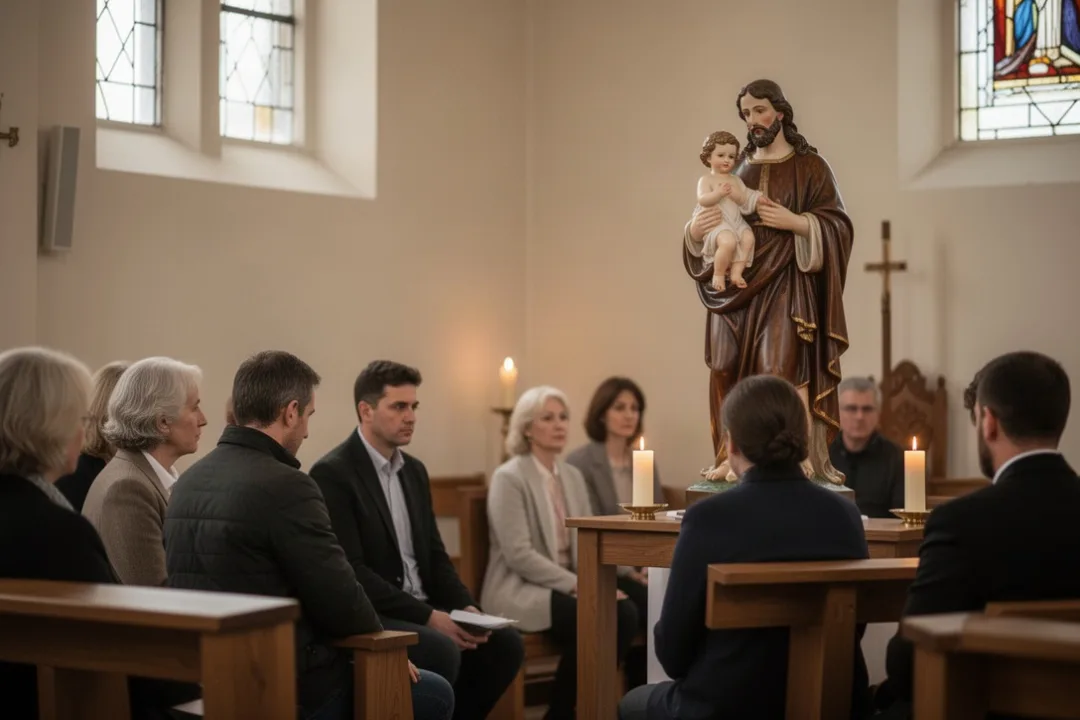
St. Cajetan is often portrayed holding the infant Jesus or kneeling before the Christ Child. This imagery reflects his strong devotion to the Incarnation, the Christian belief that the Son of God became truly human. It also reflects traditions about his prayer and his special love for the mystery of Christ’s birth.
Some devotional accounts describe a vision or mystical experience involving the Virgin Mary and the infant Jesus, especially in connection with Christmas. These accounts belong to the tradition surrounding Cajetan’s spirituality and should be understood as devotional stories rather than as details established in the same way as dates from public records.
The image of Cajetan holding Jesus carries a clear spiritual meaning. It presents him as a man who received Christ with trust, humility, and tenderness. The symbol can also remind people that faith is not limited to ideas or religious duties; it involves welcoming Christ into the ordinary pressures of human life.
His Eucharistic devotion has a similar focus. The Mass was not merely an obligation on a schedule but the center of Christian worship and communion with Christ. For someone facing unemployment or financial anxiety, this devotion can provide a setting for honest prayer, patient discernment, and renewed attention to the needs of others.
St. Cajetan’s final years and death in Naples
Cajetan spent significant parts of his ministry in northern and central Italy before serving in Naples. The city was marked by deep social inequality and economic hardship, and his work there included pastoral care and charitable initiatives.
He died in Naples on August 7, 1547. People remembered him for his prayer, his care for the poor, his commitment to priestly renewal, and his reliance on divine providence. His remains are venerated in the Church of San Paolo Maggiore in Naples, which is closely associated with the Theatines.
The Catholic Church canonized Cajetan in 1671 during the pontificate of Pope Clement X. His canonization placed official recognition behind a devotion that had already grown among Catholics who valued his example of reform and charity.
His feast day, August 7, is observed with Masses, prayers, processions, novenas, and charitable activities in places where devotion to him is strong. Customs vary by country and parish, but the central themes remain consistent: trust in God, concern for workers, and concrete help for people in need.
How to pray to St. Cajetan for work
There is no required formula for asking St. Cajetan’s intercession. You can speak plainly about your situation, ask him to pray for you, and bring the concern to God through the Mass or personal prayer. A formal novena or traditional prayer may be helpful, but sincere prayer does not depend on using perfect wording.
A simple prayer can include four parts:
Address God with reverence and honesty.
Name the need, such as employment, fair treatment, business stability, or relief from debt.
Ask St. Cajetan to intercede for wisdom, perseverance, and practical help.
Commit to a responsible next step, such as applying for a position, contacting an adviser, or asking for assistance.
You might pray in your own words: “God, you know my need for meaningful and dependable work. Through the prayers of St. Cajetan, give me wisdom, patience, courage, and the help I need to provide for myself and those entrusted to me. Guide my decisions and help me remain honest and hopeful.”
Prayer should not be treated as a guarantee of a specific result. It can help you remain grounded while you take action, recognize opportunities, accept support, and make choices consistent with your values. It can also change the way you view other people who are unemployed or struggling financially.
When praying for employment: Ask not only for a job, but also for wisdom to recognize suitable work, protection from exploitation, courage during rejection, and compassion for others facing the same uncertainty.
Common mistakes when honoring St. Cajetan
Devotion to a patron saint is meant to lead a person toward God and toward a more faithful way of living. Several misunderstandings can make prayer less healthy or less connected to Cajetan’s actual example.
Treating him like a guarantee: A saint is not a vending machine for a desired outcome. Catholics ask for intercession and entrust the result to God.
Waiting without acting: Prayer works alongside practical effort, including applications, networking, education, budgeting, and professional advice.
Ignoring unjust working conditions: Cajetan’s concern for the poor does not support exploitation, unsafe workplaces, or unfair pay.
Blaming yourself for hardship: Unemployment can result from economic conditions, illness, discrimination, caregiving responsibilities, or company decisions. It is not automatically a sign of weak faith.
Forgetting other people’s needs: Devotion should inspire generosity and solidarity, not only private requests.
Confusing tradition with documented history: Popular stories can express spiritual meaning without providing the same kind of evidence as historical records.
A balanced devotion keeps both prayer and responsibility in view. You can ask St. Cajetan to intercede while also consulting a career counselor, applying for public benefits when eligible, building useful skills, or speaking with a trusted person about financial pressure.
Ways to observe St. Cajetan’s feast day on August 7
Observing the feast day can be as simple or as communal as your circumstances allow. A parish may offer a special Mass, but private prayer and an act of charity are also fitting ways to honor him.
Attend Mass or spend quiet time in prayer on August 7.
Pray for unemployed people, small businesses, workers, and families under financial strain.
Ask St. Cajetan’s intercession before beginning a job search or making a career decision.
Donate to a food pantry, shelter, employment center, or charitable lending program.
Encourage someone who has received repeated job rejections.
Review your own treatment of employees, contractors, customers, or coworkers.
Learn more about the social needs in your neighborhood and respond in a practical way.
Families may also use the day to talk about the dignity of work. Employment can provide income and structure, but a person’s worth does not depend on a job title, salary, or productivity. Cajetan’s ministry points toward a broader view in which work should serve human flourishing and communities should care for people who cannot find work.
What St. Cajetan can teach people facing financial uncertainty
Cajetan’s life does not remove the pain of unemployment or debt, but it offers a pattern for meeting hardship. He combined prayer with preparation, personal discipline with social concern, and confidence in God with direct service to people in need.
For a job seeker, his example can encourage patience without passivity. Rejection may still hurt, and financial stress may remain serious, but prayer can help you resist despair and keep looking for wise support. The community around you also has a responsibility to respond with concrete help rather than vague advice.
For an employer or business owner, Cajetan’s example raises questions about fairness. Are workers paid on time? Are expectations clear? Are vulnerable people pressured into harmful arrangements? Does the business contribute to the well-being of the community?
For anyone with financial stability, his life is a reminder to use resources responsibly. A referral, a meal, a ride, a professional introduction, or a respectful conversation can make a real difference. The most faithful way to honor St. Cajetan is not simply to ask for his help, but to become more attentive to the needs he spent his life serving.
Frequently used symbols of St. Cajetan
Religious art often shows Cajetan wearing the black habit associated with the Theatines. He may be pictured holding the infant Jesus, kneeling before the Eucharist, or carrying a book that represents his learning and ministry.
Images of him with the Christ Child emphasize his devotion to the Incarnation. Images connected with charity or work point to his concern for the poor and people facing financial hardship. These symbols help explain why he is especially meaningful to job seekers, families under economic pressure, clergy, and people involved in charitable service.
The most important symbol, however, is the pattern of his life: a well-educated person who chose service over privilege, a priest who sought renewal through prayer, and a reformer who connected spiritual devotion with practical care. That combination continues to make St. Cajetan a relevant intercessor for people seeking work and a compelling model for anyone trying to live with faith and social responsibility.
Frequently asked questions
When is St. Cajetan’s feast day?
St. Cajetan’s feast day is August 7, the date associated with his death in Naples in 1547. Parishes and communities may mark the day with Mass, a novena, processions, prayers for workers, or charitable service. Local customs differ, but the observance commonly focuses on his trust in divine providence and concern for people facing poverty or unemployment.
What is St. Cajetan the patron saint of?
St. Cajetan is especially known as a patron of job seekers, unemployed people, workers, and those facing financial hardship. He is also associated with bankers and charitable financial institutions because of his efforts to help poor people obtain fairer loans. His patronage reflects his practical service to communities struggling with poverty and economic insecurity.
Did St. Cajetan really help people find jobs?
Historical records show that Cajetan served the poor and worked to create charitable institutions, but they do not establish a promise that he personally grants a particular job to everyone who prays to him. Catholics ask for his intercession before God. Prayer can accompany practical steps such as applications, training, networking, budgeting, and seeking professional assistance.
How can I pray to St. Cajetan?
You can ask St. Cajetan to pray for your employment, financial needs, family, or workplace in your own words. Tell God honestly what you need, request wisdom and perseverance, and ask for protection from unfair or unsafe work. You may also attend Mass, pray a novena, or honor Cajetan by helping another person facing economic hardship.













Leave a Reply