Saints in the Bible: Meaning, examples, and purpose
Saints in the Bible: Meaning, examples, and purpose
In the Bible, “saints” usually means all people who belong to God through faith, not only Christians later recognized as exemplary holy figures.
That definition can seem unfamiliar because many churches use saint as a title for a particular person, such as Saint Peter or Saint Paul. The biblical word has a broader meaning. It describes people set apart for God, called to reflect his character, and joined to his covenant community.
The Bible also uses related language for God himself, angels, sacred places, and objects dedicated to worship. The central idea is belonging to God. A saint is not presented as someone who has never sinned or who has earned spiritual status through personal perfection. Instead, sainthood begins with God’s calling and produces a life of growing holiness.
In the Old Testament, words translated as holy, holy ones, or saints come from language associated with being separate, sacred, or dedicated to God. The Hebrew term often translated as holy is related to the idea of being set apart. People, places, times, and objects could be described this way because of their relationship to God’s purposes.
In the New Testament, the Greek word commonly translated as saints is hagioi, meaning “holy ones.” It is related to the word translated as holy. The term does not primarily describe an elite spiritual class. It identifies people who have been claimed by God and are being formed into a holy community.
Paul’s letters make this especially clear. He addresses the Christians in Rome as those called to be saints in Romans 1:7. He refers to believers in Corinth, Ephesus, Philippi, and other communities in similar terms. Those congregations had serious conflicts and moral problems, yet Paul still calls their members saints because their identity rests on God’s work, not flawless behavior.
This does not mean the Bible treats sinful conduct as unimportant. The churches addressed as saints are repeatedly told to reject greed, sexual immorality, hatred, pride, favoritism, and division. Being a saint is both a gift of identity and a call to live differently.
Key distinction: In biblical usage, “saint” describes a person’s relationship with God before it describes that person’s record of achievement. Holiness is received as a calling and practiced as a way of life.
The word can also refer to the collective people of God. Daniel 7 speaks of the “saints of the Most High” in connection with God’s kingdom. Psalm 149 describes the saints praising God. These passages present saints as a worshiping, suffering, persevering community rather than isolated religious celebrities.
How the Old Testament describes God’s holy people
The Old Testament usually presents holiness through Israel’s covenant relationship with God. Israel is called to be a people set apart from the surrounding nations, not because Israelites are naturally better than others, but because God chose them for a particular purpose. The call to holiness includes worship, justice, mercy, faithfulness, and obedience.
Leviticus 19 connects holiness with practical treatment of other people. The chapter addresses honesty in business, care for the poor, fair judgment, respect for parents, and love for one’s neighbor. This shows that biblical holiness is not limited to religious ceremonies. It reaches into ordinary decisions and relationships.
The Sabbath is called holy in passages such as Exodus 20 and Isaiah 58 because it is dedicated to God. The tabernacle and temple are holy because they are associated with his presence. Priests and certain objects are set apart for worship. These uses help explain the human meaning of sainthood: people are holy because they belong to God and are dedicated to his service.
Several Old Testament passages use “holy ones” in ways that may refer to heavenly beings. Job 5:1 and Psalm 89:5-7, for example, speak of holy ones in a heavenly setting. Daniel 4 uses related language when describing heavenly messengers. The precise meaning can vary by passage, so the word should not automatically be understood as referring to human believers every time it appears.
The Psalms also portray God’s holy people as worshipers who experience hardship. Psalm 16 speaks of the holy people in the land as those in whom the psalmist delights. Psalm 34 describes God’s care for those who seek him. Psalm 116 refers to the death of God’s faithful ones as precious in his sight. These texts show that saints can be vulnerable, grieving, and dependent on God.
Old Testament figures such as Abraham, Moses, Ruth, David, Hannah, Elijah, and Esther are often regarded as examples of faith. Yet the Bible does not present them as sinless. Abraham sometimes acts out of fear, David commits serious wrong, and Elijah experiences exhaustion and despair. Their stories teach that faithfulness includes trust, repentance, endurance, and dependence on God.
Israel as a people: chosen and set apart to represent God’s purposes.
Worship spaces and objects: dedicated for a special relationship with God.
Faithful individuals: people who respond to God, even while remaining imperfect.
Heavenly beings: “holy ones” in passages describing the heavenly court.
The Old Testament therefore lays the foundation for the New Testament understanding. Holiness is not merely moral polish. It is a life directed toward God, shaped by worship, justice, mercy, and trust.
How the New Testament uses the word saints
The New Testament most often uses “saints” for ordinary Christians. Paul writes to “the saints” in Rome, Corinth, Ephesus, Colossae, and Philippi. In 2 Corinthians 1:1, he addresses the church in Corinth and believers in the surrounding region as saints, even though the letter confronts division, lawsuits, sexual misconduct, misuse of spiritual gifts, and confusion about resurrection.
That pattern matters. The early churches were not communities made up only of mature, famous, or unusually disciplined Christians. They included new believers, struggling believers, wealthy and poor members, Jews and Gentiles, and people learning how to live together. Calling them saints emphasized their new identity and responsibility within Christ.
Romans 8 describes believers as people who are being shaped into the likeness of Christ. Ephesians 1 speaks of the saints as those who have faith in Jesus. Colossians 3 urges God’s chosen and holy people to practice compassion, kindness, humility, gentleness, patience, forgiveness, and love. These passages connect holy identity with visible conduct.
The New Testament also describes the church as a body in which each member has a role. First Corinthians 12 compares believers to different parts of one body. Ephesians 4 says that leaders equip the saints for ministry, showing that ministry is not reserved for a tiny religious class. Every believer has a place in serving, encouraging, giving, teaching, caring, or bearing witness.
In Revelation, saints are often shown as people who remain faithful under pressure. Revelation 5 and 8 associate their prayers with worship before God. Revelation 13 and 14 portray saints who endure opposition and refuse to abandon their allegiance to God. Their sainthood is seen not in earthly power but in perseverance and loyalty.
Several New Testament passages use “saints” in connection with death and resurrection. Matthew 27:52-53 describes holy people raised after Jesus’ death, though the passage is brief and interpreted in different ways. Jude 14 refers to the Lord coming with holy ones, a phrase that may relate to heavenly beings or God’s people depending on how the passage is understood. These examples show why context matters when interpreting the term.
Jesus is described as the Holy One of God in passages such as Mark 1:24 and John 6:69. His holiness is unique: he is not merely one saint among many. Christian belief understands Jesus as the source and model of the holiness that believers receive and pursue.
Are saints perfect, sinless, or spiritually superior?
The Bible does not define saints as people who never fail. The communities called saints in the New Testament clearly include people who need correction. First John 1:8-9 teaches that believers must acknowledge sin and receive God’s forgiveness. James 3:2 recognizes that everyone stumbles in many ways. These statements leave no room for the idea that ordinary saints have achieved moral perfection.
At the same time, biblical sainthood is not an excuse for careless living. The people of God are expected to grow in holiness. First Peter 1 connects God’s call to holiness with conduct in every area of life. Hebrews 12 urges believers to pursue holiness, and Galatians 5 contrasts the works of the flesh with the fruit produced by the Spirit.
A helpful way to understand the relationship is to distinguish between status and formation:
Status: God sets believers apart as his people through faith and belonging to Christ.
Formation: God gradually changes their attitudes, choices, relationships, and priorities.
Practice: Saints respond by pursuing obedience, repentance, service, prayer, and love.
Hope: God promises to complete the work of renewal rather than leaving it unfinished.
This framework explains why Paul can call people saints while also urging them to stop acting in destructive ways. Their identity gives them a new direction, but growth takes time. A Christian may be genuinely devoted to God and still need to confront anger, envy, selfishness, addiction, prejudice, or dishonesty.
The Bible also warns against treating religious people as superior to everyone else. Jesus condemns public displays of religious pride in Matthew 6 and rebukes leaders who seek honor while neglecting justice and mercy in Matthew 23. Luke 18 presents a humble tax collector as more honest before God than a self-satisfied religious man. Humility is a defining mark of genuine holiness.
Saints are also not spiritually independent. They need the wider community. The New Testament repeatedly tells believers to encourage one another, carry one another’s burdens, confess sins, forgive, share resources, and care for the vulnerable. Holiness is lived in relationship, not just in private beliefs.
Practical test: If a definition of sainthood emphasizes status, admiration, or supernatural reputation but leaves out repentance, love, justice, and service, it does not reflect the Bible’s main emphasis.
How biblical saints differ from later church titles
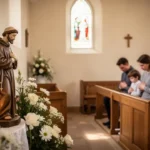
Many Christian traditions use “saint” in two related ways. The broad biblical sense refers to all believers who belong to Christ. The narrower church sense refers to a particular Christian recognized after death for exemplary faith, heroic virtue, martyrdom, or a life devoted to God.
These meanings should not be confused. When Paul addresses “the saints” in a local church, he is not referring only to a small group of officially honored individuals. He is addressing the whole Christian community. When a church calls someone “Saint Augustine” or “Saint Teresa,” it is using a later title to identify a respected example of Christian faith.
The Bible does honor specific witnesses. Hebrews 11 names people who trusted God through difficulty. Hebrews 12 describes a “great cloud of witnesses,” pointing readers toward faithful examples while directing their attention to Jesus. Acts remembers Stephen as a courageous witness, and the Gospels present Mary, Joseph, the apostles, and many unnamed disciples as people who respond to God’s call.
Different churches disagree about how saints should be honored or whether believers should ask for their prayers. Many Protestant communities reserve the word for all Christians and emphasize direct prayer to God through Jesus Christ. Catholic and Eastern Orthodox traditions retain the broader biblical meaning while also recognizing particular saints and asking for their intercession. The practices differ, but all should be assessed carefully against Scripture and the central Christian confession about Jesus.
The Bible’s emphasis is not on creating a hierarchy of impressive believers. It points to God’s grace, Christ’s holiness, the Spirit’s work, and the shared calling of the church. Remembering faithful Christians can encourage you, but no human saint replaces God as the object of worship.
What saints do according to the Bible
The Bible gives saints a calling that is both spiritual and practical. They worship God, trust him in suffering, serve other people, pursue justice, resist evil, and witness to the good news about Jesus. Their lives are meant to display what God’s grace can produce in a community.
Prayer is one of their central practices. Ephesians 6:18 urges believers to pray for all the saints. This language assumes that Christians are connected and responsible for one another. Prayer is not treated as a private activity only; it is a way the community carries needs, strengthens faith, and seeks God’s help together.
Service is another defining responsibility. In Matthew 25, Jesus identifies care for hungry, thirsty, sick, imprisoned, and displaced people with care shown to him. Acts 6 describes the early church organizing practical assistance for widows. James 1 connects pure religion with caring for vulnerable people and maintaining moral integrity.
Saints are also called to bear witness. Jesus tells his followers in Matthew 5 to let their good works point people toward God. First Peter 2 describes believers as a chosen people who proclaim God’s goodness. This witness includes spoken faith, but it also includes honesty, generosity, reconciliation, courage, and concern for neighbors.
Faithfulness may involve suffering. Jesus warns his disciples that following him can bring opposition. The New Testament does not promise that saints will avoid grief, injustice, illness, or danger. Instead, it teaches that God remains present and that faithful endurance has value. The saints in Revelation are remembered not because they controlled events, but because they remained faithful when control was impossible.
A biblical saint therefore asks practical questions:
Does this choice honor God and treat other people truthfully?
Am I willing to repent when I have caused harm?
How can I serve someone who cannot repay me?
Am I using my abilities for the good of the community?
Do my beliefs produce compassion, patience, courage, and self-control?
Am I remaining faithful when obedience is inconvenient or costly?
These questions move sainthood away from a distant religious label and into everyday life. The biblical picture includes worship on ordinary days, integrity at work, patience in family relationships, generosity with possessions, care for neighbors, and perseverance during hardship.
The final picture is communal and hopeful. Saints are people God has set apart, gathered into a people, and formed for faithful service. They remain imperfect, but they are not left unchanged. Through grace, repentance, the work of the Holy Spirit, and the support of fellow believers, they learn to reflect the holiness and love of God.
Frequently asked questions
Does the Bible say that all Christians are saints?
Yes. The New Testament regularly addresses entire Christian communities as saints, including believers in Rome, Corinth, Ephesus, and Philippi. In that biblical sense, a saint is someone who belongs to God through Christ. The term does not require a person to be famous, unusually gifted, deceased, or officially recognized by a church.
What is the difference between a saint and a disciple?
A disciple is a learner and follower of Jesus, while a saint is a person set apart as belonging to God. The terms overlap because followers of Jesus are also called saints in the New Testament. “Disciple” highlights ongoing learning and obedience; “saint” highlights identity, belonging, and holiness.
Does the Bible command Christians to pray to saints?
The Bible clearly encourages believers to pray to God and to pray for one another. It does not give a single, direct command that all Christians should address prayers to departed saints. Christian traditions interpret the communion of believers differently, so practices vary. Any practice should preserve worship of God and the unique role of Jesus.
Can a person be a saint and still struggle with sin?
Yes. New Testament churches called saints still contained people who needed correction, forgiveness, and spiritual growth. Sainthood does not mean sinless perfection. It means belonging to God and being called into a transformed life. A saint responds to sin through repentance, faith, accountability, and a continuing desire to live in obedience.













Leave a Reply