The purpose of the Bible is to reveal God and his relationship with humanity, preserve the story of God’s work in history, and teach people how to live with faith, wisdom, justice, and love. For Christians, the Bible also points to Jesus Christ as the center of God’s saving work.
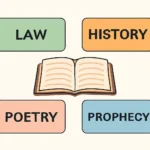
The Bible is not only a book of rules or a collection of inspirational sayings. It is a library of different writings—history, poetry, law, prophecy, wisdom, letters, and narrative—brought together as Scripture. Its purpose becomes clearer when you read individual passages within their literary form, historical setting, and place in the larger biblical story.
Different Christian traditions describe the Bible’s purpose with slightly different words, but they commonly emphasize several connected functions. The Bible does not merely provide information about God; it is intended to shape how people understand God, themselves, other people, and the world.
To reveal God’s character: Scripture presents God as creator, judge, covenant-maker, merciful redeemer, and source of wisdom.
To tell the story of redemption: The Bible traces the story from creation and human sin through Israel’s history, the life of Jesus, the early church, and the promised restoration of all things.
To teach faithful living: Its commands, wisdom, examples, warnings, and promises help readers practice love, justice, humility, courage, forgiveness, and self-control.
To form a worshiping people: The Bible gives communities language for prayer, praise, confession, public reading, moral instruction, and shared identity.
To offer correction and hope: Scripture confronts wrongdoing while also presenting God’s mercy, forgiveness, faithfulness, and promise of renewal.
To point readers toward Jesus: In Christian interpretation, the Old and New Testaments together lead to the person and work of Christ.
Central idea: The Bible’s purpose is not simply to answer every question or predict every event. It is meant to bring people into a truthful relationship with God and to shape a life that reflects his purposes.
How the Bible reveals God
One of the Bible’s primary purposes is self-revelation: God makes himself known through words and events recorded in Scripture. Readers encounter descriptions of God’s power in creation, his holiness in the law, his patience in Israel’s history, his compassion in the prophets, and his love in the life and teaching of Jesus.
The Bible’s portrait of God is not limited to abstract qualities. It shows how God responds to real situations. He calls Abraham, hears the suffering of enslaved Israelites, guides a people through the wilderness, confronts kings who abuse power, restores those who repent, and welcomes outsiders who seek him. These accounts communicate what God is like through actions, relationships, promises, and judgments.
Scripture also presents God as morally serious. It does not describe goodness as whatever a person happens to prefer. Its teachings connect worship with truthfulness, care for the vulnerable, sexual integrity, economic fairness, reconciliation, and responsible use of power. The prophets repeatedly criticize religious behavior that ignores poverty, exploitation, violence, or dishonesty.
At the same time, the Bible does not portray God’s holiness as detached from mercy. Stories such as the restoration of David after repentance, the return of the exiles, and Jesus’ welcome of sinners show that divine judgment and compassion belong together. The purpose is not to make readers despair but to lead them toward repentance, trust, and transformed conduct.
How the Bible tells the story of redemption
The Bible has many individual stories, but they belong to a larger narrative. That narrative begins with creation and human vocation, describes the entrance and spread of sin, follows God’s covenant with Israel, and reaches its central point in Jesus’ death and resurrection according to Christian faith. It continues through the mission of the church and looks toward final restoration.
Creation establishes that the world is not meaningless or self-owned. Humanity is presented as made in God’s image, which gives every person inherent dignity and responsibility. The early chapters of Genesis then explain the fracture caused by disobedience, violence, shame, and alienation. These chapters are not merely an explanation of why individuals make mistakes; they frame the human condition as a broken relationship with God and creation.
God’s covenant with Abraham and his descendants gives the biblical story a particular people and mission. Israel is called to know God, practice justice, and become a means of blessing to other nations. The law, priesthood, sacrifices, monarchy, wisdom writings, and prophetic messages all develop this relationship, including its failures and moments of renewal.
For Christians, the New Testament identifies Jesus as the fulfillment of the Bible’s central hopes. The Gospels present his teaching, healing, death, and resurrection, while the letters explain their significance for faith and community life. The Bible therefore serves as more than a record of disconnected religious experiences; it gives Christians a coherent account of creation, fall, reconciliation, and renewal.
The Bible’s final vision is not escape from creation but its restoration. The closing biblical imagery describes God dwelling with his people, evil being judged, death being overcome, and creation being renewed. This hope shapes how Christians understand present faithfulness: current choices matter because they belong within a larger story of redemption and future renewal.
How to understand the Bible’s purposes step by step
A useful way to read Scripture is to move from the immediate passage to its wider purpose. The following sequence helps prevent isolated verses from becoming detached slogans.
Identify the kind of writing. Ask whether you are reading poetry, law, narrative, prophecy, wisdom, a Gospel, or a letter. A psalm uses imagery differently from a legal instruction, and a parable works differently from a historical account.
Notice the original situation. Consider who is speaking, who is listening, what problem is being addressed, and what the first audience would likely have understood.
Find the passage’s main claim. Ask what the author is communicating about God, people, sin, wisdom, worship, justice, suffering, or hope.
Connect it to nearby passages. Read the surrounding paragraphs or chapters. Meaning often depends on contrasts, repeated words, narrative developments, or an argument that unfolds over several sections.
Place it within the whole Bible. Consider how the passage relates to creation, covenant, Israel, Jesus, the church, and the promised restoration.
Apply its purpose carefully. Decide what response fits the passage: trust, repentance, prayer, action, patience, comfort, correction, or deeper understanding.
This approach keeps application connected to interpretation. A command given to ancient Israel may reveal a lasting principle without being a direct instruction for modern civil life. A promise to a particular biblical person may show God’s faithfulness without guaranteeing that every reader will receive the same outcome.
How the Bible teaches wisdom and faithful living
The Bible aims to shape conduct, not just beliefs. Its wisdom writings address ordinary decisions involving speech, work, money, friendship, sexuality, parenting, leadership, suffering, and ambition. Proverbs, Job, and Ecclesiastes, for example, approach life from different angles so readers learn both the value of wisdom and the limits of simplistic explanations.
Proverbs commonly presents patterns in which diligence, honesty, teachability, and self-control tend to produce good results. Job challenges the assumption that every hardship proves personal wrongdoing. Ecclesiastes questions the ability of achievement, wealth, or pleasure to provide lasting meaning by themselves. Together, these writings encourage practical wisdom without pretending that life is always predictable.
Jesus’ teaching also emphasizes the inner source of behavior. In the Sermon on the Mount, recorded in Matthew 5–7, he addresses anger, lust, retaliation, generosity, anxiety, prayer, and judgment of others. His teaching moves beyond external compliance toward integrity of heart and love of neighbor.
The New Testament letters apply this vision to community life. They address conflict, favoritism, leadership, hospitality, care for the poor, marriage, work, spiritual gifts, and the treatment of enemies. The purpose is not merely to create private religious individuals. Scripture seeks to form people whose relationships display patience, truth, forgiveness, mutual service, and concern for the weak.
When you face a moral choice: biblical wisdom asks what is truthful, loving, just, and consistent with faithful character.
When you experience conflict: Scripture encourages honest correction, reconciliation where possible, and refusal to repay harm with harm.
When you have power: biblical teaching calls for humility and protection of people who can be overlooked or exploited.
When you suffer: Scripture makes room for lament while directing hope toward God’s presence and faithfulness.
When you succeed: it warns against pride and encourages gratitude, generosity, and responsible stewardship.
How the Bible forms worship and community
The Bible gives people words for approaching God. Psalms express praise, fear, grief, confession, gratitude, anger, trust, and longing. These prayers show that worship does not require pretending to feel calm or confident. A person can bring honest emotion and unresolved pain into prayer while still turning toward God.
Scripture also shapes communal memory. Israel retells the exodus, covenant, exile, and return because shared memory teaches a community who it is and what God has done. Christian churches remember Jesus’ death and resurrection through preaching, prayer, baptism, communion, singing, service, and public reading of Scripture.
Public reading matters because the Bible is addressed not only to isolated individuals. Many passages assume an audience gathered together. Letters were circulated among churches, laws were read to the people, and prophetic messages challenged public injustice. The Bible therefore has a social and communal purpose: it forms a people with shared beliefs, practices, responsibilities, and hope.
This communal purpose also creates accountability. A church or religious leader cannot treat personal preference as the final authority when Scripture challenges pride, favoritism, cruelty, greed, or abuse. At the same time, communities must interpret responsibly, because biblical language can be misused to defend prejudice or control. Faithful reading should produce humility, protection of the vulnerable, and willingness to be corrected.
Reading with care: A biblical verse should never be used to excuse abuse, hatred, exploitation, or the denial of another person’s dignity. Interpretation should consider the passage’s context, the Bible’s wider ethical direction, and the character of love and justice emphasized throughout Scripture.
How the Bible gives comfort, correction, and hope
People often turn to the Bible during grief, illness, fear, guilt, or uncertainty because it speaks to the full range of human experience. Its purpose is not to offer a shallow answer to every pain. Instead, it gives readers language for lament, examples of faithful endurance, reminders of God’s presence, and a hope that suffering and death do not have the final word.
The book of Psalms includes cries of abandonment, requests for protection, admissions of guilt, and declarations of confidence. These prayers teach that faith can include questions and protest. Lament is not necessarily rejection of God; it can be a form of relationship in which a suffering person continues to address God honestly.
Scripture also corrects false ideas about prosperity and suffering. The Bible includes people who are faithful yet experience poverty, persecution, illness, or loss. It does not support the claim that every hardship is evidence of weak faith or that every material success proves divine approval. Job’s story especially challenges confident but inadequate explanations for another person’s suffering.
Correction can be uncomfortable, but it is part of the Bible’s purpose. Prophets confront exploitation, Jesus rebukes hypocrisy, and the letters warn churches about pride and division. The aim of such correction is ultimately restoration and maturity, not humiliation. A reader should ask not only, “Does this condemn someone else?” but also, “What does this expose in me or my community?”
Hope in Scripture is active rather than passive. It encourages people to endure, serve, seek justice, forgive, and remain faithful while waiting for God’s promises. Biblical hope does not deny present evil; it claims that evil, death, and injustice will not define the final future.
Why Christians read the Bible as pointing to Jesus
For Christians, Jesus is the interpretive center of Scripture. The Old Testament establishes themes such as creation, covenant, sacrifice, kingship, wisdom, exile, return, and the hope of a coming deliverer. The New Testament presents Jesus as the one who brings these themes to their intended fulfillment.
The Gospels show Jesus teaching from Israel’s Scriptures and interpreting their central priorities. He emphasizes love for God and neighbor, mercy, justice, purity of heart, forgiveness, and trust. His actions toward the sick, poor, socially excluded, and morally compromised demonstrate that God’s kingdom welcomes and transforms people.
Christian readers understand Jesus’ crucifixion and resurrection as the decisive expression of God’s saving purpose. The exact explanations differ among Christian traditions, but they agree that the cross and resurrection are central to the Bible’s message about sin, forgiveness, reconciliation, and new life.
This does not mean every Old Testament passage is a simple prediction of a later event. Some passages address their own historical circumstances, while others contribute themes that Christians see fulfilled in Jesus. Responsible interpretation respects the original meaning and also considers the way the New Testament rereads Israel’s story in light of Christ.
What the Bible is not designed to do
Understanding the Bible’s purpose also requires recognizing what it does not promise. Scripture is not presented as a modern science textbook, a complete encyclopedia, a private horoscope, or a guarantee that every personal plan will succeed. It addresses creation, work, the body, nature, wisdom, and human knowledge, but its central purpose is to reveal God and form faithful people.
The Bible also does not function like a collection of detached quotations. Removing a sentence from its setting can reverse its meaning. For example, a character may speak foolishly in a narrative, a psalm may use poetic exaggeration, or a prophet may describe a specific judgment rather than make a universal prediction.
Nor is the Bible meant to replace wise counsel, medical care, legal protection, or responsible decision-making. Prayer and Scripture can guide a person spiritually, but they do not make professional help unnecessary. A sound reading of the Bible should encourage truthfulness about facts, respect for expertise, and care for the whole person.
Do not treat every passage as the same genre. Poetry, narrative, law, prophecy, and letters communicate in different ways.
Do not use a verse as a shortcut around context. Read the paragraph, chapter, and broader argument.
Do not assume every biblical character is a model. Scripture often records serious failures without approving them.
Do not confuse description with command. A story may report an action that the Bible does not instruct readers to imitate.
Do not make personal preference the final interpretation. Compare your reading with the text, its context, and the wisdom of the wider Christian community.
How the Bible’s purpose changes the way you read
If you view the Bible only as a source of facts, you may miss its call to respond. Scripture invites trust, worship, repentance, obedience, discernment, and hope. Reading can become an encounter with questions that expose priorities: What do I believe about God? What kind of person am I becoming? How should I treat people with less power? What needs to change?
A helpful reading practice begins with attention rather than speed. Read a manageable passage, identify its main movement, and notice what it reveals about God and human responsibility. Then consider one appropriate response. A psalm may lead to prayer, a Gospel story to trust or compassion, a prophetic warning to repentance, and a wisdom passage to a practical change in conduct.
It is also useful to read difficult passages with patience. Some questions involve ancient customs, translation choices, manuscript differences, or tensions between accounts. A mature approach does not hide these issues, but neither does one difficult passage erase the Bible’s larger witness. Consult reliable study resources, compare several translations, and seek guidance from thoughtful teachers.
Reading with others can correct blind spots. A church group, mentor, or study partner may notice historical details or ethical implications you overlooked. The goal is not to surrender personal judgment but to practice humble and accountable interpretation.
How the Bible’s purpose applies to daily life
The Bible matters in daily life when its message becomes visible in decisions and relationships. Its purpose is not fulfilled by owning a Bible, memorizing isolated lines, or winning arguments about interpretation. It is fulfilled as people become more truthful, merciful, just, courageous, prayerful, and faithful.
At work, biblical teaching may challenge dishonest reporting, exploitation, contempt for service workers, or ambition that harms others. In family life, it may call for patience, responsibility, forgiveness, and protection of vulnerable members. In public life, it may require concern for immigrants, widows, orphans, the poor, prisoners, and anyone exposed to unjust treatment.
The Bible also gives boundaries for religious power. Leaders are warned against pride, manipulation, favoritism, and the use of sacred authority for personal gain. Communities are instructed to care for one another rather than create hierarchies in which a few people receive honor while others are ignored.
Personal change often begins with small practices: telling the truth, asking forgiveness, refusing gossip, sharing resources, keeping a promise, welcoming someone who feels excluded, or praying for an enemy. These actions may seem ordinary, but they express the Bible’s larger purpose of forming a people whose lives reflect God’s character.
The purpose of the Bible, then, is both revelatory and practical. It tells you who God is, what has gone wrong in the world, what God has done and is doing to restore it, and how you can live faithfully within that story. For Christians, its message reaches its center in Jesus and its direction in the hope of renewed creation.
Frequently asked questions
Is the Bible mainly a rulebook?
No. The Bible contains laws, but it also includes history, poetry, wisdom, prophecy, songs, letters, and stories about people and communities. Its broader purpose is to reveal God, tell the story of redemption, form a faithful people, and guide moral and spiritual life. Rules make sense within that larger relationship and story rather than functioning as isolated instructions.
What is the main purpose of the Bible for Christians?
Christians generally read the Bible as God’s revelation and as the authoritative story that leads to Jesus Christ. It teaches what God has done, explains humanity’s need for redemption, gives wisdom for daily living, shapes worship and community, and offers hope. Christian traditions differ on interpretation, but these purposes are widely shared.
Should I read the Bible from beginning to end?
You can, but another starting point may be more helpful if you are unfamiliar with it. Many readers begin with one of the Gospels, such as Mark or Luke, then read Acts and selected Psalms or Proverbs. Whatever plan you choose, read in context and recognize the different genres rather than treating every passage in exactly the same way.
How can I understand a difficult Bible passage?
Start by reading the surrounding chapter and identifying the passage’s genre, speaker, audience, and historical situation. Compare a few reputable translations, consult a trustworthy study guide, and consider how the passage fits the Bible’s wider themes. Difficult texts deserve patience and humility; a quick, isolated interpretation can create conclusions the original passage does not support.
















Leave a Reply