What is the Epiphany? Meaning, history, and traditions
What is the Epiphany? Meaning, history, and traditions
Epiphany is a Christian feast observed on January 6 that celebrates the manifestation, or revealing, of Jesus Christ to the world. In Western Christianity, the day is especially associated with the Magi visiting Jesus; in many Eastern churches, it centers on Christ’s baptism and the revelation of the Trinity.
The word also has a broader English meaning: an epiphany can be a sudden moment of understanding or insight. The religious feast came first, however. Its name comes from a Greek word meaning appearance, manifestation, or revelation.
In Christian theology, Epiphany marks the way Jesus is made known beyond his immediate family and community. The feast points to Christ as someone whose identity and mission are revealed to all peoples, not only to one nation or group.
The theme of revelation connects several events in the life of Jesus. Western churches commonly focus on the visit of the Magi, described in Matthew 2:1-12. Eastern churches often give greater attention to the baptism of Jesus, described in Matthew 3:13-17, Mark 1:9-11, and Luke 3:21-22. Some Christian traditions also connect Epiphany with Jesus’ first miracle at Cana, described in John 2:1-11.
These events are different, but they share a central idea: Jesus’ identity becomes visible. The feast therefore asks Christians to consider how Christ is revealed and how people respond when they recognize him.
The central idea: Epiphany celebrates Christ being revealed to the world. The Magi, Jesus’ baptism, and the miracle at Cana are different biblical scenes that express this same theme of revelation.
Why the Magi are central to Western Epiphany
The Gospel of Matthew says that visitors called Magi came from the East after seeing a star connected with the birth of a Jewish king. They traveled to Jerusalem first and asked where the child was to be found. After receiving guidance, they went to Bethlehem, where they worshiped Jesus and presented gifts of gold, frankincense, and myrrh.
The passage does not say that the visitors were kings, and it does not give their number. The familiar image of three kings developed from the three gifts they brought. Christian art and tradition later gave them names and distinct appearances, but those details are not provided in Matthew’s account.
The Magi are often understood as Gentiles, meaning people who were not Jewish. Their visit therefore represents the recognition of Jesus by people from outside Israel. This is why Western Epiphany traditions often describe the feast as the moment Christ is shown to the nations.
Their gifts also carry symbolic meaning in Christian interpretation:
Gold is commonly associated with royalty and honors Jesus as a king.
Frankincense, a fragrant resin used in worship, is linked with holiness and divine worship.
Myrrh, another aromatic substance used in anointing and burial practices, can point toward Jesus’ suffering and death.
These interpretations are traditional rather than a list of meanings stated directly by the Gospel. The story itself emphasizes the visitors’ recognition of Jesus, their reverence, and their decision not to help Herod locate the child after being warned in a dream.
How Epiphany differs from Christmas
Christmas celebrates the birth of Jesus. Epiphany celebrates the revelation of who Jesus is and what his coming means. The two feasts are closely related, but they highlight different parts of the Christian story.
Christmas focuses on the incarnation: the Christian belief that God entered human life in Jesus. Epiphany moves outward from the birth itself. The Magi’s arrival shows that Jesus’ significance reaches beyond Bethlehem, while the baptism and Cana traditions reveal aspects of his identity and public mission.
In the Western calendar, Epiphany comes after the twelve-day Christmas season traditionally counted from December 25 through January 5. January 6 is often called Twelfth Night in relation to this count, although local calendars and customs vary.
Many churches transfer the observance to a nearby Sunday so that more people can attend worship. The exact date of a service may therefore differ even when the feast remains associated with January 6.
What the Bible says about the events linked with Epiphany
The Magi story appears only in the Gospel of Matthew. It describes visitors who follow a star, encounter King Herod, and find Jesus with Mary. Matthew does not provide every detail that later Christmas pageants commonly include, so the Magi should not automatically be placed beside the manger in every retelling.
The Gospel of Luke gives a different scene involving visitors to the newborn Jesus: shepherds who receive an angelic message and go to see the child. The shepherds and the Magi belong to separate Gospel accounts. Both groups, however, serve a similar theological purpose by showing people responding to the birth of Jesus.
The baptism of Jesus is important in Eastern Christian celebrations of Theophany. At this event, the Gospel accounts describe the Spirit descending upon Jesus and a voice from heaven identifying him as God’s beloved Son. Christians understand this scene as a revelation of Jesus’ identity at the beginning of his public ministry.
The wedding at Cana, found in John’s Gospel, is also connected with Epiphany in some church traditions. Jesus changes water into wine, and the event is presented as a sign through which his glory becomes known to his disciples. The focus is not simply on the miracle itself but on what it reveals about Jesus.
Why Eastern churches call the feast Theophany
Many Eastern Christian churches use the name Theophany, which means the manifestation of God. The name highlights the baptism of Jesus and the revelation of the Father, Son, and Holy Spirit. This emphasis differs from the Western focus on the Magi but shares the same broad theme of divine revelation.
Eastern churches that follow the Julian calendar may celebrate the feast on a date that corresponds to January 19 on the Gregorian calendar. This is not a different feast; it reflects the use of different calendar systems. Other Eastern churches celebrate it on January 6 according to the calendar used in their communities.
Water plays a major role in many Theophany services. Churches may bless water during worship, and in some places priests bless rivers, lakes, or other bodies of water. The practice connects the feast with Jesus’ baptism and expresses prayers for blessing, renewal, and the sanctification of creation.
The Armenian Apostolic Church has a distinctive calendar tradition. It celebrates the Nativity and the baptism of Jesus together on January 6, rather than observing Christmas on December 25 in the manner common among many Western churches.
How Epiphany developed as a Christian feast
Epiphany is among the oldest Christian celebrations connected with the life of Jesus. In early Christian practice, the feast gathered several manifestations of Christ into one celebration. The exact emphasis changed over time and differed between Christian communities.
In the East, January 6 became associated with the manifestation of Christ, including his birth and baptism. In the West, Christmas came to be observed separately on December 25, while Epiphany increasingly focused on the visit of the Magi. This distinction helped shape the different customs now associated with the feast.
The Christian calendar developed gradually rather than appearing everywhere in one identical form. Local churches used their own worship practices, readings, and dates. As Christianity spread across regions, the meaning of Epiphany remained connected to revelation even as the featured biblical event and cultural customs changed.
During the medieval period, Epiphany became an important religious and social observance in many parts of Europe. Plays, processions, special foods, gift customs, and household blessings grew around the feast. Some traditions continued after the Reformation, while others were reduced or reshaped according to local church practice.
Epiphany traditions around the world
Epiphany customs differ widely because the feast has been shaped by local history and culture. In some countries, January 6 is a major gift-giving day. In others, it is marked mainly by church services, water blessings, family meals, or the end of the Christmas season.
In Spain and parts of Latin America, Three Kings’ Day is an important celebration. Children may receive gifts associated with the Magi, and families may share a ring-shaped cake known as roscón de Reyes or a similar local pastry. Recipes, names, and customs vary by country and region.
In France and some French-speaking communities, families may eat galette des rois, a pastry traditionally associated with Epiphany. A small figurine or token is hidden inside, and the person who finds it may wear a paper crown. Food safety practices vary, so adults should take care when serving pastries containing hidden objects.
In parts of Europe, people mark Epiphany by writing initials or symbols above a doorway. The practice may represent a blessing for the household and a remembrance of the Magi. Different communities use different letters and interpretations, so the custom should not be treated as a universal Christian rule.
In some countries, Epiphany is linked with public water blessings or winter bathing. These practices can be deeply meaningful, but cold-water events also carry health risks. Anyone taking part should follow local safety guidance and avoid treating religious devotion as a reason to ignore dangerous conditions.
What the star, gifts, and journey symbolize
The star in Matthew’s account is often interpreted as a sign of divine guidance. In art and worship, it can represent light leading people toward Christ. The story does not require one particular scientific explanation of the star for the religious meaning to be understood.
The Magi’s journey suggests that recognizing Jesus involves movement, attention, and response. They do not merely notice the sign; they act on it, ask questions, travel, and offer gifts. Their example is often used to encourage Christians to seek truth with humility and to respond generously when they encounter it.
The gifts represent honor, worship, and a glimpse of the suffering that lies ahead. They also show that the visitors come to give rather than to take. In many worship services, this becomes a theme of offering time, resources, and service to God and neighbor.
Herod provides a contrasting response. He hears about the birth of a rival king and reacts with fear and hostility. Matthew’s narrative places the Magi’s reverence beside Herod’s resistance, creating a contrast between recognizing divine purpose and protecting personal power.
How churches observe Epiphany today
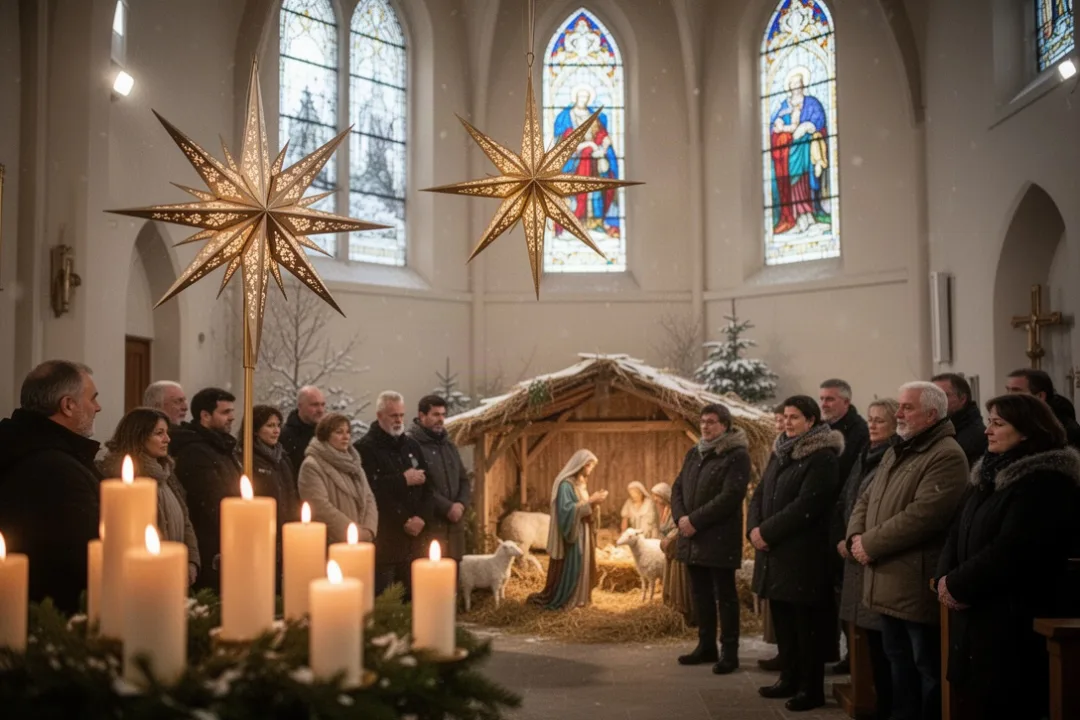
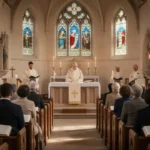
Churches may observe Epiphany with special Scripture readings, sermons, prayers, music, and communion. Some congregations include children dressed as the Magi, display a star, or invite worshipers to bring gifts for a charity. Others focus quietly on the meaning of Christ being revealed to people beyond the original setting of the Gospel story.
Common worship themes include light, mission, hospitality, generosity, and the inclusion of all nations. The feast can serve as a transition from the Christmas celebration into the season that follows, when churches begin emphasizing Jesus’ teaching and public ministry.
Some congregations observe the Sunday nearest January 6 rather than the date itself. This is especially common where attendance is higher on Sundays. A church may call the service Epiphany Sunday even when it takes place a few days before or after January 6.
Households may observe the day in simple ways:
Read the Magi account in Matthew 2:1-12 and discuss what it means to recognize Jesus.
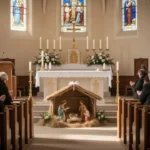
Place a star, candle, or nativity figure in a visible location as a reminder of revelation and guidance.
Share a special meal or traditional cake connected with local Epiphany customs.
Donate food, money, or practical supplies in keeping with the Magi’s offering of gifts.
Pray for people and communities who are seeking safety, truth, or a new beginning.
Common mistakes when explaining Epiphany
Several details commonly associated with Epiphany come from later tradition rather than directly from the biblical text. Keeping those distinctions clear makes the celebration more meaningful and avoids presenting customs as if they were explicit Scripture.
Calling the Magi kings: Matthew calls them Magi, not kings. “Three kings” is a traditional description based on the three gifts.
Assuming they arrived on the night of Jesus’ birth: Matthew does not place their visit in the same scene as Luke’s shepherds. The family is described as being in a house.
Claiming the Bible names the visitors: Traditional names exist in some cultures, but Matthew does not identify them by name.
Treating January 6 as the same date everywhere: Churches use different calendars and may transfer the feast to a Sunday.
Reducing Epiphany to gift-giving: Gifts are part of some customs, but the feast primarily concerns the revelation of Christ.
Confusing religious and everyday meanings: A personal “epiphany” means a sudden insight, while the Christian feast refers to the manifestation of Christ.
A useful distinction: Tradition can add color and local meaning without being a direct quotation from the Bible. You can enjoy pageants, cakes, crowns, and star decorations while still recognizing what the biblical account actually says.
What “epiphany” means in everyday English
Outside religious contexts, an epiphany is a sudden realization that changes how someone understands a problem, decision, or experience. For example, you might have an epiphany about why a project keeps failing, recognize a pattern in a relationship, or suddenly understand a difficult mathematical idea.
This everyday meaning comes from the religious idea of something being revealed. The insight may seem to arrive suddenly, but it often follows a period of observation, questions, or reflection. The word does not necessarily imply a supernatural experience.
Capitalization can help show the difference. Epiphany with a capital letter usually refers to the Christian feast. A lowercase epiphany generally means a sudden insight or revelation in ordinary speech.
The two meanings still overlap. Both involve something previously unclear becoming visible. The Christian feast refers to the revelation of Christ, while the everyday use refers to a person gaining a new understanding.
Why Epiphany still matters to Christians
Epiphany gives Christians a way to think about who is included in God’s purposes. The Magi come from outside the immediate religious community, yet they are drawn toward Jesus and welcomed into the story. This makes the feast especially relevant to themes of hospitality, mission, and the dignity of people from every nation.
The feast also challenges Christians to consider how they respond to revelation. The Magi respond with worship and generosity. Herod responds with fear. The contrast invites personal reflection about whether knowledge leads to openness, service, and humility or is resisted when it threatens comfort and control.
The baptismal emphasis found in Eastern Christianity adds another dimension. Jesus’ baptism marks the beginning of public ministry and connects revelation with vocation. Knowing who Jesus is cannot be separated from what he does: teaches, heals, serves, confronts injustice, and calls people into a transformed way of life.
For many Christians, Epiphany is therefore more than the end of a holiday season. It is a reminder that faith is meant to become visible. The light celebrated in worship is connected with practical actions such as welcoming strangers, seeking truth, offering gifts, and serving neighbors.
When Epiphany is celebrated
Epiphany is traditionally celebrated on January 6. The day is also known as Three Kings’ Day in cultures that emphasize the Magi, and as Theophany in many Eastern Christian traditions. Names and customs differ, but the feast remains connected with the manifestation of Christ.
Some churches celebrate it on the nearest Sunday, while others observe an entire season beginning on January 6. Eastern churches using a different calendar may celebrate the feast on a civil date later in January. Local church calendars provide the most reliable information about services and observances.
If you are invited to an Epiphany celebration, you may encounter a worship service about the Magi, a blessing of water, a family meal, a special pastry, or a charitable activity. None of these practices is universal, so asking the hosting church or community about its customs is the best way to participate respectfully.
At its heart, Epiphany answers a simple Christian question: How is Jesus made known? The feast answers through the Magi, the baptism, the signs of Christ’s ministry, and the continuing call for people to recognize divine light and reflect it in their lives.
Frequently asked questions
Is Epiphany always celebrated on January 6?
January 6 is the traditional date, but churches may observe the feast on the nearest Sunday. Eastern churches using the Julian calendar may celebrate it on a civil date corresponding to January 19. Local calendars also affect whether Epiphany is treated as one day or as part of a longer season.
Are the Three Kings mentioned in the Bible?
The Gospel of Matthew mentions Magi who visit Jesus, but it does not call them kings, name them, or state that there were three. The number comes from their three gifts: gold, frankincense, and myrrh. “Three Kings” is a longstanding Christian tradition rather than the exact wording of the biblical account.
What is the difference between Epiphany and Theophany?
Both names describe a Christian feast about divine revelation. Western traditions commonly emphasize the Magi recognizing Jesus, while many Eastern traditions use Theophany and focus on Jesus’ baptism and the revelation of the Father, Son, and Holy Spirit. The names reflect different emphases within related observances.
Why do some people receive gifts on Epiphany?
Gift-giving recalls the Magi presenting offerings to Jesus. In several countries, children receive presents on Three Kings’ Day instead of, or in addition to, Christmas. This custom is cultural rather than required by Christian teaching, and families may observe the day through worship, food, charity, or household blessings instead.








Leave a Reply